Appearing in multiple locations across Abu Dhabi (and the nearby archaeological site of Al Ain) under the theme of ‘Public Matter’, this new public art biennial aims to bridge Abu Dhabi's past and present, reimagining the Emirate’s environs as canvases for public engagement and creative expression. Imbued with historical, architectural and social significance, these spaces take on new meanings as they are recontextualised through the various artistic interventions of the Biennial.
“The works are really ingrained within the city; in the parks; in downtown; on the corniche,” Alia Lootah, part of the Biennial curatorial team tells us. “The urban planning here is based on a grid system, so you have a lot of free-flowing movement. That allows for different interventions in the city that become very natural to your experience.”
Building upon the successes of previous Emirati initiatives, like Manar Abu Dhabi, the Biennial features works by more than 70 local and international talents, many of which are site-specific commissions created for this exhibition. Together, these pieces interact with and reflect upon the changing face of public life in Abu Dhabi, and further raise the Emirate's increasing profile as a space for creative and cross-cultural dialogues.
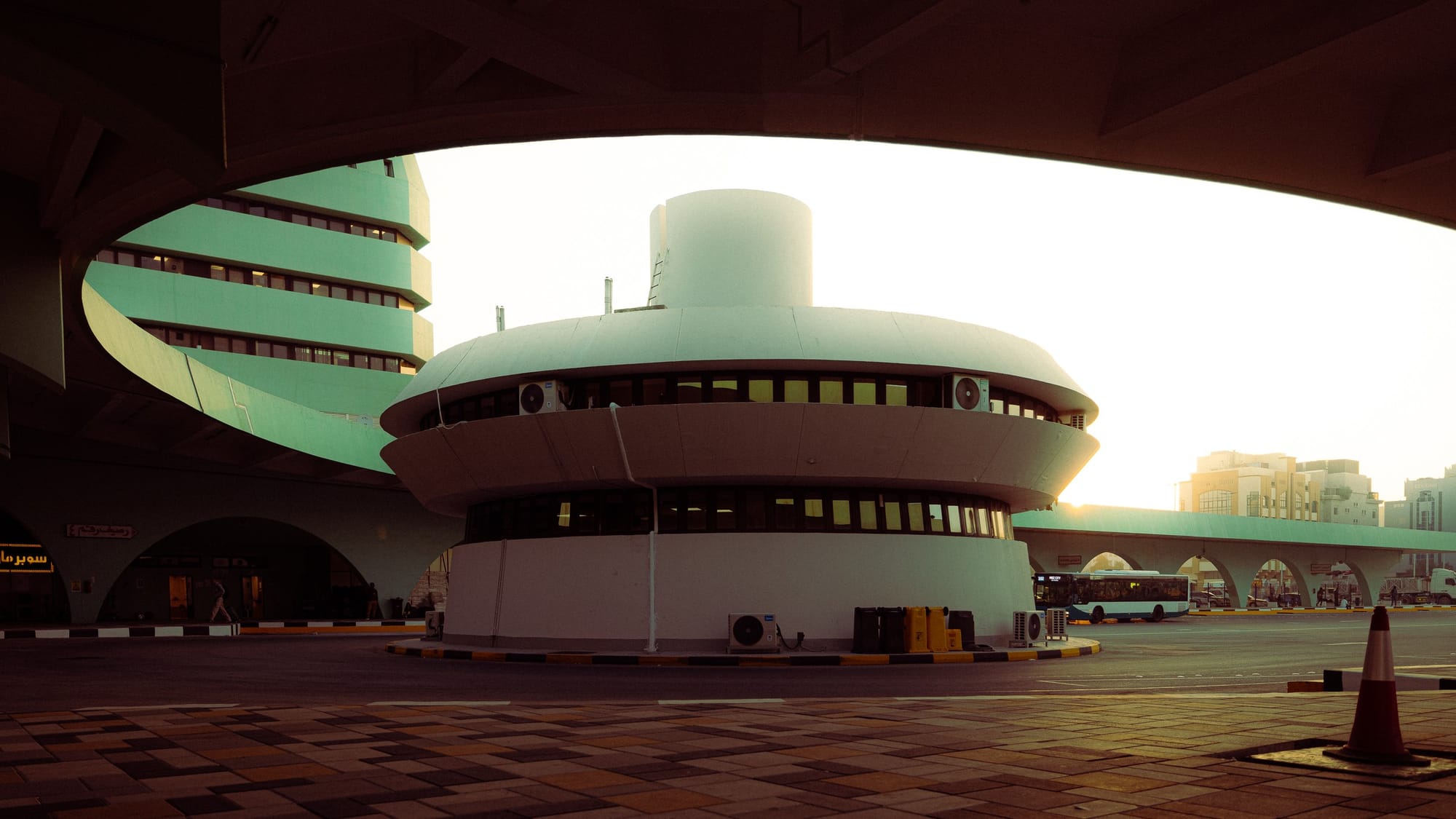
The sheer number of works and locations that make up the Biennial could very well have felt overwhelming but the eight routes are actually navigable by foot, or by driving, and were designed to encourage visitors and residents to not just explore these eight iconic Abu Dhabi locations (the Corniche, Main Bus Terminal, Public Parks, Downtown, Cultural Foundation, Carpet Souq, National Theatre and Al Ain Oasis) but also engage with them in new ways. And, for their part, participating artists responded to different ideas and inspirations, from environmental conditions and communal living, to indigeneity, identity and progress.
“With public art, you're not in an enclosed space where you experience something that's separated from the outside environment,” Lootah explains. “When you're walking through these locations, you’re experiencing both the UAE and the artworks concurrently. And, with so many of the newly commissioned works being site specific, we believe the experience is very unusual and memorable.”
“The reaction from people has been one of excitement,” she continues. “I was able to see that for myself on the very first tour, and the number of people in each group has been getting bigger and bigger. People from all walks of life have been stopping and reading the labels at every stop, taking in the works, interacting with them and having fun.”
Emirati conceptual artist Zeinab Alhashemi specialises in site-specific installations and public art and has long been fascinated by the ongoing transformation and modernisation of her country. By deconstructing familiar surroundings, blending natural and industrial elements, her works reflect on this continuous evolution.
For the Biennial, Alhashemi has created ‘Equilibrium’, a two-piece installation composed of a pair of structures, inspired by – and displayed in front of – Abu Dhabi's iconic Main Bus Terminal. These concrete elements are covered in living grass, juxtaposing industrial and organic creation, exploring the tension between human achievement and natural resilience.
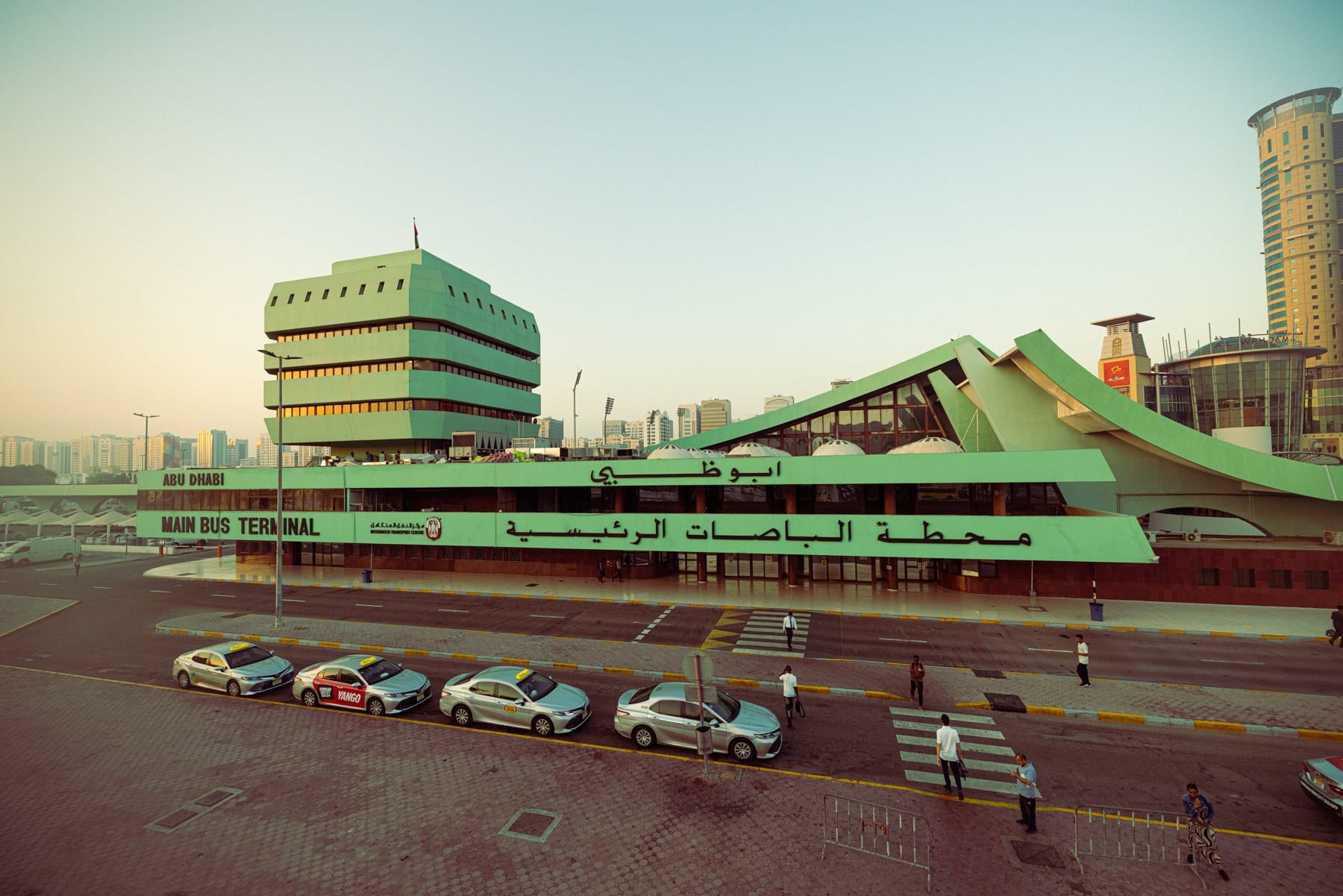
“I work around the idea of the industrial versus nature, as part of what I call ‘human interference’,” reveals Alhashemi. “We always try to mimic nature, but – in a way – we actually try to dominate nature in our daily lives. So, I'm taking the form of the brutal architecture, and then I've introduced a different material to it. I don't want to call it a sculpture; it could be just camouflaged within the space.”
Christopher Joshua Benton is an American multidisciplinary artist based in the UAE. His works span a diverse array of fields, including installations, sculpture, photography and film, often in close collaboration with local communities to unpack themes of power, labour and diaspora.
For the Biennial, Benton’s site-specific commission – entitled ‘Where Lies My Carpet Is Thy Home’ – transforms the personal narratives of Afghan, Pakistani and Indian migrant merchants living and working in Abu Dhabi’s famous Carpet Souq into a colourful manifestation of community and diversity. Inspired by Afghan war carpets and 8-bit pixel art, the massive-scale installation, which has overtaken the souq’s public plaza, weaves together both the UAE's immigration experience and the city's continuously evolving cultural tapestry.
“This project is a result of a socially engaged art process where I came to the souq every day to have workshops, hangouts and conversations with the guys who live and work here,” Benton explains. “I really wanted to get immersed in the feel of the place, but – even more importantly – I also wanted to understand what the community wanted and what they needed.”
“Every scene on this carpet is a different story that we heard through different majlis listening sessions that we had over the past eight months,” he continued. “I live ten minutes away from here, and my studio is five minutes away. I've become a really close friend to many of the men in the souq, and I think together we've been able to really tell a beautiful story of homeland.”