I grew up in a house full of books. My mum’s hardbound classics were nestled side-by-side with airport paperbacks and every novel ever shortlisted for the Booker, and my dad’s business tomes were interspersed on the shelves with volumes of poetry and philosophy. My parents sent me to a Steiner School, which meant I wasn’t allowed to learn to read until I turned six, in keeping with the curriculum. But from the age of three onwards, I constantly begged my parents to let me in on this arcane ritual that occupied them in bed, in the bath, while eating breakfast – even on the toilet.
Eventually, we reached a compromise: they taught me to sing the alphabet. I was delighted. My teachers, on the other hand, were not impressed. When I finally learned to read, I began devouring books on a weekly, sometimes daily, basis – much as my school intended.
We weren’t a religious family. My gods were my favourite authors, who with words, could create entire worlds (though it probably took them longer than seven days to do that). They controlled the birth, life and death of their characters. They had the power to make me laugh like a lunatic on the bus (and then endure the remainder of the ride red with embarrassment) or to burst into tears and wonder aloud at their cruelty. (Philip Pullman, you know what you did.)
Perhaps it’s not surprising then that I chose to make my living as a writer – though not from writing fiction, which is still hallowed ground. So I remain in awe of the novelists who have helped to shape my view of the world. One of these in particular, and with regards to Lebanon and the Middle East, is Hanan Al-Shaykh.
It was when I was studying Arabic at The University of Edinburgh that I first came across her work. During a course on the history of the Lebanese civil war, I stumbled across The Story of Zahra. The novel plunged me into the terrifying, claustrophobic world of war-ravaged Beirut. I felt Zahra’s childish fear and confusion at witnessing her mother’s affair, understood the compulsion that made her pick at her acne, feared and hoped with her when she fell in love with a sniper. It taught me more about war than any of the lists of dates and names I was obliged to memorise.
Then my mother met Hanan Al-Shaykh herself at a reading and gave me a signed copy of her One Thousand and One Nights. Al-Shaykh’s take on the stories was hilarious. Three beautiful sisters pick up a porter in a marketplace and take him home, get him drunk and ask him to guess the name of their private parts: “the basil that grows on the bridges,” “the husked sesame,” “the inn of Abu Masrur.” Al-Shaykh’s other novels were just as bold and engaging. She enthralled me with her writing, but she also confounded my preconceptions. Here was an Arab woman who, as far back as the 1970s, was writing about sex and death and masturbation, madness, abortion and virginity.
Though Al-Shaykh left Lebanon in 1975, making London her home for the past four decades and her influence is now international, she continues to write her novels in Arabic. She may have become known for her strong female characters and their survival schemes in a patriarchal world, but her books aren’t feminist manifestos. Writing from both the male and the female perspective, Al-Shaykh explores the complex pressures placed on both sexes and the reasons such power structures endure. Her books taught me a lot about her part of the world, yes, but they also raised questions that were more universal in nature, and human.
Then came the day when I was asked to interview Al-Shaykh for a story. I was a nervous wreck. What do you say to a god?
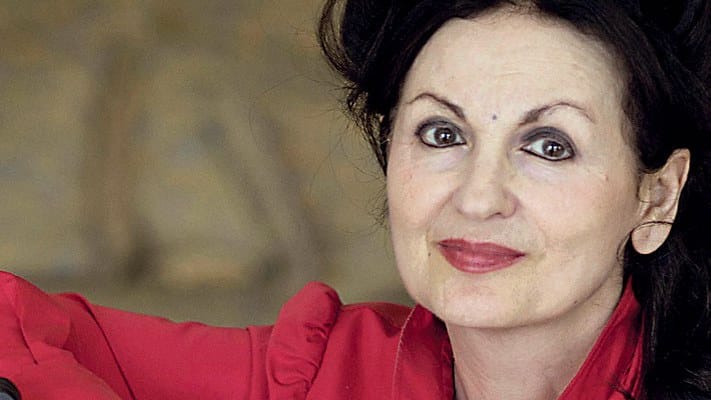
As it happens, Al-Shaykh is as modest and approachable as anyone I’ve met. Petite and cheerful with a contagious smile, she instantly made the connection between me and my mother, who’d mentioned in passing that I lived in Beirut at the book signing almost two years earlier. It’s hard to feel intimidated by someone when they’re asking after your parents’ health and expressing interest in your work, life and views on Lebanon. I think she interviewed me for a good five minutes before I got around to interviewing her, by which time I was totally at ease.
When I saw her again a year later, at Beirut’s Arab International Book Fair, I realised I wasn’t the only one who hero-worshipped her. I was chatting to two talented, creative, successful women, founders of their own publishing house, when Al-Shaykh walked by. The two women were star-struck. After the author moved on, one of them explained to me that Al-Shaykh had always been one of her major inspirations because of the author’s daring and refusal to self-censor, even when it meant that her novels were banned in her homeland.
Perhaps some of that bravery has rubbed off on me? These days I’m no longer scared of my heroes, I’ve realised they’re human too. Having said that, I’m still not sure I want Al-Shaykh to read this story of mine.