A long time ago, a friend asked me if I had the choice to forgo eating and be able to survive without it, would I? I looked at him like he was insane and replied that I wouldn’t swap quinoa salads for anything, in the world. However, that question has stuck with me, particularly when I’m looking for something quick, cheap, and delicious during my office lunch breaks in Beirut.
For some, eating is one of life’s pleasures but for others it is tedious, an example of us being enslaved to our physical bodies. A new trend in Silicon Valley has seen software developers swapping meals for protein powder shakes, which reportedly taste like a “raw pancake mix”. This invokes a terrifying dystopian future in which our entire species is sat in front of computers with tubes occupying our various orifices, catering to our bodily functions. Luckily, there are incredible talents, such as Spanish chef Ferran Adrià, who are fighting the other corner.
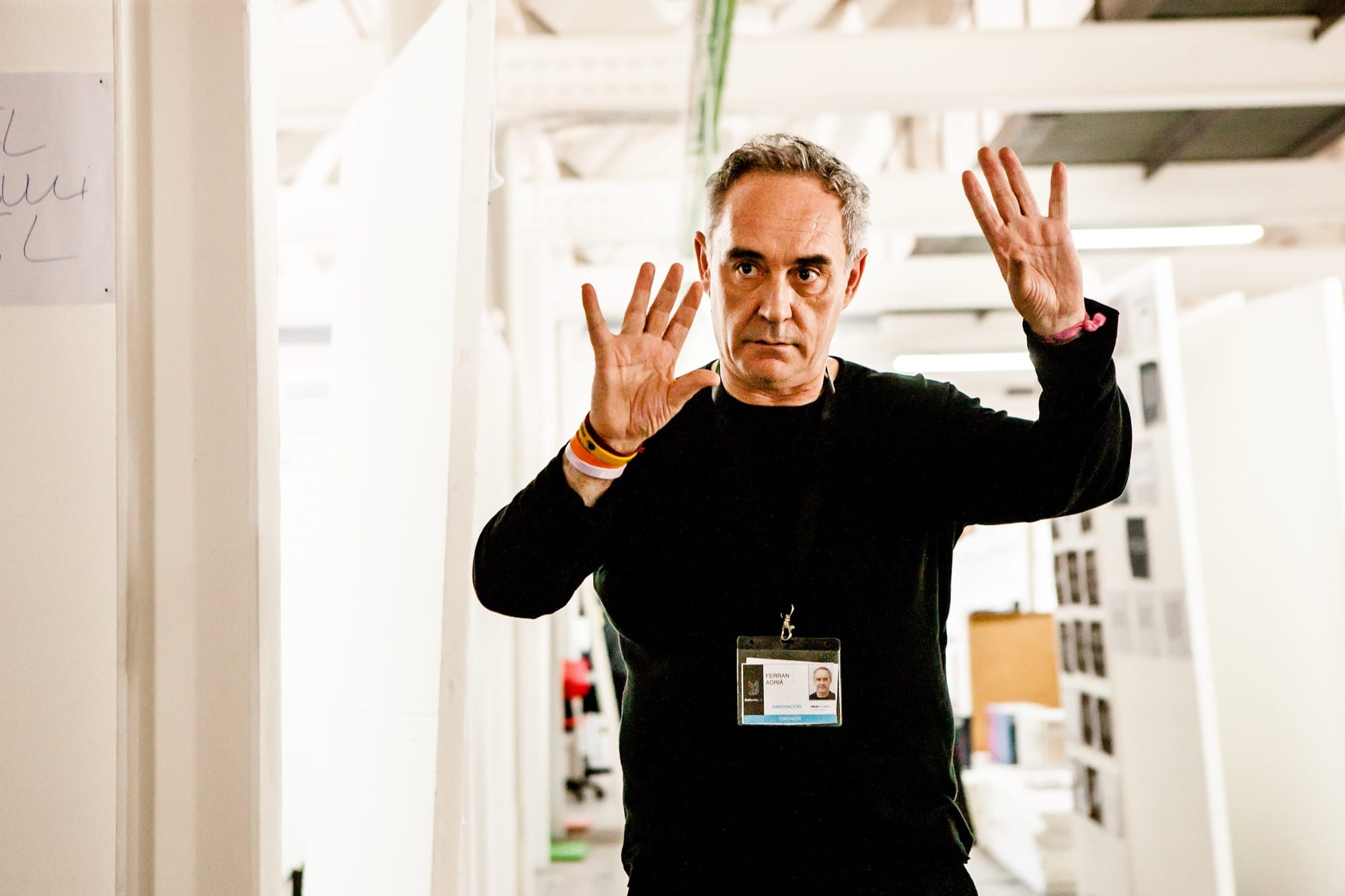
Ferran Adrià, esteemed by many to be the most innovative and influential chef in the world, claims to have never liked eating or cooking as a child, and, like many young Catalonian boys (and myself), would have preferred to be a footballer instead.
For somebody who didn’t like cooking, Adrià’s meteoric ascent to the dizzying heights of triple Michelin stardom is phenomenal. His beginnings are humble: In the coastal town of Castelldefels, he got a job in a hotel as a dishwasher, purely to save up money so he could spend the summer partying in Ibiza. At the age of 19, Adrià was drafted into Spanish military service, where he worked in the kitchen serving up to 3,000 servicemen a day. He got his big break when he landed a job as personal chef to a Spanish admiral, began serving government ministers and, on one occasion, the King of Spain. Three years later an internship came at elBulli, a highly regarded Michelin two-star restaurant, even then. Just a year and a half later, he moved up to head chef.
During his tenure, elBulli was widely considered to be the best restaurant on Planet Earth. Restaurant Magazine gave it the number one spot a record five times, and the Michelin reviewers bestowed the restaurant with a third star. Before it closed in 2011, becoming instead the elBulli Foundation, up to 2 million people would apply to dine there each summer. However, perhaps this incredible journey is fitting, as Adrià is light years away from your typical chef.
For Adrià, eating is most certainly a joy but, thankfully for many of us, it does not take seven courses at a three Michelin-starred restaurant to achieve this. He admits that a good piece of fish, well grilled, with a side order of vegetables at home, can be equal to an extravagant meal cooked by a world famous chef. His is a more creative approach to eating which relies on deconstructing tastes to their basic essence and then using them to produce something totally unexpected.
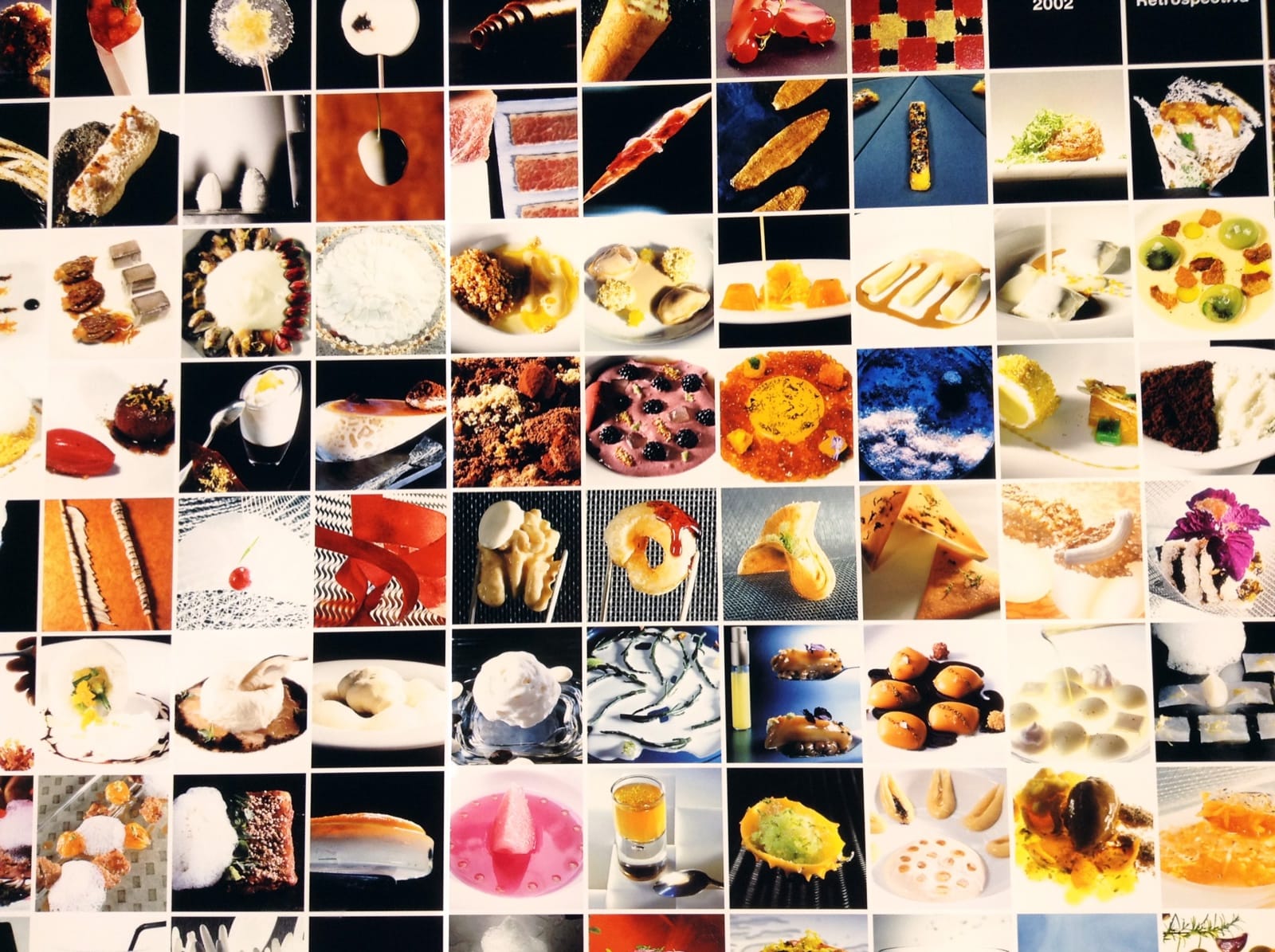
He defines his deconstructivist approach (which some refer to as molecular gastronomy) in the voluminous publication ‘elBulli 1994-1997’, which has sold 100,000 copies in six different languages, as “taking a dish that is well known and transforming all its ingredients, or part of them; then modifying the dish’s texture, form and/or its temperature. Deconstructed, such a dish will preserve its essence… but its appearance will be radically different from the original’s.” The way in which Adrià plays with expectations is by creating essences of foams, zabiones, or gelatinous substances that taste like anything from green peas to gin and tonic. The contrast of the taste with the physical appearance of what is on the plate is intended to delight and surprise the diner with tastes and sensations they have never before experienced.
American chef and writer Anthony Bordain once publically dismissed Ferran Adrià as “the foam dude”. But a trip to the elBulli restaurant forced him to eat his words. A typical meal would start out with a cocktail, but being served as a liquid in a glass would be far too straightforward. Instead it might be piña colada made from dehydrated pineapple, coconut foam, and a rum gel served on a spoon. Then what would follow in the 30-dish package would be a mélange of courses which might include such wonders as aerosol spaghetti, carrot foam, pasta-less pea ravioli, and gelatinous tuna bone marrow served with caviar. Each course is clean and precise and leaves an aftertaste that never intrudes on the next.
As a self-described ‘food deconstructivist’, comparisons have been drawn with smooth-domed British chef Heston Blumenthal, owner of the esteemed Fat Duck restaurant in Berkshire. In fact, despite the fact that Blumenthal speaks no Spanish and Adrià speaks no English, Adrià describes them as ‘best friends’. There is a mutual respect and understanding as both chefs tirelessly push the culinary boundaries, applying scientific techniques to their gastronomy. While it could be argued that Blumenthal has opted for a more mainstream or childlike use of his talents, tricking C list celebrities into eating plums made out of bull’s testicles or snail porridge on his television show, Adrià’s techniques are subtler but equally groundbreaking. He has even created his own kitchen utensils such as a spoon with holes in it, so that you can have spoonsful of cereal without the milk. He has also explored chemical processes in his ‘culinary foams’ such as freezing with liquid nitrogen.
In the West, most would agree that eating has transcended its basic bodily function and now obesity is a far greater threat than starvation. Adrià’s almost childlike curiosity when it comes to food is an attempt to make eating more entertaining. He says that what he is trying to offer is more than eating; it is an experience. He even likened a ‘meal’ at elBulli to a night at the theatre. If this is the case, then a McDonalds must be comparable to a night spent at home alone, scrolling through social media. Given the choice, I know which one I would prefer.