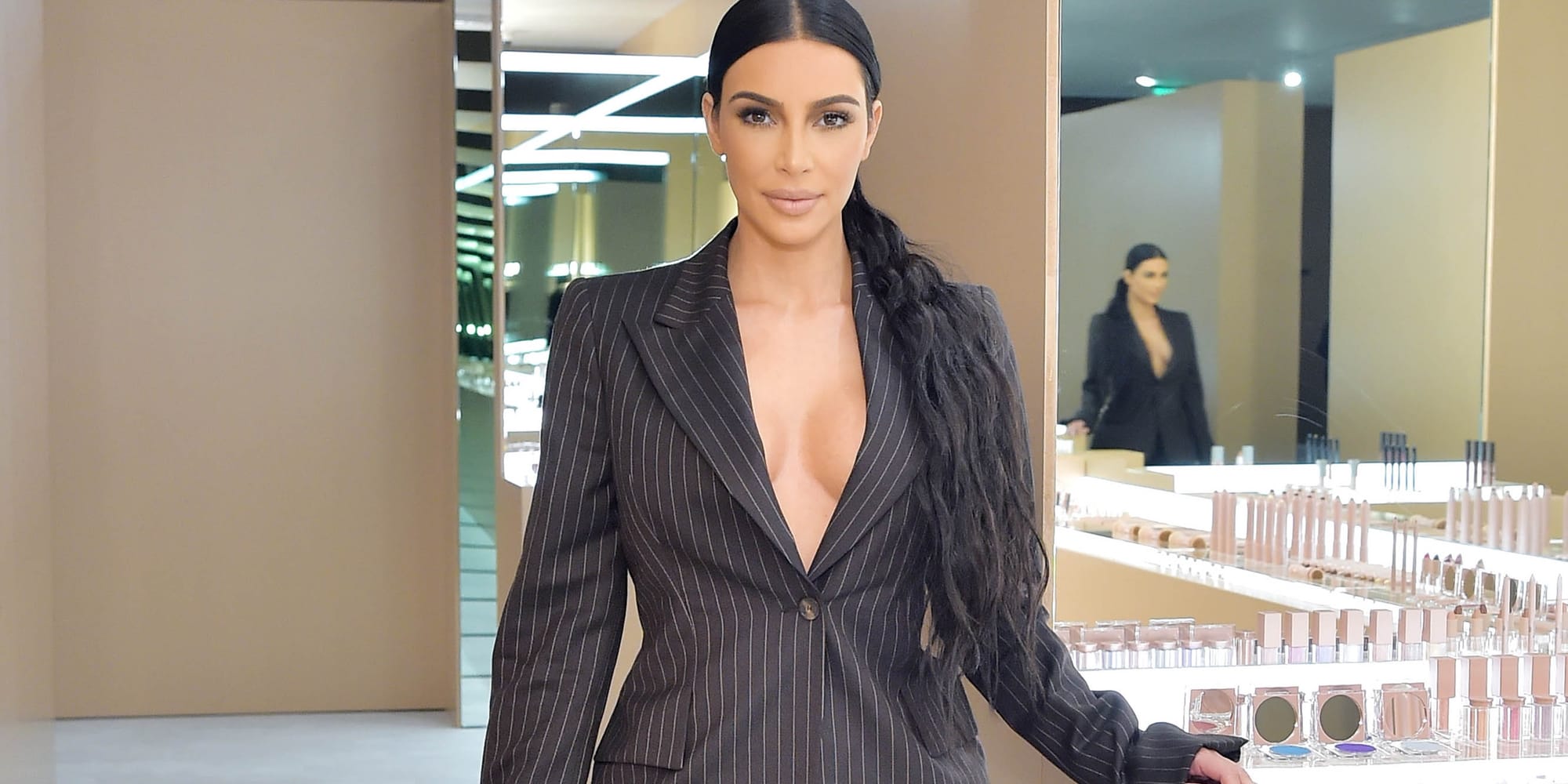
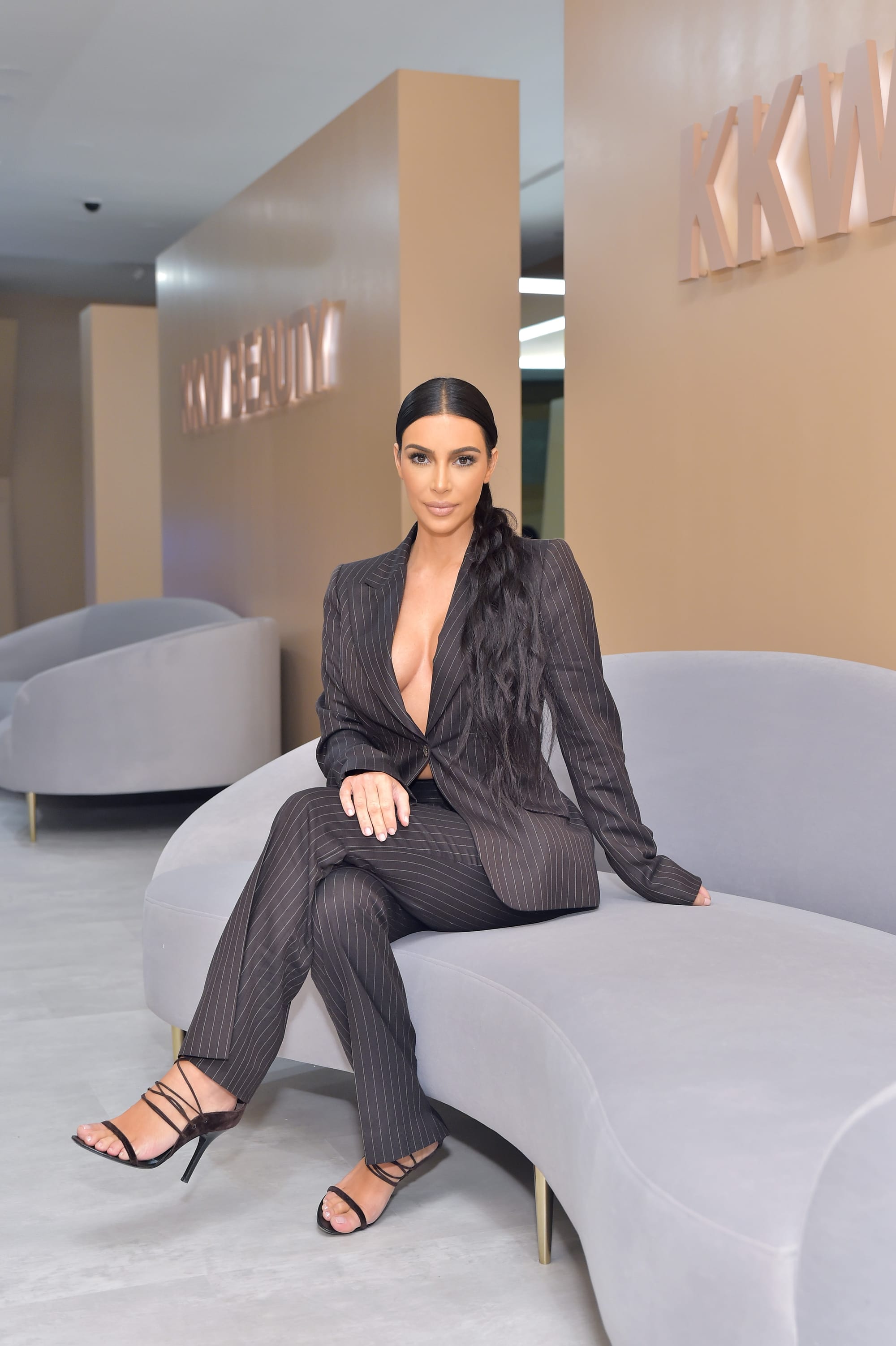
Kim Kardashian West may not have a degree but after successfully getting President Trump to grant clemency to a 63-year-old convict she decided to become a lawyer by way of a four-year apprenticeship. And now, having completed her first year, she's also releasing a documentary on justice reform. All Hail Kim Version 2.0.
In her new documentary ‘Kim Kardashian West: The Justice Project’, which is airing on NBCUniversal’s Oxygen this April, the reality star focusses her energy and shines a light on criminal justice reform. The film follows her as she works alongside legal experts on four cases of people they believe have been unfairly sentenced, and deserve a second chance.
What's the hardest part of this new career path so far?
I think what’s been challenging is helping with specific cases when we are investigating, writing memos and the paperwork that has to be done, which is all really important. I never want to mess anything up but luckily, I have a really good team that is guiding me and looking through everything and helping me get through those things.
Tell us about the process for choosing the people you feature in this documentary?
Every case that I chose is really personal to me, and a lot of the time it’s from a letter that I receive from someone on the inside that just really touches my heart. You know, there are so many cases that I do want to help, but the ones on this particular documentary showcase different aspects of our broken system, whether it’s sex trafficking or something else, but everything is over-sentencing issues, and I picked four very different cases.
How do you deal about the criticism that you're only doing this for the publicity, or to make yourself look better?
I’m very used to criticism so nothing really fazes me. I’m one of those not-human souls who can really deal with it. I’m not doing it for publicity. I really do care and spend 20 hours a week away from my family and my kids. There’s so much behind the scenes that has never been publicised in the cases that I work on. I literally do this every single day and spend hours of my time away from my work and my family, because once you get so deep into the system – and I really was not aware of so much that goes on – you just can’t give up. It can be exhausting, frustrating, but I know that we can make a difference. And so all the criticism in the world will not deter me from what I really want to do, and I hope that ‘The Justice Project’ can really make a difference and put a face on the injustice that goes on in sentencing issues, like with 63-year-old great-grandmother Alice Johnson. By letting the public hear about her background and what led her to make a decision that resulted in a drug charge, I hope that leads people to really endorse the First Step Act, which has already let out thousands of people. With Miss Alice, they can feel that she shouldn’t have the same sentence as Charles Manson for a first-time low-level drug offence. That just didn’t make sense. This documentary lets people know that even if there was a violent crime involved, you really have no idea what was on the other end and what led them to make those decisions. And so I just hope that people tune it, that their hearts are opened the way mine was when I started this, and still is every time I read a new letter from someone.
As you’re helping these people, and whether they get out or they’re in the process of it, do you find any of them wanting a hand-out, whether a hook-up through music or your other businesses?
I haven’t had that personal experience with anybody. I find everyone to be extremely grateful for the work that we’re doing and the people that I’ve introduced them to. But I’ve also introduced them to organisations that help them find employment, as well. And I love seeing the choices that they make and the exciting projects that they’re working on once they get out.
How long did it take to be able to make up your mind and say, 'They know me for the TV reality show, but this is what I have in my heart and this is what I want to do?’
I think subconsciously, having lived in a home with my attorney father [Robert Kardashian] who made me sign a contract for everything from the time I got my first car, that I would make sure I had gas and washed it once a week. I mean, everything I had to sign a contract for. So I think that by the time I was a teenager and he was working on the O.J. case and I was sneaking in his office looking at all of the evidence and things I shouldn’t have been looking at, to the day that I happened to be on Twitter and saw a video pop up of Alice Johnson, it was just in my soul for years. And I’ve even seen interviews pop up now from six or seven years ago where people asked what I wanted to do if I wasn’t filming my show and I said either a crime scene investigator or an attorney. But it didn’t take me years to think about wanting to help someone when I saw Alice Johnson’s face. When that popped up, it took me two seconds to send a message to my attorney to see what I could do. And it’s interesting, because when I first started my show, different publicists that I worked with said, ‘Oh, you should get involved in an organisation’. Like, you have to be doing something in charity work. And that’s kind of the formula that the publicists were trying to push on me but nothing was authentic like this. I’m raising four black children that could face a situation like any of the people that I help. And so, just to know that I could make a difference in my children’s lives and their friends’ lives by helping to fix such a broken system, that is just very motivating for me.
Where do you draw the line and say 'I’m not going to touch that case’ or ‘he or she deserved it?’
When I first met Alice, I thought, ‘Okay, low level drug offence, easy. I can attach myself to that.’ But if there’s something that might be violent, I don’t know how I would feel about that. But when I went to prisons and I started sitting down and listening to these people’s stories, it like took my breath away, hearing these stories of people that are no different than us. They just have a completely different circumstance, but they’re one bad decision away from being in a situation that anyone could be in. I heard horrific stories. It opened up my heart because I know after hearing their circumstances that I would do anything to fight for them, because they deserved a second chance. So I think sometimes people might hear about a murder and say they deserve to spend the rest of their life in jail but had you heard what they had been through and what led them to make that decision, you would support them too and feel safe knowing that if they were released, that they would have an amazing life outside. You know sometimes it’s a case of them having an attorney that said, ‘We’re not going to share anything that happened in your past.’ And you’re painted out to look a certain way. So it’s really interesting. I am obsessed with crime shows. That’s why I love Oxygen, but I’ve never seen a crime show that was really from the other side, from the person that had done it situation and I think it’s really important, because there really are two sides to every story.
You seem to be one of few people Trump listens to. So are there any other issues besides criminal justice reform you might advise him on or approach him with?
I wish it was that easy. There are a lot of issues that I might privately speak about with people in power that I feel strongly about. However, I stay extremely focussed on an issue that we see eye-to-eye on, and I've been just really focussed to get a lot done on what we connect on.
Apart from a low-level drug offence and a violent shooting, what are the other issues this documentary covers?
There is sex trafficking, which involved a murder as well, but the backstory that you don’t hear about her is that from the age of five years, up until she was 30 and killed her step-grandfather, he had been raping her and she had been going to the hospital at five, at six, at seven years old – she had multiple hospital visits and knowing that the state did nothing to protect her, nothing to save her. By 30 years old, she goes in and at this point she is on drugs, had a really hard life, she has seven kids from all different situations and trauma. She asks her step-grandfather for some money and he goes to sexually assault her and she pulls out a knife and kills him. And none of that was presented in court, none of that was even allowed at her trial. She was looked at as a drug addict that came in to rob him of money and then killed him. So if I were to see that on paper, I would think what everyone would think. But then once you... She wrote me this letter, this like, ten-page letter and it was the most detailed letter, I will never forget it, I cried and I instantly knew that I had to help her. Her story is so traumatic and so heart-breaking, knowing that throughout her whole life, no-one even tried to protect her and then she gets sentenced to life in prison instead of some type of therapy and rehabilitation. But, you know I’m not one to say that there aren't consequences. There’s a time, but it’s over-sentencing I think that is the huge issue.
So are you planning to take the bar exam in 2022?
I will definitely take it when my four years are up. We just finished one year, so would that be 2022 or 23? Yes.
Finally, with your other life in fashion and beauty, you talk about being woke now. So do you ever think, ‘You know what, I’m not going to do that photo shoot!’
Post a bikini selfie? No, I think I want to do it all and it’s still me and I think that’s why it works. I think no matter what, you have to be yourself and it’s all fun, and I really do believe that we can do it all.
Photography: Stefanie Keenan