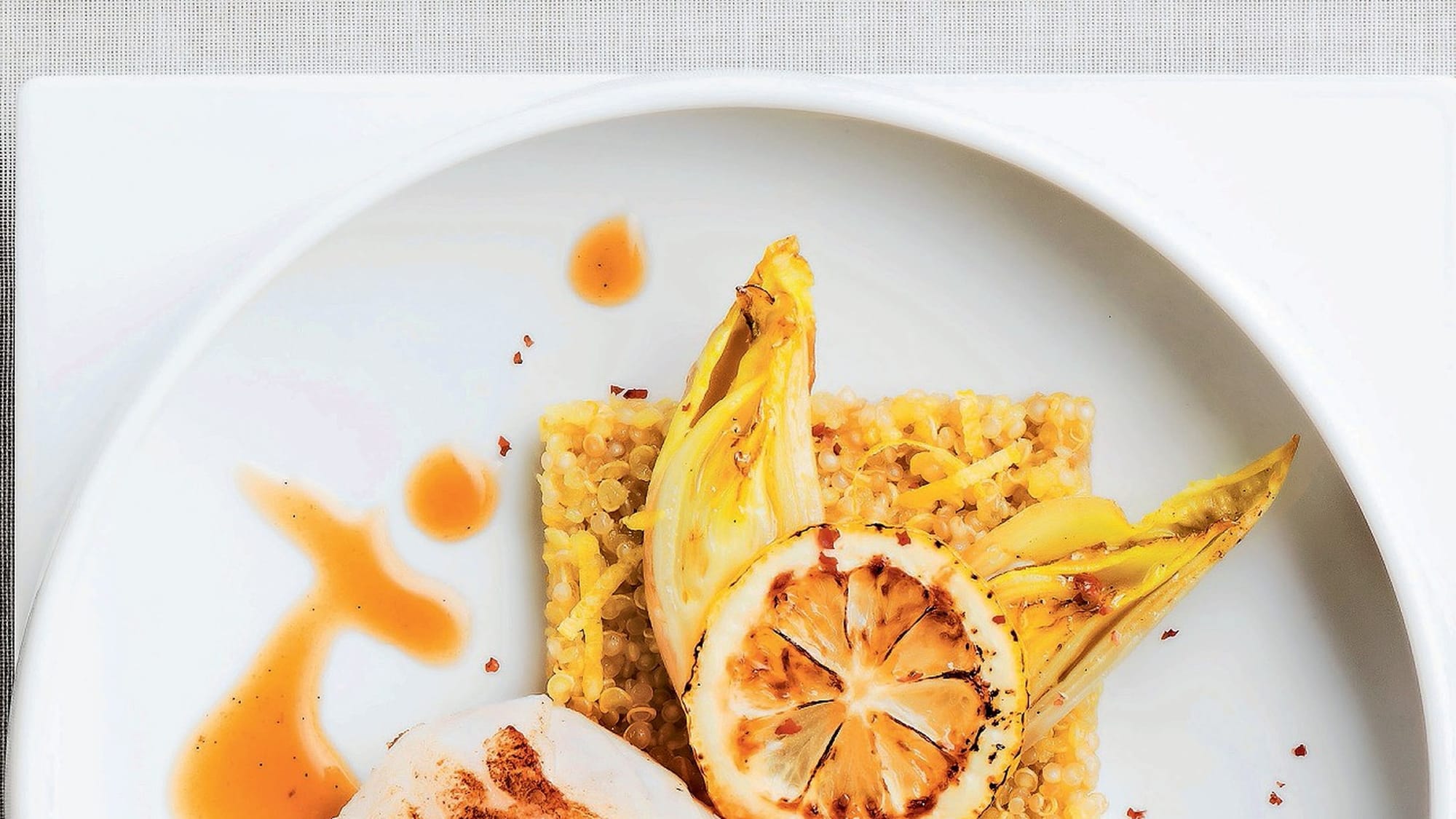
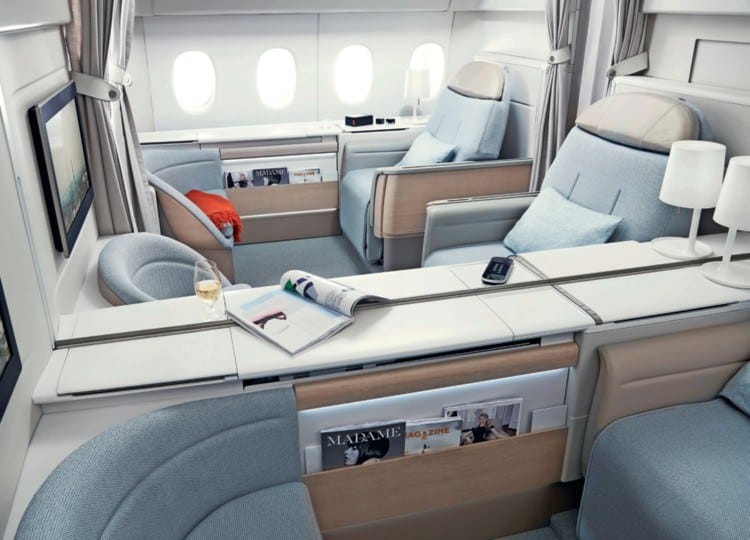
According to statistics from the International Civil Aviation Organisation, the aviation industry has seen dramatic growth over the past 20 years, with the number of passengers rising from 1.5 billion in 1998 to over four billion in 2018. As competition becomes ever more fierce among the world's top airlines, so too have their methods of eking out every last drop of profit. As a result, most of us have completely given up on airline food, either bringing our own meals aboard or eating ahead of time. But there is an exception to the inedible-plane-food rule, and it is Air France. Whether you are travelling in Business or Economy, on a long-haul flight or a quick hop within Europe, France's oldest airline continues to showcase the best of its land's culinary skills with creative and delicious meals.
I have become such a fan of Air France's food and beverage that when I received an invitation to witness exactly how their meals are prepared, I seized the opportunity with both hands, hopeful to find out what they do that others do not. Air France was one of the very first airlines in the world to offer hot meals in the air, back in 1948, after it established its SHO kitchens, Service Hôtelier d'Orly, in a wooden barracks at the airport. Back then a pre-jet flight from Paris to New York aboard a Super Constellation would take as long as 23 hours and 45 minutes, with two technical stopovers in Shannon, Ireland, and Gander, Newfoundland, so the sleeper compartments, lounges, bar and superb food were par for the course. That is when Air France's tradition of recruiting renowned and experienced chefs to help craft the meals began.
An original vintage menu from 1953 reveals a fare of foie gras topped with truffle, followed by trout with tarragon or a roast fillet of sole, finished off with an autumn-leaf ice cream. That sounds as delicious today as it did then, but even more amazing was the revelation that once upon a time, in the Golden Age of air travel, First Class passengers could look forward to guéridon table service on Limoges porcelain, with silverware and crystal glasses. With the proliferation of air travel and the addition of ever more stringent health and safety measures, the indulgence of live cooking stations did not last long. Shortly before the 1974 opening of Paris' Charles de Gaulle airport, Air France, together with its catering centre at Orly, founded its own airline-catering subsidiary, Servair.
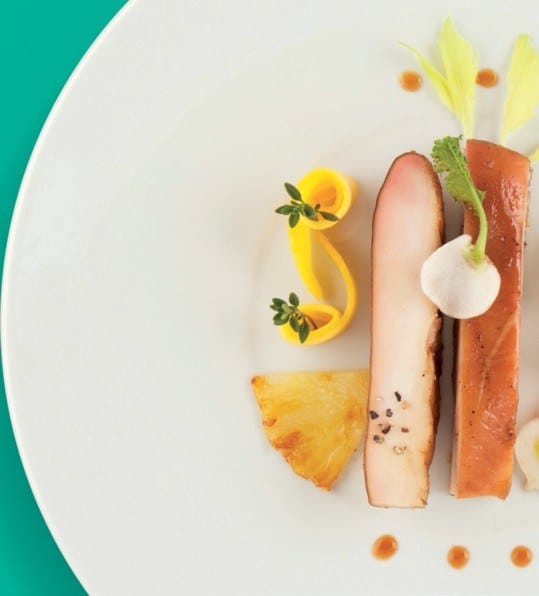
Last year Servair served 130,000 trays a day for 67 airline companies, including Air France, although it is no longer a subsidiary of the carrier. In December 2016, Air France-KLM sold 49.99 per cent of the company's shares to Gate Group. Still, Servair remains the main headquarters for all Air France food, as well as the place where French Michelin-starred chefs go to concoct creative in-flight meals. Daniel Boulud, Guy Martin, Régis Marcon, Anne-Sophie Pic and the late Joël Robuchon have all lent their culinary expertise over the years, and on my particular day I was lucky enough to meet Michel Roth, in the midst of a cooking session to finalise the menus for the last quarter of 2019.
Roth, somewhat bemused by the sight of a team of Middle Eastern journalists observing his every move, explained how your sense of taste is highly compromised during a flight. The atmosphere inside the cabin affects your sense of smell first and, as the plane climbs, the air pressure drops while humidity levels plummet, reaching less than 12 per cent at 30,000 feet, drier than most deserts. This combination of dryness and low pressure reduces the sensitivity of your taste buds to sweet and salty foods by as much as 40 per cent, and chefs have to factor this into their meals. Air France's only restriction is that its chefs do not work with raw foods such as sushi, tartare and ceviche. Once a chef arrives at their offering, there is a tasting session with the head of customer experience, the head of catering and four other panellists who decide on the validity of each dish, including a verification that all the ingredients can be bought in the required quantities.
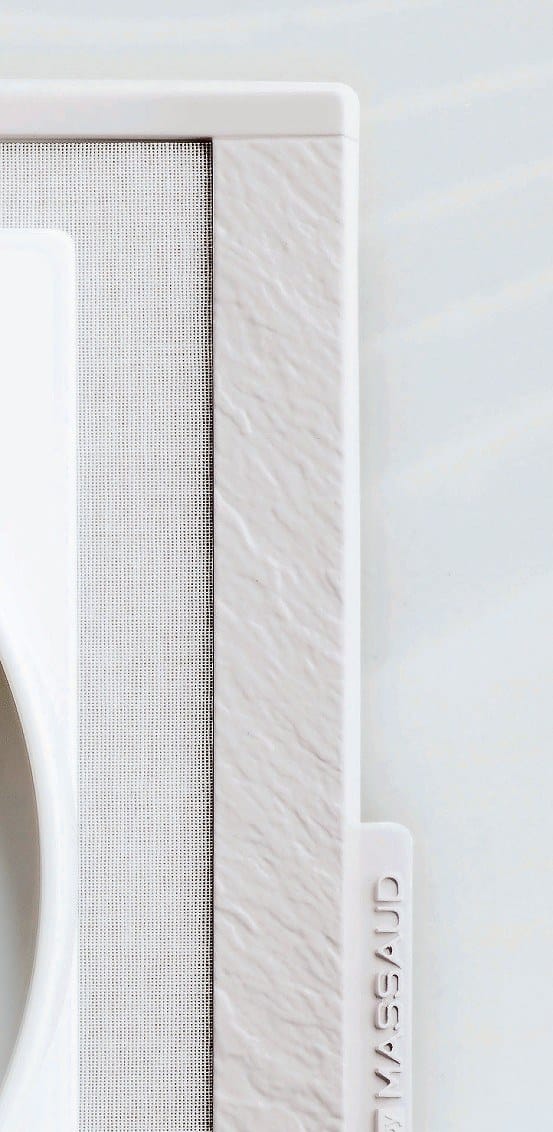
So what is the secret behind Air France's formidable food? Most airlines work with similar budgets, but the allocation varies significantly, and Air France believes in spending generously on the food and beverage component. "We have three pillars," explains Ghislaine van Branteghem, the airline's Catering Product Manager for Long Haul Flights. "The first is offering the best of France, whether in terms of chefs like Michel Roth, tableware by designers like Jean-Marie Massaud, or even champagne in all classes. The second is the element of surprise, like little Fauchon sweets at the end of a flight. And the last is sophisticated simplicity." As I tucked into my meal of duck foie gras with dried-fig chutney, followed by a perfectly tender fillet of veal, both delicious even when served on the ground at the Servair offices, I felt I had at least somewhat sussed out the magic of Air France.