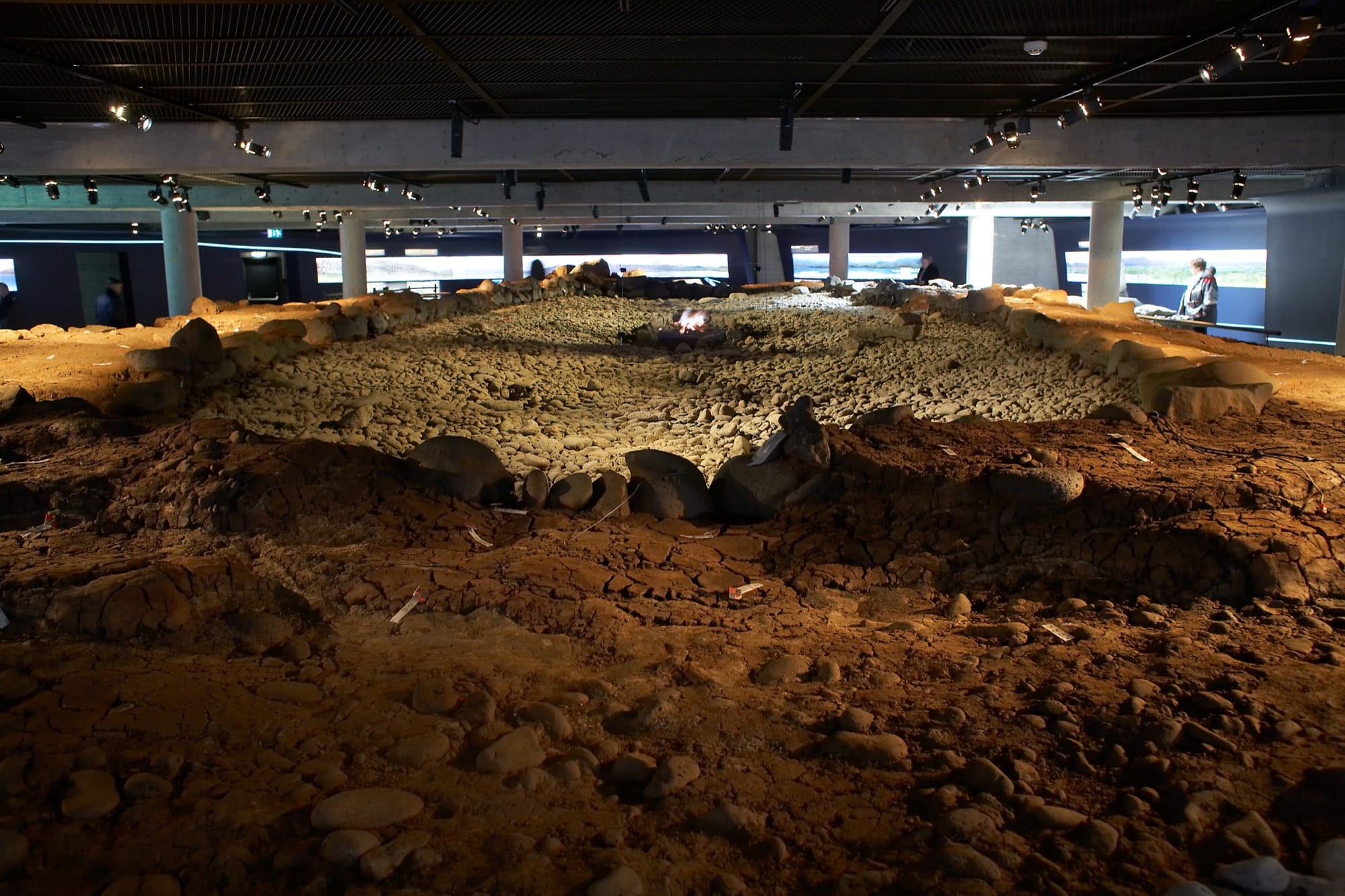
Rotten shark smells like nothing else I have ever smelt, and I grew up in a bad part of town. I am in Iceland, in the kitchen of Mulankaffe, a low-key diner in Reykjavik, on a cold winter afternoon, talking to chef Jon Orn about traditional Icelandic food. And, after showing me around the kitchen, piled with charred sheep skulls, slabs of pickled lambs testes, reeking shards of dried fish and some rather delicious lamb fillet, he pronged a small chunk of yellowish gunk on a toothpick and offered it to me. It’s pungent ammoniac, and revolting. And then, when you taste it, it's like eating a small, foul lump of mucus. It made Gordon Ramsey sick, he tells me proudly. I am heroically, not sick. But I am gasping like a goldfish. This is what these Icelanders rate a delicacy. How could one not love Iceland?
A remote, faraway place, home to sturdily beautiful Vikings, gnarled fishermen, Bjork, mythical malevolent trolls and giggling elves, lava-spewing volcanoes, enormous mountains and gushing geysers, issuing torrents of steam skywards. The hostile environment has shaped the national character - it’s why Icelanders are simultaneously stoic and darkly romantic, pragmatic and wildly imaginative. They are one of the most educated, literate and artistic European peoples, yet they value tradition and heritage – the impenetrable language remains almost unchanged since the 13th Century and they still eat the most disgusting food imaginable, in honour of times not so distant, when a pickled puffin or two was just about all that was available.
But these days, the country is in a bit of a pickle itself, to put it mildly. The recent economic collapse brought the country to its knees, forced out the government, incurred heavy bail-out debts and has left Icelanders ashamed, furious and determined to rebuild themselves as a better, less materialistic and more traditional society.
“I have blood on my teeth for these politicians!” The middle-aged lady sitting next to me on the bus burst into a bitter tirade. “My husband and I have lost everything. I think we should send the people responsible far away, strip them of their nationality.” I looked appropriately grave, and regretted asking the puce-faced woman her opinion on the political crisis. But, just like the sun strolling in after a snowstorm, her face brightened up. “Anyway, how do you like Iceland?”
It was my first morning in Iceland. I was on the bus from the imposing Loftleidir Hotel, my base in town, into downtown Reykjavik. I had to make the most of it – during winter, the sun only drops by at around 11am before apologetically vanishing around 3pm. However, it was a beautiful, icy-cold, crisp day, the sky a brilliant blue, behind the harbour, stretching around me. Around the water, as the coast curled further towards to the north, stately glaciers and snowy mountains reared behind a mix of colourful little houses, gritty docklands and industrial complexes.
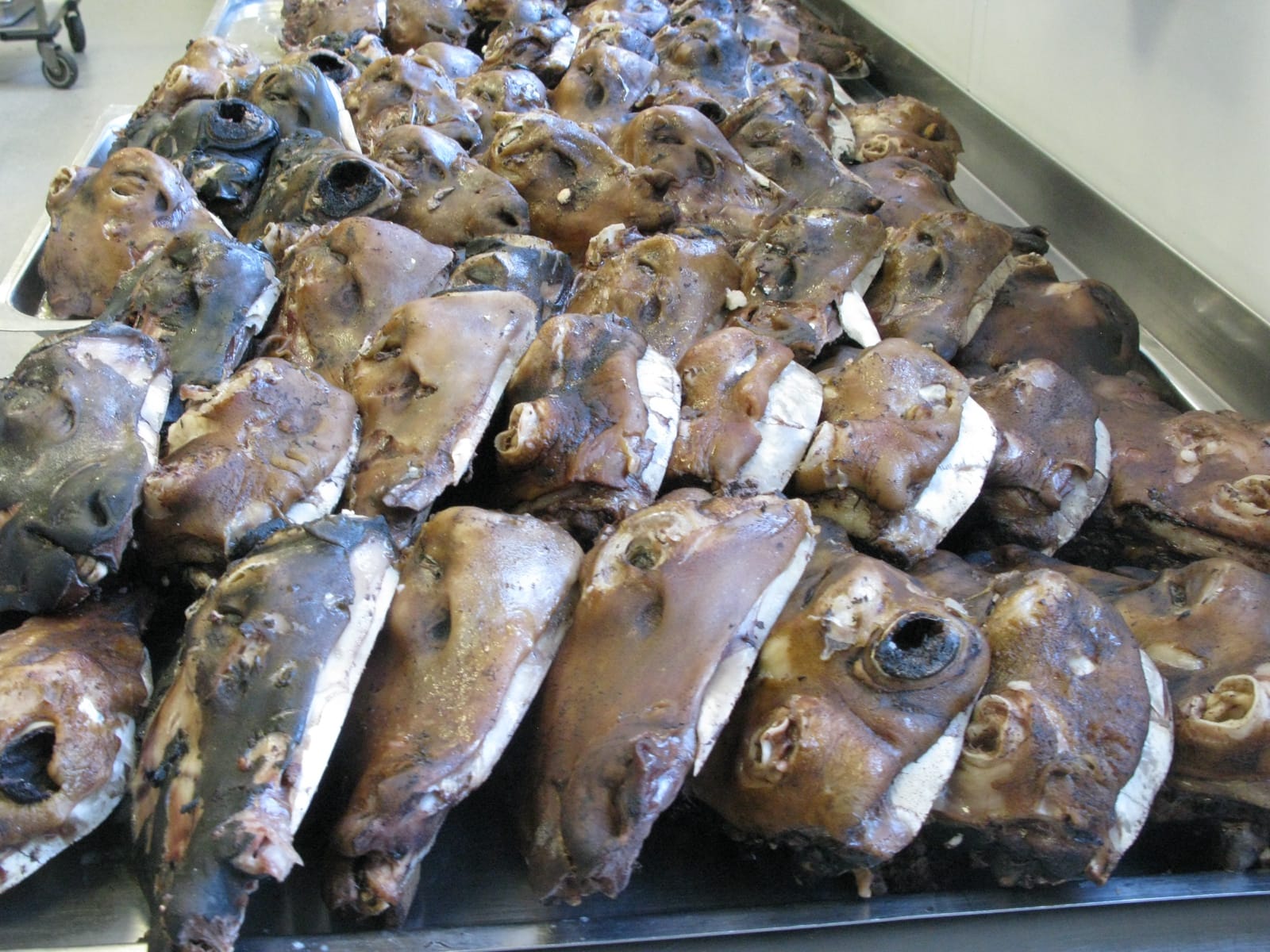
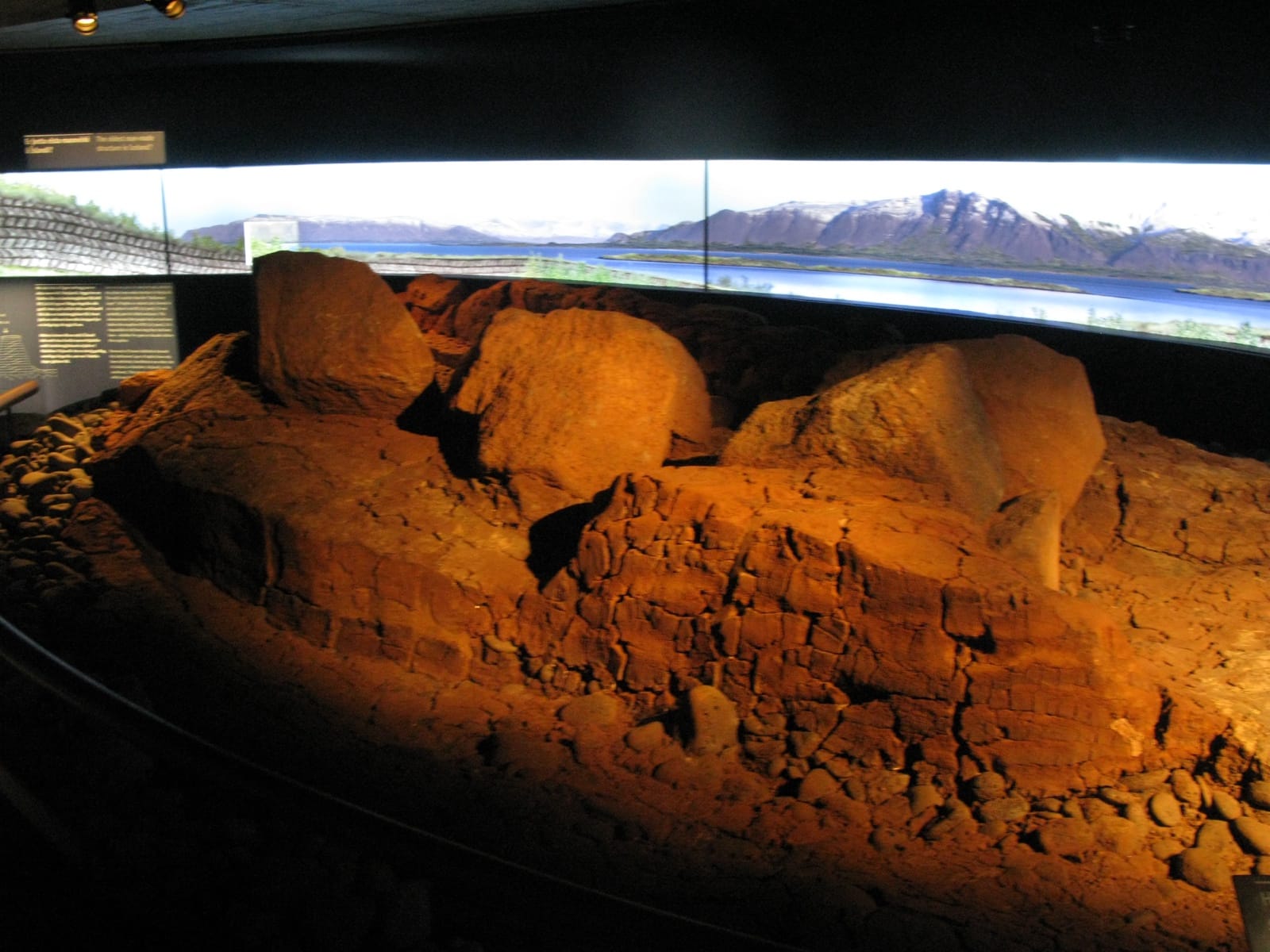
I had asked a few people about Vikings. The Vikings blasted into Iceland in the 9th Century on their longboats, killed or ejected the few Irish monks who were living meekly on the island at the time, shouted a lot and then got busy constructing a civilisation. For a thoroughly 21st Century insight into 9th Century life, I headed down towards the harbour, near a neat little square, under the pavements of Adalstraeti. There, amidst a subterranean display of technological wizardry and archaeological relics from the era, lies a ruin of a thousand-year-old Viking longhouse (visit www.reykjavik871.is for the full story). The actual remains are fascinating – a huge hall, which would have served as a meeting chamber, originally covered with turf blocks. Thanks to the CGI touchscreens, it’s possible to see what this collection of rubble would have looked like, a thousand years ago, explaining the precise function of just about every rock and pebble of the remains, as well as providing an interactive overview of the Viking settlement of the country. It’s a fantastically enthralling, atmospheric place – one can almost smell the peatfire, horses and the surprisingly well-appointed privies.
The next morning, and I was heading out of the city, towards the wilds of Skogarfoss, on the southwest tip of the island. As we left the city, the landscape morphed into a gnarled, desolate panorama that was spectacular in its brutal harshness. We passed near Hekla, Iceland’s oldest active volcano, which erupts roughly every decade or so, and in old days, terrified local clergy so much they declared it to be the gateway to Hell. And after three hours, we arrived at the foot of Myrdalsjokull, a gargantuan glacier that today, like all around it, was densely blanketed in thick, gleaming snow.
I was with a group of around ten other ‘ice-walkers’, led by a genial guide who explained that we were going to ascend the lower reaches of the glacier, roped together, with icepicks and spikes on our boots. He then linked us together, to avoid any unfortunate accidents while casually telling us that the snow concealed myriad crevasses and blowholes.
Over the next few hours, we climbed slowly and steadily upwards, a glistening panorama of pure whiteness gradually spreading outwards beneath us. The sun was dazzling up here, the wind hard and pure. Occasionally, we would skirt a blowhole, deep holes of brilliant blue ice, carved intricately by the high-pressure jets of water from deep below the glacier.
Following a three-hour hike, we reached a summit. There, behind us, Myrnasjokull reared hugely; while we amateurs collapsed gratefully by the brilliant blue ice wall of the glacier and ate lunch, before carefully roping ourselves together and beginning the slow descent down the snowy slopes, back to our warm minibus. Time was tight, so I was disappointed I didn’t get to have a go on a skidoo – motorised sleds that whiz all over the ice and are absolutely brilliant fun.
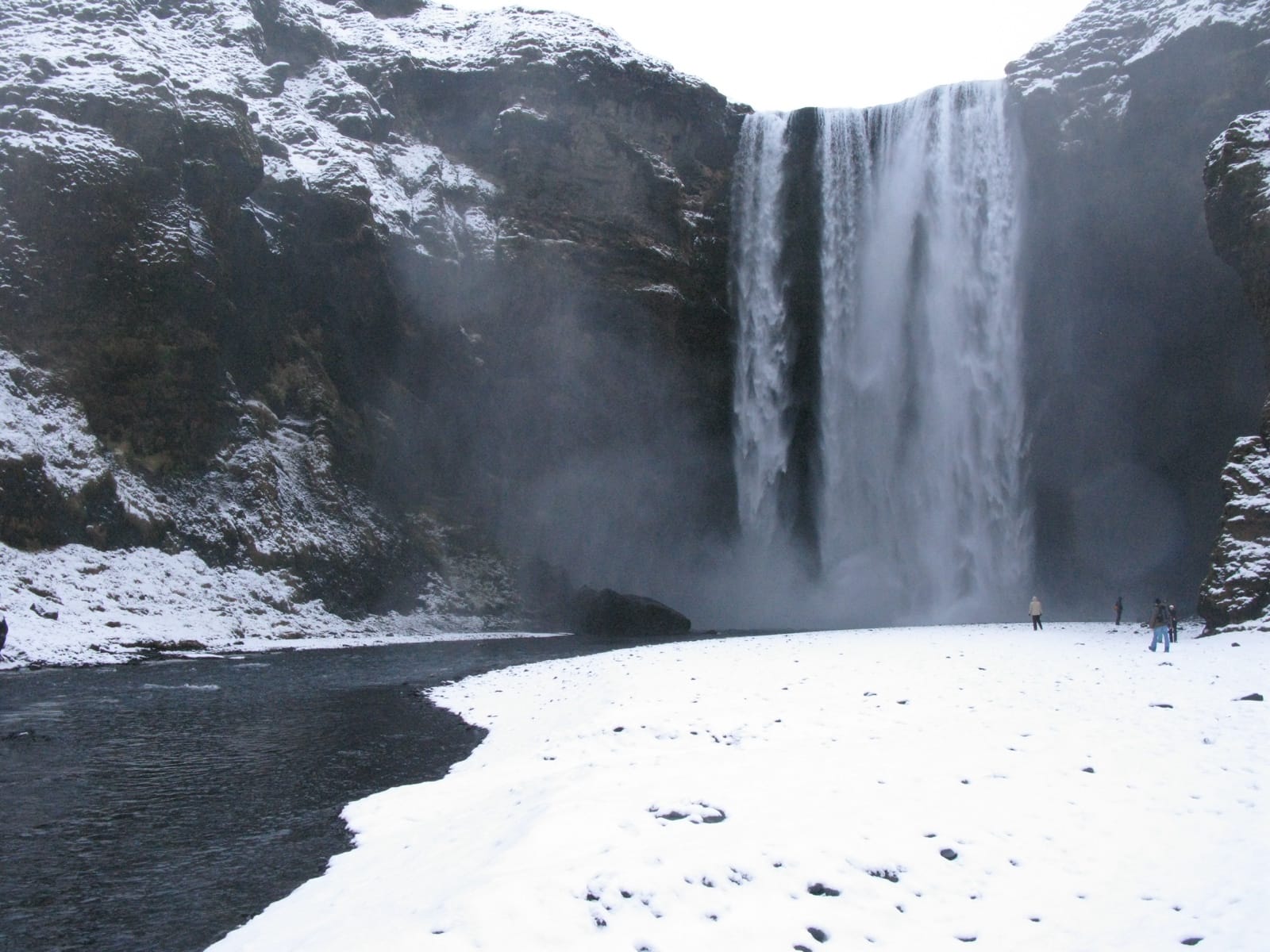
The journey home was equally epic. As we cut through the crumpled lava fields and snow plains, under an infinite sky, we passed the vast Skogar waterfalls, thundering into the surrounding silence, from high up on a black cliff top. Horses galloped across snowy fields, passing groups of phlegmatic-looking sheep, staring thoughtfully at the sky.
Tours are simple enough to arrange from Reykjavik, with almost every kind of activity, from dogsledding to extreme hiking available, according to season. Probably the most popular of these tours is the ‘Golden Circle’ tour, a daylong digest of some of the country’s greatest hits. You get to see Þingvellir, one of Iceland’s many national parks, packed with geological goodies, the stunning, whooshing waterfall Gullfoss, and a couple of dramatic water geysers, Geysir and Strokkur belching great bursts of water skywards.
Icelanders, perhaps understandably, love their hot pots, steam baths, thermal springs and mineral-rich waters. And the Blue Lagoon, in the south, near the airport, is the daddy of them all, a man-made lagoon, near a power station. While the prospect of floating about in a lagoon of milky, warm, mineral-rich water had never really appealed to me previously, the experience was truly memorable. I lay back in the sulphurous steam, and watched as the sun rose over the craggy horizon, my skin glowing with uncommon vigour as the combined force to the crisp air, creamy water and stunning scenery did its work. We were handed some special gunk to wash off with in the shower. Why? “So you don’t stink the plane out on the way home,” I was told by a friendly attendant. “That should not be your last memory of Iceland. How did you like it?”
How to get there:
Iceland Express flies from European cities (www.icelandexpress.com)
Icelandair flies internationally (www.icelandair.com)
Staying at the Loftleidir Hotel www.loftleidirhotelreykjavik.com