I love a bit of theatre, which is why I also love the show that’s every bit the part of driving a Lamborghini. Staged to within an inch of its life, it’s a sensational experience.
Ever tried reversing a Countach? With no back window your only hope is to raise the scissor door and sit halfway out, perched on the sill, with your feet barely reaching the pedals, awkwardly peering over your right shoulder. It’s like a peacock fanning her feathers to the assembled crowd. And there always is one, if not for those gorgeous looks there’s the sound of that barking V12 which will do it.
Now, you can’t tell me that in the 16 years the Countach was in production, Lamborghini could not have found an easier way for the driver to back it up, but foibles are not a detriment to Lamborghini. They’re a charm. I think it’s all down to priorities. You see, I’d often imagine there being a sign in Sant'Agata that said: ‘Make it sexier than a Playboy model, faster than Maranello’s model, louder than the Air Force’s model and sod the rest’.
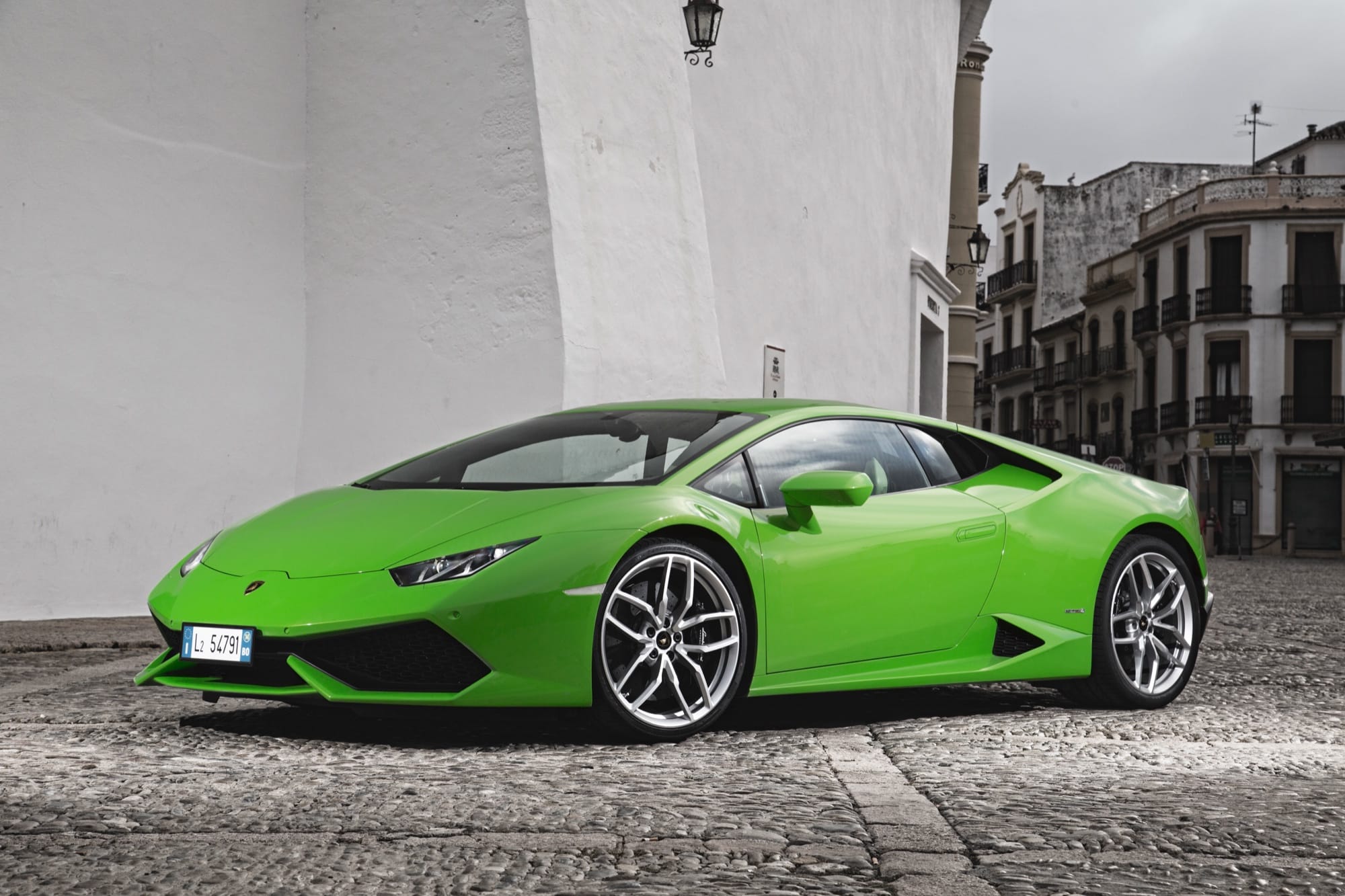
Sure, it’s new times and a new generation of Lamborghini but it’s still a special experience to be handed the keys to a Raging Bull. So it’s with utmost respect and a healthy dose of trepidation that I approach the all-new Huracàn sitting in the underground car park.
This is an all new car to replace the Gallardo, a model that served commendably for a full decade from 2003 to 2013 and although the Huracàn doesn’t have the scissor doors of the Countach – those are reserved for Sant'Agata’s top model, the Aventador – there are still butterflies in my stomach as I finger the key and thumb the unlock button.
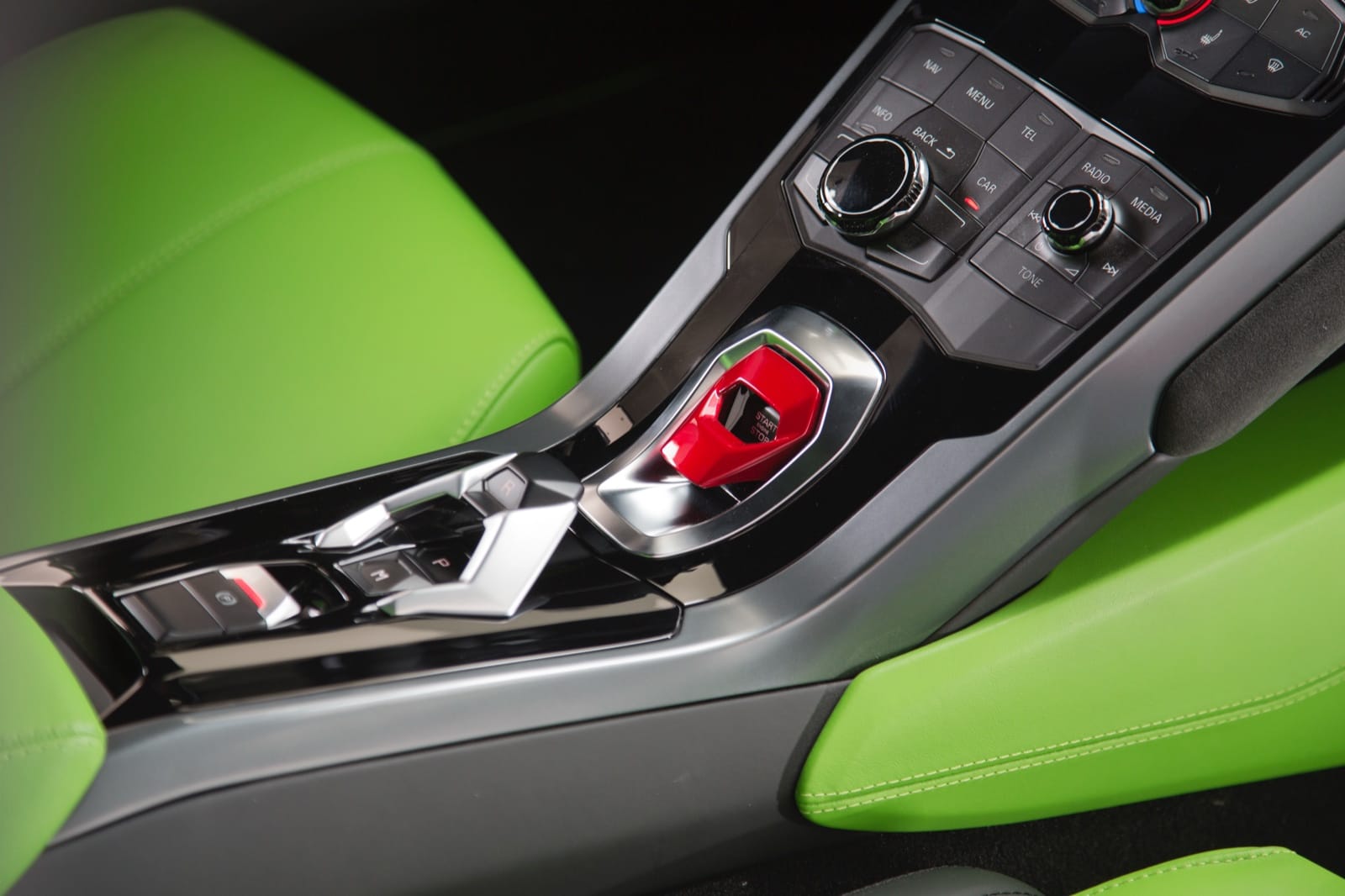
With a flash of the indicators, the flush-mounted door handle pops out like a Swiss army knife inviting me to open up and climb in. Once I do so, I feel as though I’m in a fighter jet cockpit and this is quite deliberate. For you don’t just turn a key to start the Huracàn, that would be far too mundane, instead there’s a bright red lever in the centre console that you flick up to ‘arm’ the car and reveal the start control. With your foot on the brake, you push the button, there are a few computer-controlled whirs on the starter motor and like a clap of thunder, ten finely honed, precision-built, alloy cylinders bang into life just inches behind your head before settling back down to a low base burble. I challenge anyone to not get a spike of chill down their spine when this happens. If you don’t, you are not alive. Lower the red lever back into position over the starter button and you’re good to go.
Saying that you simply drive a Lamborghini is selling both yourself and the car short, because you don’t just drive a Lambo, you need to master it in the same way a rider tames his horse. And not in a bad way. The days of fickle, badly tempered supercars are long gone. Now you merely learn to emrge with the car so that eventually it becomes an extension of your body. I can find no negatives here. The feel through the pedals runs through the balls of your feet making a direct connection between your toes, the throttle linkage and ceramic brake discs while the steering is perfectly weighted to communicate every nuance of the road back to your fingertips.
Out on the open road, it fits like an old pair of jeans and that trepidation I had initially felt, disappears, as we become solid friends and aim for the hills.
True to tradition, there are no turbos on this engine, so power is linear all the way to its whopping 8,500rpm redline. Its 5.2-litre, V10 engine delivers 610bhp and 560Nm of torque and yet weighs just 1,422kg. With so much power wrapped in a lithe body, it’s no wonder it can get you to 100km/h in 3.2 seconds and on to 200km/h in less time it took you to read this sentence. Top speed is said to be 325km/h and I have no reason to doubt it after a few blasts on the open road.
While it’s completely new, there’s a lot of familiarity with the out-going Gallardo, especially in its dimensions and V10 power. However one big change is the Huracàn now has a seven-speed, dual clutch gearbox for smoother changes and three driving modes, namely Strada, Sport and Corse.
For the most part I stay in Sport, as it offers a nicer rasp to the exhaust and more aggressive gear changes, however should the fun wear off and you want to just get to where you’re going, Strada turns it into a sedate cruiser which also invokes the auto stop-start fuel-saving function, killing the engine during any standstill. The last mode, Corsa, is best left for track days so you can explore its limits without worrying about the dangers of where they might lie.
It’s clear that Italian supercars have come a long way and nowhere was this better illustrated than when I had to return the Huracàn in afternoon rush hour traffic. In days gone by, I would have been a bundle of nerves checking gauges and slipping a big, heavy clutch to get it moving at a snail’s pace. But in this case, the Huracàn was a dream and it seems almost impossible that it carries the same badge as those grumpy Italian stallions of years gone by.
Pulling back into that underground car park, I realise it’s so low that I can slip cheekily under the boom gate like a naughty teen at a rock concert. I can’t help but giggle and thank Lamborghini for keeping the fun alive. Theatre or rock concert, time spent driving the Huracàn is one heck of a show.
WHAT Lamborghini Huracàn
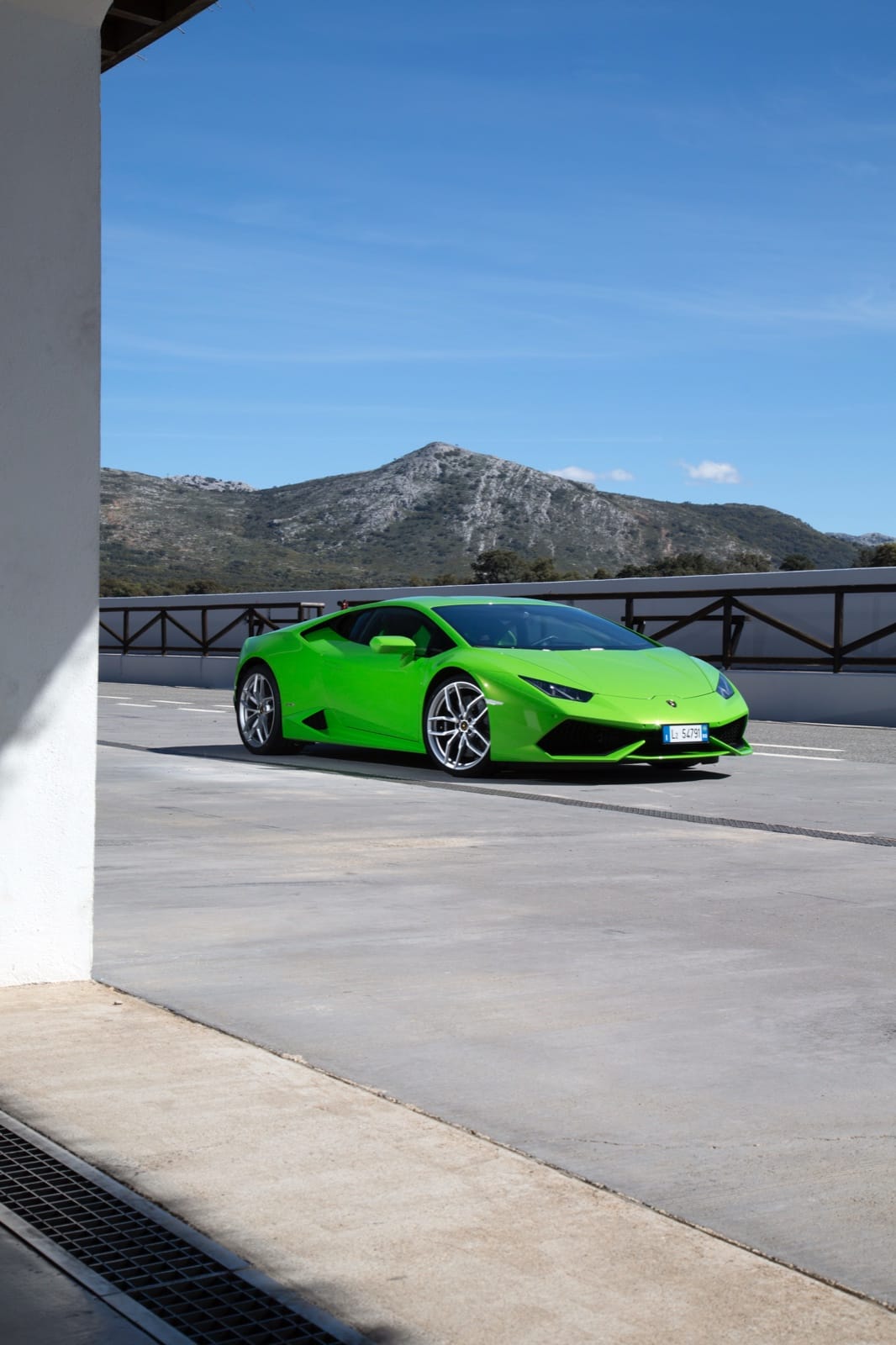
PRICE 255,500 USD
STATS All-wheel drive 5.2-litre V10 with 610bhp and 560Nm of torque
WHY It may not sprint as fast as a 458 but over an entire lap it’ll win every time. Plus it’s got a silky gearbox and excellent manners. Could well be the first Lambo daily driver.