There is something very organic about smoking a cigar: the way the rolled tobacco leaves unravel as they burn, the feel of bristly layers between the fingers, the manner in which taste and scent evolve the closer you reach the end. It is a sensual, fleeting affair. "Every cigar lover has their own ritual," Stephane Nazzal tells me over drinks at a rooftop bar in Geneva. "I once met a man who has smoked five or six cigars a day for two decades and he still prefers to bite the tip off with his teeth, spit it out, then light it with the kind of torch you'd use for a creme brulee."
Nazzal is one half of Imperiali, the company he founded in 2013 with his business partner David Pasciuto. The pair met at a Geneva family office that assembled structured investments for wealthy clients and occasionally played concierge, sourcing gifts, cars and planes. The idea for Imperiali began with one such errand. "I took a client to a Davidoff store and asked for the most prestigious cigar they had," Pasciuto recalls, "but he was looking for a cigar not many people can afford." Even the costliest box failed to impress. "In the world of watches, or cars, you have brands like Pagani with products that cost two million dollars," Nazzal adds. "It's not the same with cigars."
That encounter eventually prompted the two to strike out on their own, with an initial ambition to create the ultimate cigar. Introduced to the Rubaina cigar-making family, who had carried their seeds out of Cuba during the revolution and replanted them in the Jalapa and Jamastran valleys of northern Nicaragua and southern Honduras, they developed Grand Cru cigars and refined the blend through blind tastings with Geneva's private cigar clubs. "Our intention was to create a cigar that suits the largest palate, wasn't too greasy and draws smoothly," Nazzal says.
The cigar was only the beginning. The pair then envisioned the Emperador, a chest to house them that required 17,000 hours of work by a hundred craftsmen, 27 different crafts and 33 microprocessors to produce its 3,500-plus components, of which 2,765 were manufactured from scratch. "We wanted to surpass the limits of what is technically achievable," says Pasciuto. To do it, they recruited some of Switzerland's best engineers; on their team's conference table in Lausanne is engraved a Cocteau line: "Je ne savais pas que c'est impossible, alors je l'ai fait." I didn't know it was impossible, so I did it.
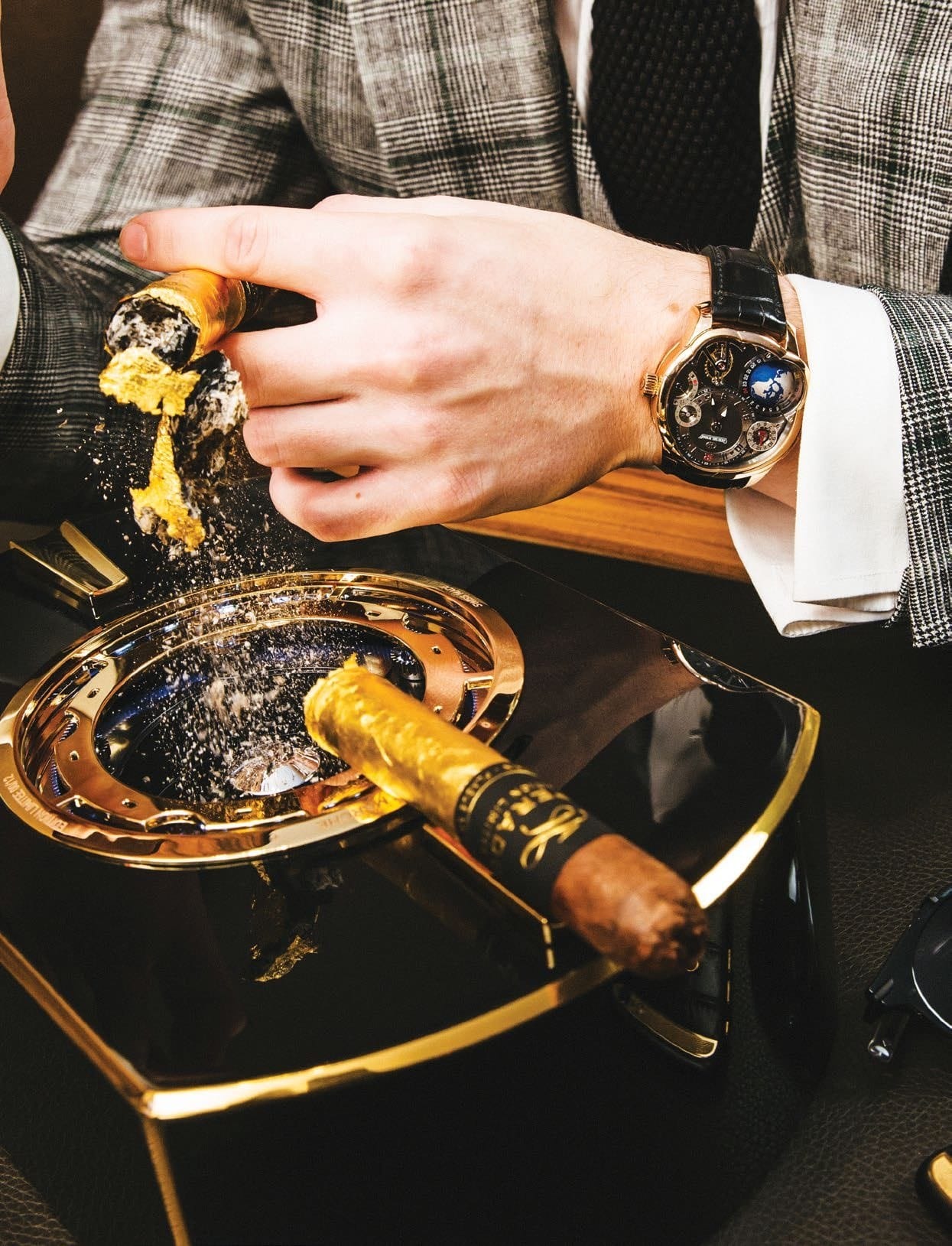
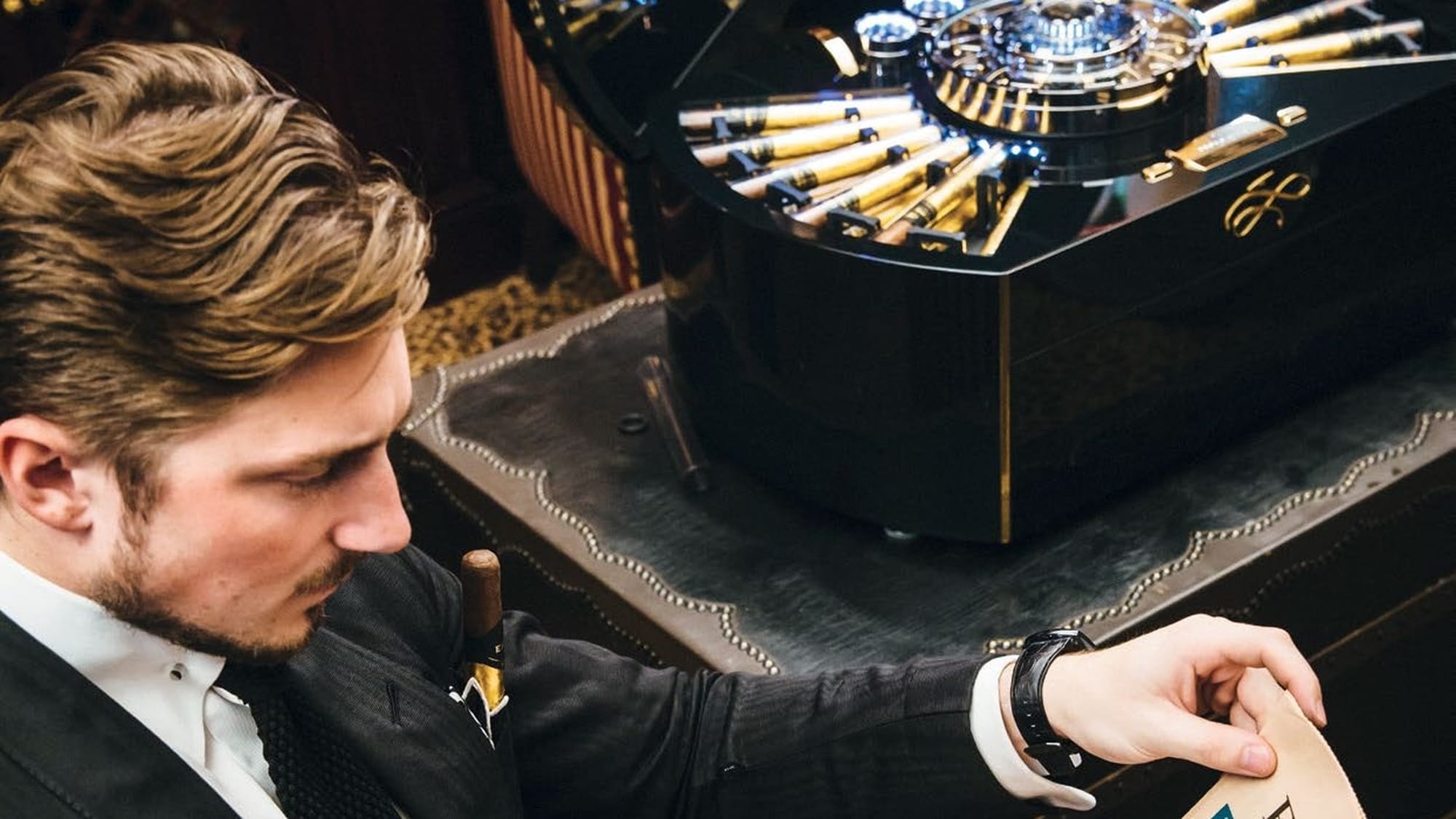
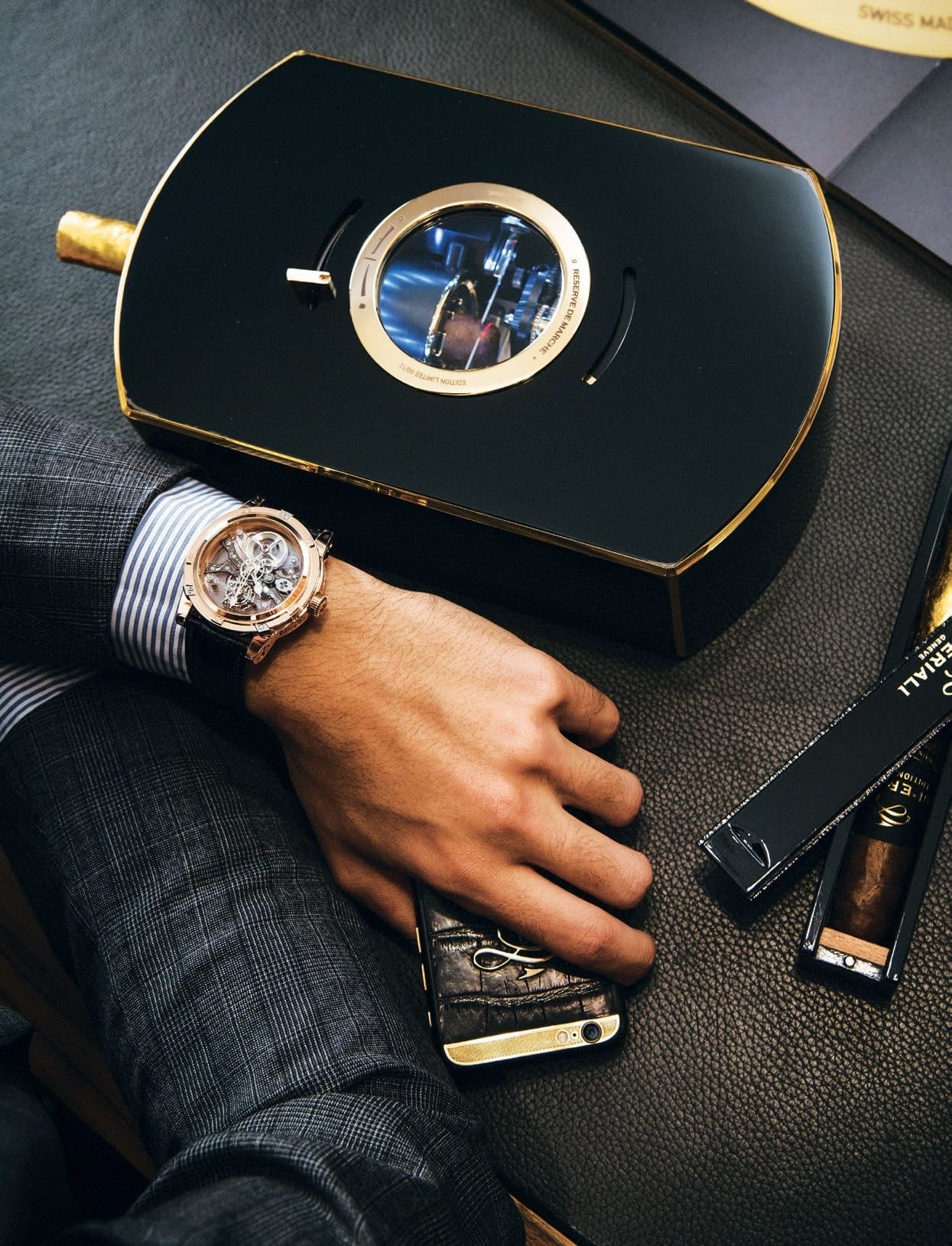
The result could be mistaken for a luxury safe, but it is far more than a humidor. A gleaming chest weighing almost 40 kilogrammes, it carries an LCD display that wakes the moment you approach a touch-sensitive, gold-plated logo, arranged around a 323-part custom tourbillon. Three indicators regulate humidity, internal temperature, an 80-hour power reserve and the number of cigars remaining. Enter a programmable code and the lid opens to reveal cigars sheathed in gold leaf, set radially in glass tubes.
The tourbillon, remarkably, winds itself every 24 hours through an electronic system rather than the wrist, a feat watch workshops initially called crazy. "We are dreamers, but I don't think we'd be here today unless we had a bit of crazy," Nazzal says. Imperiali claims the world's first self-regulating humidity system, measuring each compartment once a minute and using thermoelectric cells so that preservation humidity is generated by air rather than water, in a closed circuit needing no human intervention. To insulate the machinery the company even improved on an aerogel composite developed by NASA for spacesuits and Mars rovers.
Three hidden accessories complete the ritual: a triple-flame lighter that holds and lights the cigar, an ashtray with sensors that opens only on command, and a laser-guided cutter offering a guillotine cut or a punch in three sizes. When I wonder aloud whether aficionados really want the work done for them, Nazzal urges me to try one, and I watch the hand-applied gold leaves burn theatrically like gold dust. The smoke is less strong coffee than smooth chocolate, velvet and earthy. "By creating a product that's fully automated, we are removing the margin of human error," he asserts. What you lose in the tactile element, you gain in precision, and the realisation, mid-cigar, that you are smoking from the most expensive box on the planet.