Ushering me in to his modernist Beirut loft apartment, fashion designer Mohammed Al Mazen deftly persuades me to accept a piece of cake. Fifteen minutes later, lost in a discussion of conceptualisation to materialisation, he reminds me to taste the cake, which has lain untouched and rather desolate on a round, high coffee table beside the sofa we are seated on. Between blooming white orchids and a shining black skull sculpture, the frothy white cake completes the impeccable and perfectly balanced world of monochrome in which Al Mazen lives.
The emerging designer, whose family hails from Saudi Arabia, hasn’t always found himself in such modish surroundings. While he’s always loved shopping and even making clothes, he was once an MBA-wielding banker in London who would suppress this urge while suffering the daily grind.
“I wasn’t happy at all”, he laughs, adding that at age 29, he decided it was time to make it happen. “People would ask me where I got certain items that I’d made myself. This was a great source of encouragement for me. At first I was thinking of opening a concept store but then I thought to myself, I want to do something more, I have to give more.”
After studying at S Mode, he began to make one-offs and special pieces for friends and gradually, for a growing client base. Now he’s moving into ready-to-wear, launching his particular vision of male attire with a capsule collection for Trunk, a men’s concept store in Beirut’s Saifi Village.
For this, Al Mazen has crafted an assortment of twelve pieces. “These are the key looks for the M.Maze man. Each piece is studied and modelled to express various characters and different takes on manhood. For example, you’ll find the rock look, the proper look, something easy-going, or something more sophisticated, they’re all there.”
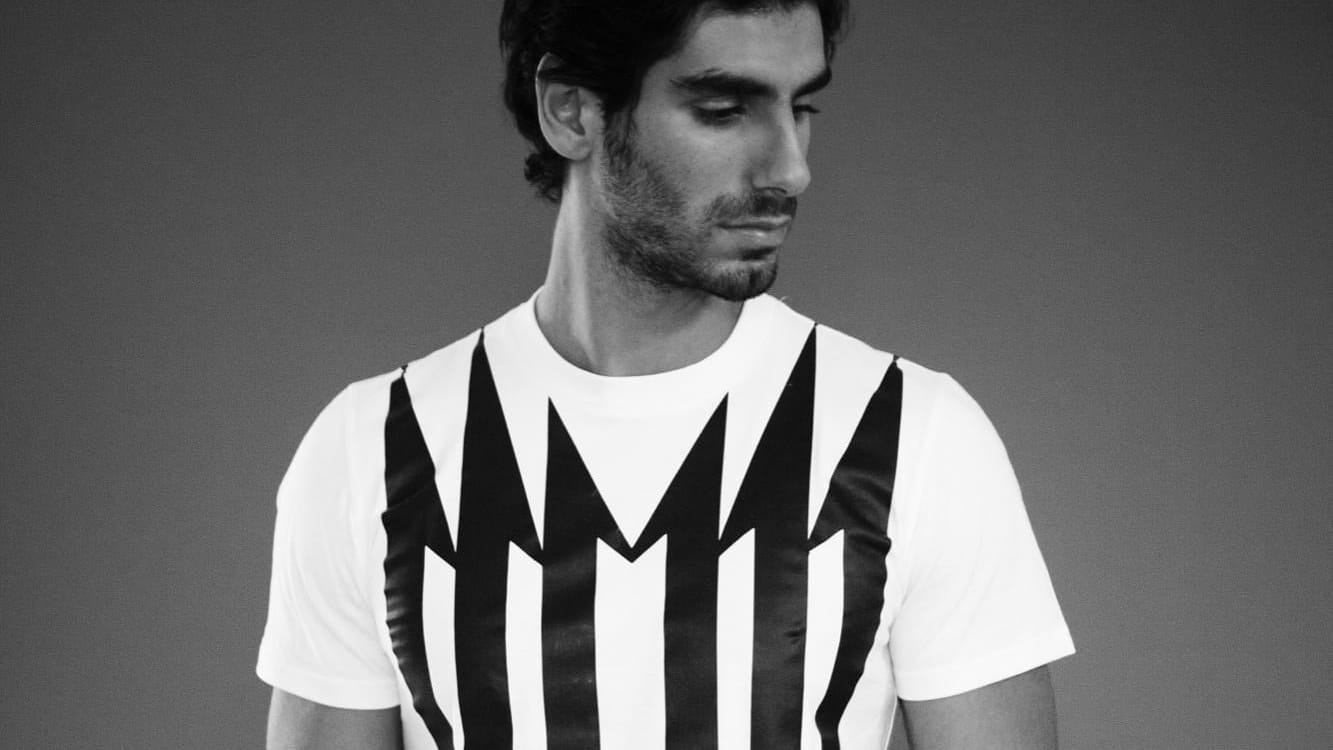
By designing for every aspect of a client’s life, he avoids narrowly concentrating on any one archetype. The diversity manifests itself through a range of looks from the high-octane, like a panelled bomber or a sculpted jacket reminiscent of antique battle dress, to the big easy, such as the white t-shirts adorned with black imprints of the M.Maze logo. Standout pieces include impeccably draped, leather-waisted harem pants and a collarless bolero cut high in the back to drape down dramatically over the chest, evoking the shape of a traditional waistcoat, which is emphasised by lines of vertical stitch work.
In achieving such forms, Al Mazen taps into the techniques he developed while structuring bespoke pieces for his couture clients. Some of these he learned while studying at ESMOD, the French fashion college with a branch in Downtown Beirut, where star couturier Elie Saab holds the position of art director. In keeping with the practice of Haute Couture, he devotes time to first draping his fabrics and then working directly on a mannequin with two of his tailors.
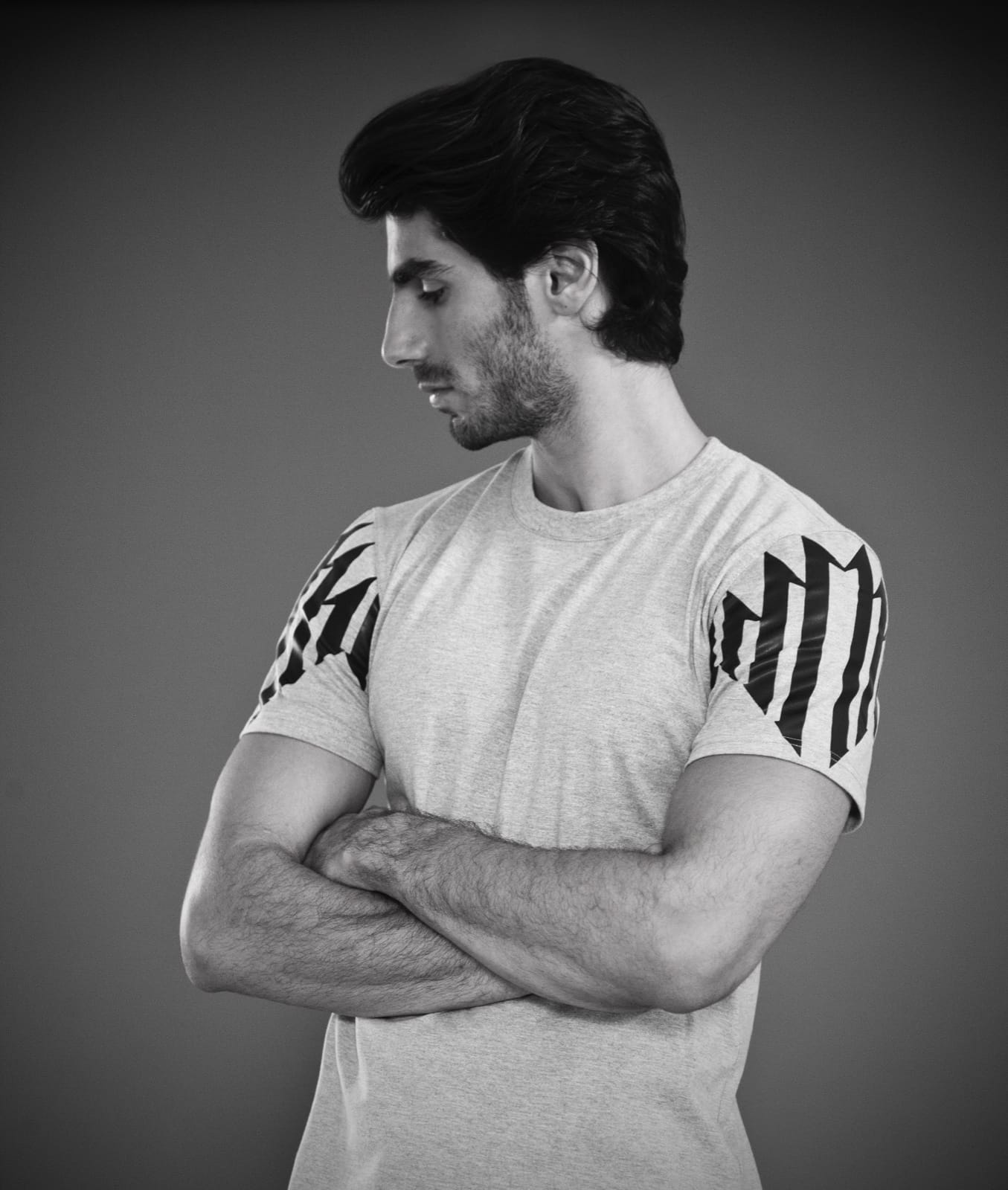
Black is a principal colour in his work, although he also introduces white here to lift the collection and bring a summery counterpoint to an otherwise dark aesthetic. Articulating the looks as I munch into the cake, he explains that he was inspired by a hand-held fan, describing how the symmetry and straight lines mimic the geometry of his unusual object-muse.
Architectural shapes are an M.Maze trademark, lending Al Mazen’s pieces striking, unusual forms. Although he loves fashion, it is style that he prioritises and his aim is to achieve timelessness in his work. “I’m not afraid to look back to the previous collections of famous fashion designers, like Karl Lagerfeld, Vivienne Westwood, Alexander McQueen, John Galliano and I get inspired by everything, by books, by movies, by everything.”
While goth-lux overtones are quite explicit, whether it’s the predominance of black, the mix of leather and metal detailing or even the dark tone of the promotional photography, certain details – like the Tartan jacket lining – integrate punk references too. This makes the overall tone a globalised one and the appeal international. The sleek, rock’n’roll look is reminiscent of everyday men’s fashion in Los Angeles, where Al Mazen recently holidayed. Perhaps the way his brand picks up on that city’s keynotes was one reason why he’s been asked by one of LA’s most talked-about boutiques, Akai Ito, to send samples to show celebrity clients.
Mainly moving between Saudi Arabia and Beirut, the designer travels often. Paris and London are particular favourites. In Paris, he tells me that he visits fashion shows or museums and prefers the cooler concept stores to big brand boutiques – he particularly loves going to Colette and L’Eclaireur for shopping and inspiration. His perfectly styled apartment is laden with the fruits of his international treasure hunts, with uplifting artworks and striking design pieces arranged into artistic mise-en-scenes that sit beautifully against architectural details like glass walls and an exposed concrete staircase. The striking backdrop is host to many guests, as these days the designer says he prefers to socialise at home.
By the time I’m done with the cake – the slice was huge, and the fork was miniature – Al Mazen is already sharing his future plans. He dreams of one day having his own store, in order to totally represent the brand but in the meantime, he is happy to take things step by step and gradually build a signature style.
In appearance as in fashion, Al Mazen’s tough rebel look – think big, black boots and shaven head and fitted clothing in black and white – is just a sculpted shell, beneath which can be found a touchingly sweet and gentle soul.