You know that feeling before lift-off, those few, thrilling seconds when you feel as if you are rising faster than your body and for a millisecond perhaps, as if you don’t even have a body? Now imagine feeling like that for long enough to actually float. It’s the kind of experience you’d expect to find in orbit, on the Moon and to a lesser degree on Mars (though there, at a third of earth’s gravity, you’d still feel a bit of a tug). At the very least, you’d expect to have to train as an astronaut to get there.
But what about the rest of us, who’d love to experience freefall but don’t have the time (or the desire), to enter the military and attempt to get onto the astronaut track? Well, these days, weightlessness can be experienced on earth - or, to be more precise, at between 7,500 and 10,500 metres above it – in exhilarating 30 second bursts.
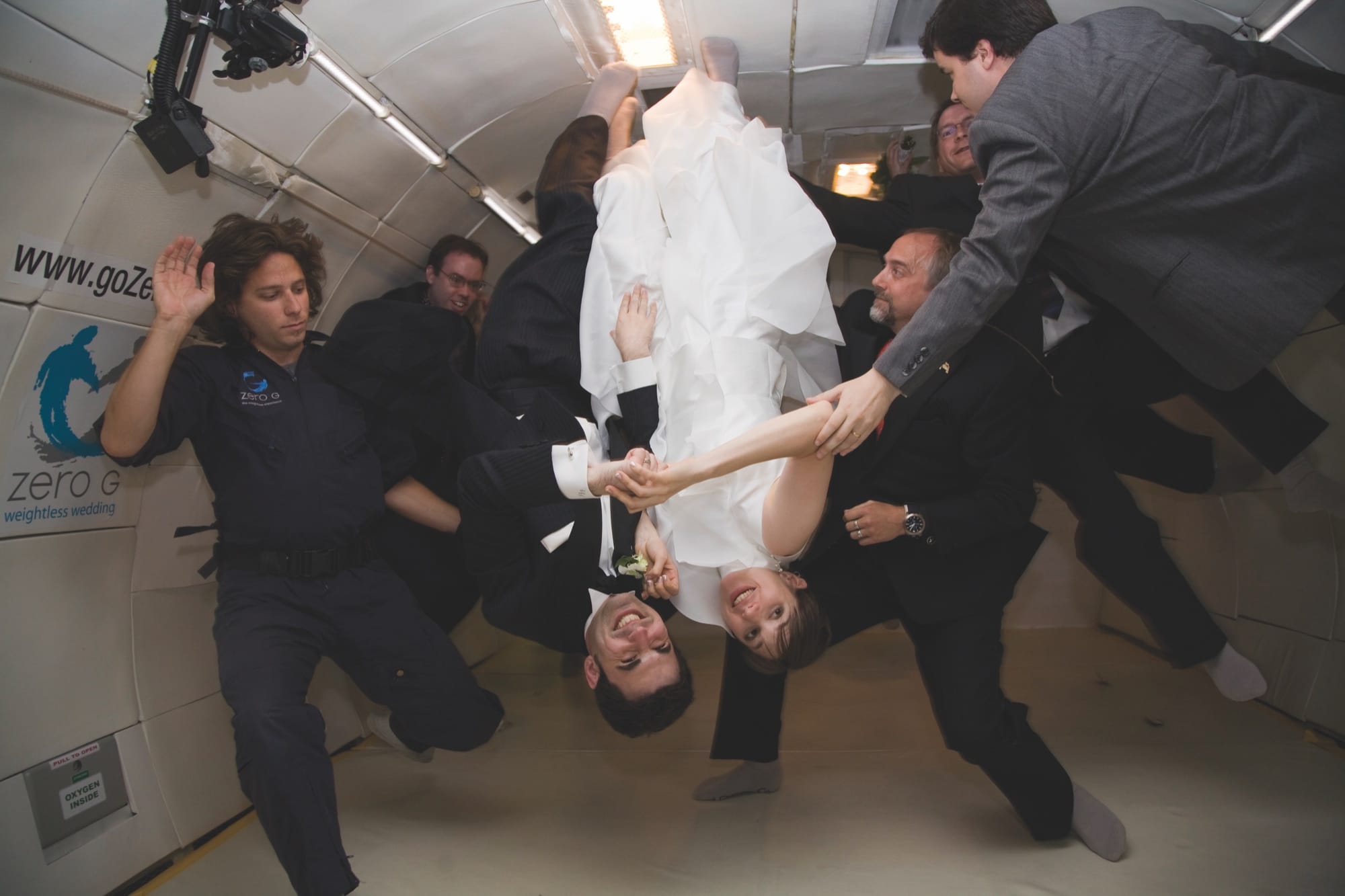
Enter Zero-G, the US-based space adventures outfit, which has been offering commercial reduced gravity flights since 2004. Their G-Force One is a Boeing 727-200F modified to be able to fly a parabolic path (essentially, a controlled nose-dive) which results in brief bursts of zero-gravity experience for its passengers and which has, in the words of the company’s co-founder and former Space Shuttle payload specialist, Dr. Byron Lichtenberg made “space environments accessible to everyone and anyone”.
Now, over 230 flights later, Lichtenberg and his partners Dr. Peter Diamandis and NASA engineer Ray Cronis have demonstrated that just about anyone (well, as long as they have the money, are over 8 and in good health) can experience what it feels like to walk on Mars, the Moon and float in zero gravity. All it takes is two hours of your time and 4,950 USD (plus 5 % federal tax), which is about as much as it costs to fly Business from the Gulf to New York. Pricey, but not unaffordable.
Each flight is made up of a succession of 12 to 15 parabolic arcs - 1 designed to simulate Martian gravity, 2 to simulate Lunar and 12 to attain complete zero-gee – which add up to a total of 7.5 minutes of weightlessness. “Each parabola provides up to 30 seconds of weightlessness, “Lichtenberg explains, “and 30 seconds of 1.8 Gs.”
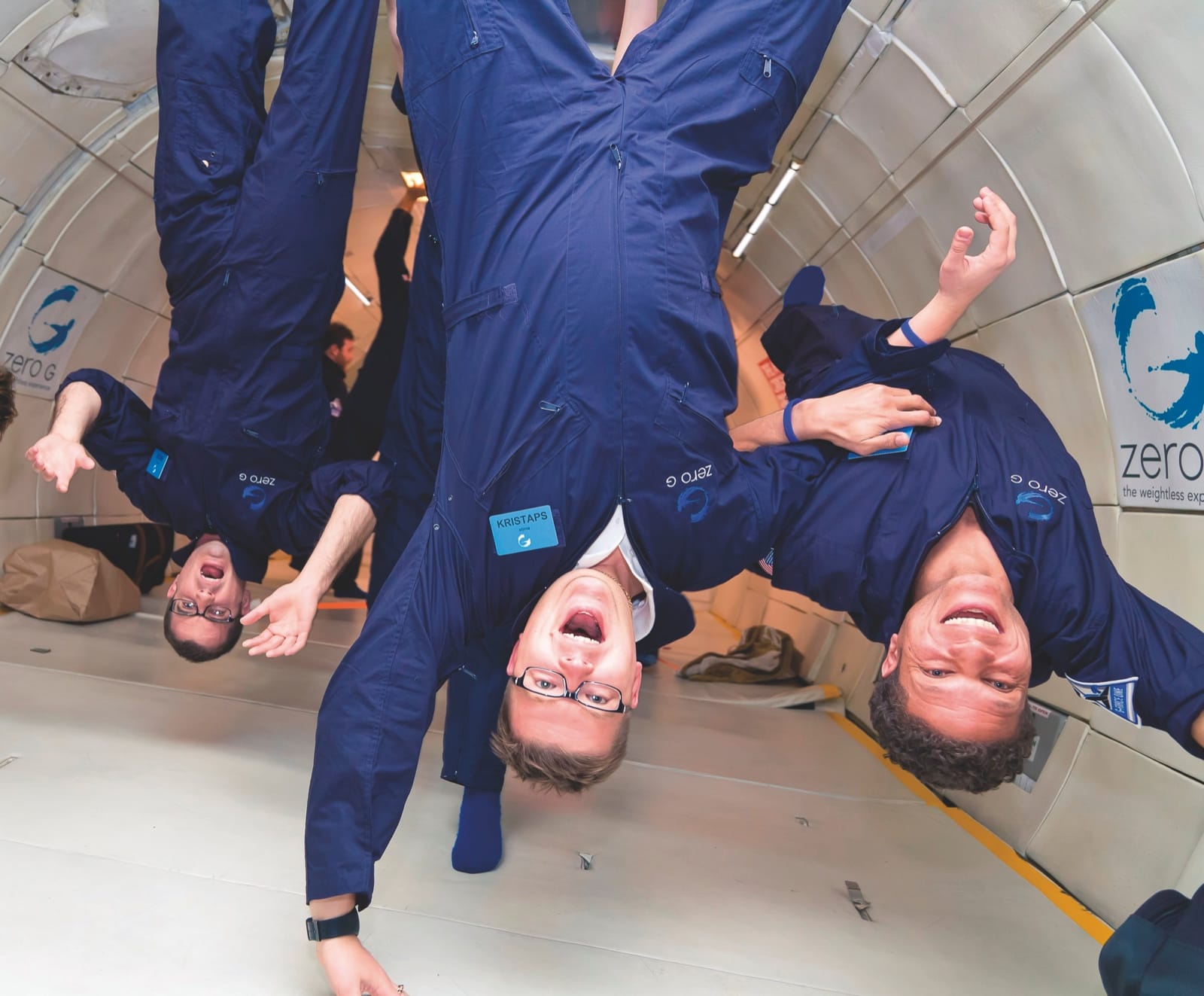
After climbing to an altitude of 7,315 metres, the pilot pulls up to 10,363 metres, gradually raising the angle of the nose to 45 degrees as he goes. At this point, passengers will begin to feel heavier as hypergravity kicks in. If you’re beginning to imagine Apollo 13-style gurning, don’t worry, the increase will temporarily make you feel 80% heavier but won’t stretch your face. At the top of the curve, the pilot nosedives, again at 45 degrees and suddenly, all the gravity vanishes. Everything in the plane becomes weightless for the next 20 – 30 seconds, allowing you and your 35 specially-suited companions to float, flip and roar around the plane. Absorbent padding on the floors and walls will cushion your fall as gravity kicks back in and of course, there are no seats to get in the way.
Nor need you worry about photos as there are six high-definition video cameras mounted to tape the whole experience, leaving you free to tumble about without having to worry about capturing your perfect Facebook moment.
“The first and most amazing was the flight where we took Dr. Stephen Hawking onboard,” Lichtenberg says, recounting the experience he still cherishes today. “You could see the excitement in his eyes as he was able to leave his wheelchair and float freely.”
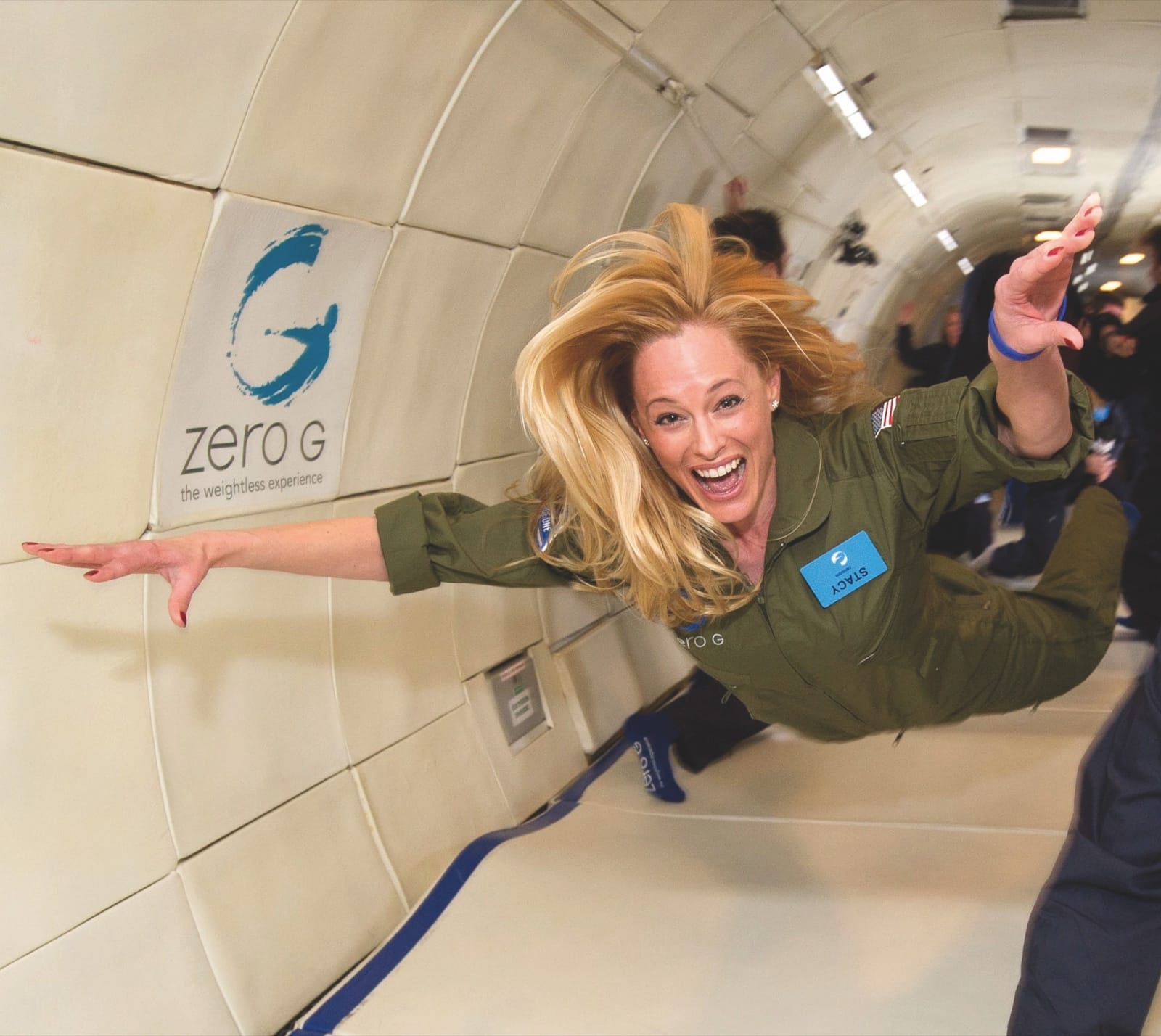
Our advice? Whatever inspires you to go on this trip, remember that for your first trip in zero gravity, it’s probably best to do so on an empty stomach. Unless, that is, you want to end up wearing what you ate for breakfast.