The old-world ambiance – leather armchairs and luscious tapestries – of the private member’s lounge at Paris’ Musée de la Chasse is an unusual environment to discuss future global trends and big ideas. But then Lidewij Edelkoort is anything but traditional.
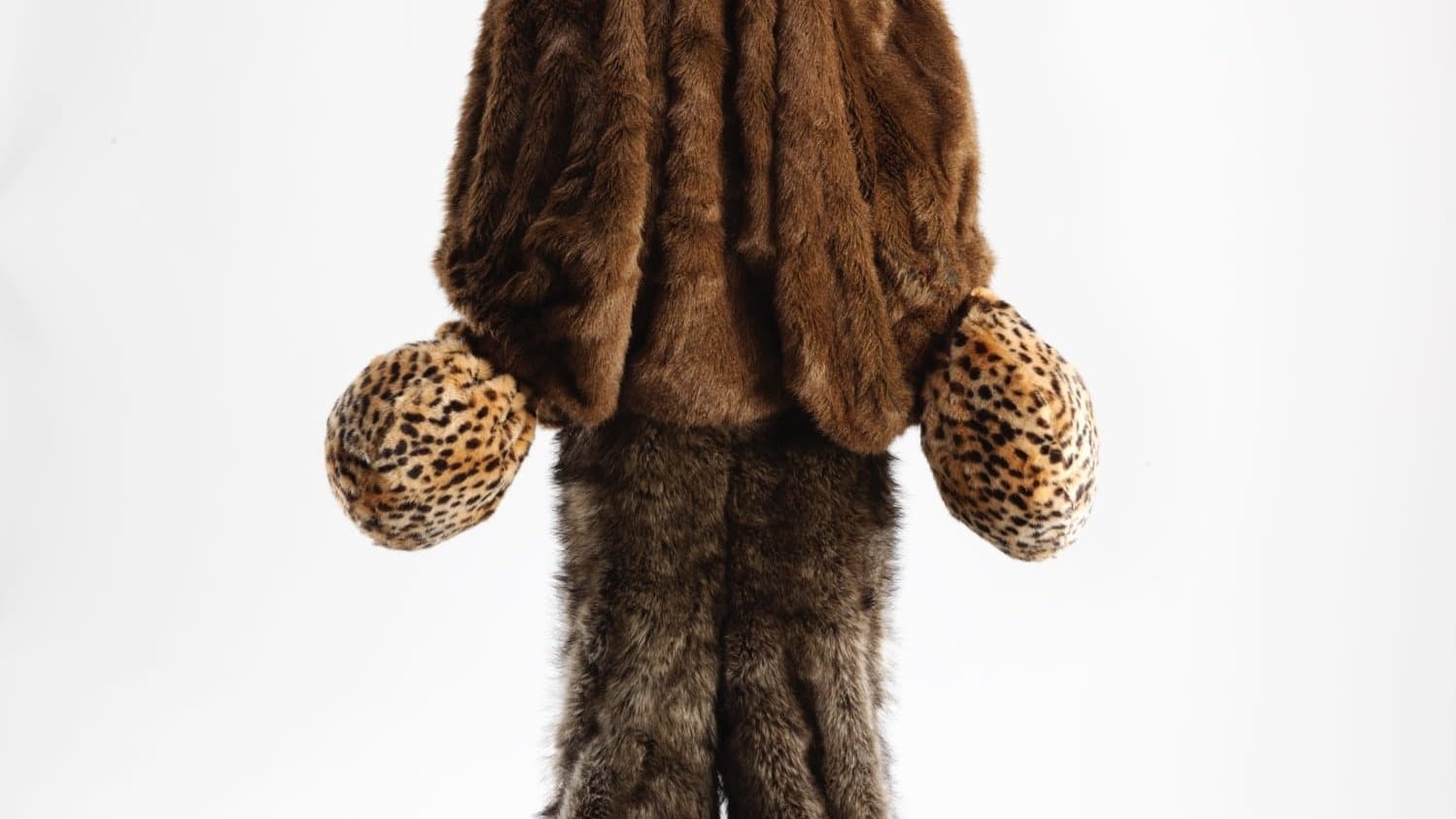
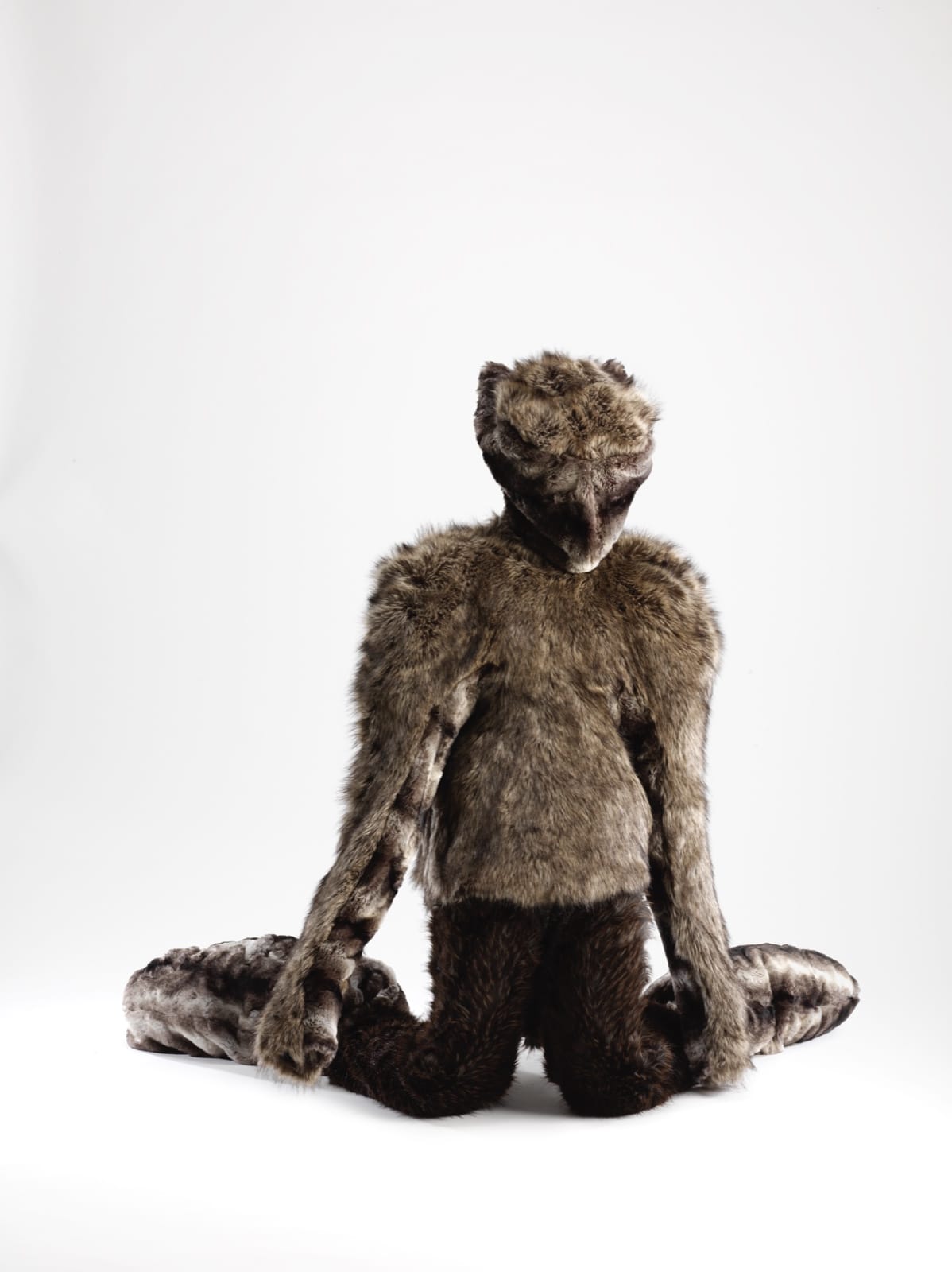
Take fake fur. At an exhibition entitled ‘Monstre(s)’ that was held this September during Paris’ Design Week, a technologically advanced and exceptionally soft type of faux fur was presented by its Japanese inventor. As curator of M°BA, the Fashion Biennale that took place earlier this year in Arnhem, Edelkoort commissioned artists to create ‘manimals’ (man/animals) out of this fur, which were then shown to over 60,000 children at the Royal Burgers’ Zoo before finally making their way to Paris. Why?
“We have an enormous need for ‘animalisation’ in our lives, for instinct to come back,” she explains. “I believe that, in a strange way, we are all dying to become animals and that’s why domestic animals are a big business.”
It is safe to say Lidewij Edelkoort engages only in projects that reflect manifestations of her forecasted trends. But she is no trend watcher. Nor is she some mastermind behind the curtains, manipulating the prints we will wear in a few seasons’ time - though she does have a significant influence on designers with her industry trend books. Rather, she has built a mini-empire out of intuition, an ability to think laterally, holistically and analytically. She offers insight into wider cultural movements and how they will be reflected in material choices. Consequently, she often tells companies what they don’t want to hear, shocking audiences with her frank predictions and originality of thought.
“The problem, of course, with my job is that when everything is going well and I say the wind is changing, people don’t want to hear bad news. Then when we are in a bad situation and I say ‘hey, I see hope on the horizon’, people have difficulty believing me,” she says. “I have a very long record of seeing things precisely right; I benefit from having been proven right. It’s nothing to do with me; I’m just the messenger of these trends. Intuition delivers universal messages, what you call the ‘zeitgeist’. I’m just able to pick up on them and understand them earlier, bring them into perspective, give them colour, shape and image, to explain what I see going on.”
Time and space are rather fluid for Edelkoort, though the demands of clients do help structure her intuitions. “From fibre to yarn, textile to embellishments, choice to shape, cutting to sampling, ordering to catwalk and to shop, fashion is about two years in the making,” she explains. “The early players, the big yarn companies, need to have the information two and half years in advance. And,” Edelkoort continues, “that’s just fashion. Cars need six or seven years, fragrance three or four years. I once did a job requiring me to think 25 years ahead. Of course, you can’t really pretend to know whether in 2020 we will drink whisky or white wine. I don’t know. But I do know many other things.”
She explains her methodology in terms of being an “archaeologist of the future” - finding fragments already present, snippets of videos, an old lady in the street, a work of art, a chapter in a book, a pebble on the beach – all of which are stored in her ‘archive’.
“I’m not consciously doing anything. I’m just observing and observing, always,” explains Edelkoort, who has nevertheless extrapolated her process into Trend Tablet, a social media platform and trend tracker. “When the key fragment pops up in archaeology, suddenly you can imagine a village, a society. In the same way, I can imagine tomorrow with the fragments that I have already. It dawns on you, you say, ‘oh, this is what it’s all about’, There’s nothing organised about it, there’s nothing you know beforehand, it doesn’t come on tap, the insight is erratic, which makes it fantastic.”
Born in Holland in 1950, Edelkoort studied fashion design at the School of Fine Arts in Arnhem. “We acknowledged that I was not going to be a couturier, nor the best illustrator, but I always knew exactly what fashion would be, I mean to the point I was already directing my fellow students. I had something. They didn’t know what to do with me but they were clever enough to keep me.”
She went on to become trend forecaster at Holland’s leading department store, De Bijenkorf and then moved to Paris in 1975. In the 1980s, she created her dynamic network, Trend Union. From 1999 to 2008, Edelkoort served as chair of Eindhoven’s Design Academy, where she is still active today. In 2004, she was awarded the Netherlands’ Grand Seigneur award for her work in fashion and textiles and in February 2008, France’s Ministry of Culture made her a Chevalier de l’Ordre des Arts et des Lettres.
Like anyone who would meet a trend forecaster might, I ask Edelkoort what the future holds. “Since 2012, many people have been making a u-turn in their lives, searching for collaborations, looking to revive smaller companies, family companies, companies founded with friends,” she pronounces. “The individualist era is over. People don’t realise it but it’s really old fashioned to be an individualist.”
She also notes that the idea of agriculture in the city – of ruralism in urbanity - is an increasing trend. And one she predicted. “The agricultural community will become the planet’s new elite,” she wrote in an entry on Style Tablet several years ago, “dominating our essential needs and inspiring years of farmer style. Rural and urban lifestyles will merge, resulting in an inverted social landscape with a greener city and a more contemporary countryside.”
Her most recent publication, ‘Fetishism in Fashion’, delves into the seamier side of contemporary fashion. But controversy is part of her trade. Perhaps the best illustration of what it means to be before one’s time – as Edelkoort most certainly appears to be – is this anecdote from the 2010 Design Indaba Conference, held in South Africa.
Before a panel of international creative leaders, Edelkoort began talking about the redefinition of the family, which concluded radically, with a future vision of the bordello.
Whether you like it or not, Lidewij Edelkoort says what she sees. Given her track record so far, the world might be wise to keep listening.