The affinity of MB&F, or rather Maximilian Büsser & Friends, to employ outside watchmakers in its creative process is natural. After he moved from Jaeger-LeCoultre to Harry Winston in 1998, Büsser was key in the conception of the house’s Opus Series, for which each model – there is one per year - is conceived by a different designer. So he has, as the British would say, “previous”, in employing outside masters to help with his fabulous creations. But even if Büsser did not temper his own imagination with the input of others, his personal approach is radical, inventive and adventurous – and not only when it comes to watchmaking.
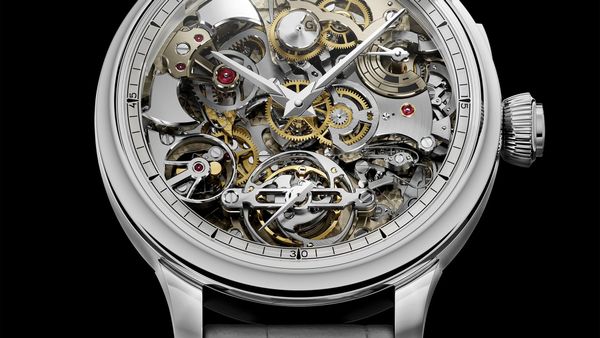
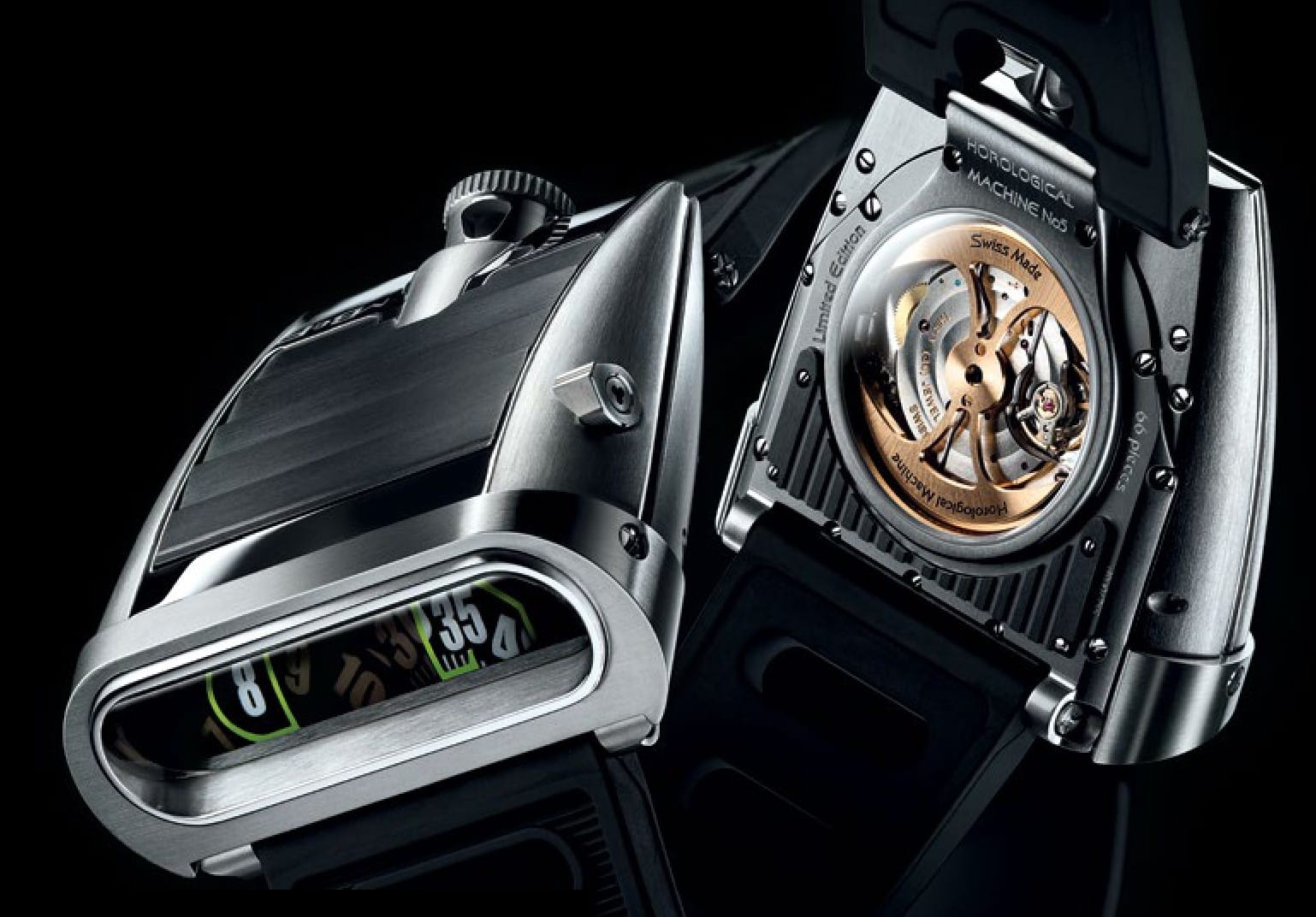
That said, MB&F is not out to reinvent complications or techniques that were perfected centuries ago. Instead, Büsser is content to present the display of time in novel ways, by taking a fresh approach to how mechanisms are housed. If anything, he’s a traditionalist at heart, which explains the existence of the Legacy Machines within the otherwise outré MB&F catalogue. This is a line which pays homage to the greatest watchmakers of the past, with creations that look nothing like the house’s signature “frog” watches like the HM No 3 or for that matter, the spacecraft propulsion unit-like HM No 4.
In under eight years, Büsser – a youthful 46 – has guided MB&F to the point where it just may be the most outrageous brand in the whole of haute horlogerie. When I asked him how he chose the individuals with whom he collaborates, the busy designer, entrepreneur and micro-engineering expert told me that was decided on a project-by-project basis but that he remains in full control, a benevolent dictator.
“I learned one thing from my mentor, the late Günter Blümlein who was managing Jaeger-LeCoultre at the time I worked there, and who recreated A Lange & Söhne. One day, I was battling with him at a product meeting, because I was the only one who had the guts to battle with him. After five or ten minutes of us each defending his side, he looked at me and he said in his strong German accent, ‘Mr. Büsser, creativity is not a democratic process.’ And that is probably one of the two or three best lessons I ever got in my life.”
MB&F is Büsser’s baby, a platform for his ideas, for his creative process. But to realise them, he says that he has to find people who can translate his “crazy ideas” into reality. “That’s where the process starts,” he explains. “I’m lucky enough, after 22 years in this industry, that I know a lot of great people.”
For the design itself, Büsser always works with Eric Giroud. “He’s one of the only people I know who can actually read my sketches and intentions and transform them into 3D designs. From there we decide, which engineers, which watchmakers are the most able to transform that design into reality.”
Initially, when he started MB&F, Büsser only worked with people he knew from previous experience - artisans, engineers, watchmakers he’d worked with at Harry Winston or Jaeger-LeCoultre. Then, over the years, that changed. “The friends of my friends became my friends,” he explains, “meaning, for example, that one supplier tells me, ‘Oh, you should try and work with this guy – he’s really amazing.’ So you meet him, you discuss things with him, get a good feeling with him and you start working together.”
Because the calibre of each outside partner is so high, they tend to contribute more to the projects than just the element for which they are selected and Büsser welcomes extra input.
“Some of these partners bring new ideas to the projects. Sometimes I have to say, ‘No, I don't like it,’ and some are really great ideas,” he continues. “That’s how we work. It starts with our idea, which we then try to make a reality. Then it will be modified by engineering or some other ideas and then on to the final product.”
Because MB&F is as much a dream factory as it is a watch manufacture, Büsser has expanded its scope beyond timepieces but the values remain the same. The recently launched Music Machine, with music box elements produced by Reuge, is a perfect example; a non-horological object that has become one of the most widely discussed of all MB&F’s creations.
Büsser, familiar with and deeply fond of Reuge’s music boxes, saw in them the potential to do something the respected Swiss manufacturer – soon to celebrate its 150th anniversary – might never have considered. While it remains the world’s most revered maker of music boxes, Büsser felt that their products were in danger of becoming a little bit of an anachronism. “I adore their craftsmanship,” he adds, “I adore the idea and the people there are really amazing but that was not the music box I wanted to have in my sitting room.
“I know it’s very self-centred but at the end of the day, that’s what it is. So I showed them the design we’d done and asked if they’d agree to craft a music box like that. They fell off their chairs initially but they made the object virtually exactly as I’d designed it. Amazing!”
MB&F also produces or represents non-horological, outré creations under their M.A.D. Gallery. These are items as far removed from watches as penny-farthing bicycles and guitars. The gallery features in the world of MB&F as what Büsser calls his “playhouse.”
“It includes everything I would love to own but at the end of the day, there’s one central theme to everything that we present, that mechanics can be art. M.A.D. stands for “Mechanical Art Devices”. So the creations have to be mechanical, created with artistry. It can be something which is complete art, like the motorcycles produced by Chicara Nagata.”
If that sounds odd – a motorcycle as a work of art – consider this. Nagata has only produced five motorcycles in the last 15 years and when he talks about him, the awe in Büsser’s voice is unmistakeable. “He spends 7,000 hours on each piece and he’s never sold one. He makes ends meet by doing graphic design so he can eat and pay his rent. He doesn’t care about money. He told me, ‘My wife has left me, I have no more friends but I can’t stop doing what I do.’ That’s incredibly powerful.”
Büsser’s appreciation for Nagata reflects his desire not just to work with people beyond the core personnel at MB&F but also to make available highly desirable objects beyond the core competence of MB&F per se, which is most certainly its wristwatches.
“We only present the products of people we admire. It’s not about the product itself, it’s about the person behind it. By showcasing creativity in other domains, motorcycles, lamps, kinetic art that follow a similar life experience, the collection becomes something coherent.” It also, we might add, becomes audacious, entertaining and - in the best possible way - really quite mad.