At first stitch
Armed with unquestionable talent and unwavering determination, Zuhair Murad launched his eponymous fashion label twelve years ago. Overcoming many obstacles to finally achieve his dream, Bespoke celebrates this talented designer, victor of the Bespoke 2008 Ultimate Fashionism award.
Zuhair Murad’s prominent designing headquarters in Beirut present somewhat of a paradox. As you approach the building from one of the congested main arteries of the city you observe grand oversized windows boldly branded with the Zuhair Murad logos. Yet the interior of this creative nerve centre has been left as basic as possible apparently in order to allow for creative energies to flow unbounded by diversion. Shades of red and black compliment Murad’s minimalist office decor. Everything here is positioned with intent. From an overgrown bonsai nestling itself in the corner of his workplace; to the fabrics lining the tables before the windows, a plethora of coloured fabrics overlaying one another, creating a material rainbow further vitalised by beading embellishments. To the side of this jubilee of colours, I notice well sharpened colouring pencils and multihued markers, each sorted, stacked, and aligned within matching cups. Facing his desk was an opulent, ornamental and highly stylised painting of a woman by Lebanese contemporary artist Hrair.
Assistants hurriedly went about their business, occupying themselves with the daily monitoring of the international press. Cuttings of celebrities, the latest darlings of the red carpet, wearing Zuhair Murad dresses envelop the tabletops. Those on the ‘best dressed’ lists are seemingly clambering for a Zuhair Murad masterpiece. I snatch a peak and make out some of the more well-known faces such as Beyonce, Christina Aguilera, Shakira and even Ivana Trump for whom Murad designed the hexagenarian’s wedding dress. But just as a woman yearns to wear a Zuhair Murad creation, Murad reveals to me how he still yearns to dress a certain few – namely Monica Belucci and Charlize Theron.
But things were not always so Hollywood. Murad’s journey to his current status was a long and arduous one. His origins tie him to Baalbeck - a city that dates back to the early Bronze age. A city once ruled by the Phoenicians and later one of the largest Roman sanctuaries in the Empire. The monumentally scaled architectural remnants continue to bear testament to this era and it is precisely this cultural heritage that Murad likes to draw inspiration from. Just as the temple of Heliopolis in Baalbeck came about by perseverance, brick by brick, so to Murad has built his house, dress by dress, stitch by stitch. But, the path to sartorial success was not without bumps along the way. In fact, there were many, but determination and belief in his own abilities helped him conquer them.
“When I was young, I used to draw portraits, cut out materials and mix colours together,” he fondly recalls. And, unlike other young children, in his free time, he used to sew clothes. At 16, he would sketch designs and sell them to established fashion houses in order to raise the money he needed to further himself.
Yet, upon graduating with a diploma in design from the Chambre Syndicale de la Haute Couture in France, Murad opened his own small fashion house. “I started with my brother Suhail who studied pattern-making. And slowly, we started to grow.”
“It has been 12 years, and it has been very, very difficult. There were a lot of hardships along the way. It was tough to start from nothing. You need money, public relations people, and experienced staff to work with you, because you cannot be alone. But I believed in myself and I was determined to succeed.”
“Also, in an Arab country, you have to work harder [to succeed] than those in Europe,” he began explaining. “There is no experience or factories to manufacture fabrics in this region. The fashion designers abroad don’t even fund their lines; therefore they can solely focus on designing. Here, we do everything.” Yet, even with the apparent technical hitches, Murad now has over 150 people working with him, 12 of which assist in the design brainstorm.
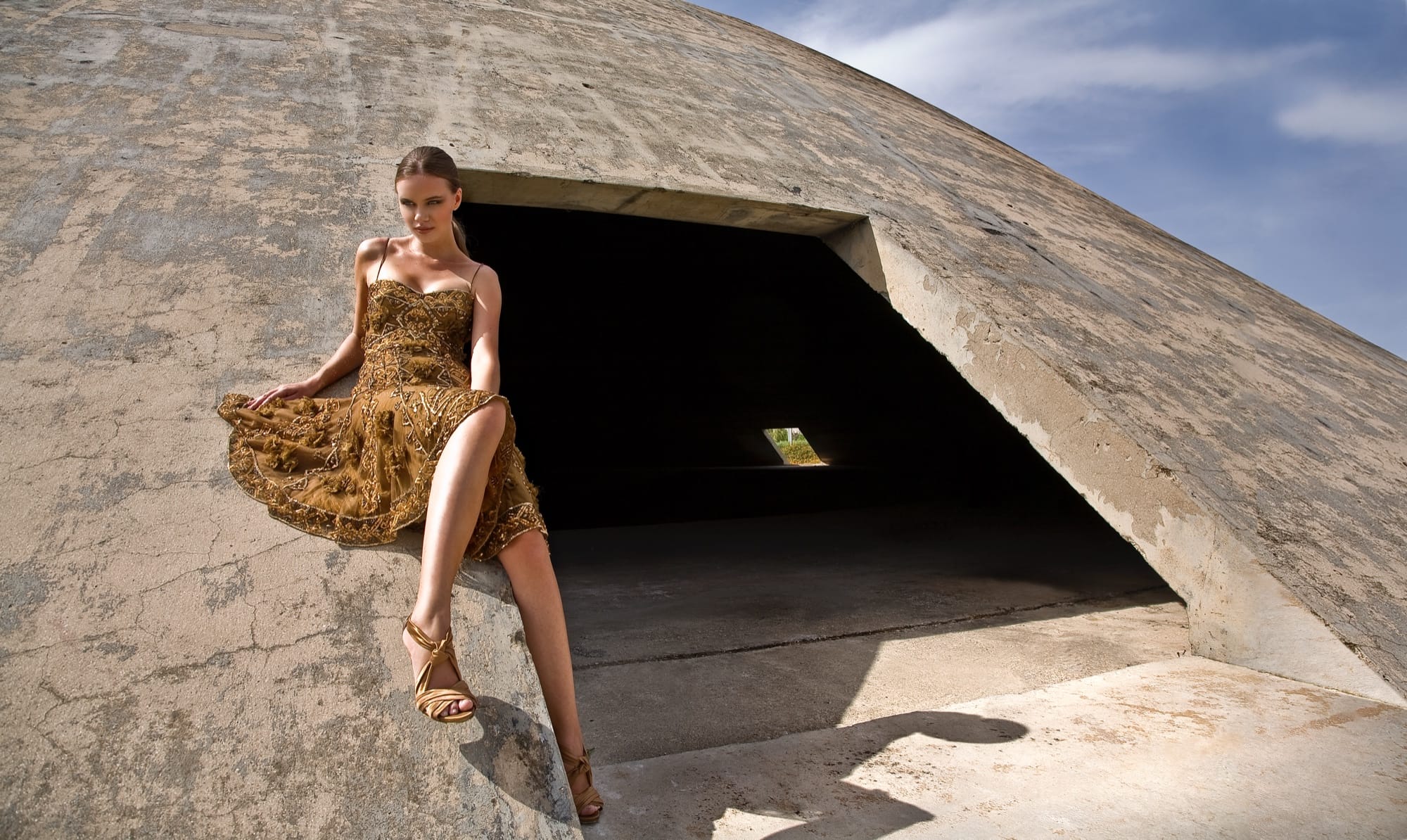
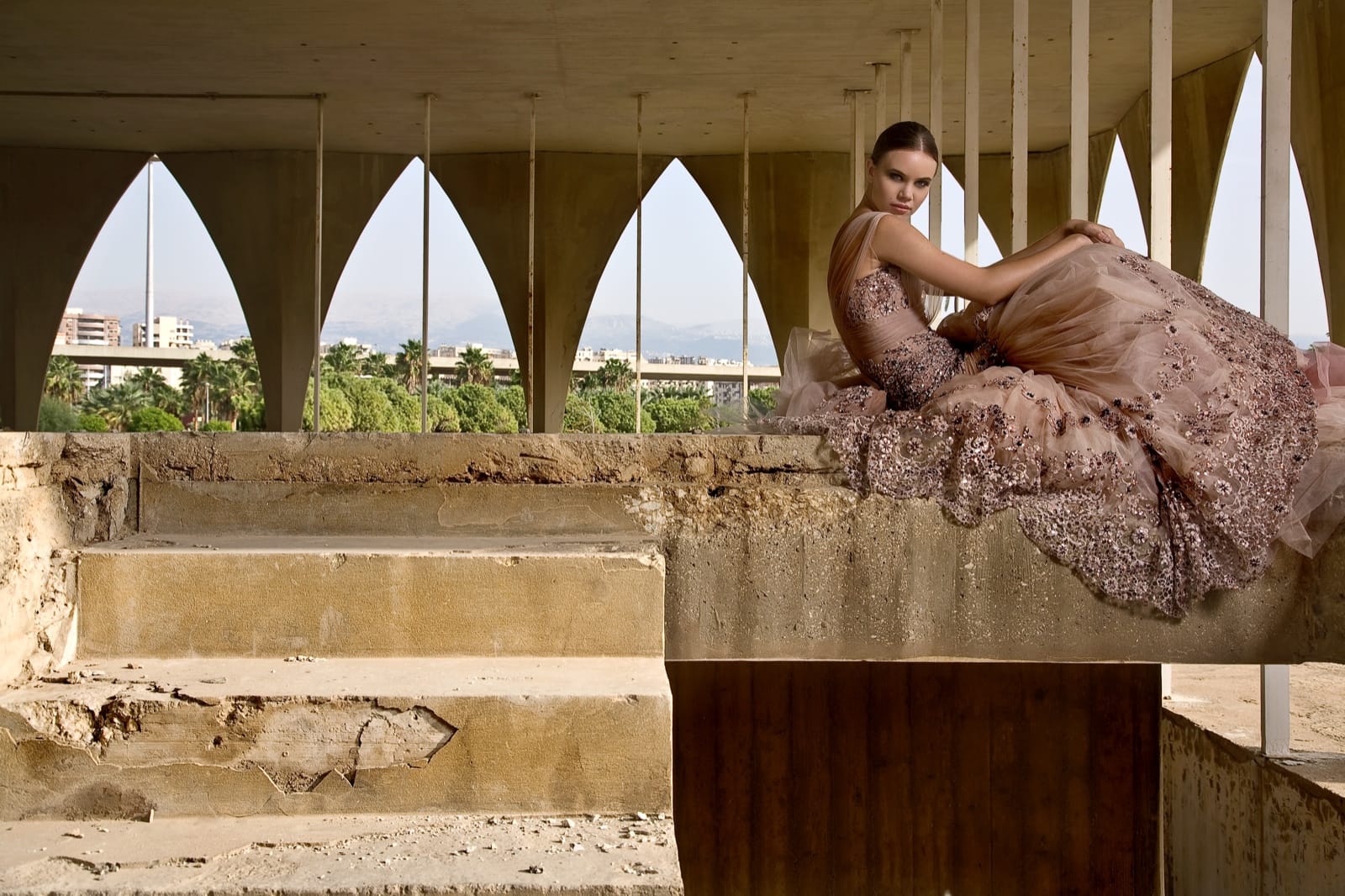
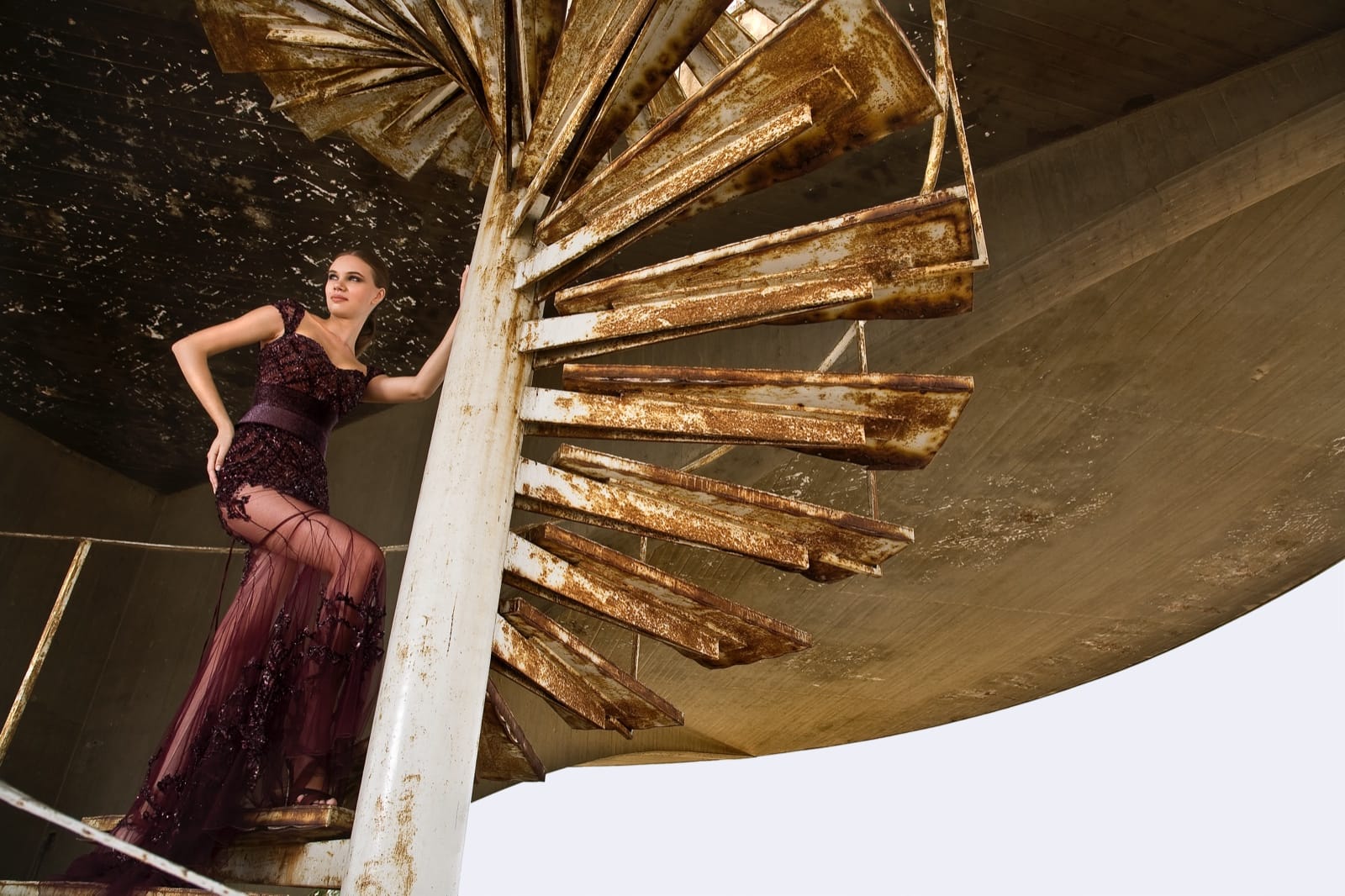
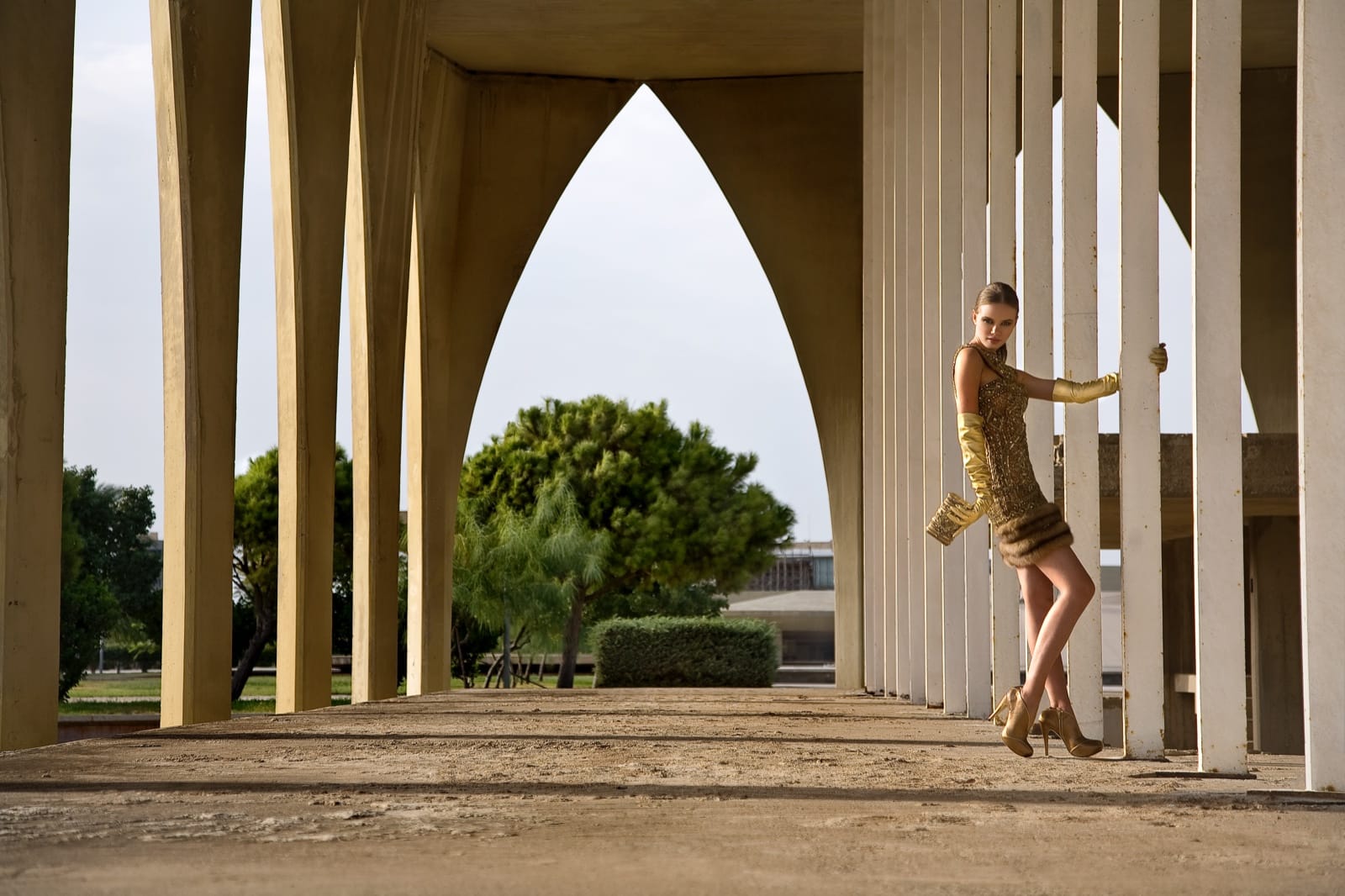
For each collection, Murad and his talented apprentices, look globally for inspiration. Woven into his latest Fall / Winter 2009 collection of dresses are old Caucasian carpet designs, traditional Russian customs and a feel of the different cultures of central Asia – each, evident in the unique ornamentation and motifs of the dresses. The fabrics Murad focused on were rich velvets, flowing silks, satins, chiffons and lace.
But even with the global acclaim his dresses are receiving, Murad asserts how there is still more to do. Having launched a prêt-a-porter line soon after his haute-couture one, he now plans to introduce ‘street wear’ line. This is of course in addition to the all important accessories ranges of bags and shoes that have become a Murad staple. But the ‘street line’ was inspired by the successful collaboration, three years ago, between Mango and Murad in which the designer created capsule collections for the high street label that were sold at their outlets across the region. “It has been a success globally. I see a lot of girls wearing it, and it makes me happy, as now my designs are in every home.”
His men’s collection is setting off too, with a lot of focus on black. But, it will not be too flamboyant, as he gestured with his hands. Straight shoulders, shirts fitted on the waist, and subtle manipulation of collars and buttons – just as the shirt Murad was wearing on that day - a chic black chemise, with a faint black and white polka dotted collar. “It’s for men with strong personalities and a lot of confidence,” he says of his line.
As the interview jumped back and forth between English and Arabic, with a random word of French thrown in for further effect, words sparingly turned into animated hand gestures, and I got to learn more and more about creativity, the intricacies of running a fashion house, and how complex the inspired minds behind it are.
Zuhair Murad described in a few words? Well, to begin with, he would like to be recognised as “an artist,” and one day he hopes that he will be remembered for having “left a permanent mark.” Elegance to him, is “first to be simple, then neat, and lastly comfortable.” Beauty, well that’s easy, it is “the person’s [positive] inner spirit shining outwards,” he responds. What about luxury? To which Murad replies with a question, “What do people respond to this with?” He pondered for a while before offering, “I think it is to be comfortable and to make good use of your money.”
“What three words best define Zuhair Murad fashion?” I inquired in conclusion. To which he enquired, “What do you feel? I like to know what people feel.” Somewhat caught by surprise, I let out a little laugh, before he let me off the hook with a definitive answer of: “richness, femininity and allure.”
Images: Joe Kesrouani