It will come as a surprise that Karim Rashid, a British-Egyptian national born some 47 years ago, is revolutionizing global perceptions through his designs. In the US alone, some two million Americans throw their rubbish in a bin designed by him and no less than 750,000 people sit in his award-winning ‘Oh Chair’.
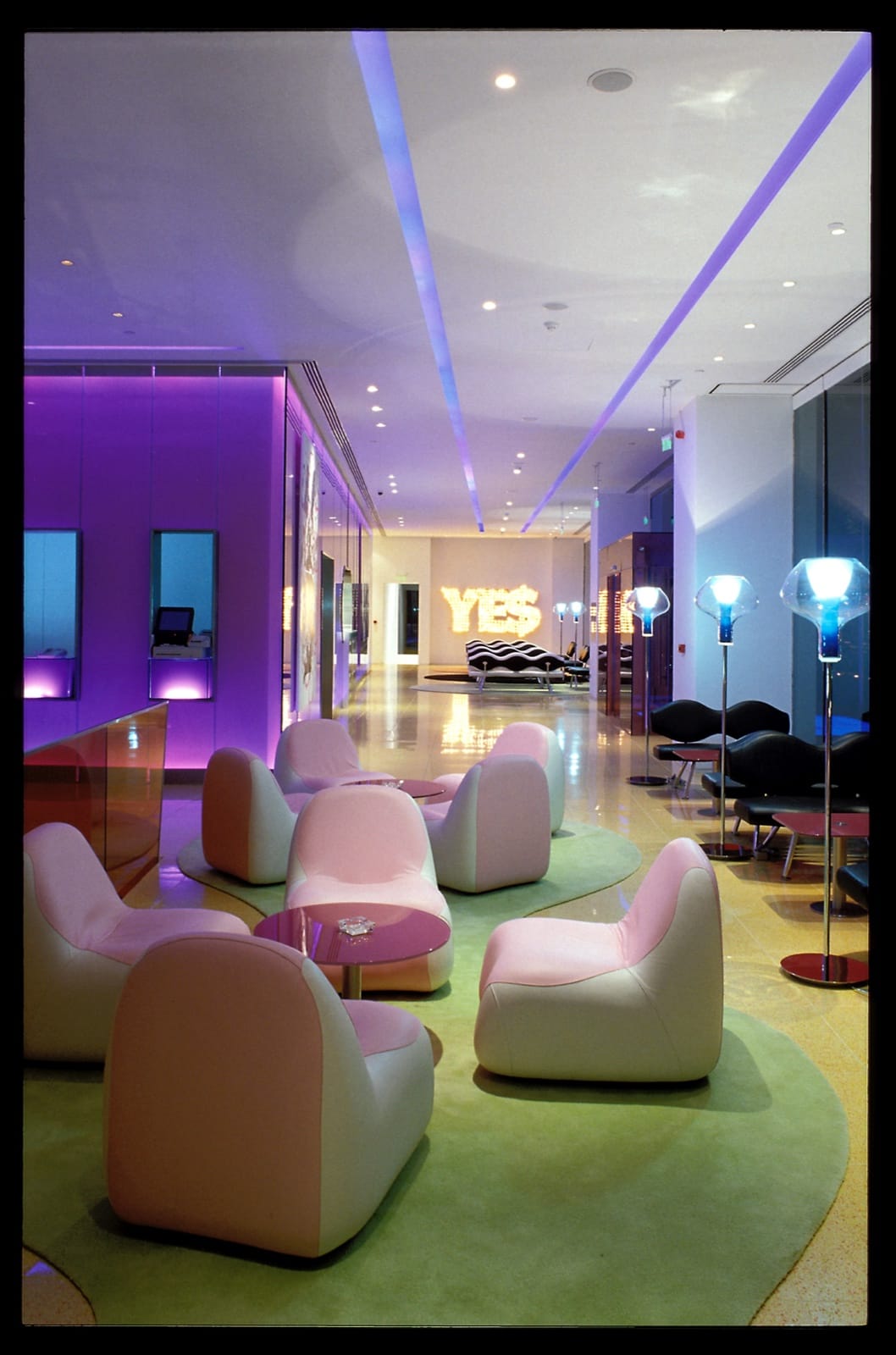
Elsewhere Rashid is no less prolific. Creating packaging for Issey Miyake perfumes and Prada cosmetics; he has also designed the award-winning Semiramis Hotel in Athens and shops for Giorgio Armani. These are just a few of the multitude of other projects on Rashid’s résumé. The list is impressive, spanning auto company Toyota to prestigious Italian design company Alessi.
Rashid has gained much acclaim and many accolades having won over 40 awards in the last twenty years. That equals roughly two awards a year. Then again, his name is behind 2,000 or so objects. In 1999, Rashid was awarded with the prestigious George Nelson Foundation Award for ‘breakthrough furniture’ and in 2005 the European Hotel Design Award for ‘best interior design in public space’.
Rashid claims he always wanted to be a designer and remembers drawing churches when he was four. His father, a set decorator for TV, would change around the living room once a week. Such transience surely got young Karim thinking on the aesthetic and functional motive behind each object. He wasn’t the only person to be influenced, as his brother Hani, is now a prominent architect in New York. Rashid’s training began with a degree in industrial design from Carlton University in Canada, he then travelled to Italy and worked for a year with design emperor Etore Sottsass in Milan. In 1993, he opened his own office in New York.
Design is about shaping our culture: the way we live, the way we organise our lives and the way we interact. Rashid embraces it as anything created by man, as opposed to nature, which to him appears to be somewhat of a dead end. This is perhaps why he is so enthusiastic about technology and machine-made objects. Futuristic visions – where robots have a big part to play – is far from being a nightmare for Rashid. It’s about going forward and not looking back “I hate history,” he once declared.
But his full embrace of technology is not without reason. Rashid makes a point of always visiting the factory where his creations are made. There, he tries to weed out unnecessary lines of production. Creating an industrial object with the least possible waste is part of his signature. Letting the machine do the work – as opposed to handmade pieces of furniture – is also a Rashid philosophy. “If machines can do it better let them do it. We have other things to do,” he points out.
No project seems too big or difficult for Rashid, who is intent on democratising the field altogether by introducing design into as many homes as he can. So while he does create a lot of things for the elite, what really gets Rashid going is thinking about mundane everyday objects, and making them work more efficiently. Salt and pepper shakers, plastic pens and ashtrays are but a few. “Every object should replace three,” he wrote in his monograph I Want to Change the World. In practice, that means a bookcase that works as a lamp, a vase that changes colour when the water needs to be replaced and a perfume package that doubles as a toiletry case.

But what exactly makes Rashid’s designs so popular? In the same monograph Rashid explains – in rather intellectual terms – what makes his style so appealing. He writes, “My work is a marriage of organic and pure geometry, of technology and materials. Soft, friendly organic forms communicate tacticality and express a strong visual comfort and pleasure.” He calls this ‘Sensual Minimalism’. Basically, if we experience pleasure by being around a certain object, Rashid argues, then our entire behaviour will change for the better. “I try to develop objects that reduce stress – objects that bring enjoyment, not encumbrances, that simplify tasks and increase our level of engagement and beauty.” This idea gave birth, in 2001, to the Pleasurescape installation at Houston’s Rice Gallery. Furniture and space morphed into one soft white lounge area “extendable ad infinitum,” according to the designer.
At the turn of the millennium, Rashid believes industrial design has to grapple with issues of excess, sustainability and market seduction. How do you produce in a mass market, how do you sustain this production in an ever shrinking availability of raw products and how do you convince the buyer?
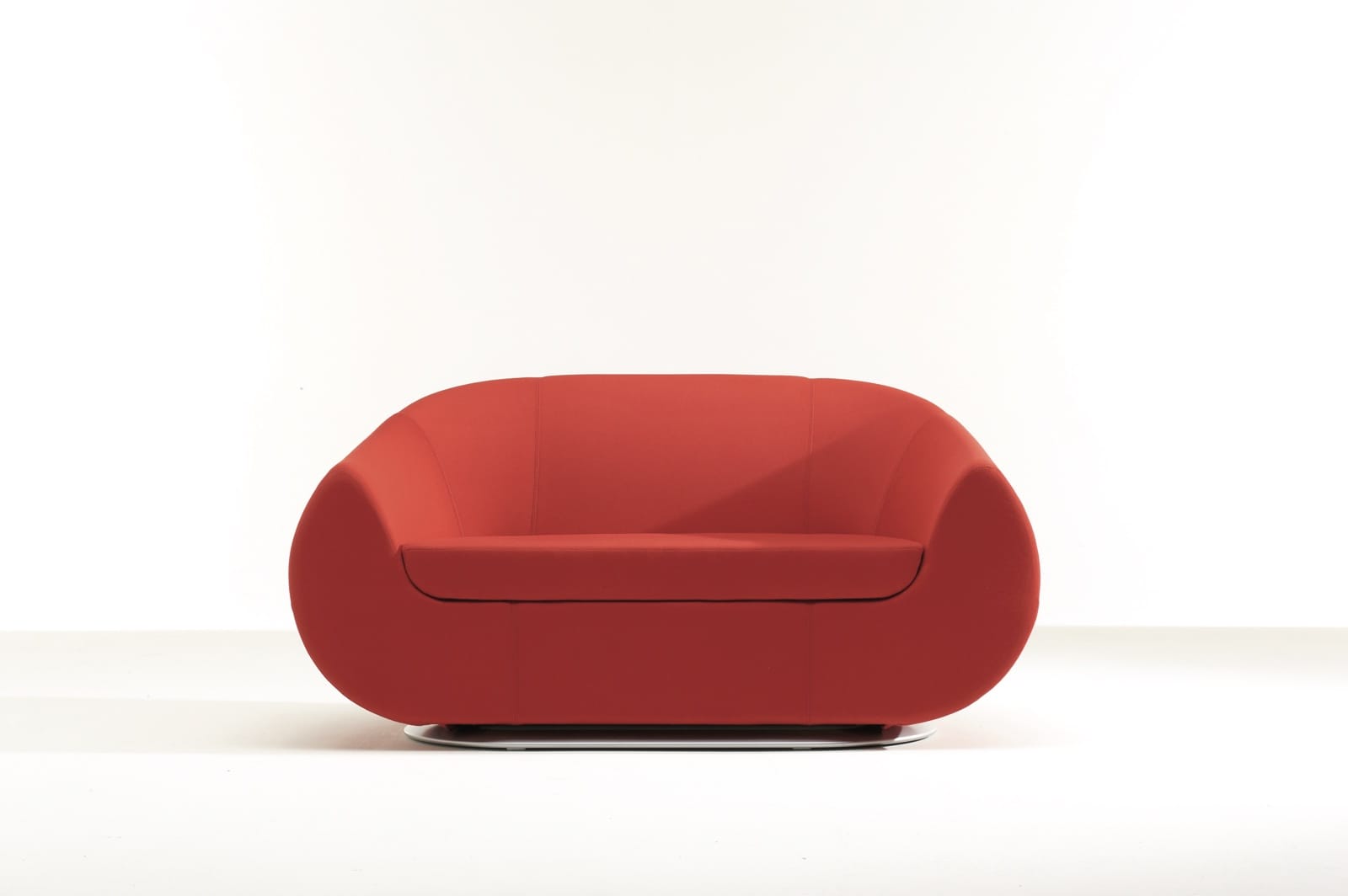
The 100 USD industrial-looking ‘Oh Chair’ and the ‘Kone’ for the Dust Devil vacuum cleaner are attempts to answer such questions. In a more luxurious vain is the more recent ‘Loveseat’. Designed for VeuveCliquot, this luscious pink chair, with two cocoon-like seats and a centrepiece which stores the beverage, is sold at the chic British furniture emporium Conran, for no less than 10,000 USD.
Rashid might disagree but ultimately his industrial designs are closer to pieces of art, albeit industrially made ones, than anonymous furniture. Not only is there an original idea behind each piece but the aesthetics is an integral part of the finished product. Rashid himself wonders at the difference between artist Donald Judd’s million dollar ‘boxes’ and signature design shelves. The answer is not much if you ask auction houses worldwide, where prices for design collections have reached record highs. A case example is Zaha Hadid’s prototype Aqua table which recently sold for almost 300,000 USD.
In the world of progressive design, the boundary between art and industrial design is definitely getting more blurred. With his work in 14 museums, Rashid is undoubtedly leading the trend.
Contact
Karim Rashid Shop
New York City, NY, USA
Tel + 1 212 337 8078
HYPERLINK "http://www.karimrashidshop.com" www.karimrashidshop.com
----------
Design First
Dubai Design Forum
May 27-29, 2007
Perhaps more discrete but no less historic than the Dubai Art Fair, which opened with great fanfare last March, is Dubai’s Design Forum. For the first time in the Gulf, the issue of design is addressed. Is design in the Arab world a myth? Why aren’t there any design museums in the Arab world? To come to terms with such issues, the Forum has invited today’s global stars of design and architecture. Amongst whom are Zaha Hadid and Karim Rashid: two big movers in the word of art, architecture and design. Born in the Middle East, they developed their talent in the west to critical acclaim. Hadid is the recipient of the 2004 Pritzker Prize in Architecture (the equivalent of the Nobel Prize) and Rashid is a multi-award winner. Both have ongoing projects in the Emirate: Hadid is building the beautiful Dancing Towers in Dubai’s Business Bay and Rashid is creating a new hotel concept with My Hotel Brighton.