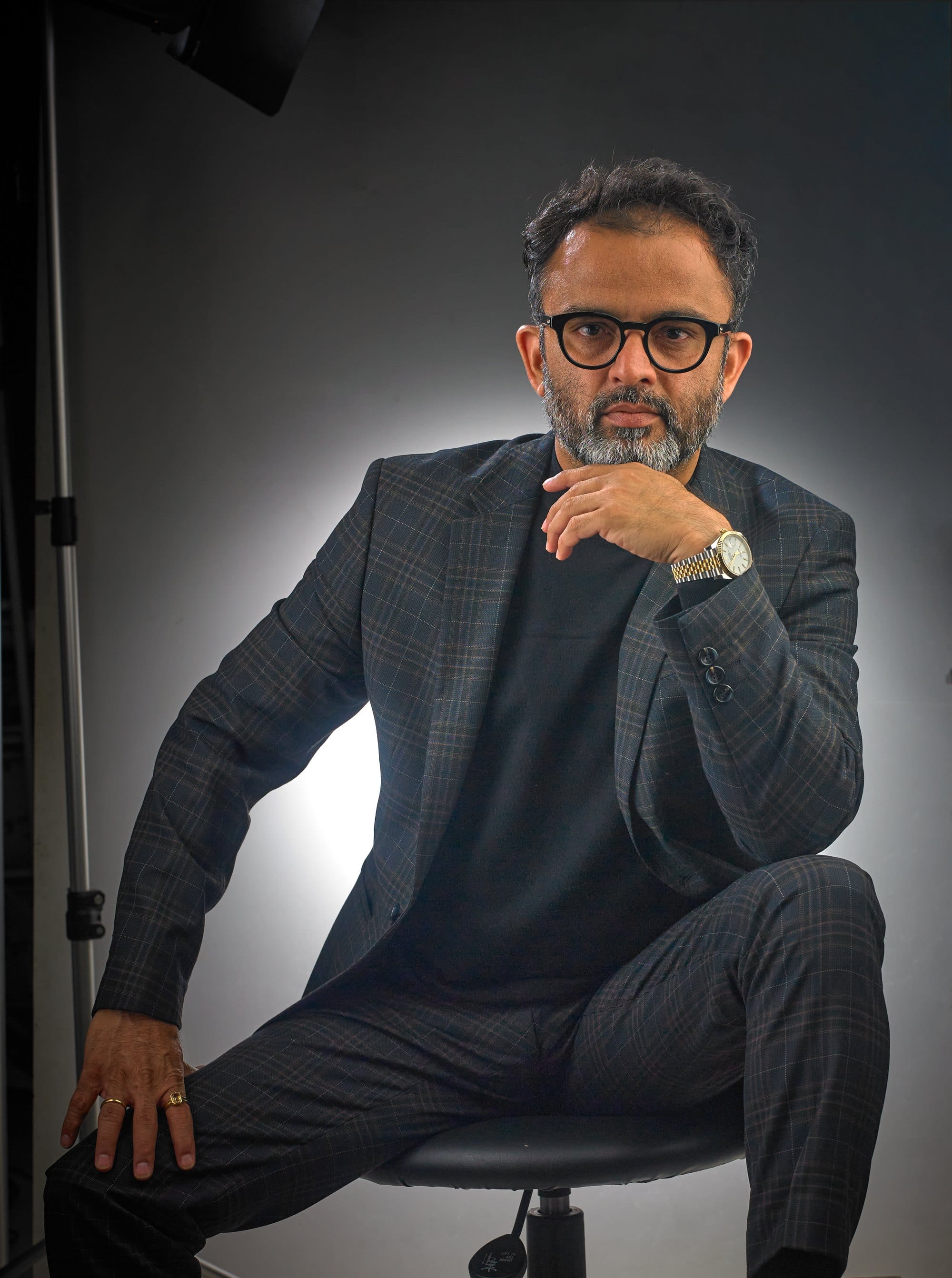
"Sorry for being late. I just came from a burial, and it was pouring down with rain on my way back,” explains Deepak Gugarii, the principal architect and founder of Studio VDGA (Varsha and Deepak Guggarii Associates), a few minutes after our scheduled video call interview was supposed to have begun. It turns out he had just bid farewell to Christopher Benninger, a renowned American-born Indian architect, urban planner and academic. Gugarii had spent six years under his tutelage (he worked for CCBA Designs, formerly known as Christopher Charles Benninger Architects) after he graduated from the College of Architecture, Kolhapur. “He was like a guru to me,” he says fondly. “He was a Harvard gold medallist. Thanks to him I started my own practice.” While his former employer was widely known for planning large scale urban projects and for his many institutional landmarks throughout India, Gugarii focuses more on residential and hospitality projects.
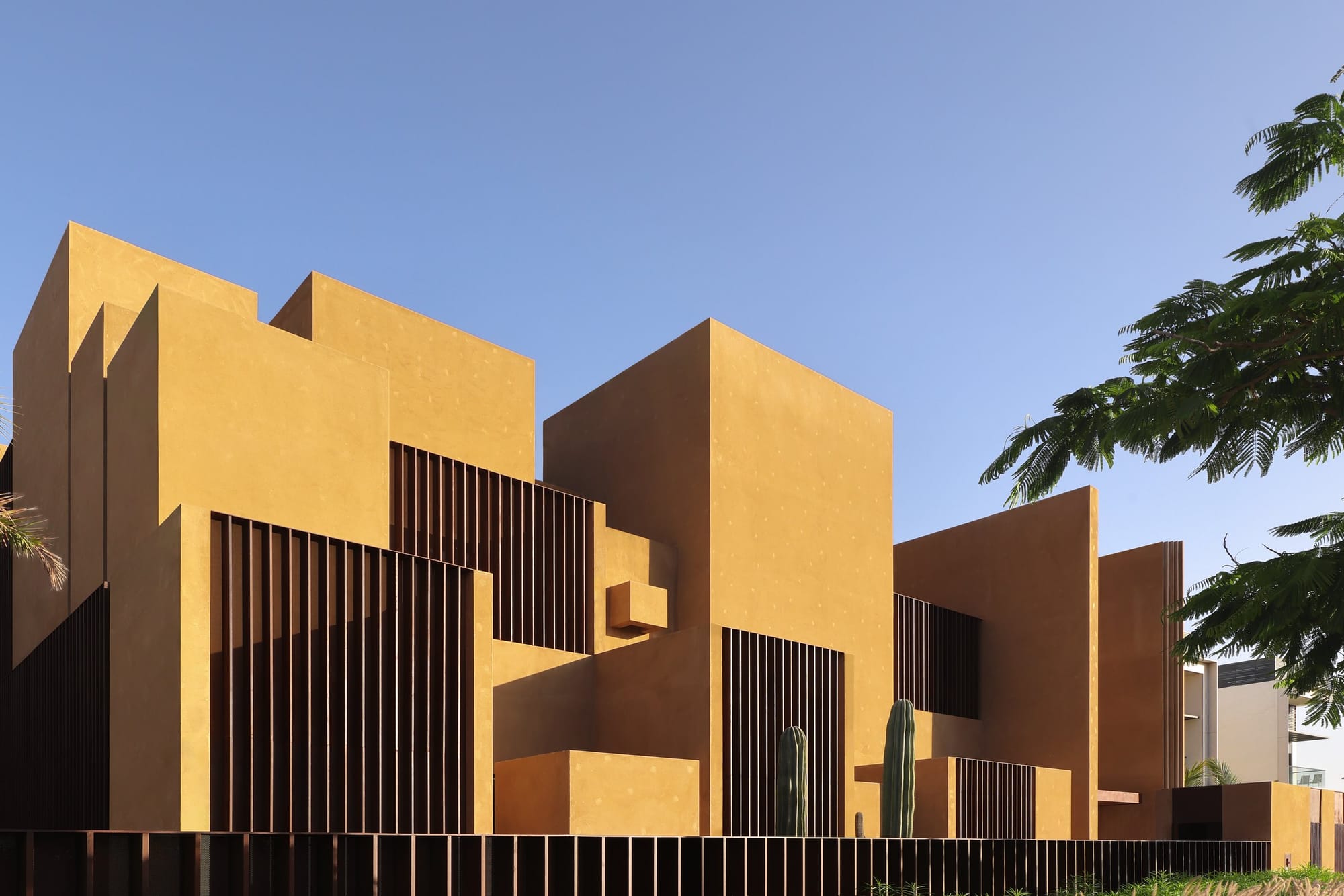
Gugarii’s practice, Studio VDGA in Pune, a vibrant metropolis 200 kilometres from Bombay, came into Official Bespoke’s radar when we discovered their recent project, House of Courtyards, an extraordinary family villa within the relatively new enclave of Dubai Hills, a gated community in the sprawling Mohammed Bin Rashid City development. Set on a very large plot of 2,800 square metres, House of Courtyards evokes the feel of the kind of high-end wellness retreat you'd probably find on some pristine island. And not for no reason, either. Its cleverly shaded outdoor spaces, soothing colour palette and elegant curated spaces purposefully provide its owners with a calming Zen environment. The villa’s unique design was a combination of the principles of ‘Vastu Shastra’ (Ancient Indian architectural guidelines) and the contextual relevance of the project.
Before the project began, Gugarii came to Dubai Hills to explore the existing residential homes to see how he could contribute to the prestigious community. What we did not realise was this was VDGA's first ever project in the UAE and, curiously, he says he got the impression the villas in Dubai Hills were like a beautiful bouquet of flowers. What's more, many seemed to have taken design cues from other countries. Whether embellished with Spanish style arches, Roman columns or looking very modern and blocky, they didn’t tell him a story or that they came from Dubai. “I wanted to do something local. Something that also bridges the past and the present. Dubai has a desert past although you don’t see much of it today,” he says. Gugarii admits he has always wanted to work in deserts, especially the one in Rajasthan. Additionally, he admires the culture of desert people who are compelled to be creative due to the barren nature of the land. “Deserts have always enthralled me. I've always admired the Kasbahs of Morocco and the Pueblos of New Mexico. This is the feeling we wanted to conjure with House of Courtyards.”
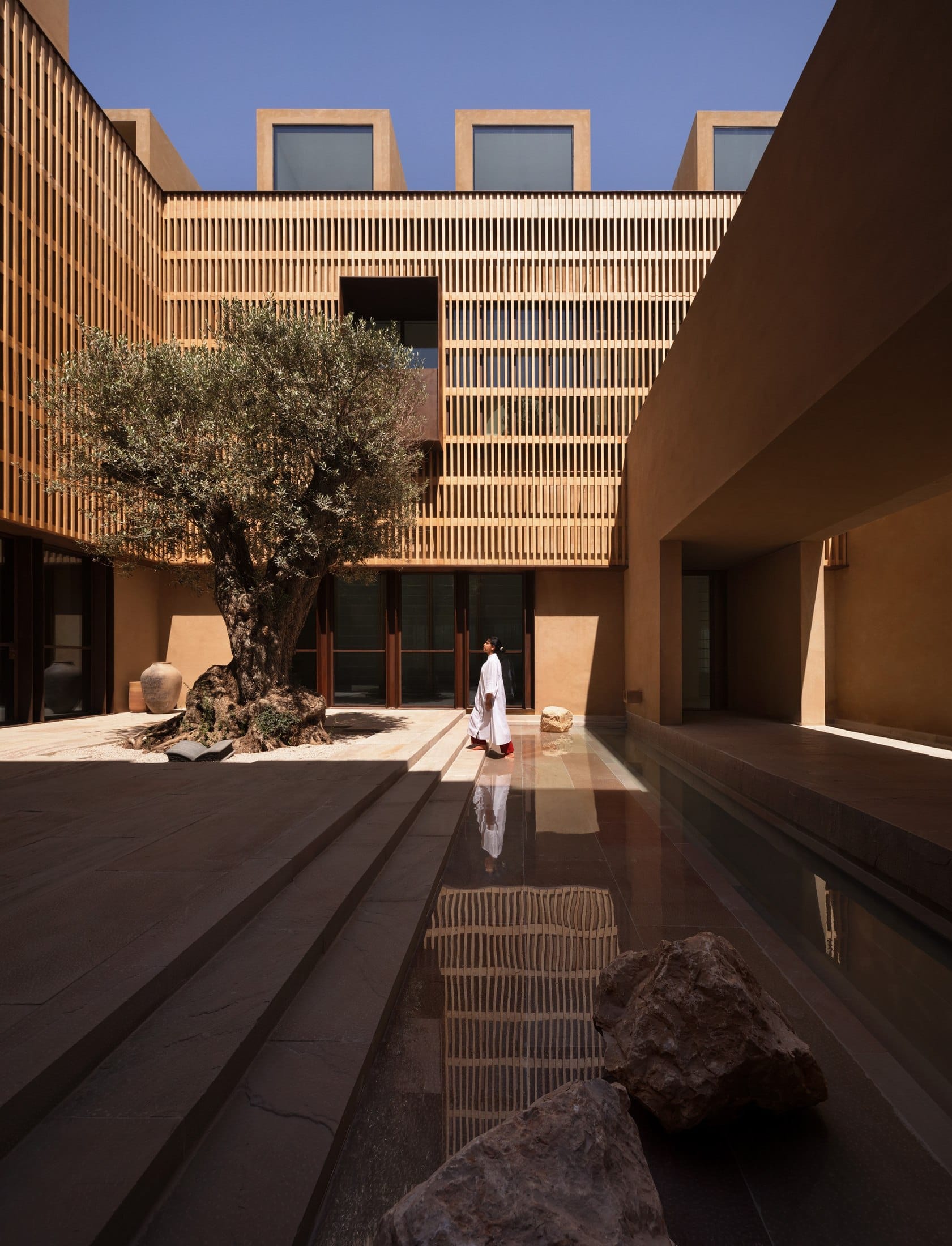
One can see how these earthen, sustainable vernacular structures inspired Gugarii. The ochre colour of the villa is reminiscent of the sandy deserts, while the external textures are inspired by the desert mud plastered adobe look. The three-storey villa (comprising a ground floor, basement and first floor) is designed with tall walls and dotted with numerous resplendent courtyards breathing life to the spaces. While the villa’s towering walls creates an impression of grandeur, they were made to keep the entrance areas shaded without a roof. Many different levels in elevation and high turrets were also created to enable the self-shading of the structure while cutting off the glare and harshness of the sun. The precision of this work was achieved by carefully studying the Dubai sun path and the summer and winter solstice. Noting that most people tend to stay 24 hours inside air-conditioned spaces he wanted to challenge this trend: “Any human soul loves to be in open spaces. By adding the courtyards, it breaks the scale of the building.”
A majestic 2,000-year-old olive tree sits in the main courtyard of the house. It was intentionally planted there to make it the focal point of the house, with everything else revolving around it. He also mentions that according to Vastu principles, olives are auspicious. However, the main reason he favoured the tree was for its sculptural character and beauty. Other courtyards are decorated with aloe, yucca and cacti, bringing in other flora typical of the desert landscape.
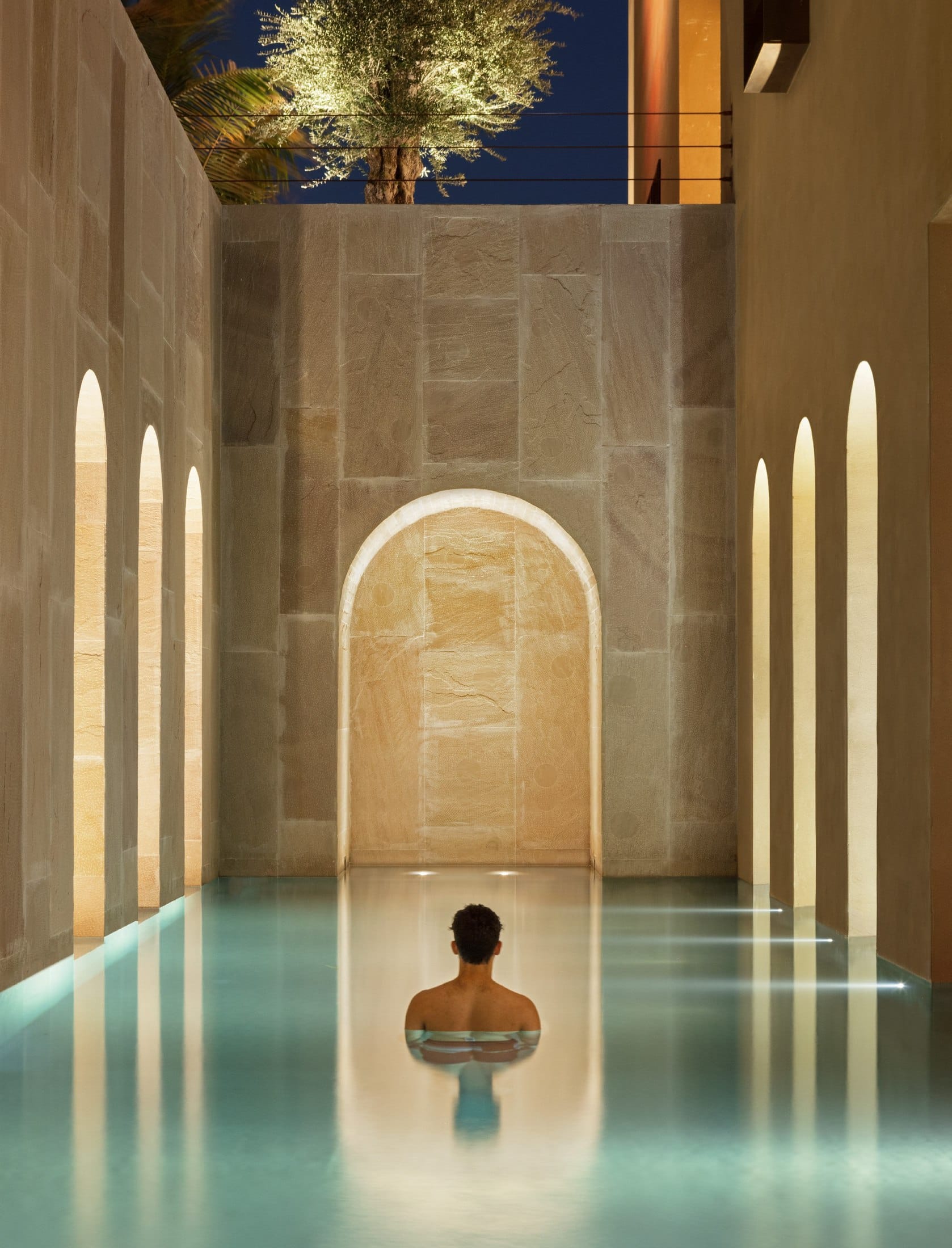
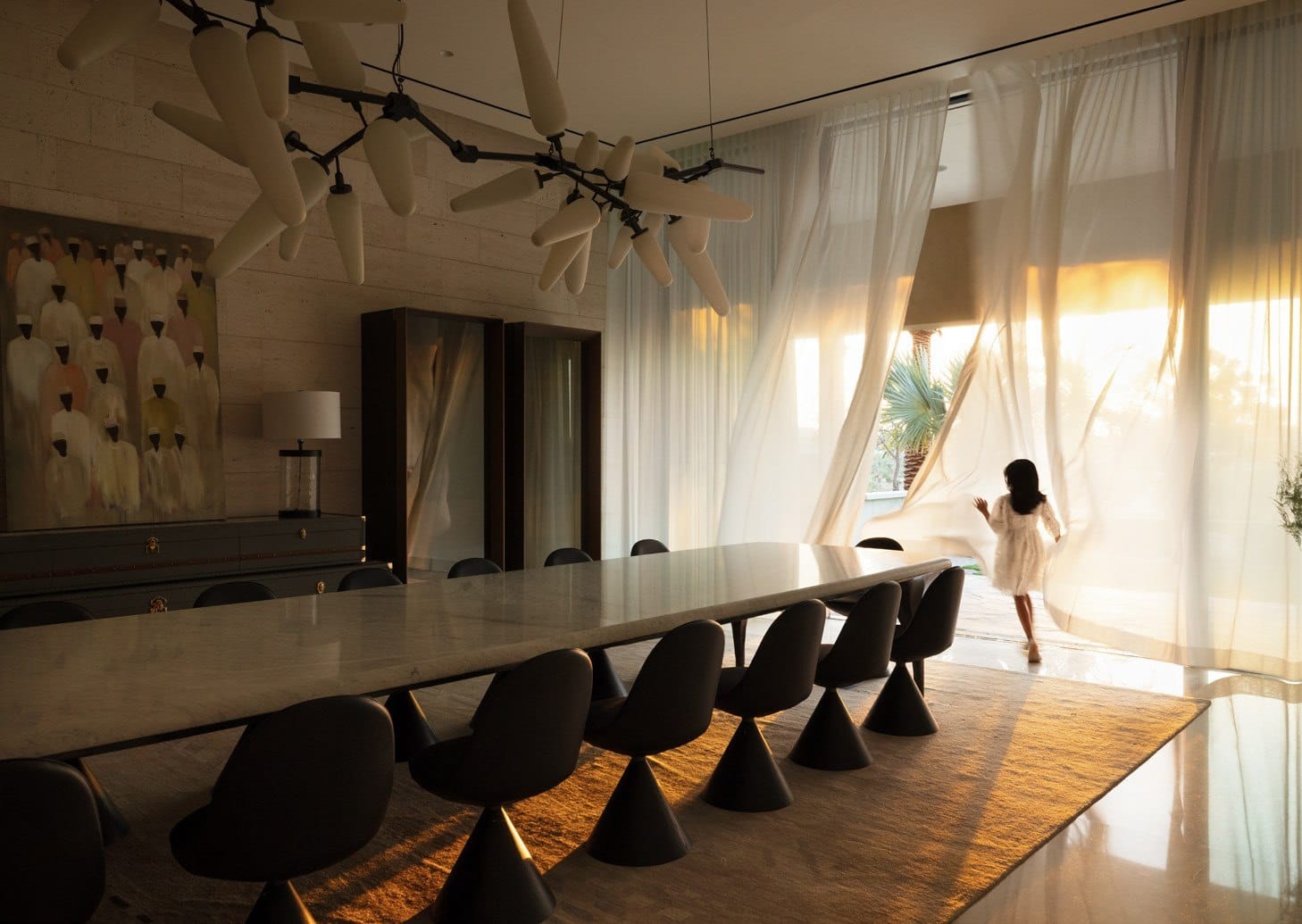
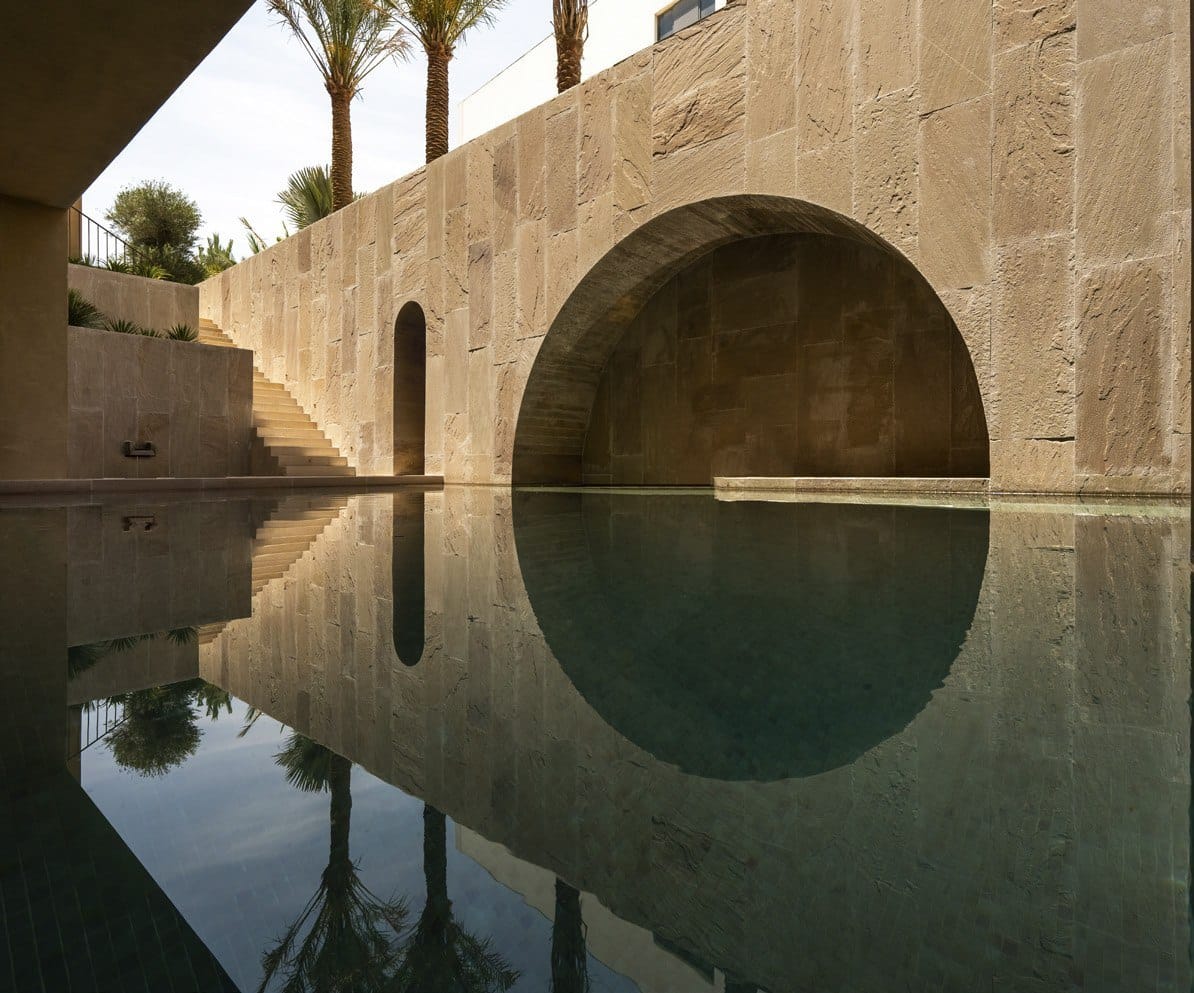
The interior of the villa is broken down with social spaces and guest rooms on the ground floor, family spaces on the first floor, while the basement accommodates a parking area, various back-end utility areas, a home theatre and lounge, which extends into the pool area. “The pool is a hidden treasure of the villa design. Fenced by a series of arches, the pool winds up on one side into a Jacuzzi niche,” the Gugarii reveals. The overall internal aesthetic is pared down and elegant with plenty of gorgeous bespoke fittings. “Everything was handpicked by me and Rashi Sanson, my partner at VDGA,” explains Gugarii. He also designed much of the stone furniture which were inspired by the traditional stepwells of India, marked by curves and cascading steps. For the living and dining areas he partnered with German furniture designer Valentin Loellmann to make a beautiful organic console and a long, 16-seater dining table. Gugarii is especially proud of the kitchen which has an open-air style that can be found in rural India with the traditional chulha (stove) setting. As the client is also Indian (a family of five), he wanted to give them some of the experiences of their home country and not necessarily artefacts.
Strictly an architecture and interior design studio, VDGA was founded in 2003. It has garnered over 70 national and international awards and accolades, such as JK Cement Architect of the Year Awards, ArchDaily Building of Year, Dezeen Awards, Identity Awards UAE and CNBC Awards, to name a few. The studio focusses purely on design while everything subsidiary, such as structural and civil engineers, are all outsourced. His team of 15 invests heavily on research, materials, developing mood boards and having many spirited debates in house on how to go about a project and find solutions. For Gugarii sometimes the context of a project is derived from the site, and it is straightforward as he explains: “If you have a site on the beach it is simple; it is the sea view. Sometimes the context is derived from the adversity of the site, such as the climate condition. And sometimes there is no context.” For the latter, he gives an example with, Office of Cardboard, one of his earlier projects.
The client in question was an automobile manufacturing unit in Pune, Western India. The site was a very dull factory building and initially Gugarii did not know what to do with it. Subsequently, he had a chat with the client and understood that they were rapidly shifting from diesel petrol to electric vehicles. Coupled with the consideration of global warming and the world’s initiative to go green, Gugarii found the context for this factory office design. “We came up with cardboard which is a biodegradable material. We used honeycomb boards as they are very durable and typically used as pallets for shipping goods.” The honeycomb boards were laid in layers (in different forms) as to form free flowing curves throughout the interior walls of the office creating a striking décor while also sending a poignant environmental message.
Currently, his studio is working on multiple projects in India, a house in Mauritius, a yoga retreat in Indonesia and a project in Morocco. “We are always looking to see what value we can add or how we can inspire others,” stresses Gugarii. He refuses to take on projects if he feels he cannot do them justice as the mantra of the studio is to do enriching work. “Good spaces grow positively on the psyche. As architects we have the opportunity to create a space where we induce a feeling that all the six senses are aligned together. Architecture should be soothing, like balm to the soul.”