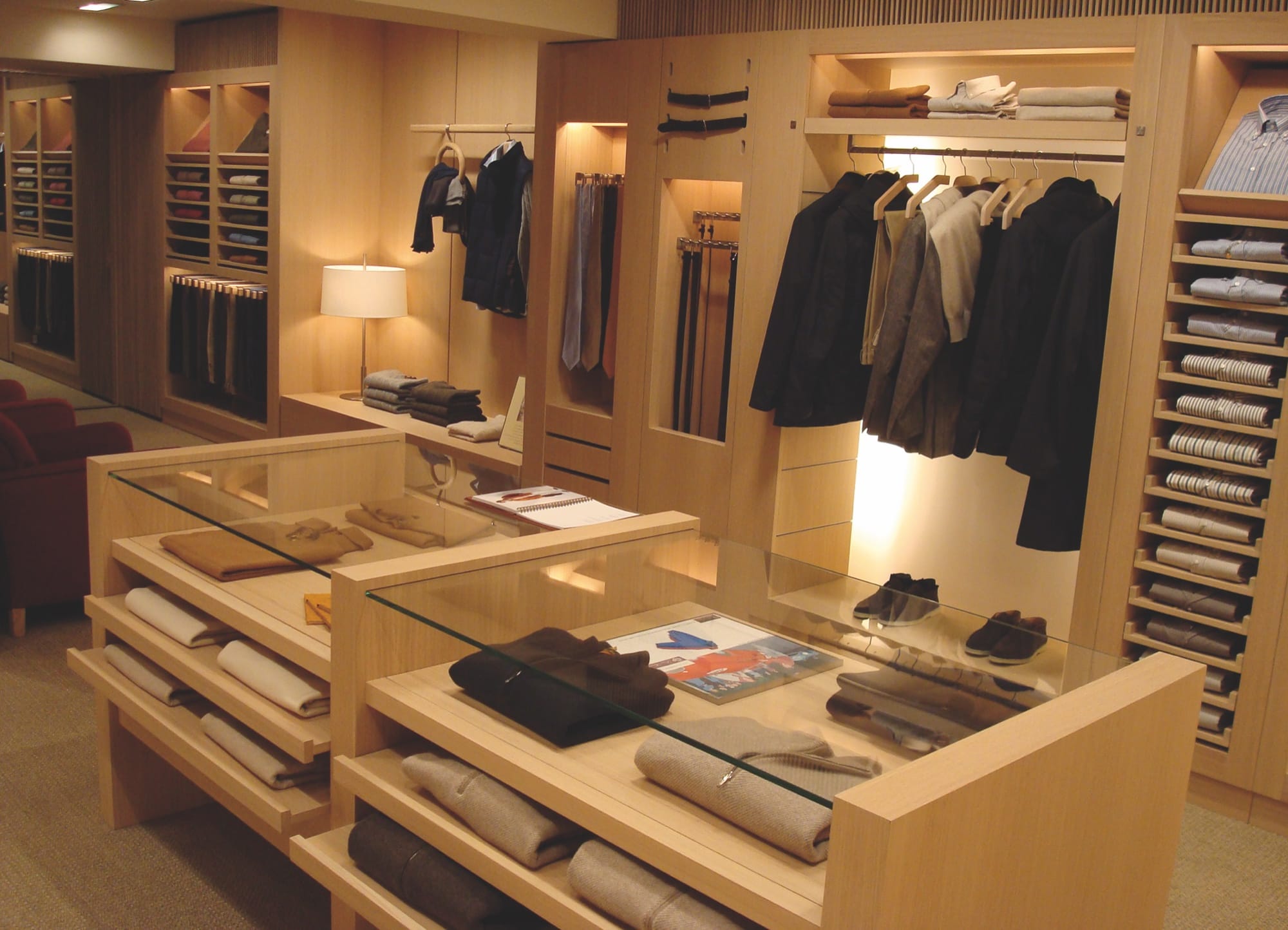
Chances are that you have seen one of the 130 Loro Piana stores worldwide. Even more probable is the fact that you, or some of your closest, know very little about what the brand stands for. That is because Loro Piana does not market itself like other labels do. Rather it spends vast sums and huge resources on securing a vertical integration of its business so that it can guarantee total control over the entire fabrication of its clothing business. With exclusivity deals on some of the very best fabrics the world has to offer, this is a brand that appeals to the most discerning customers, people willing to pay for excellence regardless of cost. Yes, a typical Loro Piana customer is a person of consequence or prominence. With this in mind Bespoke just had to pay a visit to the company’s flagship Milan boutique in order to discover what makes this company tick.
Originally from Trivero in northern Italy, the Loro Piana family started as wool merchants at the turn of the 19th century. Around 50 years later the family moved its activity to Valsesia and founded the Lanificio Fratelli Lora e Compagnia, followed by Lanificio di Quarona di Zignone & C. a few decades after that. Loro Piana itself was finally established in 1924 by Pietro Loro Piana before being taken over by his nephew Franco who moved the company into the international high fashion markets from where it has held an esteemed position ever since.
It has now been six generations that the family has been wholesaling textiles from the village of Quarona, right at the foot of the Italian Alps. Today the family continues to sell its fabric to high-end brands such as Brioni and Brooks Brothers although it has expanded into the new arenas of more commercial brands including J Crew. Naturally the less expensive labels are not allowed to sew the exclusive Loro Piana scripted label onto their garments.
Timeless elegance created with select yarns and fabrics, refined details, meticulous search for quality, and the perfect combination of beauty and function. This is perhaps the best way of summarising the philosophy underlying the design and manufacture of the Loro Piana products. “The whole society is shifting from superfluous consumption to quality-oriented choices. In this sense, we like to think that Loro Piana is the ultimate reference for those who believe in authentic quality and exclusivity in every aspect of their lives,” says Sergio Loro Piana, ceo of the company. “Our aim is to meet the needs of sophisticated consumers who are more sensitive to timeless elegance than to fashion trends.” In a world where fine garments can be found anywhere it comes down to recognising quality and to wear a Loro Piana garment is to know what top-drawer quality really means - the very finest fabrics.
Baby Cashmere
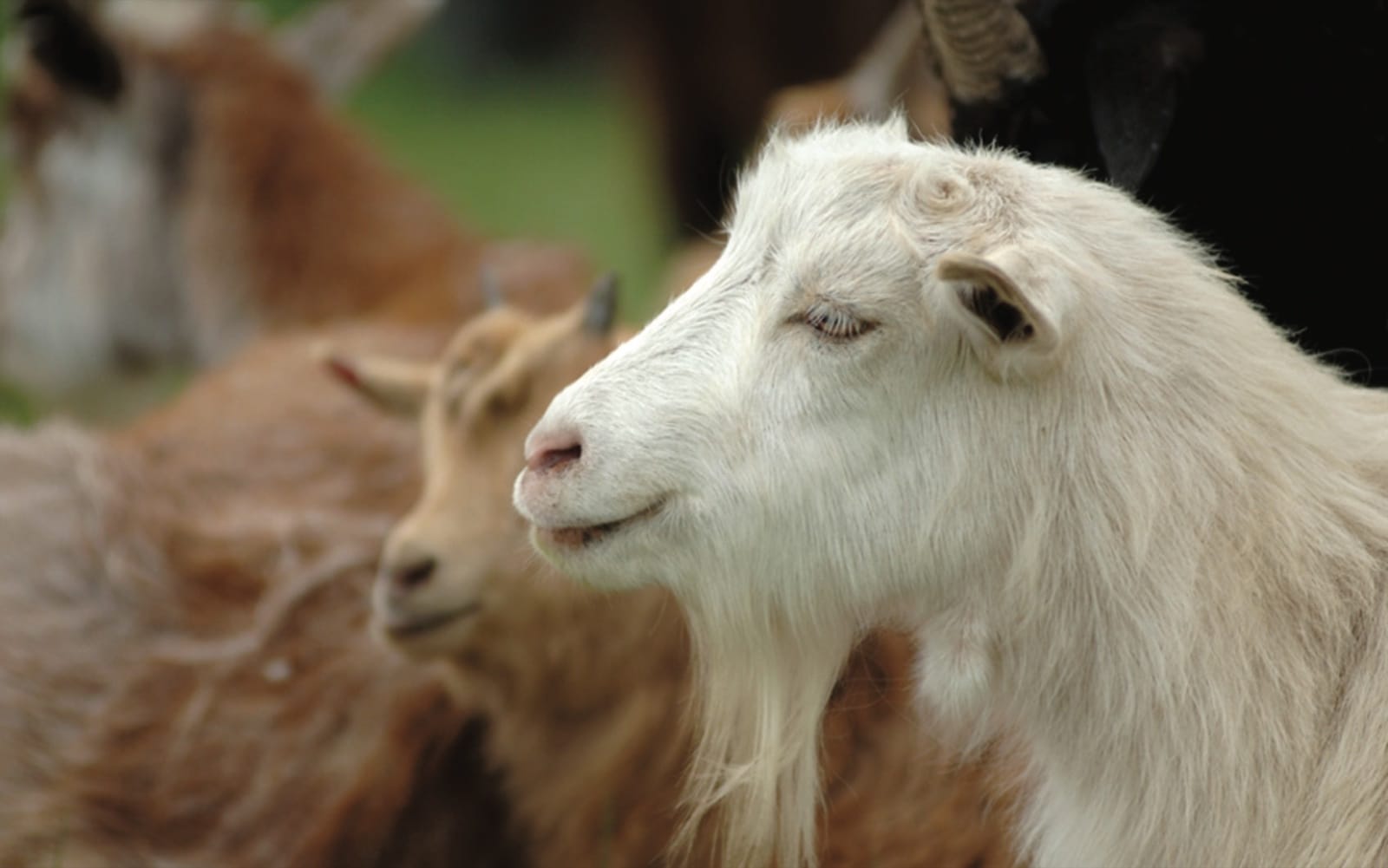
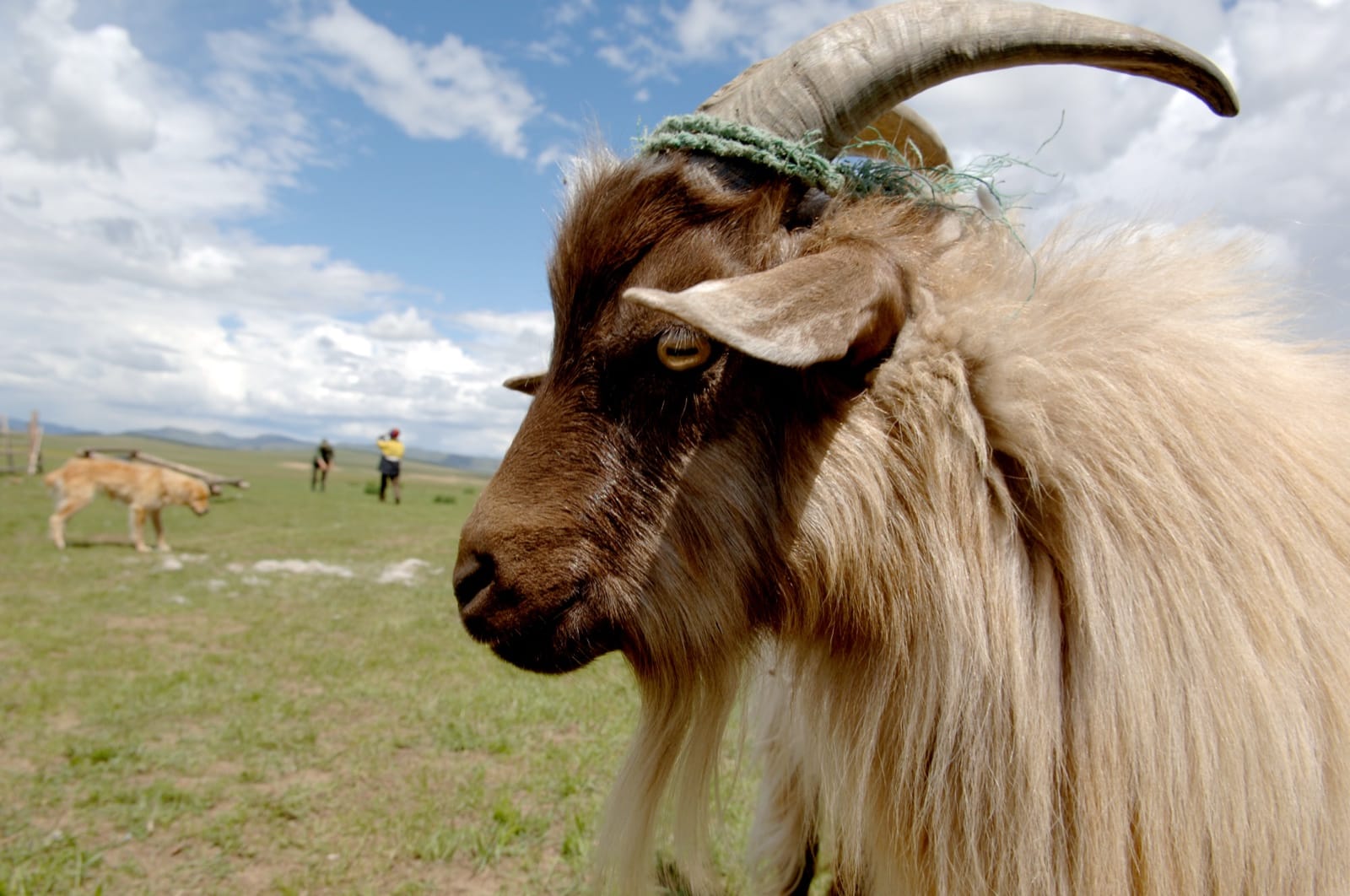
Loro Piana is known to search the world for the very finest cashmere, a wool characterised by its softness and natural lightweight insulation. Indeed the company has a very special relationship with the Mongolian government and it is the only foreign company allowed to deal directly with Mongolia’s goat breeders, rather than through a broker. This is not the result of some corrupt scheme but rather recognition of the company’s support and continued financial and intellectual reinvestment into Mongolia’s lucrative cashmere industry.
Loro Piana has even pioneered a cultivation of 13-micron-diameter cashmere (human hair is about five times thicker), which is the finest known to man. It goes by the name of Baby Cashmere and Loro Piana owns the exclusive distribution rights. The fleece is combed off a baby Mongolian Hyrcus goat, never sheared, and is done before the animal is but a-year-old. Given that that the harvesting is only done once a year, each baby goat can only be combed once in their lifetime, and the total harvest is a mere 100 grams of usable hair meaning that it takes about 40 goats to make just a single cardigan.
Loro Piana negotiated for ten years in order to gain access to these rarified hairs and then had to embark on a program of education for the local farmers to teach them the value of the product; a time-consuming process to say the least. “This fibre is capable of imparting sumptuousness to the simplest of garments: the excellence of best raw materials is an everlasting value, an investment in some way, which has very little to do with fleeting trends,” says Pier Luigi Loro Piana ceo and chairman of Loro Piana. It’s clear that Baby Cashmere is one of the most difficult products to harvest, that in itself has made Loro Piana and its products sought after the world over. “Our items are luxurious, yet very discreet at the same time; you have to experience them, in order to understand the difference best raw materials and craftsmanship make,” Pier Luigi Loro Piana concludes. That a Milanese company is able to source only the world’s finest bales of this rare product and build a thriving luxury goods business around it is a testament to both the quality of the product and the ingenuity of this brand.
Vicuña
Since 1994, Loro Piana has been directly involved in the re-introduction on the world market of one of the most select of all textile fibres: vicuña. Poachers would routinely slaughter the animals with the government doing nothing to stop this practice. They were eventually reduced to no more than 5,000 animals and consequently declared a species at risk by the 1976 Washington Convention. Thanks to the efforts of Loro Piana, the company spent more than a decade convincing the Peruvian government that it was sitting on a goldmine if it controlled the distribution (and thereby the price) of the fibre, there are now more than 160,000 of these small wild camelides, including 100,000 in Peru alone. The key to achieving this was persuading the Andean campesinos, or rural folk, to develop a way to catch and shear the swift-moving vicuñas and sell their fleece to the highest bidder.
Eventually the campesinos and local government were persuaded to change their way of doing business and, in 1994, the Peruvian government named Sergio and Pier Luigi Loro Piana as the heads of a consortium that would control the worldwide distribution of vicuña. The Loro Piana firm was soon in control of the world’s largest supply chain for the precious fibre. When the agreement with the campesinos ended in 2003, the brothers spent the next five years pursuing a way to continue sourcing vicuña, seeking a way to protect a 22-year investment that was paying lucrative dividends.
Recently the company revealed that it had bought over 2,100 hectares of land, high up in the Peruvian Andes. This would serve as the world’s largest privately held vicuña reserve. Though it is illegal to own vicuñas in Peru, the land is actually where the animals already live and it is large enough for them to roam freely so the company has cleverly by-passed the regulations on this front. Therefore Loro Piana has secured its vicuña requirements while side-stepping the need to bid against competitors for the right to sell the fibre. "Suffice to say it’s going to remain a small operation, but a very important one in terms of prestige," Sergio says. Given that an adult animal only produces 250 grams of hair every two years which, after shearing and carding, goes down to 120 grams. This means that the fleeces of 25-30 animals are required to produce one vicuña overcoat. The intrinsic value of a vicuña cloth or garment is therefore further increased by the rarity of the fibre and the authentic art of working it.
Merino Wool
Since 1997, the brothers have conducted an annual contest among merino-wool growers in New Zealand and Australia, rewarding the one who cultivates the finest fibre. The company then purchases and uses these extra-fine wools (the reigning champion wool measures 11.7 microns across, which is finer than even vicuña) for its Record Bales Collection; the fibres are transformed into 50 tailor-made suits only after the finest wool is found.
Pecora Nera
In 2002, the brothers formed an alliance with New Zealand sheep farmer Fiona Gardner. She bred a flock of unique black sheep whose wool Loro Piana now uses in its Pecora Nera (Italian for "black sheep") clothing collection.
White sheep are in fact the result of long-term selective breeding after it was discovered that it was possible to dye white wool in a broader range of colours.
However, the dark colour remained as a recessive or secondary genetic characteristic of some white sheep, which is why flocks occasionally give birth to black lambs whose wool is not used. This is where the term “a black sheep” to describe a negative member of a group comes from.
But the Kiwi breeder focused her business on dark sheep, she discovered they had amazing characteristics, such as the extraordinarily thick fleeces that give rise to a bright and highly resistant wool, whose natural colour ranges from various shades of mixed browns to black. Another aspect is worth underlining: the wool of black sheep is totally natural and not dyed and therefore it is not affected by chemical agents.
Loro Piana, the largest buyer of the finest merino wool and in constant search for innovative textiles, finally met this breeder and accepted the challenge of producing unique fabrics by becoming the exclusive purchaser of the past two years’ shearing.
Other breakthroughs
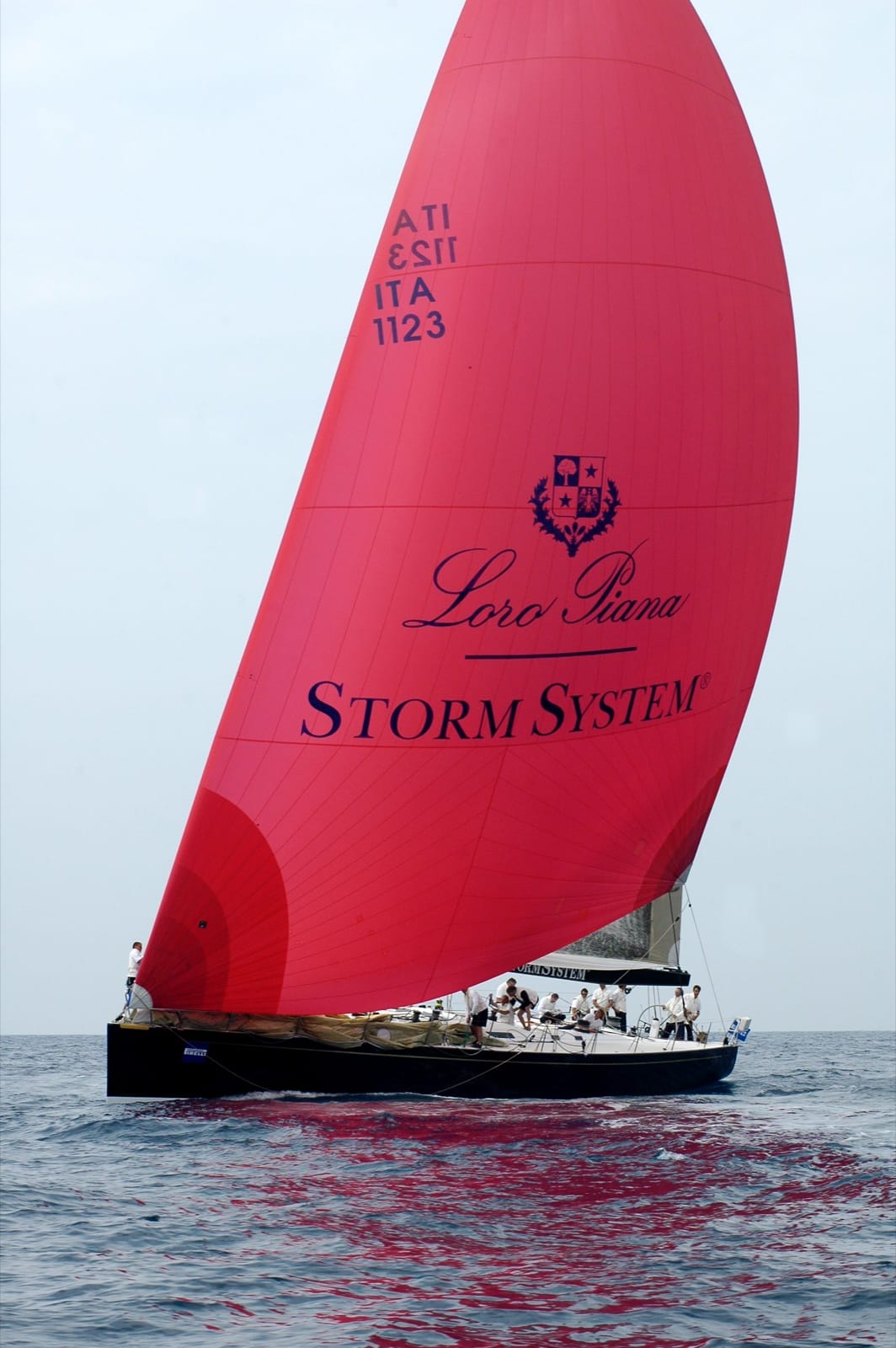
Loro Piana has made many breakthroughs in its pursuit of excellence. These include the summer ermine plaid, a plaid designed with Chinese Laska ermine furs. These are some of the rarest furs on the market because these animals hold the natural honey-coloured fur solely during the summer mating season. Loro Piana combines these hairs with honey-coloured cashmere and then edges them with suede in order to obtain a plaid that is unsurpassed in lightness and warmth. Then there is the Storm System, a technologically advanced generation of innovative fabrics that unite the natural thermal and insulating properties of wool and cashmere with a high degree of protection against the wind and rain. One of Bespoke’s particular favourites was discovering the Shield Protector, this is
a pocket built into a jacket that has a special copper lining, protecting the body from possible damages derived from cellular electromagnetism.
With the company divided between two divisions: the luxury goods company and the textiles business, the future looks good for Loro Piana. Recently, the brand has landed in the Middle East, opening branches in what Sergio Loro Piana refers to as “the most prestigious retail locations throughout the Gulf.” With a focus on classic styles and an uncompromising approach to quality, this Italian firm is sure to find a warm reception in the region especially among those that appreciate true and uncompromising excellence.
Contacts:
HYPERLINK "http://www.loropiana.com" www.loropiana.com
Boulevard at Jumeriah Emirates Towers,
Sheikh Zayed Road,
Dubai
Harvey Nichols,
Mall of the Emirates,
Dubai
Salhia Commercial Center,
Ground Floor Shop #15,
Fahid Al-Salim Street,
Kuwait
The Pearl,
Porto Arabia,
Doha