One of the most popular sub-genres in this flourishing speciality was all about how outrageously expensive life was in modern Japan. We learned that a square metre of land in central Tokyo cost more than most people in New York made in month and that a cab ride from the airport was 150 USD or more. We read tales of the 50 USD melon, the 5 USD strawberry and the 100 USD Wagyu or Japanese steak. Worried workers in Detroit could take heart. Their jobs might soon be carried out by robots at Toyota and Mitsubishi, but at least they could afford a punnet of strawberries and nice piece of meat from time to time, unlike their overworked counterparts in Daikanyama.
As for the 100 USD Wagyu steak, that still exists, though these days, you’ll only find it at that price as a lunchtime special. Come dinner, the very same steak at the very same restaurant will cost 200 USD, perhaps 300 USD dollars and even a burger scraped together from the trimmings that don’t make it onto the griddle will set you back between 50 and 80 USD. Not for nothing is Wagyu known as the ‘foie gras’ of beef.
Wagyu literally means ‘Japanese Beef’, although only the meat of the Kuroge, Katsumo, Nihon Tankakushu and the Mukashu breeds are considered worthy of the label.
In Japan, Wagyu is generally known by the area where it is produced. Kobe, perhaps the most internationally famous of all Japanese beefs, is only one of dozens of areas where Wagyu is raised. The Japanese themselves tend to prefer meat from Mishima, Ohmi or Hida but current king – or rather queen – of the cows is Matsusaka Beef. This comes from a town in the Mie prefecture of south central Honshu and is produced from virgin female cows. Matsusaka has the highest fat-to-meat ratio of all Japanese beef.
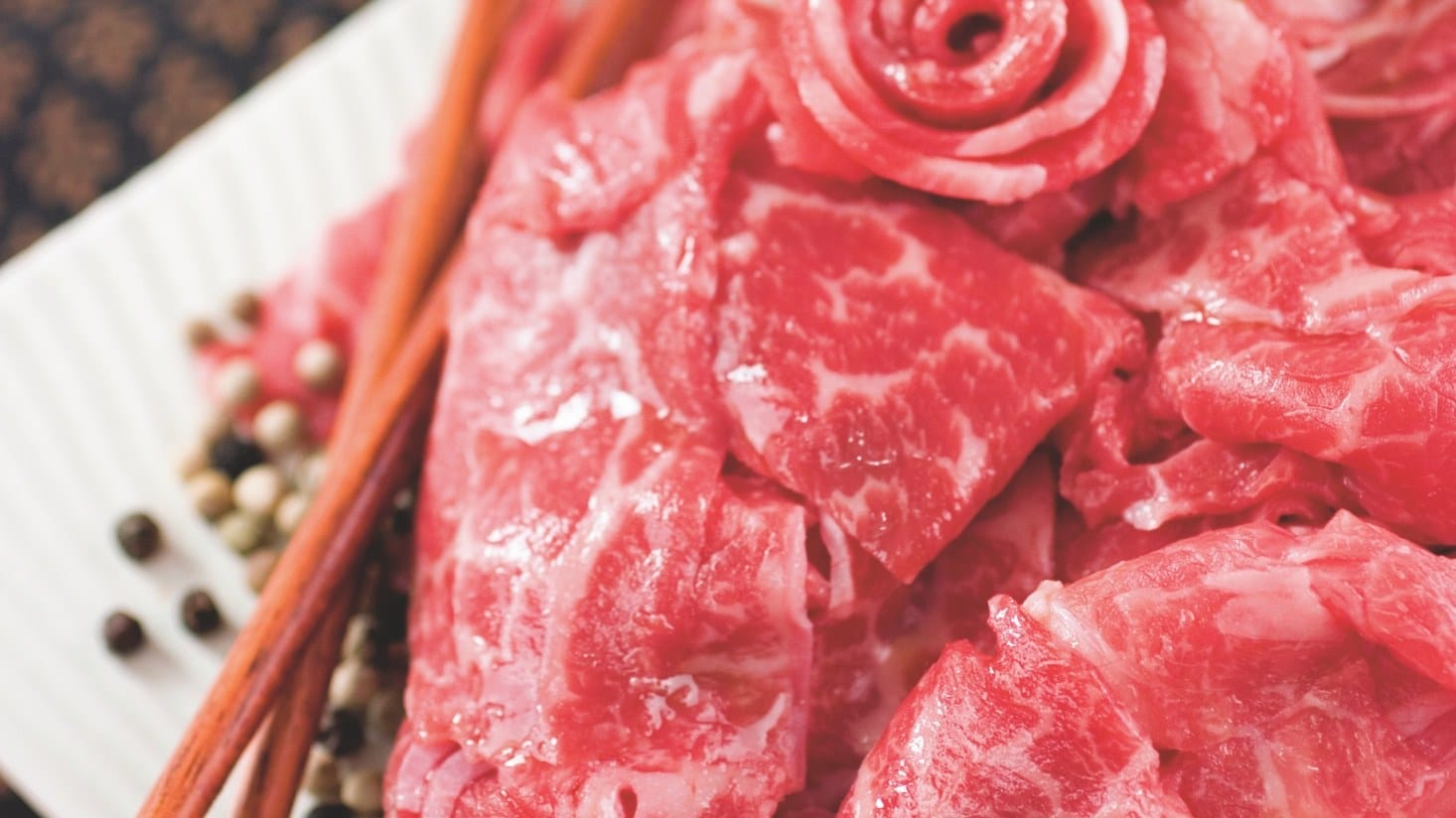
Come across it in its raw form and frankly, to anyone raised on non-Japanese beef, Wagyu isn’t terribly appealing. Swathed in thick layers of fat, the rich red meat is so heavily streaked – or ‘marbled’ - with additional fat, that at first sight, it looks more like bacon than beef.
Even at supermarkets, where it is usually sold in 50 or 100 gram slices, a kilo of top quality Wagyu like Matsusaka can cost upwards of 660 USD.
Criminal? Perhaps. Decadent, for sure. The reason Wagyu costs so much is simple – these cattle are spoiled rotten.
From the moment they are born, Wagyu lead a pampered life. Fed a diet of tofu lees, oats and sometimes beer to stimulate their appetites, Wagyu are taken for afternoon walks and massaged with straw brushes dipped in sake to keep their coats healthy. The most highly prized are kept in air-conditioned sheds where often, they can graze to the soothing sounds of Classical music.
Their movement is limited so that as they grow, they pack on layers of fat and the muscle tissue remains relatively soft. The ‘Good Life’ ends abruptly at around the age of 3, when the cattle are sent to slaughter. By comparison, Western cattle tend to be slaughtered at the age of 6 or even 8 years.
The result is a meat so thoroughly marbled, so tender and so juicy that a slice placed in the mouth simply melts. No chewing is necessary.
According to the Japanese scale on which meats are give grades of between 0-12, Black Angus, the king of steak in Europe and America comes in at 4.5 and at its best, USDA Prime steak scores between 5-6. Kobe generally comes in at 8 or 9 while even higher quality grades, like Matsusaka, can earn an almost perfect score.
Traditionally, the Japanese are not big meat eaters and have relied instead on fish and tofu for sources of protein. For centuries, eating the flesh of any four-footed animal – and at times of poultry too - was taboo, an act of cruelty and spiritually, extremely polluting according to both Japan’s native Shinto faith and the Buddhist beliefs that were introduced from Korea around the 5th Century.
This is not to say that meat played no part at all in the traditional diet. The taboo has been observed in different ways at different times and in instances of famine, or scarcity of food, wild game in particular was often hunted and eaten.
Today, meat still plays a minor role in Japanese cuisine but its general increase in availability and rise in consumption is often credited with giving rise to successively taller and larger generations of Japanese since the end of the Second World War. The current generation, generally much taller than their parents are known as the Beansprout Generation for their tendency to grow quickly but to lack substance.
The Akasaka on the 37th floor of the ANA Intercontinental Hotel in Minato-ku, with its floor to ceiling windows and expansive views over the Tokyo Tower and the Rainbow Bridge may not be the most obvious place to go for a Wagyu experience but of all the Teppanyaki bars in Tokyo, this one is by far the most traditional.
With bags placed to one side and discretely draped in linen to protect them from the odour of cooking meat, diners are seated before a large hotplate, a maximum of six to each griddle. Your order taken, an assistant chef arrives, wheeling a trolley laden with vegetables, sauces, oils and of course, the famous red and white marbled meat that has brought you here in the first place.
With his back to the panoramic view, the chef – today it is Chef Takahashi – begins preparations with a solemnity and attention to detail that borders on the ritual. The air fills with the sweet smell of frying cloves and as they begin to caramelise and emit the first wisps of smoke, they are swept off the griddle and back into the bowl. Taking a cloth, with a deft, sinuous movement, Chef Takahashi smoothes the garlic-tinged oil across the griddle and then lays a slice of pumpkin, several large sweet green chillis, some konyaku jelly and fresh shiitake mushrooms on its surface.
A minute later, he places several nuggets of beef fat in the middle of the grill. They immediately sizzle and begin to melt, releasing a puddle of glistening, unctuous oil. The sizzle as the meat meets the griddle is enough to set the mouth watering and the pulse racing. Under the chef’s careful ministrations, the steaks begin to brown and then sear. He turns them gently, broiling on one side and then the other, before gently browning them around the edges.
I’ve ordered mine medium rare and to my untrained and frankly hungry eye, they seem ready to serve but Chef Takahashi isn’t convinced. Turning them once again, he plumps each steak with his chopsticks, to see just how much longer they need to be cooked.
He turns them again and checks once more with his chopsticks. Happier this time, he is almost done. Moving the teaks to a cooler part of the griddle, he sprinkles them with cognac and with more than a touch of high culinary drama, sets them alight. As the flames subside, he neatly slices them into bite-sized chunks. Seared to a crisp on the outside, the meat is a light pink at the edges and a deep, rich red in the centre. The rich marbling evident earlier has disappeared.
My mouth waters twice. The first time as Chef Takahashi places my steak in front of me. The second time as I bite into the first morsel. The explosion of flavour is paired with exquisite texture. Crisp on the outside but light and tender on the inside, the meat barely needs to be chewed. There is no gristle, no tough fibres, nothing to bite through. As soft and as fragrant as a piece of loukum, they melt on the tongue, leaving the mouth, flesh dissolving in a welter of juices that leave the taste buds begging for more and a broad smile of satisfaction to spread across my lips.