As early as the 9th century, Venice played a major role as a trade centre and with the establishment of its first Biennale in 1895, the city positioned itself as a focal point of arts and culture where the whole place would transform into a gaping public museum. What began as nightly artist meetings at the local caffe Florian evolved into a world-class exhibition, the mother of all biennales. Despite the format of national self-representation in pavilions, the Venice Biennale is known for its provocation and pushing of boundaries when it comes to contemporary art. And it is often referred to as the Olympics of the art world.
The Middle Eastern presence at the Venice Biennale has been rather shy since its establishment but unlike ever before, this year’s Biennale brought a new focus to the Middle East, heralding the burgeoning art scene in the region, with five national pavilions: Saudi Arabia, Egypt, Iraq, Syria and the United Arab Emirates. Also on show, which runs until November 27, displaying works of more than 20 Arab artists, is a large Pan Arab collateral exhibition entitled The Future of a Promise. Due to the instability in the region, unfortunately, Bahrain had to withdraw from the Biennale, and the Lebanese government cancelled their representation for reasons unknown. Just a leap away, another two countries in the near region, which also have a presence in the Biennale this year, are Turkey and Iran.
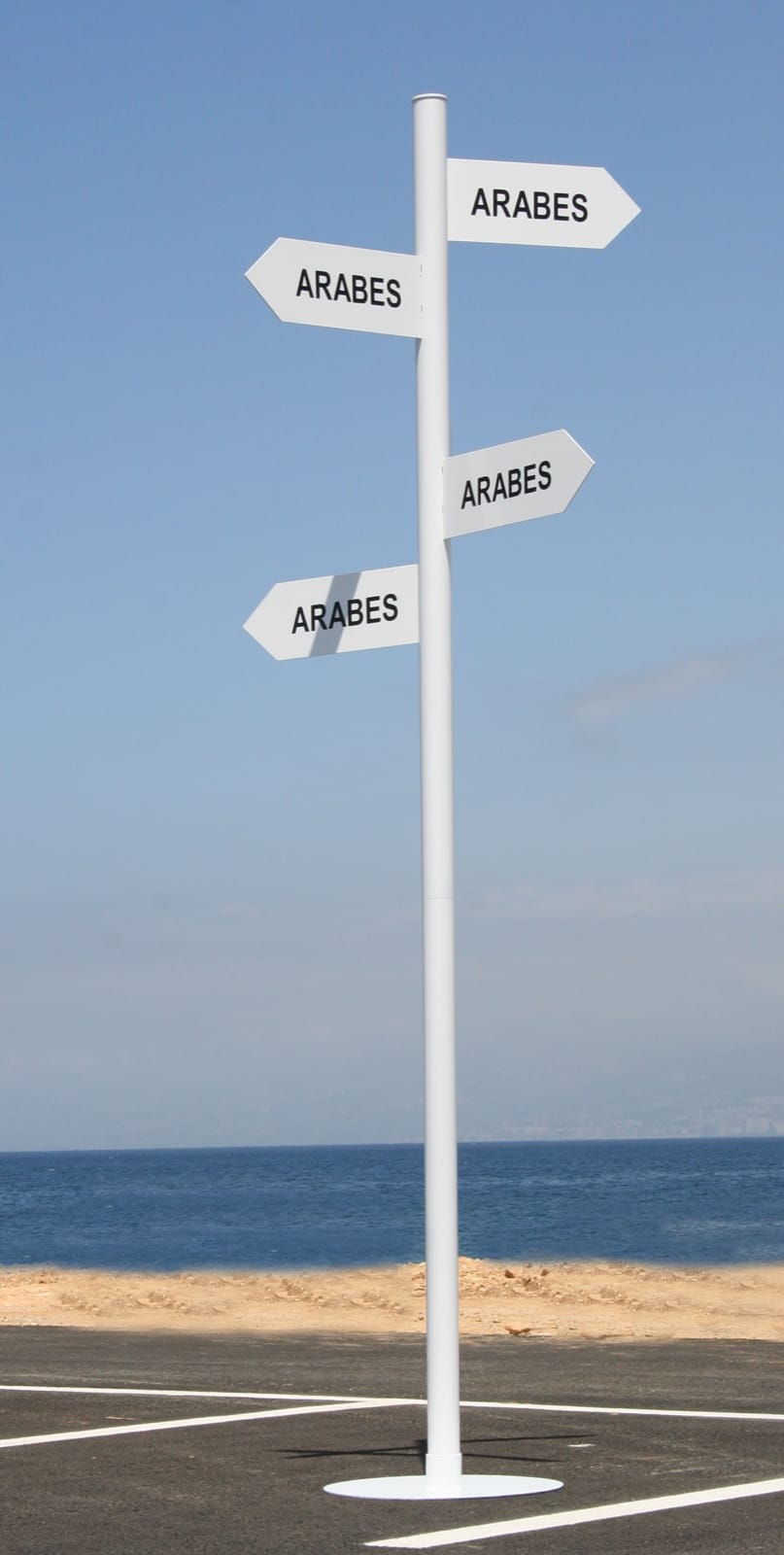
As my boat pulled into the basin of Venice’s Arsenale, the body of water where some of the finest ships of the 14th century were built, I was subject to all that makes Venice charming. Except that this year was different. Even the unseasoned visitor will notice the Arabic names placed on the vaporetti (public boat) stops. These translations were in fact an artistic intervention, brought by well-established Palestinian artist Emily Jacir via the Future of a Promise.
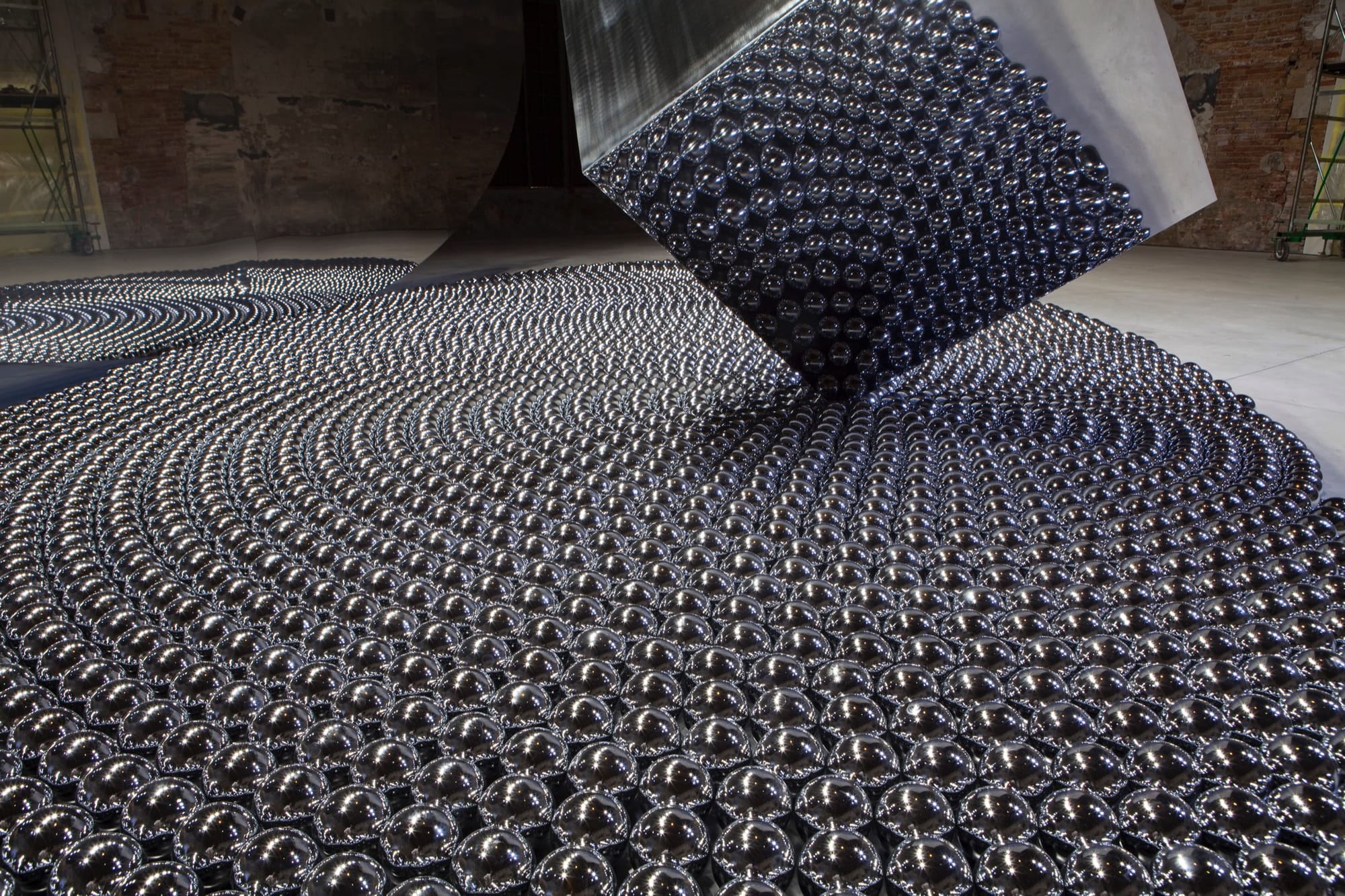
And that is not all, personally, I was with pride upon visiting the first Saudi National participation at the world’s premiere art exhibition. Among the multitude of artists representing their respective nations were Shadia and Raja Alem. The Mecca-born sisters were chosen as cultural ambassadors of the Kingdom of Saudi Arabia for our first entry to the world’s pre-eminent art show. The duo drew from iconography that was very familiar to them. Their installation, ‘The Black Arch’, provoked a stir, representing a pavilion that was one of the first-timers to the Biennale. The work itself was alike a multifaceted meditation; it references Mecca in a complex installation of a reflective cube and hundreds of chrome marbles. Projections of both cities, Venice and Mecca are reflected behind a large black oval wall. At its base, steel balls glisten denoting a plethora of people perambulating the Ka’aba during Hajj. A metal box that sits on a precarious angle is lined with black stones and pebbles that the sisters collected from the Muzdalifah valley outside Mecca. The Alem sisters in effect brought a piece of their homeland to Venice.
As an object, ‘The Black Arch’ commands respect. It sits comfortably within the rough and rugged space of the Arsenale. After reconciling with an initial smooth, polished surface, the viewer walks around the piece to experience its other face, one where your own reflection mingles with ghostly photographic projections of pilgrims praying in Mecca and images of Arab merchants transposed from Venetian paintings. The Alem sisters were very clear in their choice not only to draw upon their own experiences, but to also link them to the city of Venice that hosted their seminal artwork.
Although the visual work was domineering, for the Alem sisters imagery alone would not suffice. The pavilion was filled with sounds. Sounds that one might not associate with Arabia or Mecca, but were truly Saudi nonetheless: the intimate strumming of a lute, the songs of the Bedouins; in short, the sounds the sisters remember while growing up in Mecca. The January 2011 floods in Jeddah destroyed 15 years of Shadia and Raja’s artwork. Days later their mother passed away. Yet on June 1st 2011 the Alem sisters pulled through to exhibit their monumental artwork.
The Egyptian pavilion, directly linked to the political situation in Egypt, represents an homage to Ahmad Basiouny, the Egyptian artist who was shot dead on the 28th of January, during the revolt in Tahrir Square in Cairo. According to the pavilion's statement, the Egyptian ministry of culture seeks to "recognize and honour the life and death of an artist who was fully dedicated to the notions of an Egypt that only too recently demanded the type of change he was seeking his entire life”. The exhibition features Basiouny’s conceptual video ‘Thirty Days of Running in the Place’ and one which he shot during the protests.
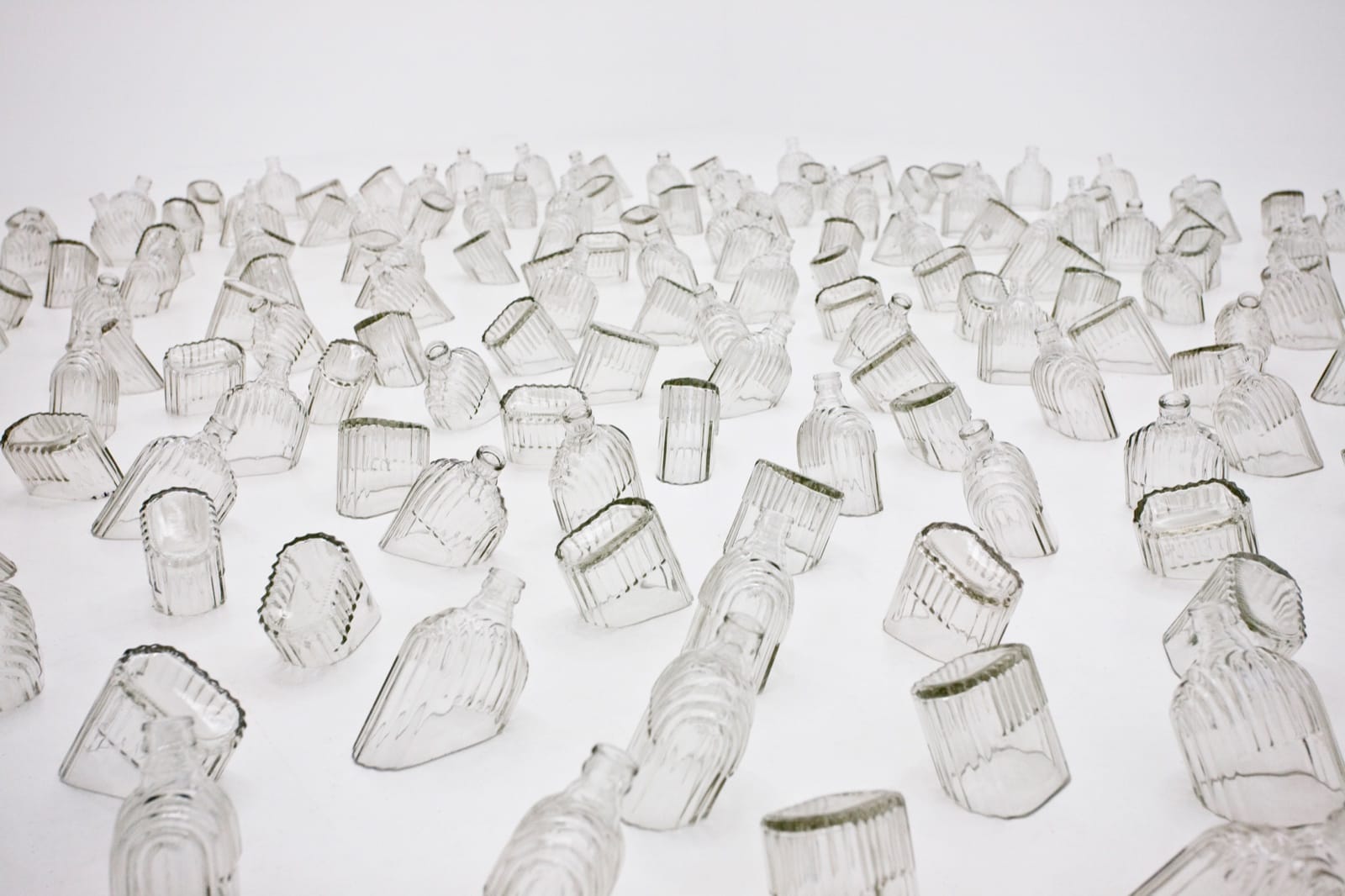
Another big moment was for Iraq, returning to the Biennale after more than 20 years of absence - their last participation was in 1976. The pavilion showed works of six Iraqi artists whose works include painting, installation, video and sculpture and was entitled ‘Wounded Water’.
Turkey, a country with a unique global positioning, linking East and West, Europe and Asia, didn't opt for a political statement. The pavilion of Turkey, represented by Ayse Erkmen, touched on Venice’s relationship to water, a vital aspect. Erkmen's sculptural installation, ‘Plan B’ transformed the pavilion into a water purification unit, filtering water from Venice’s canals only to return the drinkable water back into the canal, drawing attention to the process of transformation. ‘Plan B’ also abstractly depicts systems and processes that we are part of daily: blood circulating through the body, capital flowing through borders, the mechanisms of authority, the supply of natural resources while offering a poetic reference to the potentiality of change.
This year, the water isn’t the only thing being transformed in Venice. Our entire region is undergoing an unprecedented political upheaval, with a palpable message being sent to the world from our artists. And as a continuation of its programme in supporting artists from Saudi Arabia, Edge of Arabia was proud to include The Future of a Promise, the largest Pan-Arab show of contemporary art in Venice. Stephen Stapleton, the director of Edge of Arabia, told Bespoke, “'Two years ago Edge of Arabia presented a grassroots exhibition of contemporary Saudi art at the magnificent Palazzo Polignac on Venice's Grand Canal. Although that show was modest, it was well received by an international audience and paved the way for this year's Saudi National Pavilion and the Biennale's fist pan-Arab exhibition: The Future of a Promise, which we produced. Edge of Arabia are very proud to have returned to the 54th Venice Beinnale, continuing to facilitate timely cultural dialogue and exchange between the Arab World and the International arts community.” This landmark exhibition brought together more than twenty-five recent works and commissions by some of the foremost artists from the region. The Future of a Promise examines the way in which an idea is made incarnate in a formal, visual context and how a promise opens up a horizon of future possibilities, be they aesthetic, political, historical, social or critical. With the events currently unfolding in the Middle East, the question of the future and the promise inherent within culture has assumed an even more acute degree of pertinence. It is with this in mind that the exhibition inquires into the promise of visual culture in an age that has become increasingly disaffected with politics as a means of social engagement. Whilst the artists included in ‘The Future of a Promise’ are not representative of a movement as such, they do seek to engage with a singular issue in the Middle East today: who gets to represent the present-day realities and the horizons to which they aspire? Art for thought, indeed.