Although the party's official guest list was a closely guarded secret, the rumoured 400 or so names was a who's who of the international elite and immediately brought to mind the Great Gatsby: Russian oligarchs, an Australian mining magnate, European aristocrats, Serbian sports stars, a few well-known intellectuals, various international financiers, countless models and whoever owned the private 737 that had arrived from the Middle East.
This wasn't New York in the Roaring 1920s. It was Montenegro last July. Playing the role of Gatsby was the scion of history's most famous banking dynasty, Nathaniel Rothschild, who had invited some of his friends to celebrate his 40th birthday at Porto Montenegro - a massive luxury development for super yachts on the Bay of Kotor.
So how did this disused Yugoslav naval base get chosen to be the successor of Saint-Tropez and Monte Carlo? More importantly, what continues to draw some of the world's most powerful people to this quiet corner of Europe?
On one level it’s the same thing that has drawn empires here for more than two thousand years: one of best natural harbours in the entire Mediterranean and quite simply put, breathtaking scenery. Rocky peaks that look as though they're computer generated plunge vertiginously into deep blue waters from heights of nearly 2,000 metres, leaving just enough space here and there for settlements to nestle in along the shore. The walled Venetian town of Kotor is the most storied of these settlements and the reason I've come to Montenegro.
Indisputably the best way to approach Kotor is by sea, which is exactly how most visitors glimpse this hidden city for the first time - often atop the deck of an impossibly large cruise liner as it makes its way ever so slowly through the narrow waterway. I on the other hand first caught sight of historical Cattaro (the old Venetian name for the city) after driving almost 900km in a decade-old Citroen Saxo and spending three hours stuck at the last border crossing, before finally traversing the hazy 2km tunnel that leads into Kotor from the south. Of course the trials and tribulations of the trip did absolutely nothing to diminish how impressive it was to finally lay eyes on this Mediterranean Shangri-La. If anything, it made it feel even more enigmatic.
After a night of much needed sleep in a glorious boutique hotel in the old town and armed with a German-language map I couldn't read (the tourist office was out of English!), I set out to explore the palaces, churches, squares, archways and monuments whose sum make Kotor a UNESCO World Heritage site.
Although often described as a miniature Venice on a fjord, Kotor doesn't have the 'must-see' sights of its parent city. However, I found that a day (or two) spent wandering aimlessly along its narrow cobbled alleyways was time well-spent, as was chatting with gregarious locals, who are the best source for Kotor's international celebrity gossip - apparently I had just missed the family of Carlos Slim, while the ubiquitous Brangelina are known to drop in from time to time. The story I heard most often was that of an unnamed sheikh who reserved half (or was it all?) of the nearby five-star hotel where James Bond was supposed to have stayed in Casino Royale.
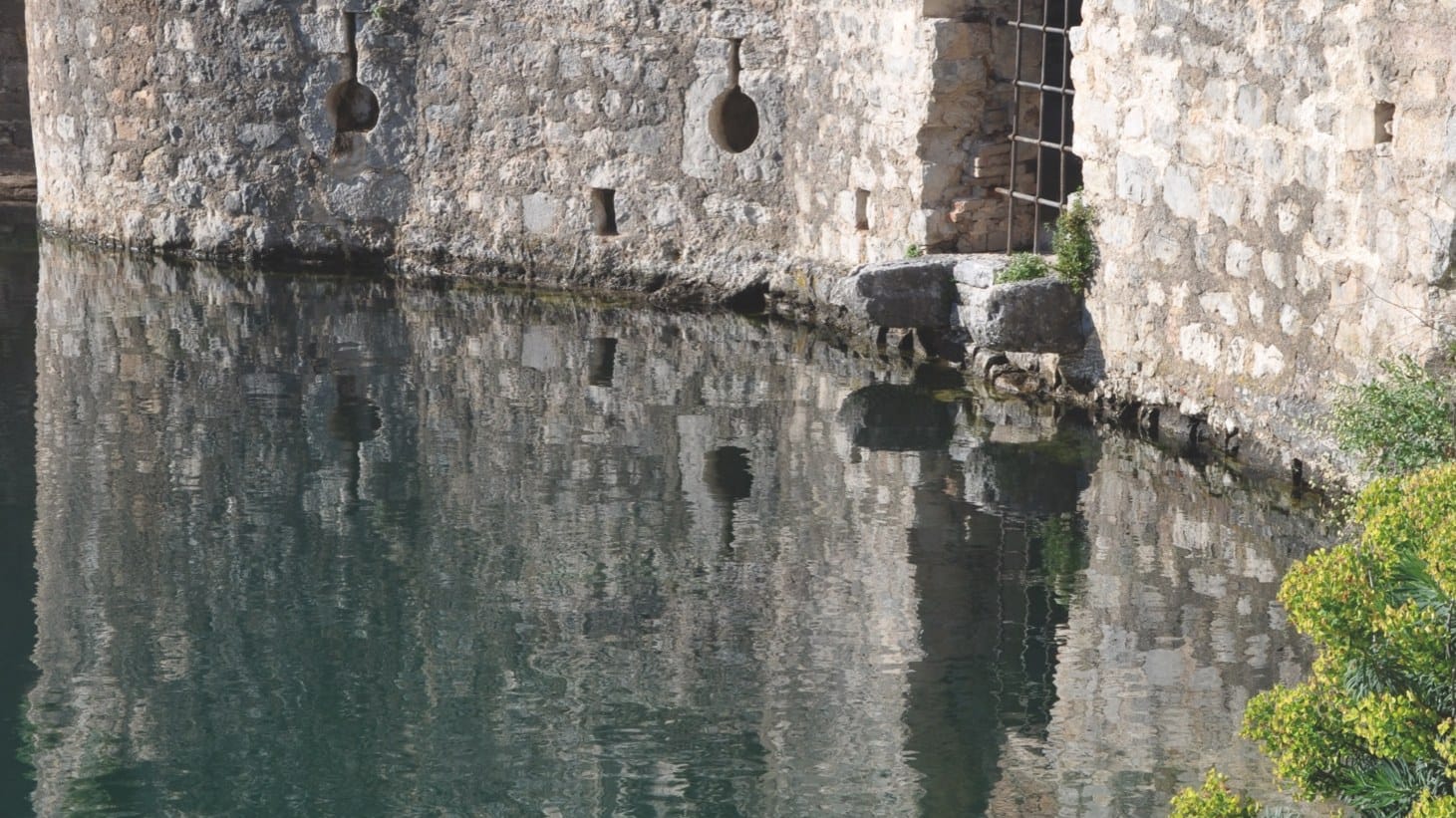
Well-known visitors are nothing new to the Bay of Kotor. Roman generals are largely credited with starting this trend back in the 2nd century BCE. The following millennium and a half brought a succession of conquerors that reads like the syllabus of a European history course: Byzantines, Ostrogoths, Saracens, Illirians, Bulgarians, Serbians and the Republic of Ragusa all left their mark before Venice gained control in 1420. La Serenissima went on to enjoy 400 years of nearly uninterrupted rule, during which Kotor developed into an important centre of trade, and acquired much of its present appearance. The Venetians were also largely responsible for constructing the fortifications that surround the city, twisting and turning up the Mountain of St John.
Reminiscent of the Great Wall of China (albeit it some 2,000 times shorter), the ramparts are open to visitors and offer postcard worthy views of the old town and mountain-lined bay on which it sits. Built to repel the Ottomans, Kotor's fortifications sadly proved no match for a devastating earthquake in 1979, which severely damaged half the buildings in the old town as well. Restoration work progressed slowly and it was not until 2003 that UNESCO finally removed Kotor from its list of endangered heritage sites. However, there are still a handful of semi-ruined and completely overgrown buildings hidden away in the less touristed corners of the town - I found a roofless church by the southernmost gate to be an especially photogenic specimen.
After traipsing around Kotor's old town, playing the part of the intrepid urban explorer, I decided to go for a drive around the inner bay, which is also part of the UNESCO site, taking in the stunning views in every direction while trying to keep an eye on the winding road hugging the coast. As inviting as the water appeared, it was sadly still too cold for an afternoon swim - though it did give me the perfect excuse to return during the summer.
Leaving the ancient walled city behind several days later, on the way to the border, I was reminded again of Kotor’s new appeal as I passed the impressive gates of Porto Montenegro in nearby Tivat.
Home to invaders, but of a (mildly) less rapacious sort, what little I could see of Kotor’s brand new pleasure port, though still modest, looked like it could have been anywhere (wealthy) on the Med. Or the Gulf, for that matter. Call it International Chic. Less distinctive, then, than Kotor’s historic charms but oddly fitting, nonetheless. Here was proof that ancient Cattaro still had it. Today’s conquerors might want Kotor as a destination rather than a colony but it is still coveted, as busy catching the eye of the empire builders of the 21st century and encouraging them to stay, as it has been for the last two thousand years or so.