Close your eyes. Tilt your face towards the warming glow of the Hawaiian sun and feel the cool mountain breeze kiss your cheeks. Breathe in deeply, exhale slowly, and relax. You’ve arrived. Four Seasons Hotel Lāna’i at Koele, A Sensei Retreat is a garden of Eden in a league of its own. As the latest incarnation of the Four Seasons Hotel brand it bears all the elegance and refinement that is synonymous with their world-renowned establishments, and then some. It’s the caviar on a smoked salmon blini. The gold leaf on a Samurai sword.
Set away from the glittering white-sandy shoreline, higher up in the dusty mountains, Koele Retreat is found on Lāna’i, the smallest of Hawaii’s six volcanic islands. Majority owned by American businessman Larry Ellison, Lāna’i was once nicknamed the ‘Pineapple Island’ after the 8,000-hectare plantation built in the flatlands surrounding the Pālāwai basin. Today, the island, which is run amok with 20,000 wild deer, is focusing its efforts on tourism, and Four Seasons is its beating heart.
But Koele Retreat is different. It sits apart from the other Four Seasons, which is a beach resort on Manele Bay. The adults-only refuge is a haven of wellbeing, a hideaway sanctuary that awakens the senses. Landscaped gardens envelope guests on arrival, with a yawning pine tree-lined view descending to the coastline. Voluptuous Botero figurines lie seductively in wait at the front of the plantation-style property – just a hint of the striking sculptures that pepper the 97,000 sqm grounds, all taken directly from Ellison’s personal collection.
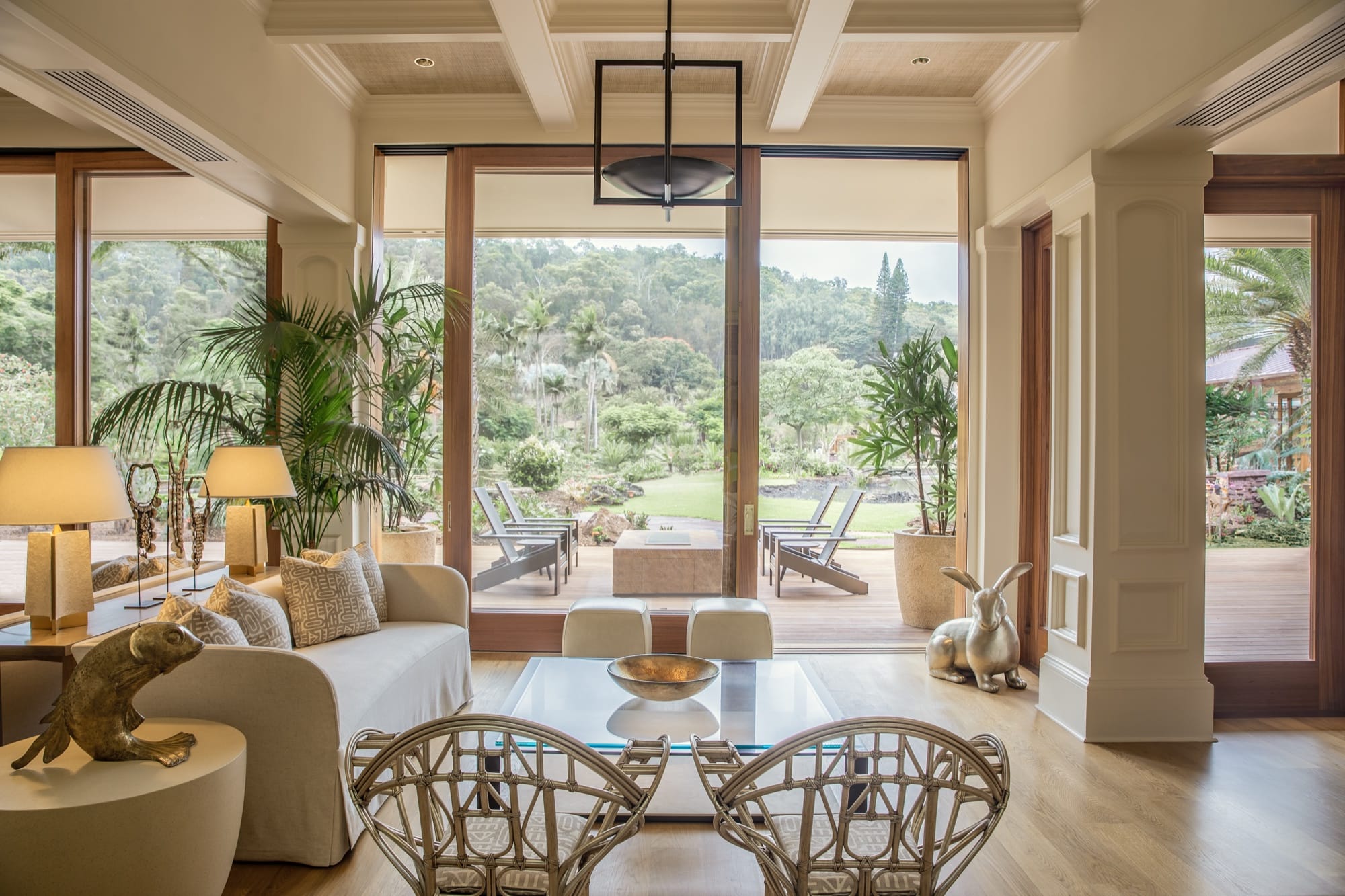
Step inside the 96-room hotel and the eye is instantly drawn to a vast wall of glass that looks out upon verdant gardens. Overlooking the oasis pool is British artist Marc Quinn’s Burning Desire, a monumental bronze orchid painted in fuchsia that is visible from all angles. Newly renovated by Todd-Avery Lenahan of TAL-Studio, the hotel’s grand, high ceilings and re-imagined Great Hall set the design tone. A smorgasbord of specially commissioned artwork by top tier names line the walls, dazzling in golden hues; Summer Kimono by Miya Ando in the lobby, Goldfish by Riusuke Fukahori near the south wall, and Kaze by Harue Shimomoto along the south corridor. There is a commonality that runs through it all. A central theme that invites guests to shake off the shackles of everyday life and surrender to the serenity of Sensei.
A collaboration with, Sensei Retreats and Nobu, Koele is the Four Seasons’ world debut of an all-inclusive offering. Twinned with a fully customised wellness itinerary it takes a scientific approach to good health. Each guest is paired with a dedicated Sensei Guide, all qualified practitioners in the fields of nutrition, fitness, mindfulness, stress management or yoga, who tailor guests’ experience to specific personal needs. But the programme is fluid and adaptable, without even a whiff of pressure to conform. The goal is rested mindfulness realised in the lap of luxury, and the Sensei Guides are the willing sherpas who help guests to climb that mountain.
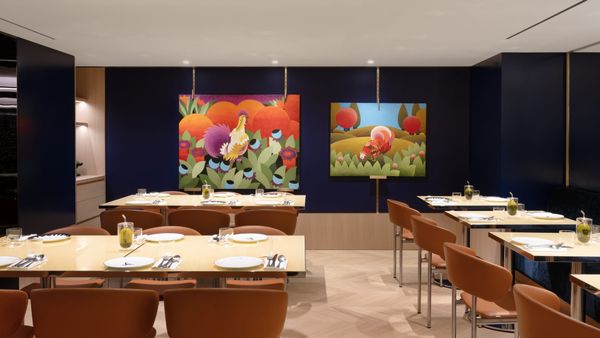
Central to the philosophy is evidence-based nutrition. Housed in a glass pavilion that sits upon a reflective Koi pond is Sensei by Nobu, the only restaurant on location. Executive Chef Yoshi has blended years of culinary experience with a scientific approach to delicious food, elevating the menu to a higher ground. Traditional culinary ingredients have been replaced with healthier, more nutrient-dense oils. Smaller servings of animal protein sit alongside larger servings of vegetables, much of which is grown on Sensei’s organic hydroponic farm on Lāna’i. This is applied to breakfast, lunch and a mouth-watering five-course dinner, where Nobu signature dishes, including miso marinated black cod and grilled Wagyu, are served together with flavoursome, locally-inspired creations, such as roasted lobster and seafood shabu-shabu.
A minimum three night-stay is the recommendation, extending to seven nights to truly embrace all that is on offer. And there is so much. Signature spa treatments take place in one of ten private spa ‘hale’ – dedicated standalone suites set in the lush grounds. Each comes complete with oversized treatment tables (for individuals or couples), an indoor and outdoor rain-shower, infrared sauna, steam room, Japanese ofuro bath, private salt-water plunge pool and lounging area. One of four signature scents permeates the air. Dedicated hale time is highly recommended. Two hale also feature outdoor Watsu pools for water Shiatsu, a weightless massage that eases tension by being cradled, twisted and gently stretched in a body-temperature outdoor pool. Much like the entire retreat, it induces a deep state of waking relaxation.
Spa treatments and group sessions are founded upon Sensei’s three guiding pillars – movement, nourish and rest. Take evening Vinyasa yoga on the pavilion deck. Opt for strength training in one of two movement studios, or experience suspension training in the dedicated fitness centre. A leisurely stroll around the gardens will lead to the jewel in the crown – a stepped waterfall garden wrapped around ten heated Japanese onsen baths.
What Koele Retreat offers is room to breathe. Far from the madding crowds it teaches a slower pace of life. A place to take stock, and rejuvenate from the inside out. Bolstered by island excursions like a sunset sail to Sweetheart Rock or a visit to the moonscape grounds of the Garden of the Gods, the intention is to nurture and grow mind, body and soul. And for what it’s worth, it works.