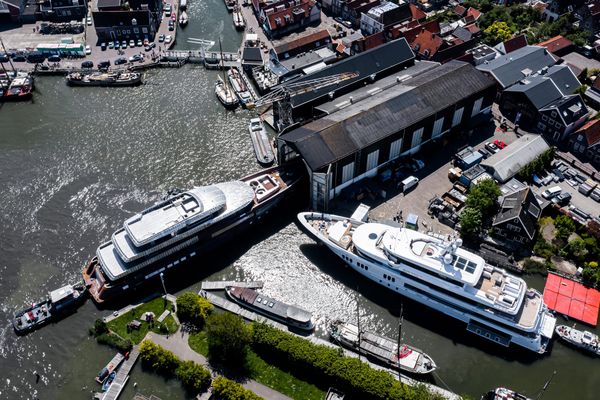
Freivokh, a qualified architect, an enthusiastic sailor and a great designer to boot, is not afraid to experiment and draws inspiration from everything around him, including the high seas. In more than 30 years, he has participated in many races - from the Fastnet race in 1979 to the Channel crossing.
What makes him stand out above the rest? His originality. If we are to look at the impressive list of boats he has created over the years, it becomes glaringly apparent that each design differs widely from the next. In short, each blueprint is justified to wear the crown of being a true and unique masterpiece that personifies both technical genius and artistic freshness.
While many other designers tend to fall into the pit of repetitive work and accepted formulas, Freivokh continually seeks the opportunity to create, innovate, experiment and build.
Mario Najm Celebrated for your award-winning, out-of-the-box solutions and superb designs, our readers are eager to know more about you. The floor is yours.
Ken Freivokh I was born in Los Angeles, California, USA. All four grandparents were born and lived in Ouman, Russia. My father was French, and my mother was born in Chile. At an early age, our family moved to Peru, were I completed my Bachelor of Science studies in the University of Engineering, and later received my Master of Architecture at the Faculty of Architecture. I was awarded the Duke of Edinburgh scholarship for studies in Europe, and elected to carry out postgraduate studies at the Royal College of Art, London, where I received a Engineering Master of Design. I am a member of the Society of Industrial Artists and Designs, and also a long-standing member of the Royal Institute of British Architects. Also following years of competitive sailing, I am fully qualified to Yachtmaster Offshore standard.
Your company has won several awards for its interiors, design as well as accolades for ‘The World’s Best/Largest Sailing Yacht’. Who is the team behind these creations?
Our team comprises of German, Spanish, French and English designers. On projects such as Maltese Falcon, we have worked with Dutch Naval Architects and top carbon specialist, Insensys - the developers of high performance, low cost, fibre optic load measurement technology.
You have pioneered the latest axe-bow phenomenon. What does this feature mean in layman terms? What does it entail? And what are its inherent advantages?
The axe-bow, or reverse bow, allows the water to ‘see’ the yacht as longer, and it is a physical fact that a yacht can travel through the water in displacement mode in direct proportion to its length. Therefore, with minimal machinery, the yacht can easily attain speeds well in excess of the speeds that a conventional raked bow would achieve. The fact that it may be seen as futuristic or ground-breaking is only incidental to the real reason for our adoption of such a solution. Further, the longer waterline length also helps to minimise fore and aft pitching and will tend to reduce the wake created as the yacht moves through the water. Naval architects such as Martin Francis have recently tested such solutions with the yacht ‘A’, but the principle was well established many years ago and for some reason abandoned in favour of raked bows of what we now regard as conventional craft.
Your latest creation, the 286-foot ‘Maltese Falcon’, wowed the crowds at the Italian Yacht Club. Is this your latest launch? What are its specification and extra features?
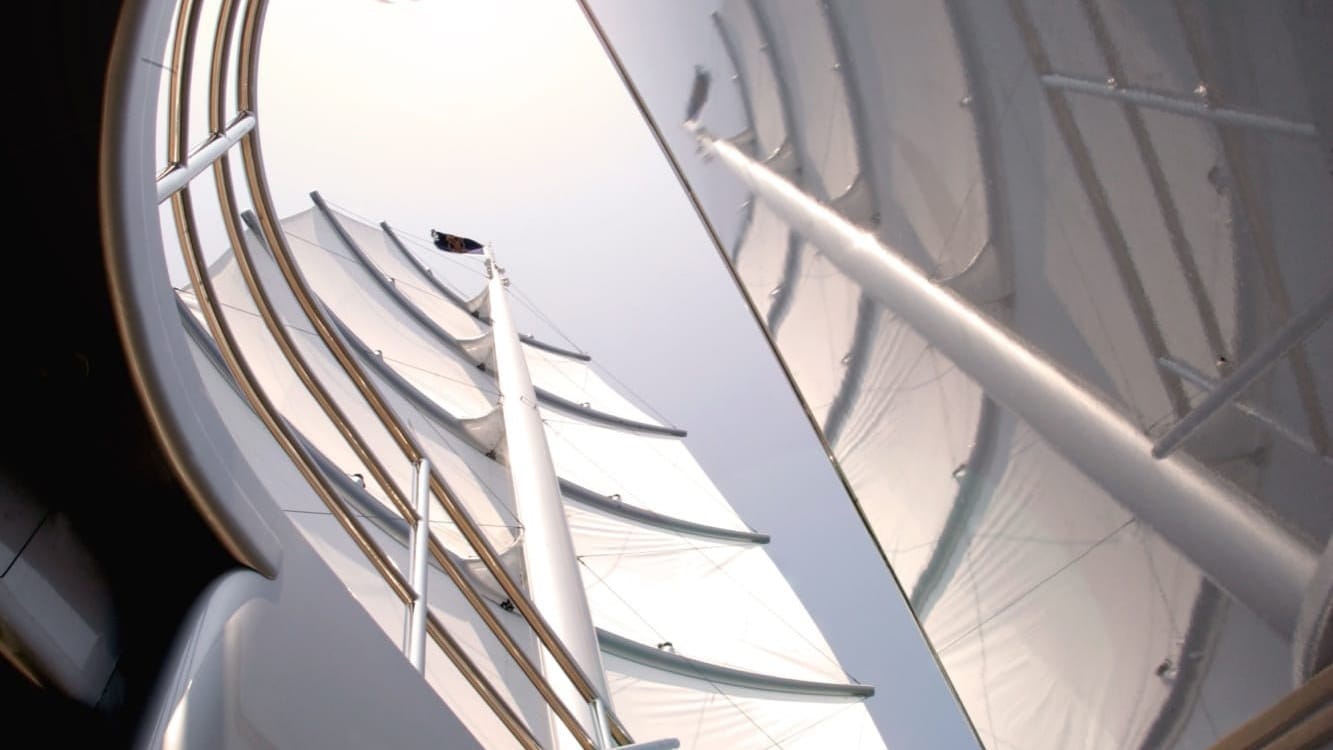
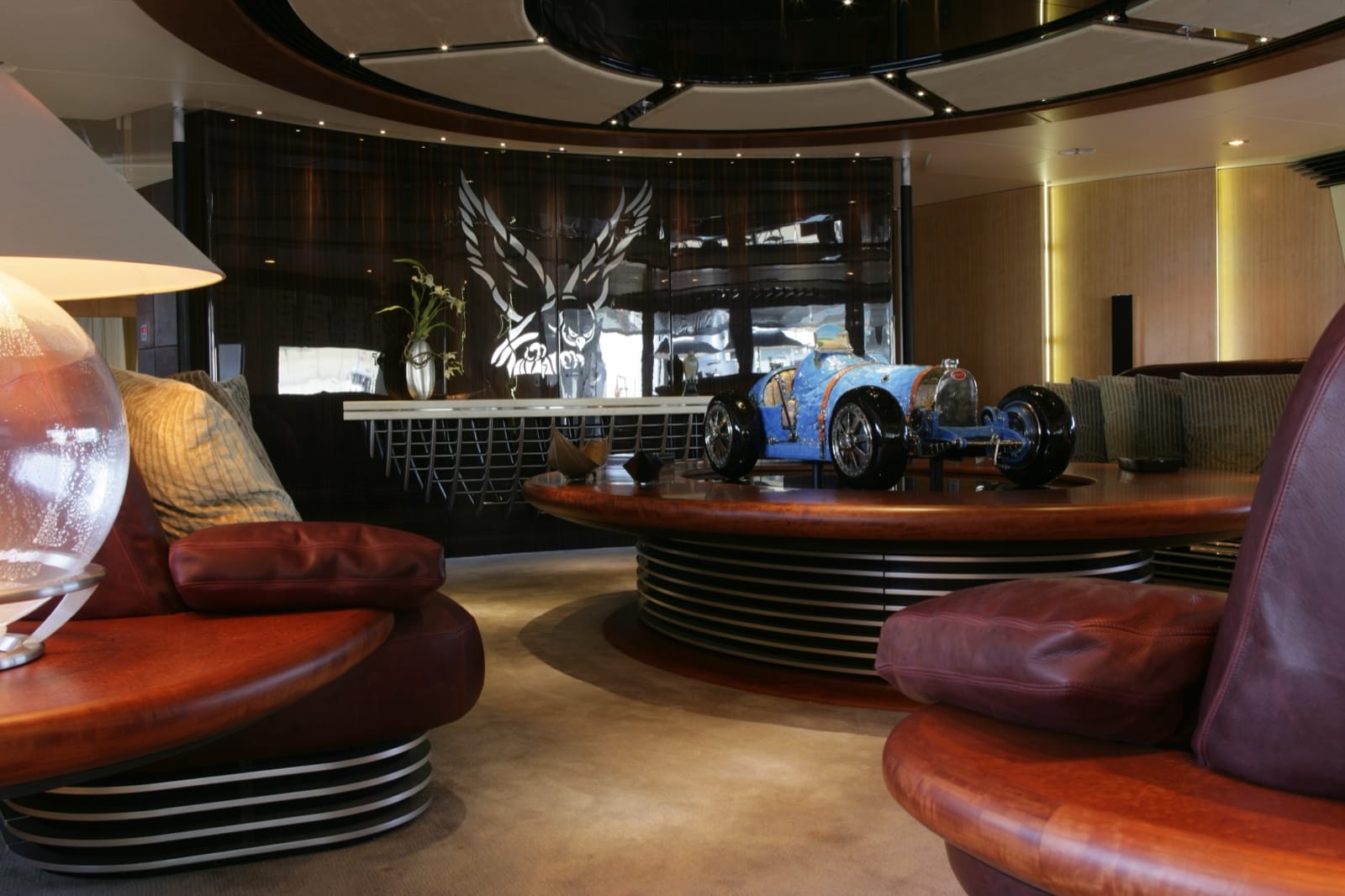
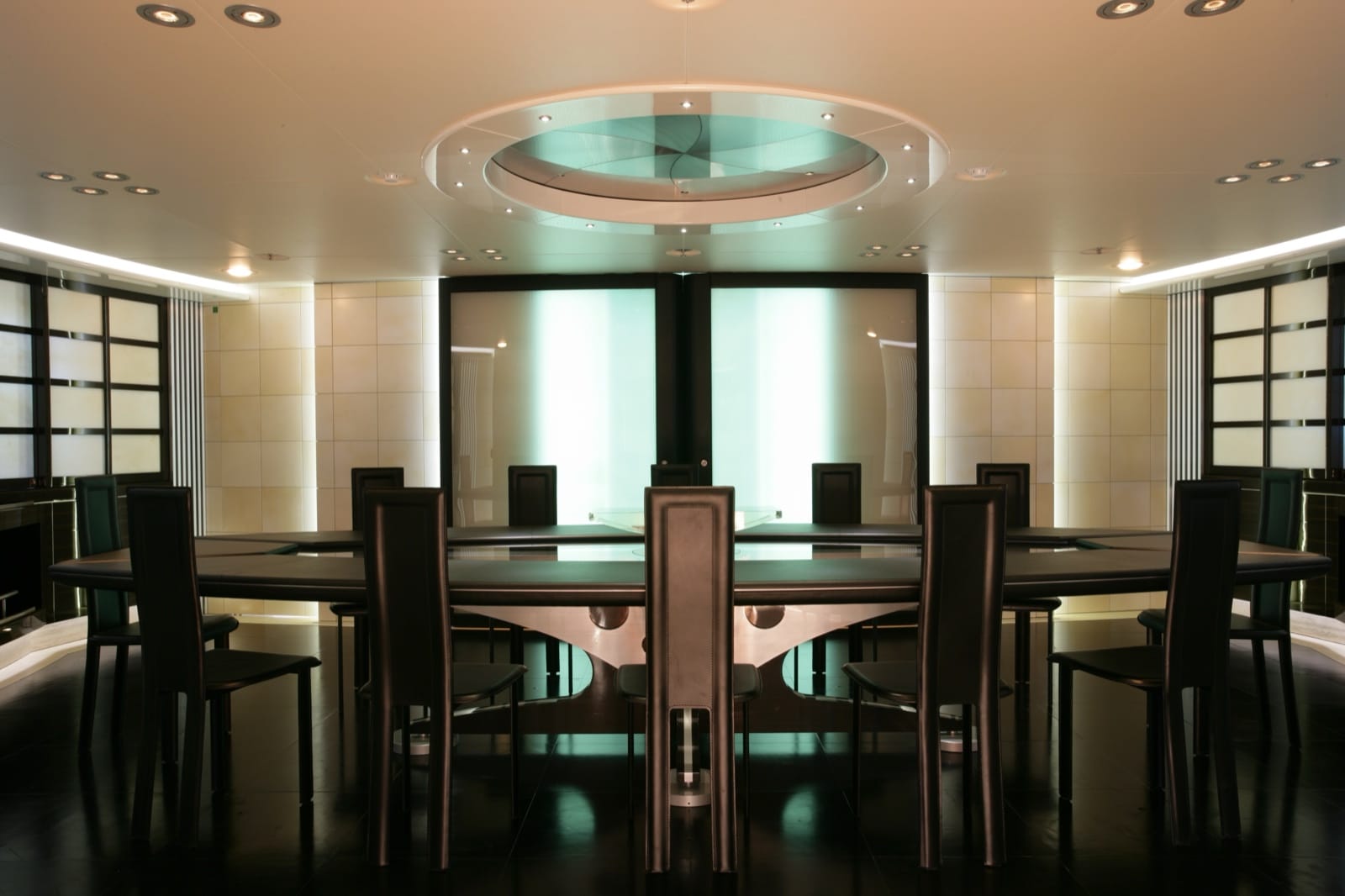
Maltese Falcon was indeed ground-breaking, but in more ways than one – the masts are the largest carbon structure in the world, the sailing system is totally new and highly appropriate for controllability, safety and efficiency on an ocean-going, long distance cruising and large sailing yacht. The layout concept avoids the conventional solutions of long corridors and compartments, to create a totally open internal space-both horizontally and vertically-through use of a very special atrium and glass floors. There is also innovative use of new materials, new technologies, etc.
What do your innovative yachts offer that others do not? What are your design philosophies that set you apart from the rest?
Our approach is to analyse the brief and the requirements from first principles, which always helps us to arrive at unconventional solutions, which may be more appropriate to solving the problems and requirements. In short, we rely on lateral thinking and out-of-the-box thinking methods. Most other design teams may produce pleasing designs, but within the restriction of accepted principles. For example, what determines the shape of a milk jug and a teapot? If our team where to be asked to design them, we may well find that they should be designed the other way around – the milk jug may well work better if the spout draws the milk from the bottom, and the tea pot may well work better drawing from the top. However, even though such designs may indeed prove better, they would be in defiance to conventional wisdom and public acceptance – it is always daring and sometimes foolish to move too far from convention, but our team will still insist in going through such analysis, and will not be afraid to come out with new design solutions.
Before you embark on a project, do you establish a relationship with your client to understand his/her needs before letting your creative juices flow?
The most important aspect of such a relationship is to understand what the owner is really after. With the owner of Maltese Falcon, we raced and lived aboard his previous yachts and visited his homes - all to understand his lifestyle.
How much would an average yacht cost if you were to design and manufacture it? Where do you manufacture your yachts?
In the range of fifty million euros. However, we do not manufacture them; they are built all over the world.
In light of the world financial crisis, do you perceive a negative effect on the future of private yachting? In your opinion, will the current recession affect the demand for your designs in the long-term?
The lack of readily suitable finances will certainly have an effect, as will concern to be seen ordering a new yacht in a time of crisis. However, life must go on, and most clients will still wish to proceed with their projects and dreams. Further, our designs are totally unique and will continue to appeal and generate interest, irrespective of the difficult situation.
With world governments scrambling to curb global warming caused by carbon emissions in all sectors, do you feel that now is the time to concentrate on pioneering 21st century environmentally-friendly designs? How ‘green’ are your current designs?
We are already involved in designs for yachts using fuel cell technology, and of course, our sailing yachts are more environmentally friendly.
PAGE
PAGE 1
Mario Najm/Ken Freivokh Interview