“I love luxury, I love to create. I believe that luxury says something about us; it is a state of mind, not so much a product.” Listening to Cairo-born El-Shahat, it’s hard to imagine that he actually read Engineering at Cambridge, then worked in banking before following his dream and founding Tavola Rasa. It was while studying at Jesus College that he was first exposed to the marriage of aesthetics and functionality, “I had a ground room floor which overlooked the chapel – it’s beautiful. I realised that even though it was a small building, people went out of their way to look at it. Beauty and quality – that is why things survive.” A few years later, El-Shahat was working in finance and collecting furniture as a hobby when he found out his sister was making a documentary on the economics of furniture. “And I decided, you know what, I’m going to make the furniture I’ve always wanted to buy.” The name Tavola Rasa comes from his time at University. Bored with engineering lectures, he attended talks at the Philosophy department, and was particularly struck by the concept Tabula Rasa (the clean slate), a theoretical condition of the human mind before ideas are imprinted on it by external objects.
As befits an engineering graduate, El-Shahat believes that design is not the problem when creating an item of luxury, it’s ensuring that the interior is as well made and well finished as the exterior. “I make my furniture from the inside. It’s all made and finished completely by hand,” he explains. By looking at the objects that make luxury real: drawers that open and close smoothly, cupboard panels that don’t catch the material of your shirts or blouses, he aims to create furniture that will be handed down from generation to generation.
El-Shahat designs all his pieces himself, and sits with those clients that wish to buy his haute-couture furniture on more than one occasion to get the best idea of what they are looking for in a piece of furniture. Once designed, the furniture is made from wood taken from renewable sources at his workshops in Trujillo, Spain or Alexandria, Egypt. “My craftsmen are the most talented people I know,” he states, even though he is involved in every stage of the piece’s creation. As business increased, El-Shahat found that not all clients wanted to wait six months for a unique piece of furniture. “So I developed my demi-couture line. It is of the same quality, but the customer does not have to wait, or go through the design process.” London’s Harrods has recently started stocking seven of his collections in the Campbell section on the second floor, one below the other furniture collections in the store. Far from being bothered by this, El-Shahat is delighted – it fits in with his overall view of how his furniture should be seen by his customers. It’s all to do with “art as functional furniture,” he explains.
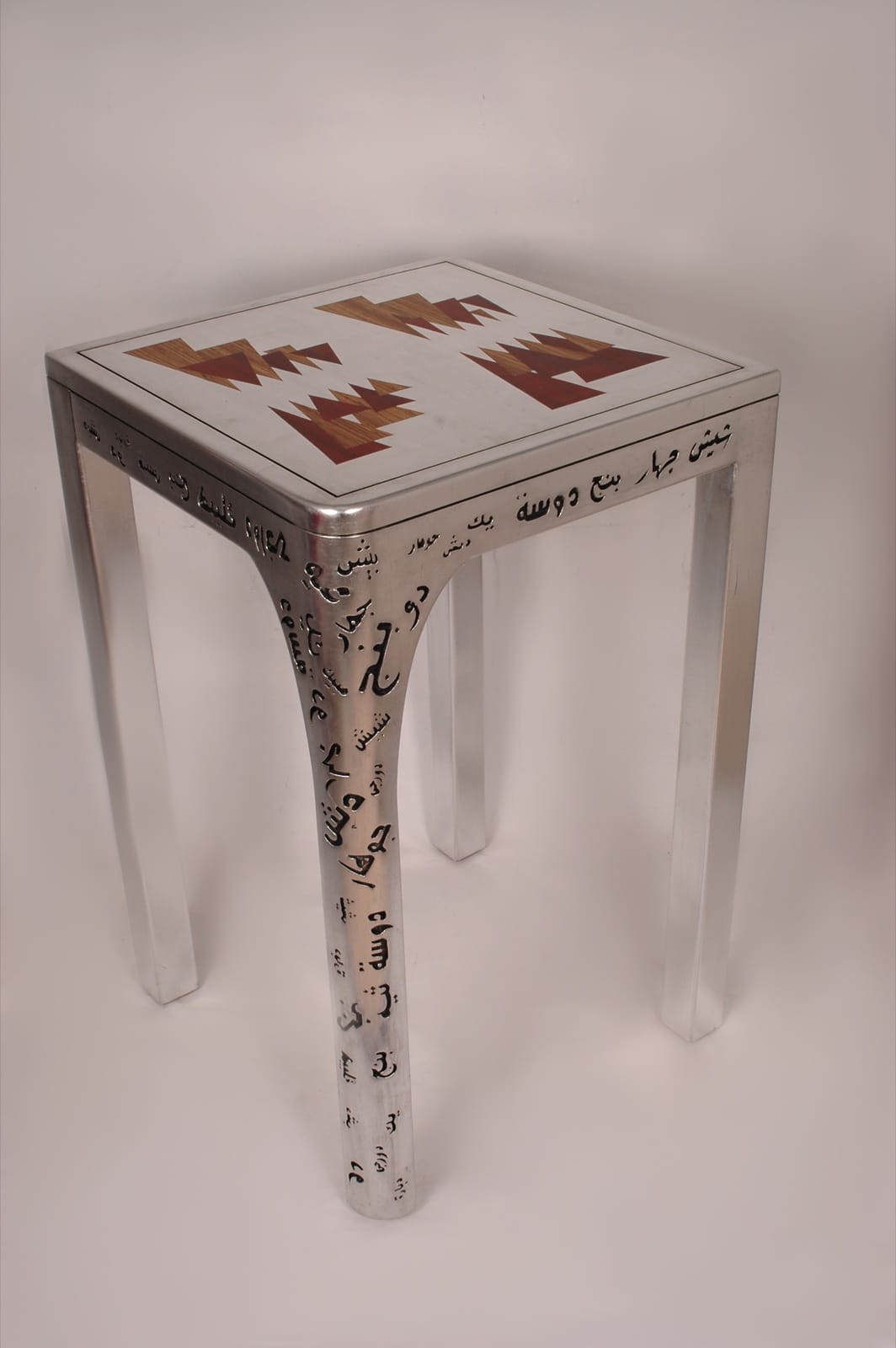
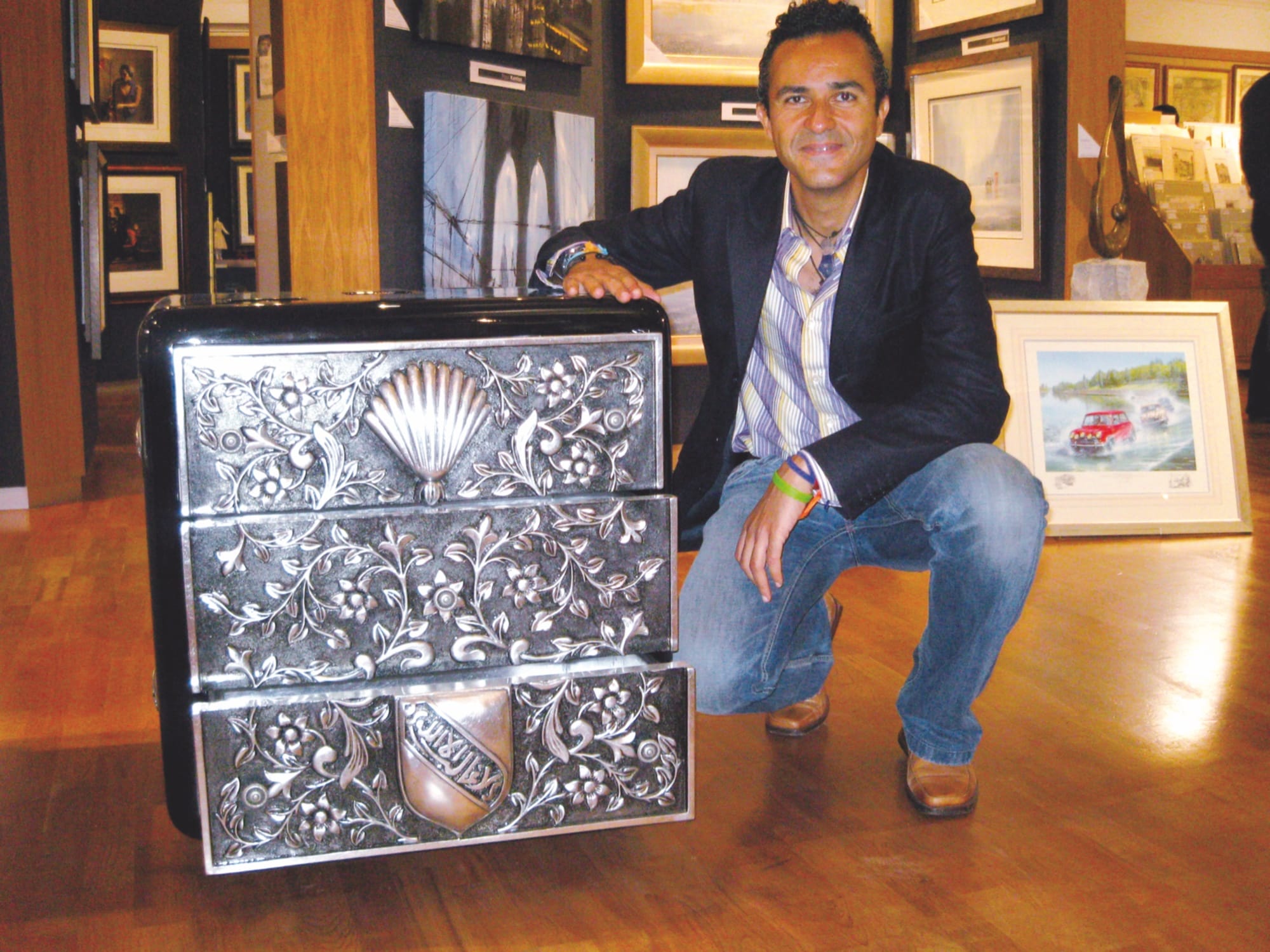
Whether the piece is haute-or demi-couture, the quality of the wood, attention to detail and the finish is the same. “Ninety per cent of my clients probably don’t see beyond the design of my pieces. But my job is to go beyond design,” explains El-Shahat. And looking at his pieces, displayed in Harrods, you can see that the finishing is exquisite. Every surface, visible or not, is completed to the same quality. The underside of the ‘Mutant Hypogriff’ chest is covered with distressed rubbed copper leaf finish, just as the visible surfaces are. Each piece is unique, for example, his mirror frames incorporate the natural knots of the wood into the design, creating truly unique and collectable pieces.
One of these is the double semanale entitled ‘Salomé of the Fourteen Veils’, a beautiful piece of work designed for today’s business woman. Standing at nearly 1.5 metres high, it holds 14 drawers, two for every day of the week. Other work reflects his interest in the diversity and merging of cultures and can still be found in the world today – his ‘Risk and Cultural Conflict’ collection combines elements of Christian and Islamic Spain in its design.
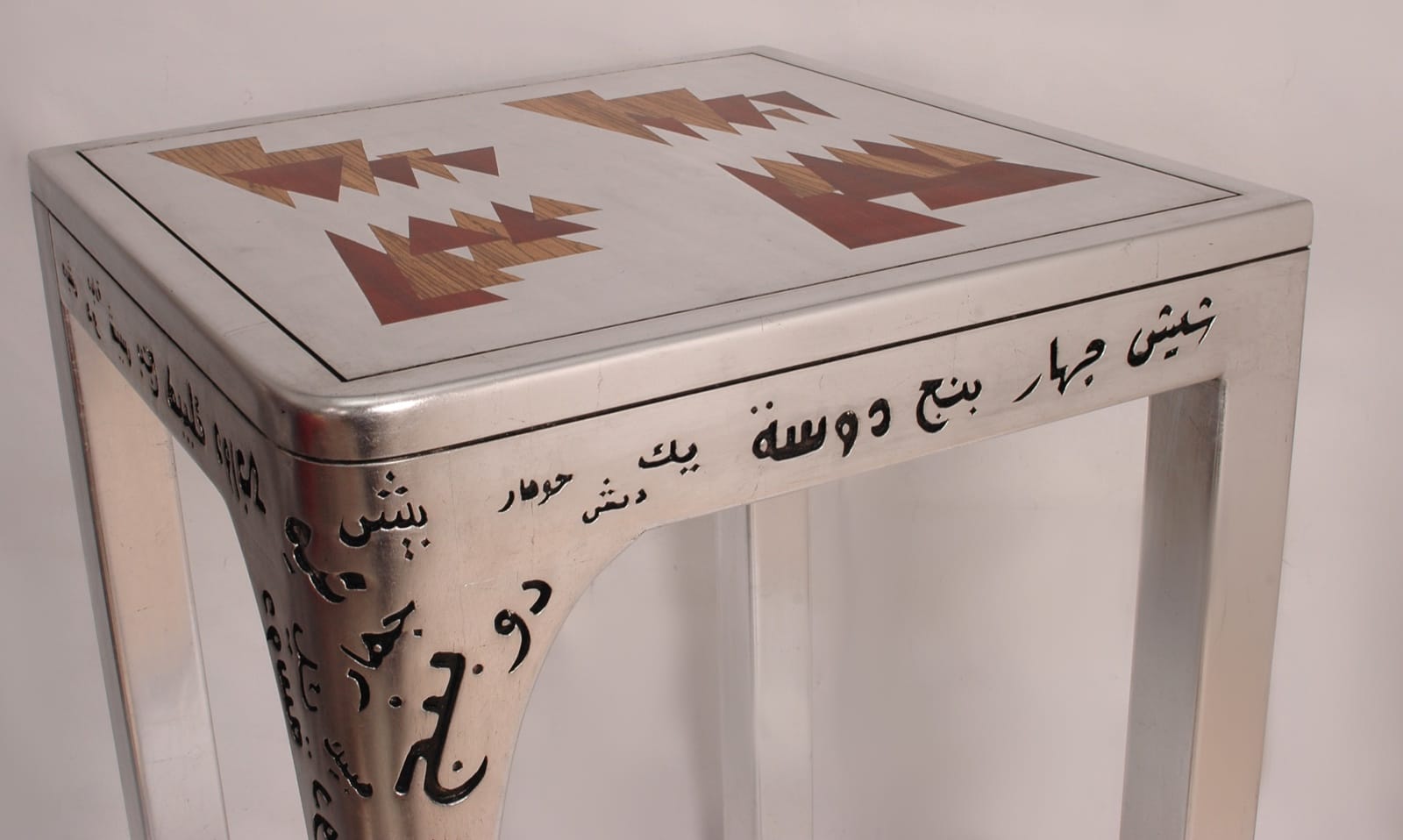
As well as selling individual pieces to clients, (customers include fashion designers, leaders of industry and royalty) El-Shahat also undertakes larger-scale projects. The most recent and high profile of these has been the refurbishment of Chloe, an exclusive private club in London’s stylish South Kensington district. Using pieces from his ‘Risk and Cultural Conflict’ collection, El-Shahat created an environment where, “my furniture and the punters can feel at home.” There too, the uniqueness of his work can be seen – no two mirror frames are alike, and the black and silver colours of the furniture blend perfectly with the stylish interior of the club.
But it’s his relationship with his clients, old and new, that El-Shahat will continue to cherish. “I don’t set out to make something that would be considered ‘vintage’, but at the same time I aim to make something that has a pedigree. You make something that is beautiful and contemporary; everything that is vintage now was new and contemporary once.” And as long as El-Shahat continues to create beautifully designed items for the home that can be handed down the generations, tomorrow’s vintage furniture will be safe in his hands.
Contacts