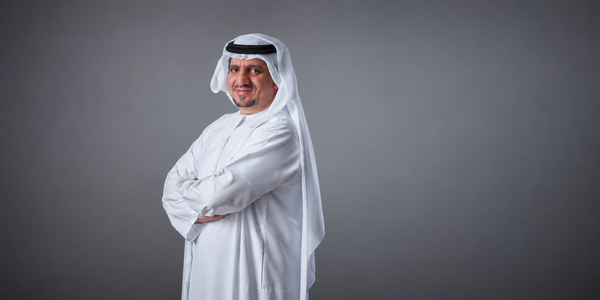
There are but a few art collections that can rewrite history. Yet there are only select individuals that manage to do just that. Syrian-born businessman Rifaat Sheikh Al Ard’s passion and pride in Islamic art began at the tender age of 11 years, having spent a chunk of his childhood in Spain when his father was appointed Saudi Arabia’s Ambassador to the European country. A vast land steeped in Arabian history, art and culture, with hammams, mosques and artifacts bearing witness to the pinnacle of Islamic power. “There is so much history in Spain,” says the mild-mannered and extensively well spoken collector. “The Arabs were there for 700 years so our influence was obviously great. So, I began to focus on Islamic art.”
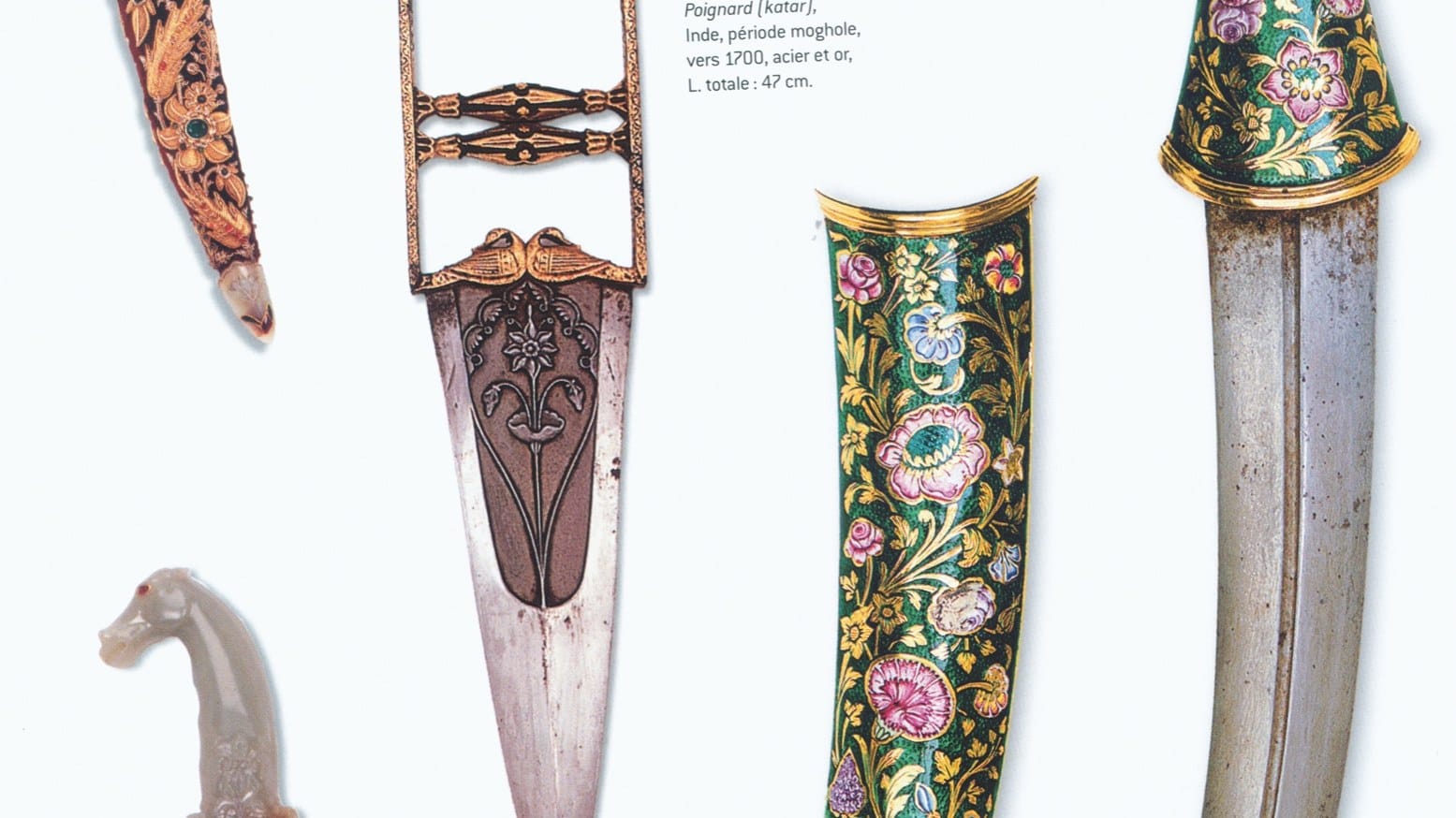
Rifaat Sheikh Al Ard is by all accounts a self-effacing man, preferring to be in the background, to be judged through his work, his contributions to society and his dedication to bringing into the fore the glories of our Islamic past. He is so keen on not being in the limelight and not exposing himself as a person that he gingerly requested that I focus on what appears to be his seminal work: a 1,000-odd collection of arms and armoury relating to the Furûsiyya, which loosely translates to the Knights of Islam. Four- hundred-and-one works of art including spears, shields, masks, spurs and daggers can be currently viewed at the Institut du Monde Arabe in Paris as part of the Furûsiyya Art Foundation collection. The exhibition will then move onto other European capitals. Sadly the Middle East is not on the itinerary.
In all fairness, the collection is impressive, telling the tale of a man who took the painstaking time – an outstanding quarter-of-a-century – to see his dream realised and then to share it. As with all acute businessmen, he knew how to delegate, selecting the best and never giving up. In the early 1980s, Sheikh Al Ard teemed up with Islamic Art expert and Pakistani-born Bashir Mohammed whose reputation as a dealer and expert was only matched by his stellar and unparalleled knowledge of the field. Together, they began researching and tracking down weapons used by Islamic Knights between the eighth century and the seventeenth century at which time firearms became the power du jour.
Collector and dealer have managed to achieve quite a feat in bringing together this extensive and awe-inspiring collection of cold weapons – those that are made of steel, hand-held and requiring person-to-person combat. The exhibition includes the weapons used by the Turkish Al Arisiyya tribe which were the only Muslim warriors to protect a Jewish tribe known as the Al Khazars – they would later be identified as the antecedents to the Ashkenazis. On display, you’ll also be blown away by a crusader dagger with Arabic script crafted into it as well as the Saint George Cross. It was thought to have been a gift offered to Al Kemal, the Sultan of Cairo, by a very appreciative King of Jerusalem, Frederic II for political services rendered.
But my question remains, when you have such a willingness to invest, why not go for the European masters, the Greek antiquities or even contemporary creations? Without hesitation, as though he has been asked this question an exhausting amount of times, Sheikh Al Ard iterates, “It’s important to collect objects that are related to your heritage, those for which you have a preordained feeling.” One thing, though, comes across clearly. Much like the Knights he brings to life, Sheikh Al Ard is on a quest to engender a positive almost idealistic view of Islamic culture and warfare. History may never be the same again.
Rana Ballout What does it take to become a collector?
Rifaat Sheik Al Ard Passion. Without a doubt it takes passion. [chuckles]. You also, obviously need to be patient. But you have to really love what you are doing because you can stay up all night following an object or discussing it with traders. It is very exciting.
What was the first object you felt passionate about?
Sheik Al Ard It was in the early 1980s at an auction held by either Sotheby’s or Christies, I am not quite sure. It was a tray stand from the Mamluk period [1250AD-1517AD] dating to the fourteenth century. You put an object like a cylinder on the floor and you can place a tray on it. The main idea was that you could place your knees under it and thus eat comfortably. It wasn’t really an innovation but they used to sit on the floor, like many people still do so today, and they place the tray on it. It also had some calligraphy.
Why did you choose to get into Islamic arms and armoury?
Sheik Al Ard Well, the strength of my collection is basically in the arms and armoury. I chose this particular specialty because I wanted to be able to gather the best collection possible. And at the time when I started collecting no one was really interested in this particular type of art and craft, so I decided to go for that. I couldn’t compete with other collectors and museums in such things as calligraphy, metalwork on miniatures because they were so far ahead of me, so I decided to take a different path. It was an untapped area to look into.
Bashir Mohammed [Also] There are 1,000 items [in the full collection] but we are showing 410 of them. The rest are in store. We wanted to include the representative items. The collection has been in the making for just over 25 years. The fact that this sector of Islamic art was untapped made it all the more difficult to source the items because you had to go around and find them. Plus some items are so rare or one-offs that not everything could be bought.
How would you define good Islamic art or collectibles?
Sheik Al Ard You have to train your eye for that. The most important thing is to visit museums over and over. You should keep going back to see the quality pieces to be able to identify them and then you start looking for pieces in the market that come close to that. It is a question of training one’s eye. When you have the opportunity to view an exhibition on Islamic art, I urge you to go and do it. It is a must or else you don’t get the feeling or the training that you need. It is vital to keep viewing them.
So is it difficult to tell a forgery from the real thing?
Mohammed Obviously you need to have a background in Islamic art in general and you have to have lots of experience. And as a dealer you have to put your money where your eye is. So if you make a mistake you lose a lot of money. And since there are fakes out there you need to do a thorough examination. Dealers are akin to doctors but [what we do is] more difficult because recognising a good piece of art or a bad one requires criteria that is in the mind and has nothing to do with physical reality so it is a conceptual in nature. You basically need a good eye combined with learning and a good background.
How do you source the material?
Sheik Al Ard You need to have the right people sourcing the material. People with a good eye and a lot of knowledge. Luck also plays its part. [chuckles]. I have friends who say that they want to get into Islamic art and then decide to invest in ten objects. That’s the wrong way to go about it. It is best to buy one object for the same price that is real quality than ten which are mediocre. The latter will never make a good collection. Also, start with one great piece and work from that.
Is there a price range?
Mohammed I am not going to go into the value of things. It is distasteful and I think that everything in this collection is priceless. But you’ll find, in this collection, swords that belonged to rulers like [Ottoman Emperor] Suleiman the Magnificent or to [Sultan] Salahuddin himself. They are so rare. The masque itself is a unique piece.
What are the differences in the artistry between the Christian Chivalry arms and those of the Muslims?
Mohammed This is a long and academic subject. Basically the European swords were straight and mostly for cutting and stabbing. During that period, the Muslims used the sabre sword which is a slightly curved sword. Also the Muslims artefacts actually do look more like works of art.
Sheik Al Ard Simplicity, purity. It has to do with everyday life. You don’t have an object in Islamic art for the sake of the object. Everything has to have a use. You don’t have a statue for the sake of just looking at it. Everything has a purpose. You may have a fountain made into the shape of a lion’s head which is now considered to be a collectable but it also has the use of being a fountain. A bowl is for eating or drinking. The arms and armoury even may have been beautifully decorated but they were used – there was no such thing as creating a rifle just to hang it up on the wall.
What do you think it is about Islam that has made the weapons of the Knights more artistic?
Mohammed The earlier weapons are not as artistic as the later ones. But basically the reason is that the outlook on war was slightly different, especially in later times. Even though you did have Christian Knights going to battle for God, the Muslims had an ideal that they could imitate and that was Ali. There were Sufis which called themselves the Mourabitoun which had no idea on how to be ferocious or warlike for its own sake. Their lives were given to the devotion of God. So for them it was not hatred of the enemy but love of God which dominated the whole spirit. The greatest warriors in the Ottoman army was a core known as the Jannisary – they were Europeans who were captured slaves brought up in the palace as Muslims. They were members of a Sufi order called the Dakashi. You’ll also notice that the military music does not have a military tone but rather it has beauty further emphasising that the warrior would go into battle to meet his beloved God. And that would be a joyous thing. Since war in the name of God is a beautiful act, they would beautify everything around them. Today, people have forgotten the ideals of the past. Today, when you go to war you try to kill the maximum number of people. In the old days, you would try to gain your objective with the minimum loss of life. The attitude was very different. Now you kill as many people as possible without possibly gaining your objective.
Is there an item that has escaped you?
Mohammed Yes. The Zulfikar sword. It was given as a gift by the prophet Mohammed to Ali, who was the prime example of what a Knight should be. As the Quran states, “There is no warrior like Ali. No sword like Zulfikar.” Nothing has been heard on the sword since the ninth century. Also, contrary to popular belief the Zulfikar is not a double-edged sword but a straight one.
What defines an Islamic Knight?
Mohammed The Knights actually followed a strict code of honour and combat and that is why they were defeated in the age of the firearms. Knighthood as we know it disappeared both in our region and throughout the world when firearms began which was from the 17th century to the 19th century. Although Muslims also had firearms, they would use them for siege purposes only to blast down walls but not to shoot at the army for spiritual reasons. The Muslims were not happy using firearms for their wars because it didn’t conform to the principles of chivalry, because it was cowardly and also they believed that the prerogative of killing by fire or punishing by fire as that of God.
Which was your favourite period in Islamic art?
Sheik Al Ard That’s a difficult question because most periods have their great moments. The Fatimid period [909AD-1171AD], the Umayyad period [661AD-750AD] was also brilliant in output but it was very short so the collectibles are very rare. But probably the most prolific period was the Mamluk because it was stretched out over a long time and there were a lot of patrons of the arts at the time.
What is lacking in the world of Islamic art today?
Sheik Al Ard Today, unfortunately, we have hardly any patrons. Come to think of it, the Europeans today recognise Islamic art more than the people from the region; maybe that is because we have other priorities today. But it is important to know and learn about your past.