The year is 1994. De Niro strikes a strategic partnership with Nobuyuki Matsuhisa, the Japanese chef and gastronomic genius, known as ‘Nobu’ to those who frequent his eponymous restaurant in Beverly Hills, to open the first Nobu restaurant in New York. That flagship in Tribeca would become the genesis of a veritable dining empire.
Today, there are 32 Nobu restaurants spanning five continents, from Melbourne to Manila, Moscow to Milan, Miami to Mexico City. Although each is characterised by timelessly chic interiors, usually within leading hotels – Armani in Milan, J.W. Marriot in Beijing, Kempinski in Budapest, Fairmont in Monte Carlo, Atlantis in Dubai and so on – the one in Doha takes things even further. It too is set in a hotel but the scale is unprecedented; it’s the largest in the world in fact and also the first be set in a freestanding structure.
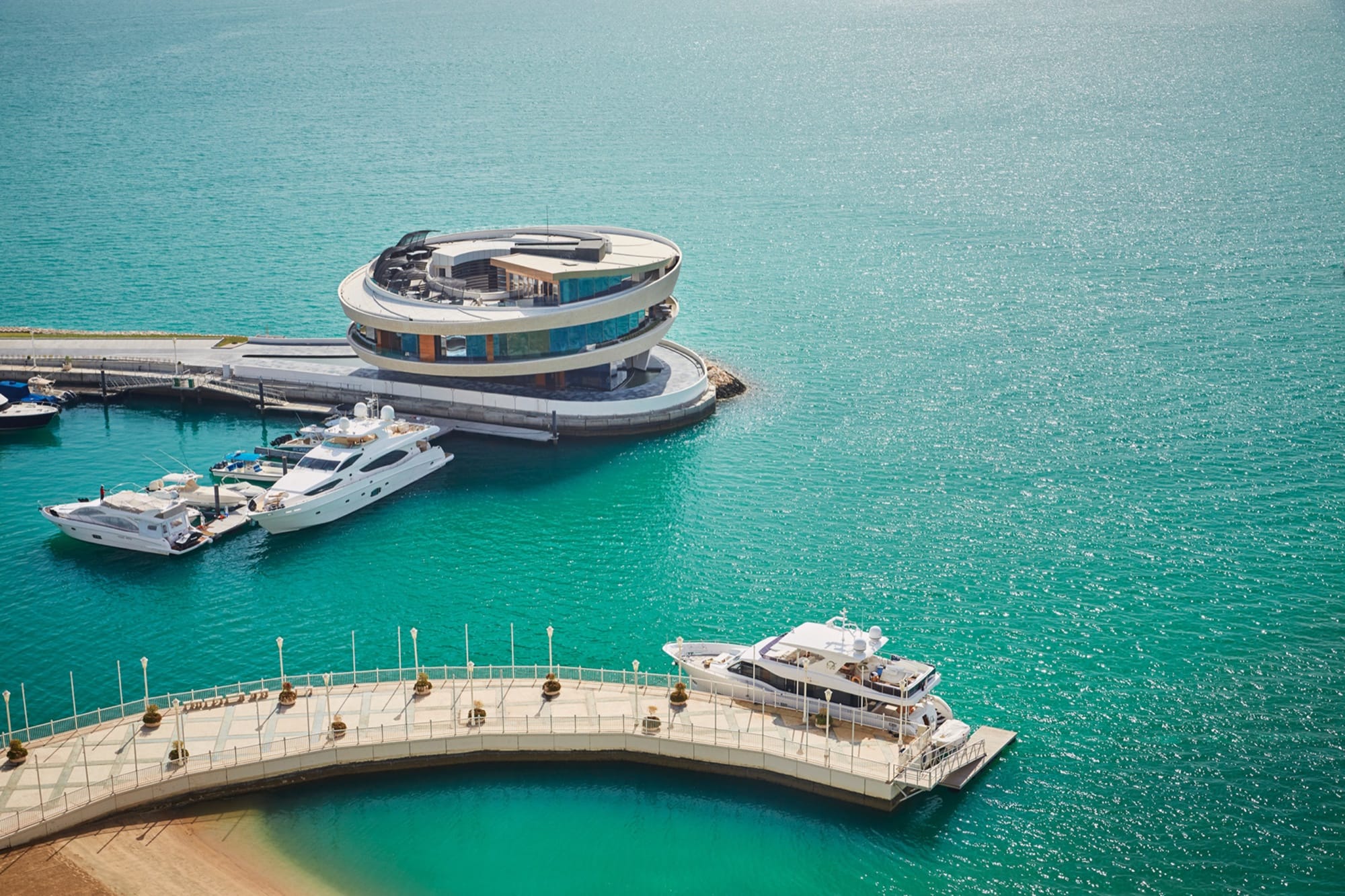
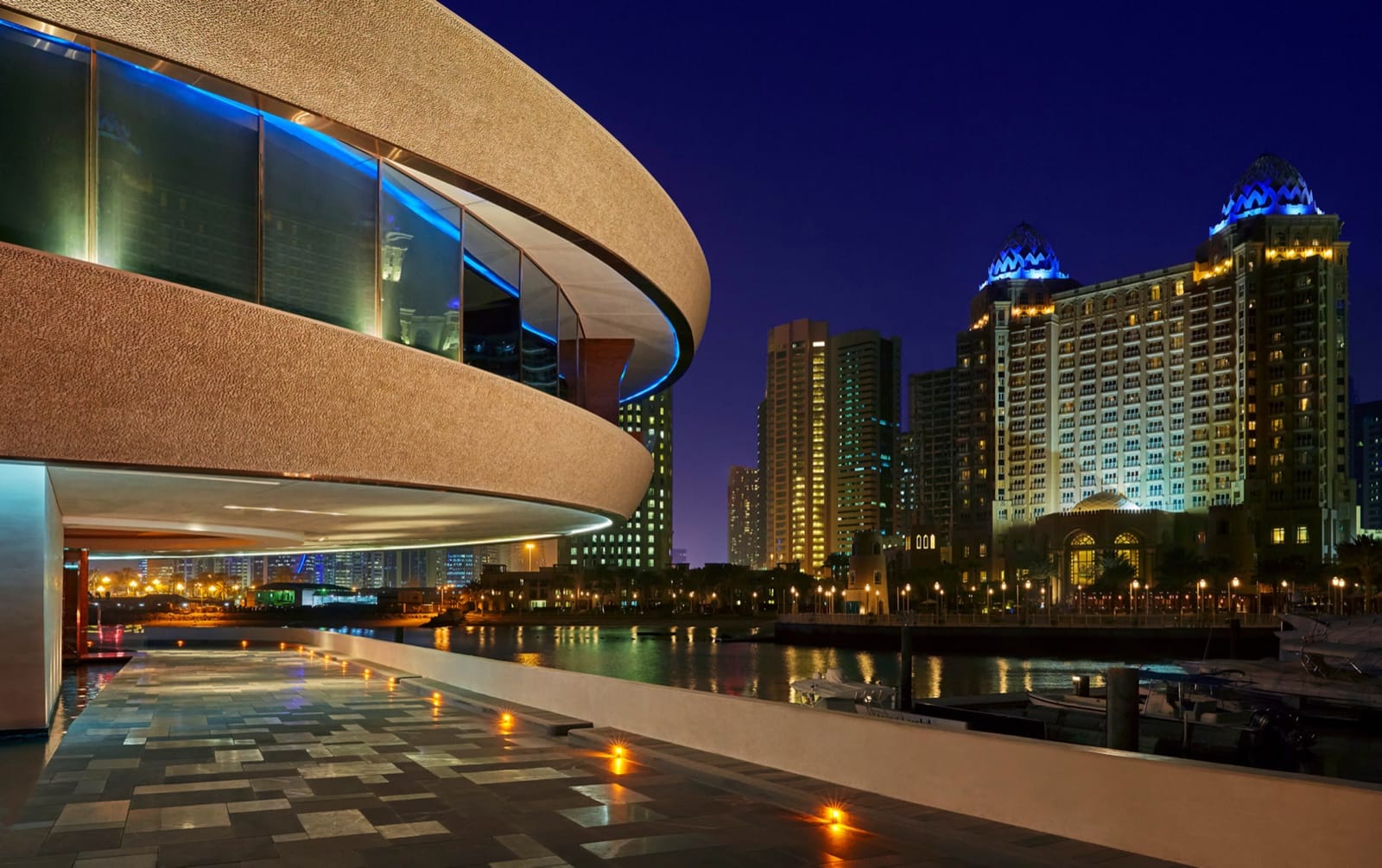
A meandering road hugging the marina of the Four Seasons Hotel Doha leads one to its very edge. Here, dramatically surrounded by the waters of the Arabian Gulf, stands the solitary building, concentric in shape and resembling an alien spacecraft. The design, as it turns out, is inspired by a coiled shell, architect David Rockwell’s subtle nod to the humble beginnings of Doha as a pearl diving town.
This theme runs throughout the interiors of the tri-storey, 24,000 square-metre building. Spherical lamps of blown glass dangle over the main dining area like clusters of luminous pearls. Closely arranged rows of taut, jute-like rope cascade across the room; they mimic fishing nets and also artfully function as diaphanous barriers. The two indoor bars, one exclusively non-smoking, are named White Pearl and Black Pearl.
While every element down to the distance between tables is meticulously calibrated to live up to the reputation of Nobu restaurants being among the hippest on earth, the primary allure remains rooted in the food. Chef Nobu preserves the rudiments of classical Japanese cuisine as he infuses flavours from his travels, plating them together with a certain savoir-faire that can only be described as culinary sex appeal.
Case in point: the yellowtail sashimi with jalapeño. Triangular slices of grain-fed hamachi arranged in a six-point star tread in a shallow splash of yuzu dressing. The heat from the spicy pepper emboldens this mild fish but is then tamed by the coolness of fresh coriander. Both bursts of green are the influence of Chef Nobu’s time in Peru during the 1970s, when he began to incorporate local ingredients into his cooking – but what began out of necessity has morphed into a Nobu hallmark.
The Doha menu contains a seamless collection of Peruvian-Japanese crossovers such as Shimeji spicy ponzu tacos. Here, mini taco shells (no larger than a clementine wedge) act as a vessel for the mushrooms marinated in a citrusy dressing. The filling is light, tart, and palate-cleansing, while the salty, crunchy tortilla induces cravings for more.
Another standout from the fusion list is whitefish Tiradito sushi rolls, displaying a kind of reverse cultural immersion. At its heart, Tiradito is a sashimi-inspired ceviche, an imprint of Japanese migration to Latin America. Instead of being cubed and cured in citrus juice to produce ceviche, raw fish is sliced and only lightly seasoned with citrus prior to serving. Typically, Tiradito is served as is. But Nobu takes it back to his homeland with the shari and seaweed, resulting in a sushi every bit as international as it is imaginative.
Of course, no visit is complete without the signature black cod yuzu miso that made Nobu famous. A centuries-old Japanese classic, the dish has been modernised and popularised by Nobu with his twist of a smooth, honey-like sauce. The fish is steeped in a marinade of mirin, sake, miso and sugar for days so that when roasted, its buttery flesh takes on a rich sweetness. The balance of seasoning and smoothness is almost sensual, lingering on the palate and mind before being etched into memory.
If Japanese cuisine is distinguished by its subtlety, then this characteristic is wholly exemplified in the new-style scallop sashimi. Tender slices of scallop are flash-seared in hot sesame and olive oil – that wink-long second adding a hint of smoke without altering the texture of the mollusk.
Yet those with a penchant for loud flavours will find more excitement in the likes of rock shrimp tempura coated in yuzu-accented spicy mayonnaise – the marriage of deep-fried with creamy sauce never fails to please crowds – and it’s a bestseller across the globe, likewise in Doha.
Still, nothing quite captures the essence of Chef Nobu’s cooking better than the comfort of familiar food made flawlessly. To finish with a freshly baked chocolate ganache, its warm and oozing interiors housed in pillowy cake; a scoop of green tea ice cream; the contradictions of hot and cold placed on opposite ends of a bento box to be savoured together, it’s simple, delicious and just exquisite to behold. The genius of Nobu.
WHAT Nobu Doha
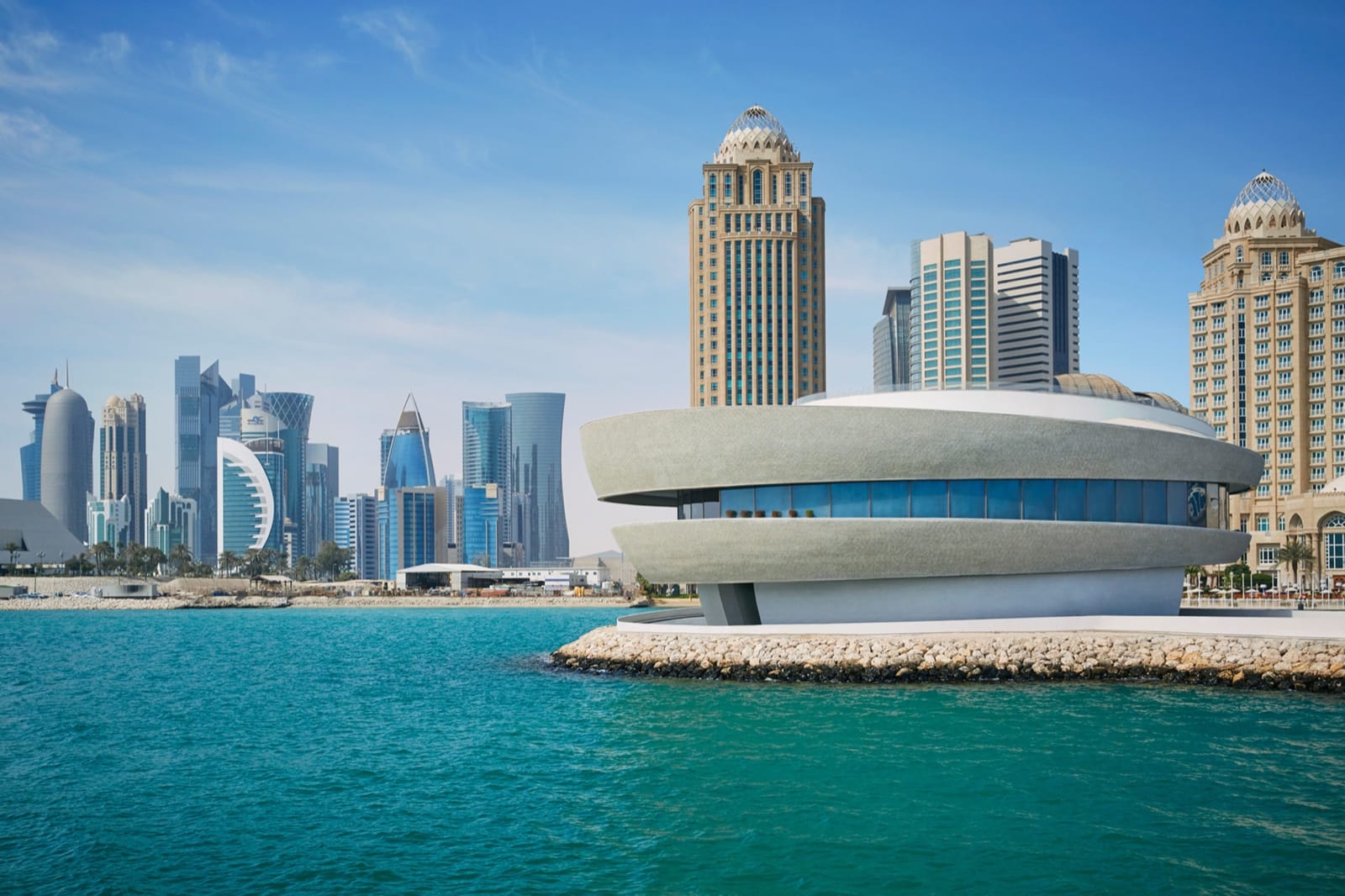
WHERE Four Seasons Doha
SINCE April 2015
WHY The food is Nobu’s signature award-winning fare but the venue is extraordinary. There’s a 134-seat main floor, two private dining rooms, a 10-seat sushi counter, two inside bars and a 38-seat rooftop lounge that encompasses both indoor and outdoor seating options. Topping that won’t be easy.