Cats do indeed have nine lives, if the most recent offering of power catamaran yachts is anything to judge by. The power-cat world has gone through a multitude of design pivots over the last 20 years, from vessels that were essentially sailing cats minus the mast, to a group with faster-running, more efficient powerboat planing hulls, to sleeker boats with a premium on interior design, to the latest generation that is modifying the shapes to focus on extreme sustainability and smarter interior layouts.
“The market continues to grow and become more diverse,” says Nicolas Lapp, vice president at Sunreef Yachts. “There’s more emphasis on luxury and clean energy – one reason we’re enjoying a lot of success is because the multihull architecture is perfect to implement green tech.” Given a catamaran’s shallow draft and twin hulls having significantly less wetted surface than a monohull, a catamaran is inherently more efficient and can therefore run further on less fuel.
Sunreef’s latest Explorer line takes the brand even further upmarket with three models being proposed with renderings including two 40-metres and one 50-metre, capable of crossing oceans with minimal carbon output. “They all have solar power, hybrid propulsion, batteries, and advanced water and trash management – there’s a lot of attention to green technology,” says Lapp. There are no orders yet for the Explorer line, but the company views these three yachts as a template for future superyacht owners who want to jettison diesel-guzzling monohulls for vessels that are shorter but more voluminous.
Its 40M Explorer Eco could well become the halo model of this new generation. With banks of solar panels, capable of generating up to 40kWp integrated into the hull, roof, and superstructure – this is an industry first. They recharge the vessel’s lithium-ion batteries that generate about 920 kWh. The two 540-kw electric motors can propel it for long distances – Sunreef says the yacht has transpacific range – and comes with an advanced heat-recovery system that powers the boiler and what Sunreef claims is the most efficient air-conditioning system in the yachting sector. There are also explorer features like a rain-water recovery system and range extenders.
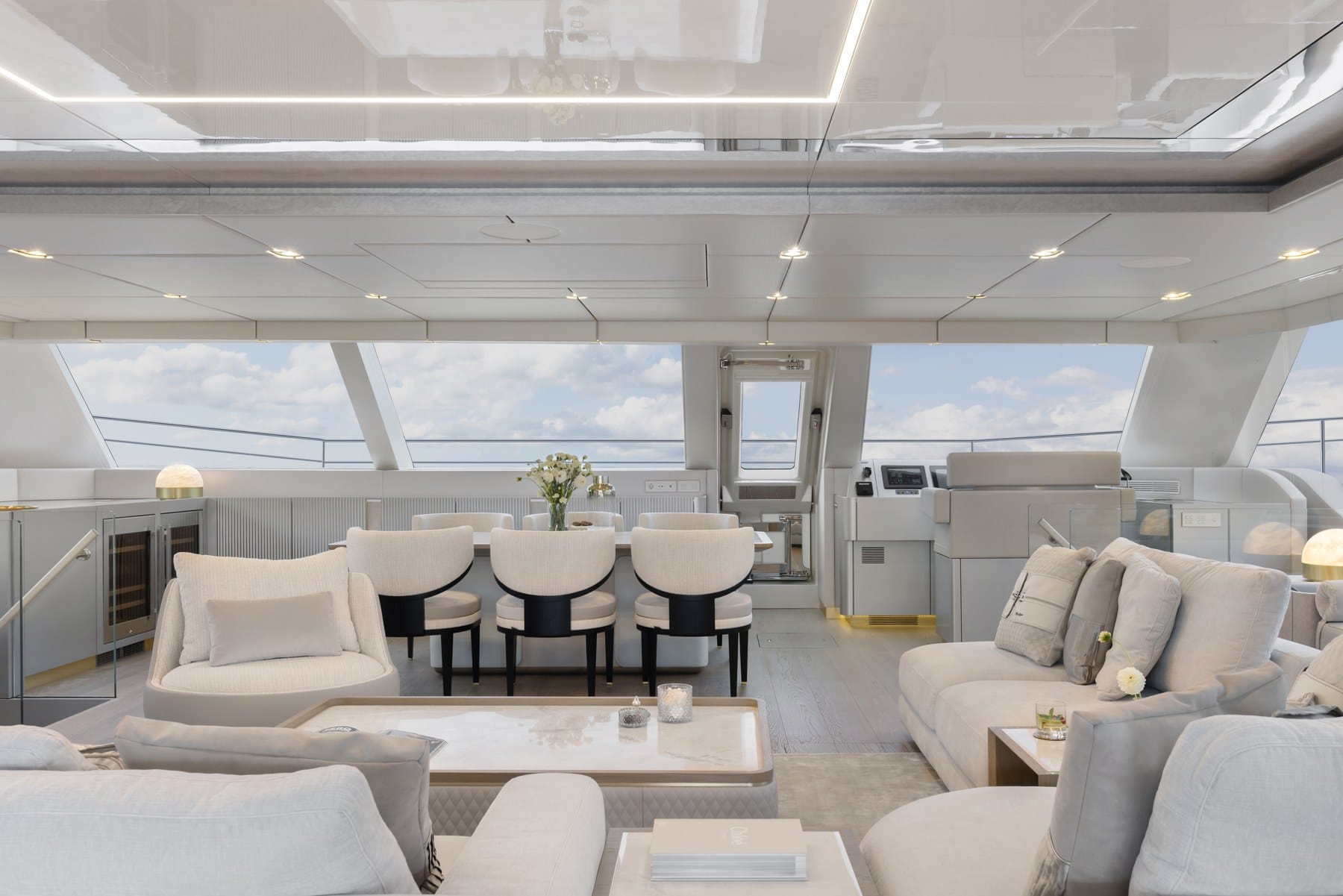
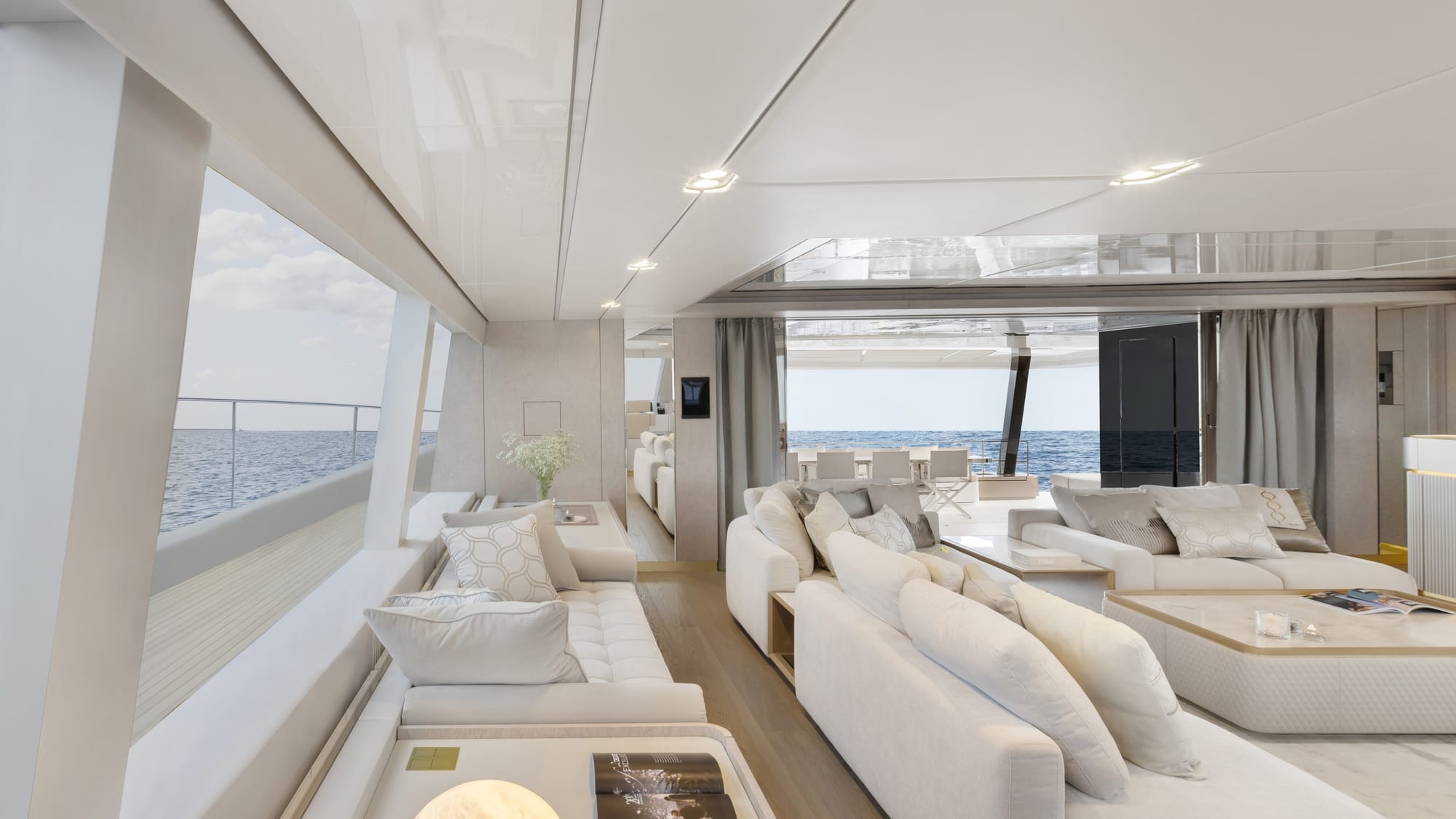
Beyond sustainability, the builder didn’t skimp on luxury. The 13.34-metre beam on the 38-metre hull allowed the designers to give the main salon a New York loft look, with much more space than a typical monohull of the same length. The master suite has a private terrace, and if an owner doesn’t want four guest staterooms, one rooms can be modified to an indoor cinema, spa, library, or gym. The exterior is comparable to a larger superyacht, with a large, open foredeck with lounges and indoor cinema, a rear beach club that folds out, and a large aft cockpit with a swimming pool.
Italian superyacht builder Wider also sees a migration from conventional superyacht owners to its new 28-metre WiderCat 92, which recently launched its first hull, with another eight hulls under construction at its shipyard in Fano. Wider is also focusing on combining luxury and sustainability in its twin-hulled yacht. “We’ve noticed a growing demand for more owner-friendly yachts with lower fixed costs,” says Marcello Maggi, president of W-Fin Sarl, Wider’s parent company. “That has resulted in many clients’ downscaling on their existing yachts.”
The 92 has three staterooms below-decks, with a full-beam owner’s suite on the main deck that also includes a private terrace. The owner’s area occupies nearly half of the boat’s interior volume. On the exterior is a forward cockpit, sky lounge and at the transom, a massive swim platform with foldout bulwarks – giving credence to the Wider name. The boat also has a hybrid propulsion system that includes twin electric motors that deliver 500kW each to the boat’s thrusters as well as two 349kW variable-speed generators that produce the electricity. Its n30 LiFePO4 batteries are managed by what Wider calls a “state-of-the-art” management system that allow the boat to operate in zero emission mode for 27 nautical miles at 6 knots, or at anchor for up to 14 hours.
Both Wider and Sunreef point out that, besides zero carbon emissions, the electric-only mode will be a selling point to new owners, thanks to the lack of noise and vibration typically caused by diesel generators. Both yacht builders are also going for a sleeker look with a more aerodynamic topsides and curves on the hull, a stark and welcome departure from the traditional boxy look of most big power cats. Both also feature a lot of beautiful, open areas across the exterior, with large windows that light up the interior.
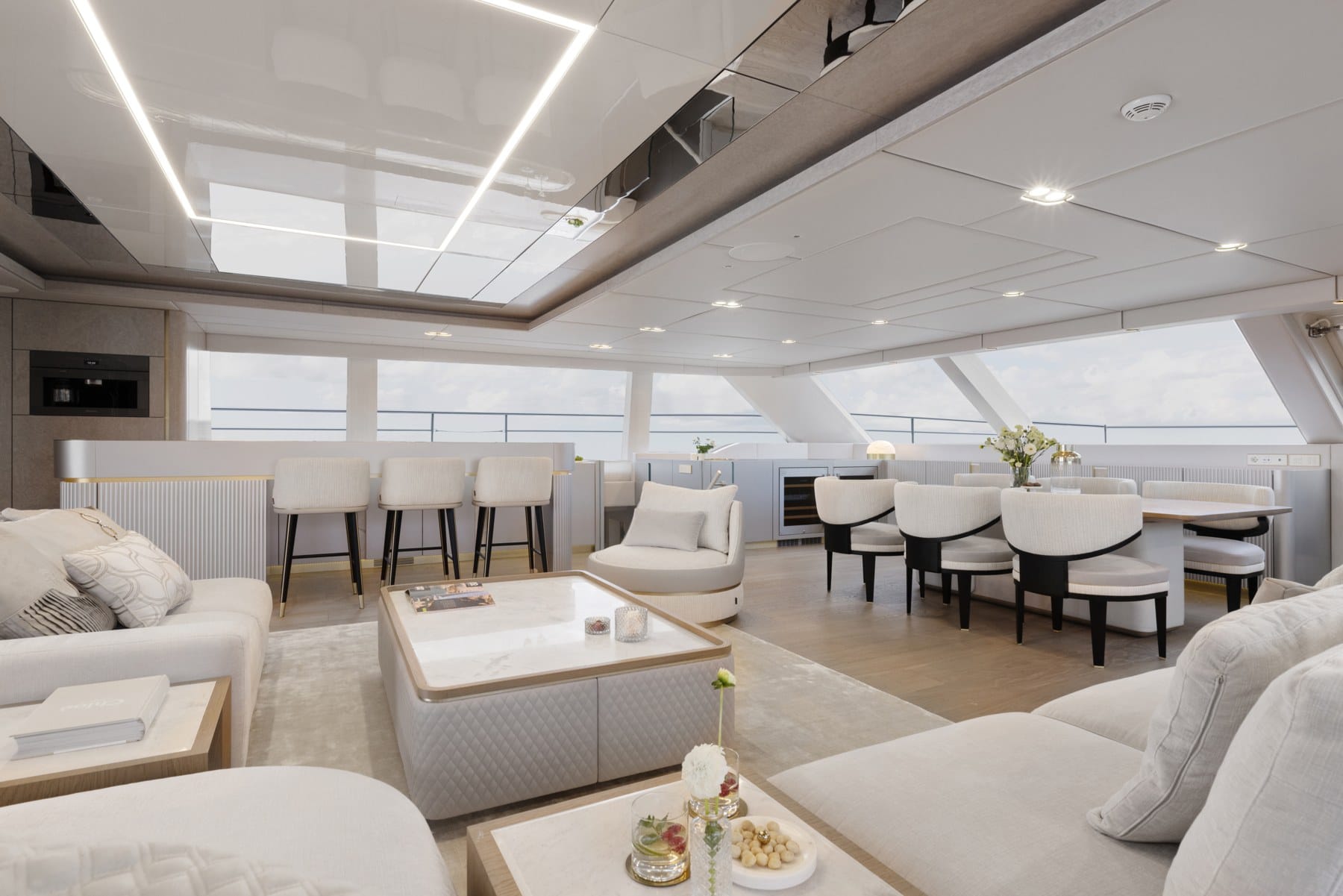
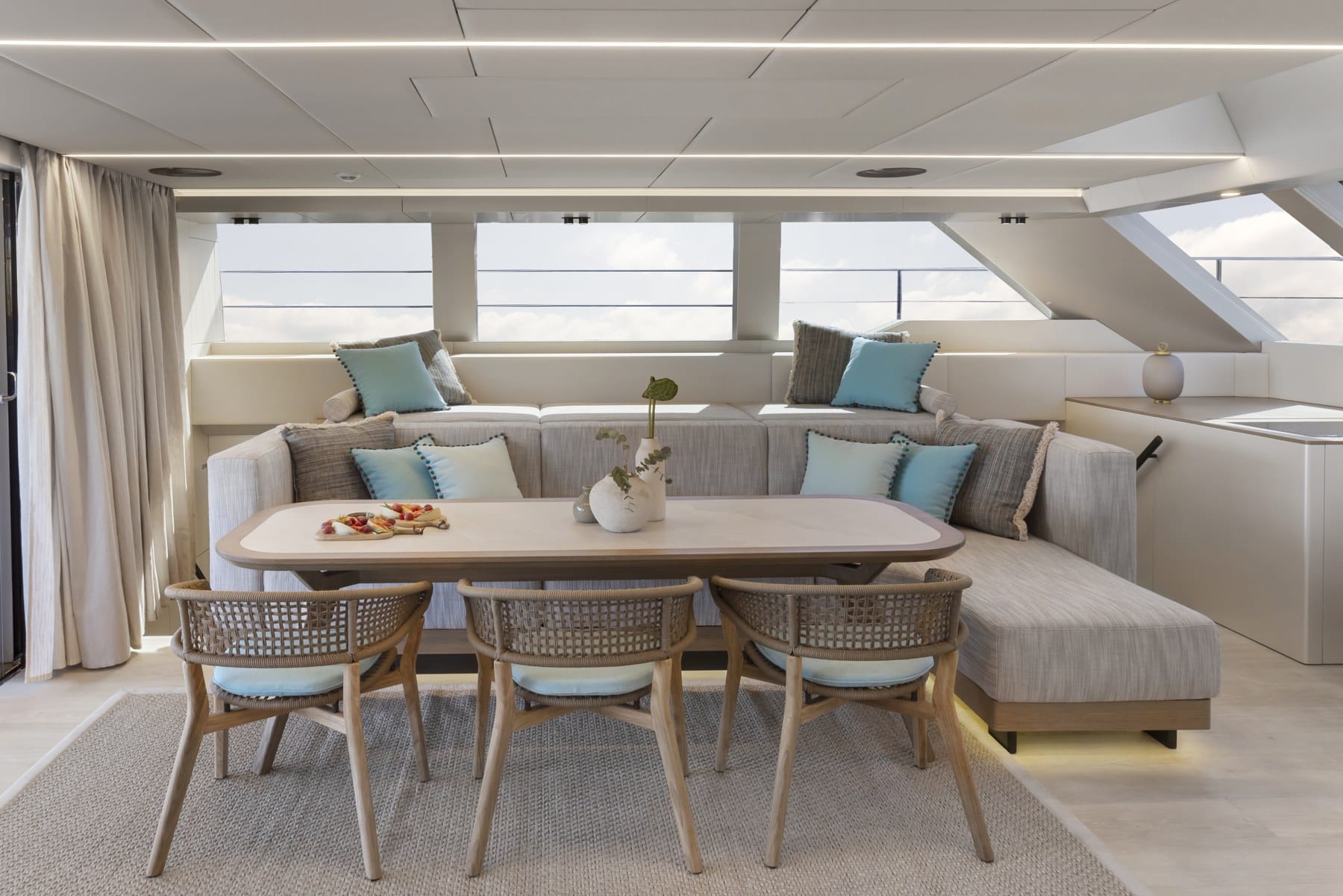
Bluegame Yachts is working to revolutionise yachts in the 65- to 80-foot range with the BGM75 it launched last year. The 22.7-metre vessel’s 8.15-metre beam is narrower than most cats its size, but the same size as other 65-metre monohulls. The beam delivers the fuel efficiencies that cats have over monohulls, but the broader-than-monohull beam let the designers reimagine the interior spaces for a whole new look. But they're also taking a new approach to sustainability with an IPS hybrid propulsion system that will have the hydrogen fuel cell system developed for the America’s Cup project. That system will be introduced in 2026 on the new BGM65HH (hydrogen-hybrid).
Sunreef is undertaking a similar narrower-beam approach with its new Ultima line, five models that range in length from 44 to 88 feet. “This line is responding to customers looking for a more dynamic luxury yacht,” says Lapp. “We kept the twin-hull architecture but gave it a sleeker form with less beam.” The result is a faster boat, with aggressive, aerodynamic lines and easier manoeuvrability.
Perhaps the ultimate Sunreef cat that's available right now though is the 11 million USD, 80 Sunreef Power Eco. It's the same boat that Rafa Nadal recently acquired and it measures 24 metres in length with a massive 14-metre beam and comes with a 990 kWh battery system that's the largest aboard any yacht in its category, capable of powering all amenities plus the electric engines – the conventional gensets are backups only for if ever you need to exceed the 10-knot / 300-nautical-mile zero emission range. And it can accommodate up to 12 guests, although we prefer eight guests and four crew – it's all very configurable.
These new designs have created fierce competition between the yards, as well as other big power cat builders like Prestige and Lagoon, in an attempt to woo superyacht monohull owners. Call it a cat fight.
Top: Athena Too was commissioned by a local Emirati owner, who has a genuine passion for new technology and quality. The yacht not only uses state-of-the-art green tech but also features plant-based composite elements. In many ways, it offers a glimpse into the future of luxury cat yachting. Bottom: The most notable feature of the vessel is what the builder has dubbed its “solar skin,” which covers over 185 square metres of surface area. The flexible solar panels have been seamlessly integrated into the composite hull and superstructure in a process that was developed in-house by Sunreef to produce up to 40kW of power, meaning, at anchor, when conditions are good during the day, the energy produced by the panels can surpass the consumption of the boat, even with the air-conditioning on.
Opposite: The main saloon benefits from wraparound windows that afford an airy, bright social space for the yacht's eight guests (in one king and three queen en-suite cabins). This page: The spacious swim platform doubles as a tender garage for a Williams Sportjet 520 tender.