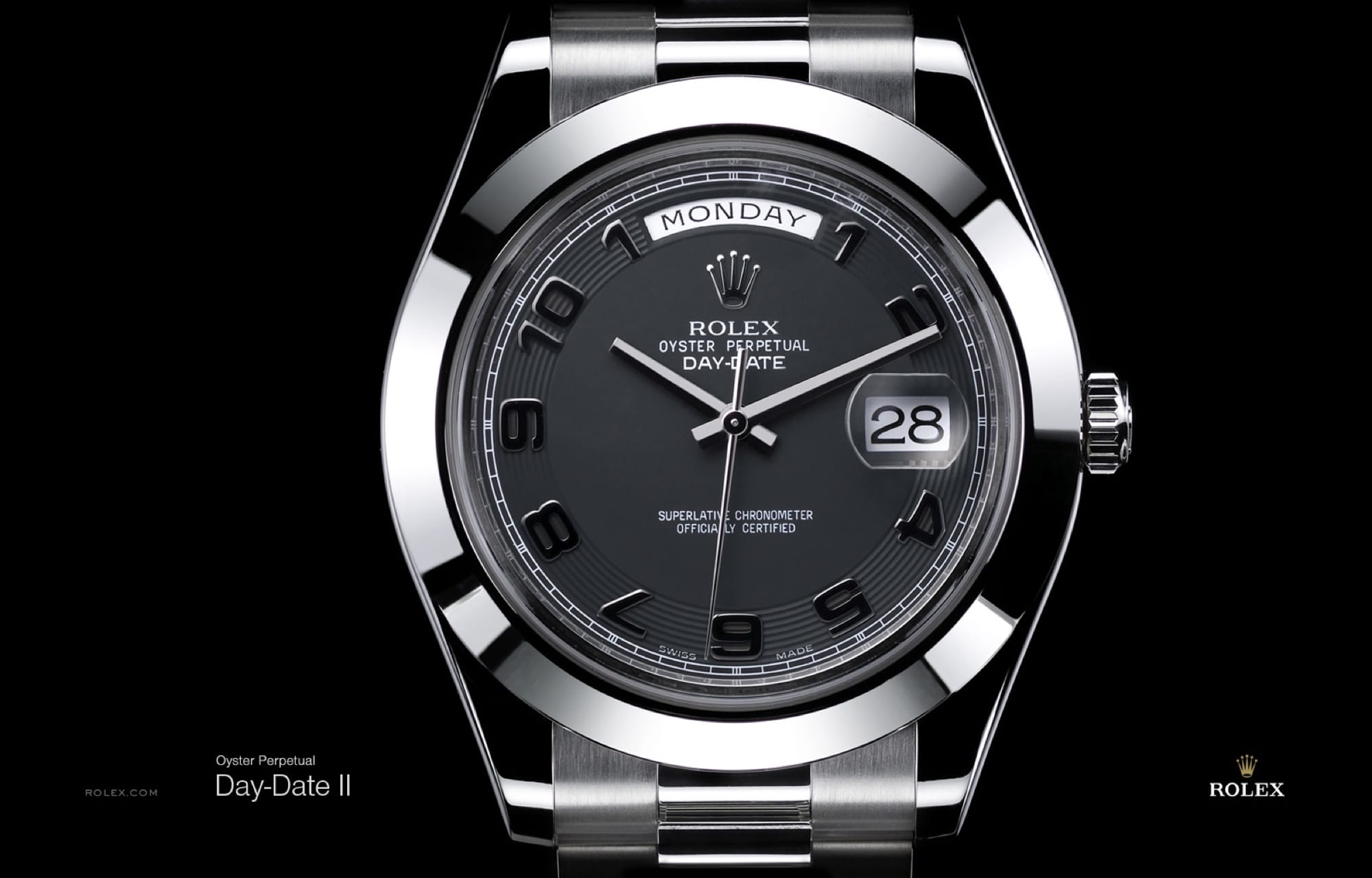
Watch enthusiasts are often surprised to learn that Rolex, the quintessentially Swiss marque and the world’s leading watch brand, began trading in London and not Geneva. Back in 1905, its founder, Bavarian watch distributor Hans Wilsdorf, took a daring position in predicting that wristwatches, previously only worn by women as pieces of jewellery, would replace the ubiquitous pocket watch.
His gamble soon paid off as more and more Britons bought his products, spreading their popularity across the whole Empire. But popularity was not enough for Wilsdorf who obsessed himself with his timepieces’ quality and innovation. Indeed, Wilsdorf went to take extreme lengths to prove to the public that Rolex watches were of the utmost excellence in calibre and superiority, going so far as to arrange for them to be tested by the official quality-control organisations. In doing so his watches became the first to receive a coveted Swiss certificate of reliability by 1910.
It was in 1918 that Rolex finally moved to Geneva in order to be closer to the manufacture of the movements. This perfectly suited Wilsdorf’s desire for constant innovation and Rolex has continued to do so at an unprecedented rate with over 360 patents, averaging 5.8 new patent applications each year. Yet early on, Rolex realised that making a great product would not suffice and that marketing it was key. In fact the company could be said to have invented the celebrity endorsement deal. For in 1927 when Mercedes Gleitz became the first English woman to swim the Channel, Rolex had astutely placed one of its Oyster timepieces on her wrist. It was a great move and one that the company has replicated many times over such as in 1953 when Rolex was the first watch company to top Everest with Sir Edmund Hillary.
Nowadays the Rolex watch is by far the most recognisable timepiece on Earth. And while other watchmakers have to rely on the mercy of their suppliers, Rolex has steadily consolidated full control over its entire watchmaking business. If truth be told, there is no more ‘extreme’ luxury brand out there in terms of market share, product desirability and instant recognition. So, here is a list of facts you may not know about the house of Rolex:
1. In 1926, thanks to its innovative screw down crown, the Rolex Oyster became the first truly waterproof and dust-proof watch.
2. Rolex invented the first self-winding mechanism in 1931, naming it the Perpetual Rotor.
3. The Datejust, introduced in 1945, was the first wristwatch to indicate the date on the dial.
4. The specialised usage watch designed for a specific job, such as diving, sailing or piloting was a concept invented by Rolex. The Submariner is one such example.
5. Rolex is the largest buyer of gold in Switzerland and as such it has its own gold foundry.
6. The rose gold alloy Everose, invented by Rolex, is the only rose gold colour metal that does not turn yellow after prolonged contact with chlorine.
7. Most of the Rolex’s profits go to charity. The company is owned by two family trusts, the larger of which gives a majority of its income to good causes.