Imagine a famously bespectacled celebrity and there’s a good chance they’re wearing glasses by Maison Bonnet. From its atelier in the city of Sens, this fourth generation company has been supplying custom-made eyeglasses to the likes of Le Corbusier, Audrey Hepburn, Jackie Kennedy, Jacques Chirac, Yves Saint Laurent and Louvre architect I.M.Pei. As a list of references, it doesn’t really get much better than that.
Though little has changed for Maison Bonnet since its establishment in the 1930s, a recent development in the last few years has been the opening of a luxury boutique in Paris opposite the Palais Royal. Arriving as we did during a sunny weekday morning, most of the foot traffic seemed unaware of the incredible institution that lurked in the Passage des Deux Pavillons, off the Rue des Petits-Champs. But ring the bell and you’ll be ushered inside their intimate and quiet space.
Naturally, you’ll find no over-the-counter frames or same-day delivery reading glasses here. But you might, if you’re lucky run into another like-minded sophisticate. We happened to bump into a young lawyer, patiently waiting for her appointment. “My husband got some glasses from Maison Bonnet and I thought I’d like a pair too,” she shared after a little prodding.
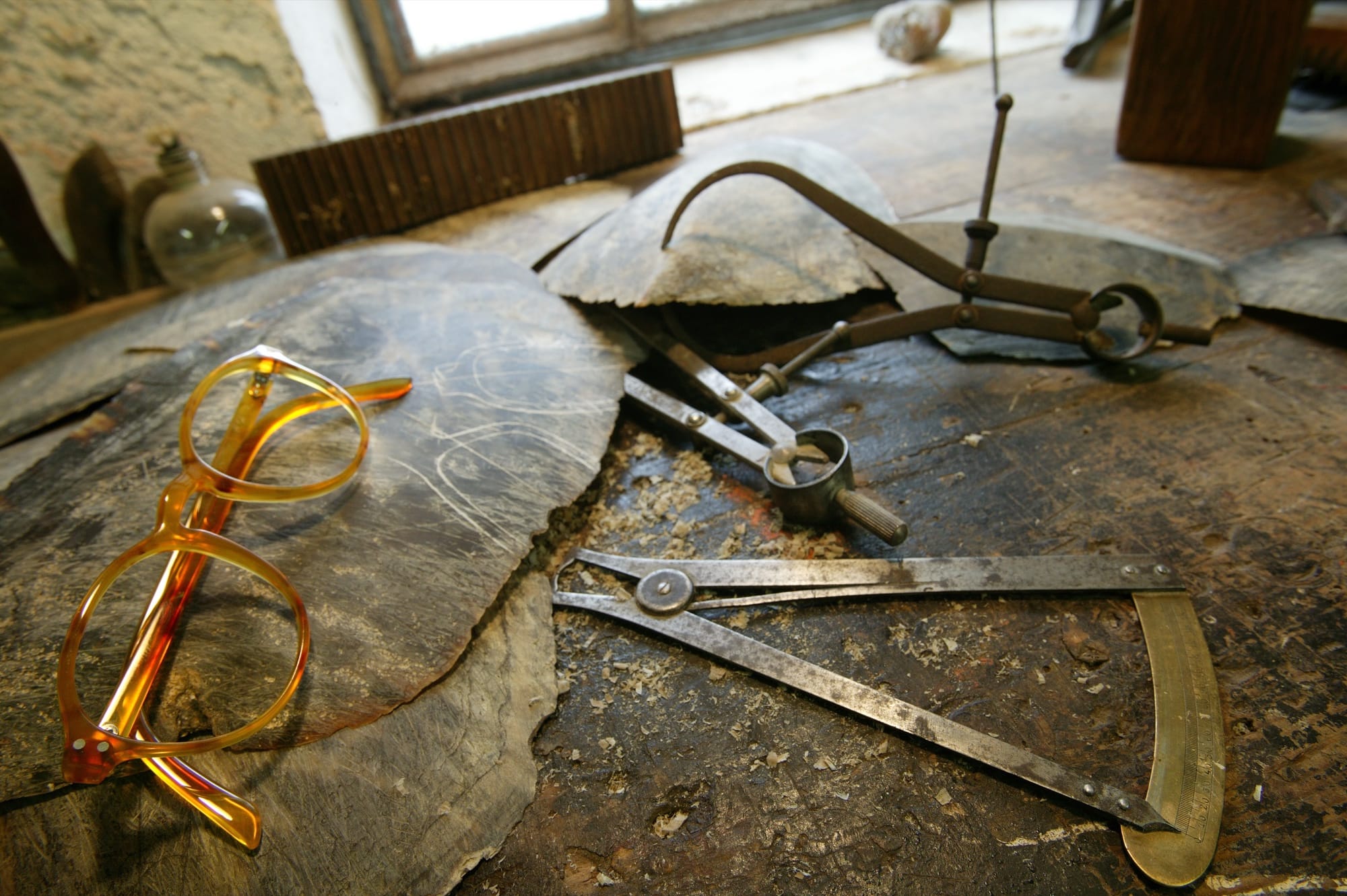
The glasses she’s referring to are no ordinary spectacles. They are the result of a three-month operation, involving 20 hours of hand labour, and a process that includes 10 stages, 12 fittings, interviews, personality assessments and face measurements. With only six employees – including Christian Bonnet and his two sons Steven and Franck – the house produces a mere 1,000 pairs a year.
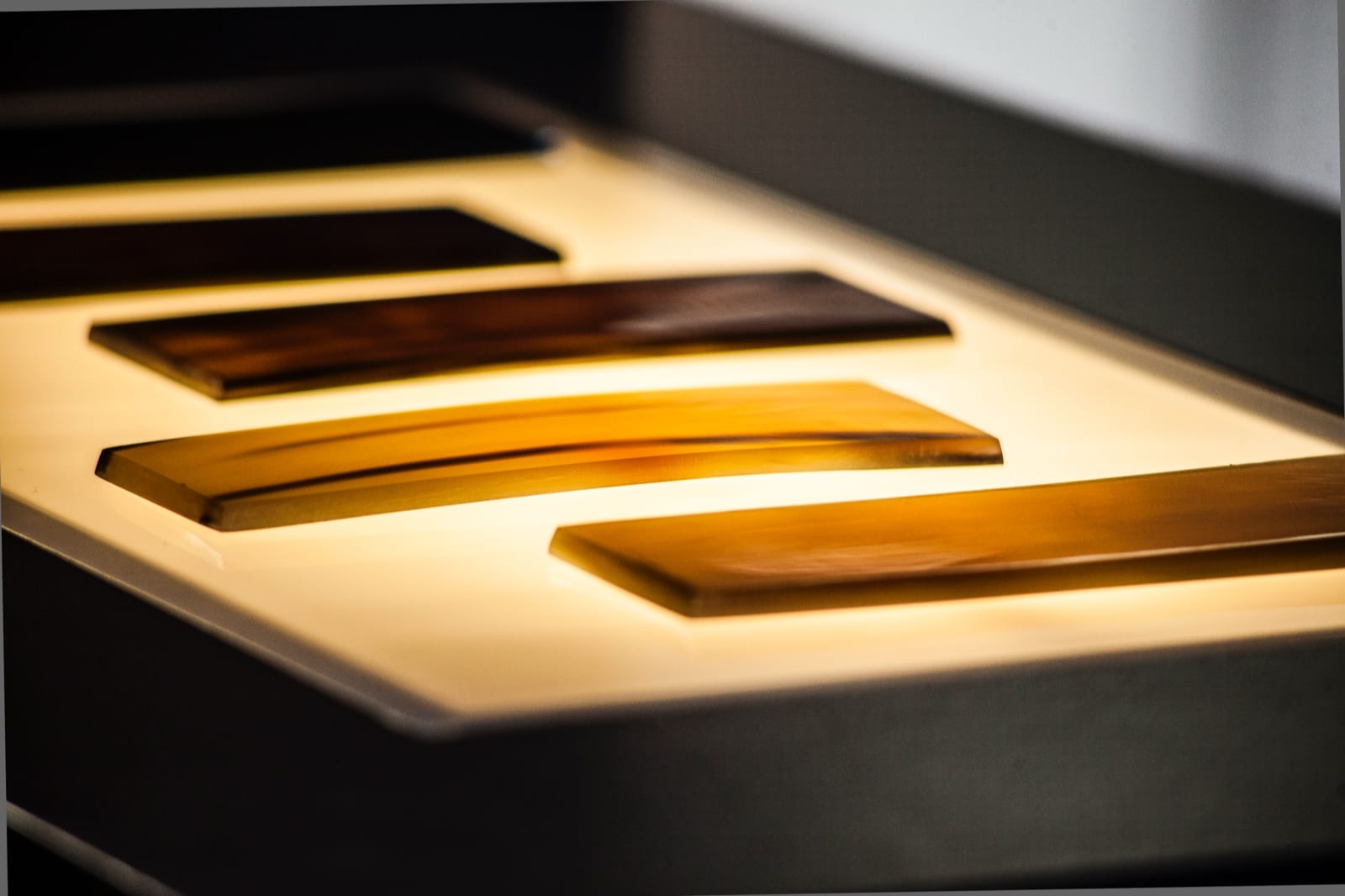
Remarkably, they still follow the tried and tested traditions first started by Christian’s grandfather, Alfred Bonnet. Their speciality? Real tortoiseshell. This is a material so delicate, it takes the company’s apprentices ten years before they are entrusted to handle it. However, as you may well know, tortoiseshell was, for the most part, banned by the Washington Convention in 1973 but the material the atelier uses was acquired before the ban, and a Master of Art certification from France's Ministry of Culture allows them to work with it. Of course, with such limited resources, stock will eventually run out, but that just makes such an acquisition all the more precious. The cost, in case you’re wondering, is upwards of 40,000 USD.
“Some of our clients get a pair of tortoiseshell glasses and order a similar pair in acetate, so when they are on their yacht, for example, they need not worry about losing them,” explains Steven Bonnet. The acetate glasses, which come in 30 colours, start at around 1,150 USD. There is also a buffalo horn option, starting at 1,650 USD, which offers the benefit of being a natural material, a boon for those with allergic or sensitive skin.
Another advantage of Maison Bonnet glasses is the meticulousness with which they create the perfect shape for each face. Although the function of eyewear is to perfect one’s vision – something the Bonnets’ take very seriously given that they strive for a perfect fit so that the lens correction is precisely aligned with the eye – the effect it has one one’s appearance cannot be underestimated.
“We had a customer whose face was very complicated, very angular and very small – he had to look for glasses in the children’s section, it was very, very difficult,” Steven Bonnet recounts in his heavy and almost cinematic French accent. “In the end he told us he met his wife in a bar in London because she thought his glasses were fun.”
Indeed, glasses are a big deal. They sit in the middle of your face, a gateway into your personality, defining the way you look to the outside world. Plus, they’re usually worn all day, everyday. In that light, it seems almost foolish not to have a pair made to suit your unique features.
Think of Maison Bonnet’s glasses as an investment, with a process that’s one hundred per cent old-school charm. Customers are interviewed over a coffee by Franck or Steven Bonnet in the private apartments above the shop. There they discuss their tastes, habits and professions so that the Bonnets can better understand exactly what they’re seeking. “We make a point of asking them what they like and dislike about their faces, so that we can get an idea of how the glasses can correct what they consider flaws,” he adds. “For women it’s very different. They often want to correct something in their face. Also, they want to change styles every couple of years, like they change their hair. I think this is a very interesting proposition. It’s all the more complicated if the woman is very beautiful because when I put the shape on her face, I’ll naturally prefer her without them.”
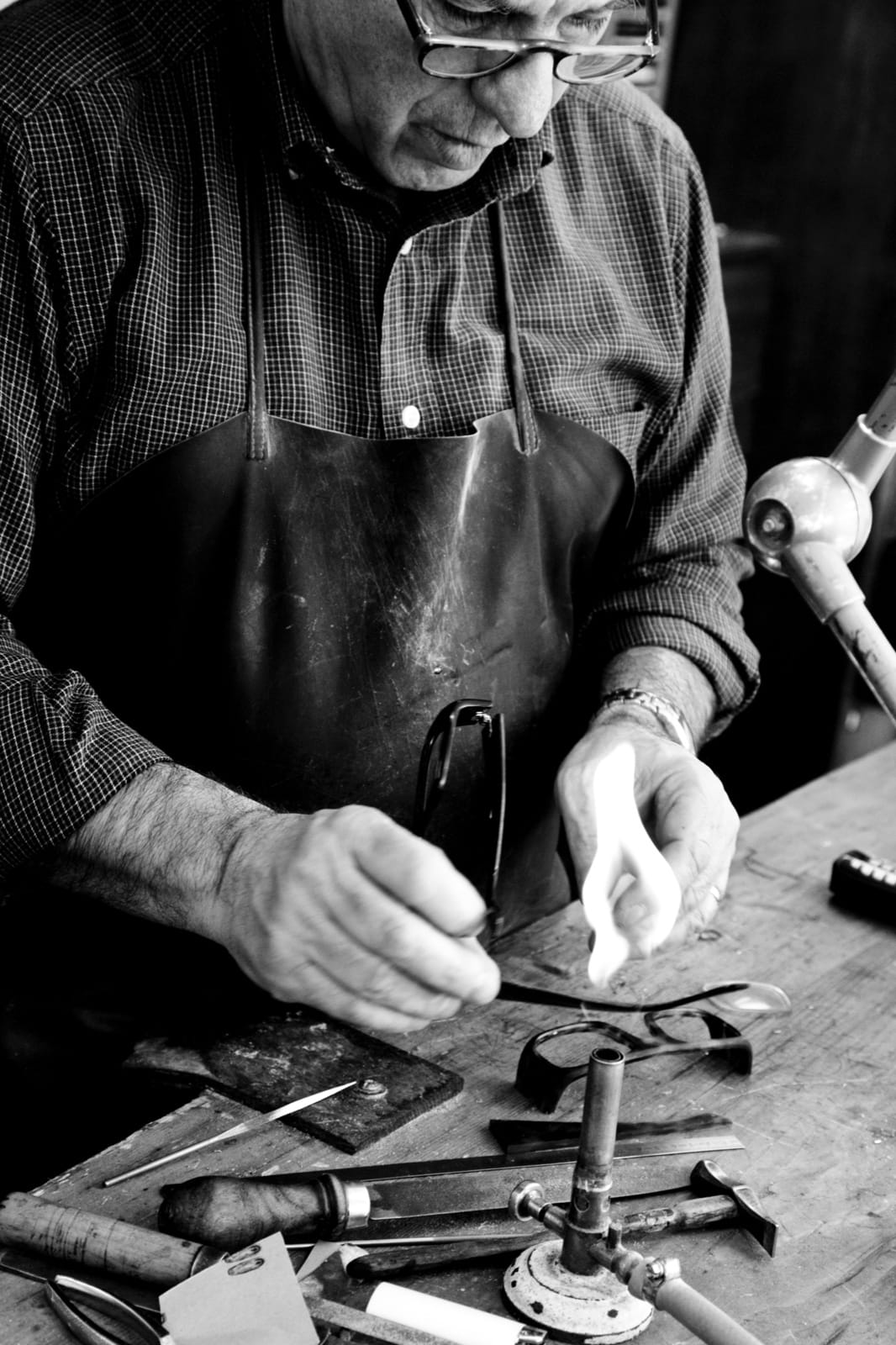
Still, a well-executed shape, as he calls it, can enhance and even transform a face. “When you have a man with a big nose and no hair and they put them on, now they are very nice,” he continues.
In an age of ever-faster pace, Maison Bonnet may seem archaic but theirs is a refined pleasure. Morgane Oudin-Maury, the company’s Director of Communications, eloquently surmises just what a treasure it is. “In the 1990s all the luxury brands licensed manufacturers to start making frames. It was a way for people who can’t afford bags or clothes to appropriate the brand. Everyone has the same things – glasses, phones, computers. But we noticed that people are fed up of being the same. They like to buy less and something more precious. That’s exactly what we do.” Long may it continue.