Today, although National Geographic is best known for bringing the remote corners of the globe to photogenic life, it might surprise you to learn that the magazine’s association with photography first came about entirely by chance. One day in 1904, its then-editor, the legendary Gilbert Grosvenor, found himself with 11 pages to fill and the deadline looming. Deciding to make a selection of images from the Imperial Russian Geographical Society, which he had at hand and which included some of the first photographs taken of Lhasa, he ran a photospread, and hoped his readers would not find his solution frivolous.
More than a century later, National Geographic’s photographs of both the breathtaking and the bizarre can be seen as a history of photography itself, from the earliest, evocative black-and-white pictures to the coloured autochromes, the golden age of Kodachrome and finally, today’s digital technologies. To mark their 125th anniversary, the Society has given Taschen full access to their archives and the result is a three-volume book of almost 1,500 photographs, many of which have never been published before.
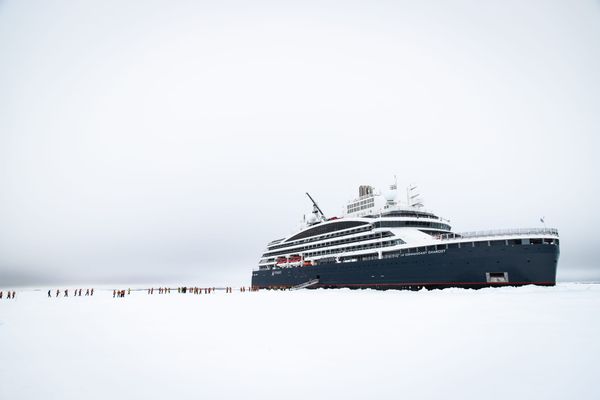
A showcase of travel, science, history, culture, wildlife and conservation, as well as groundbreaking underwater photography, the first volume of Taschen’s “National Geographic: Around the World in 125 Years” covers the Americas and Antarctica. The second turns its attention to Europe and Africa and the third to Asia and Oceania.
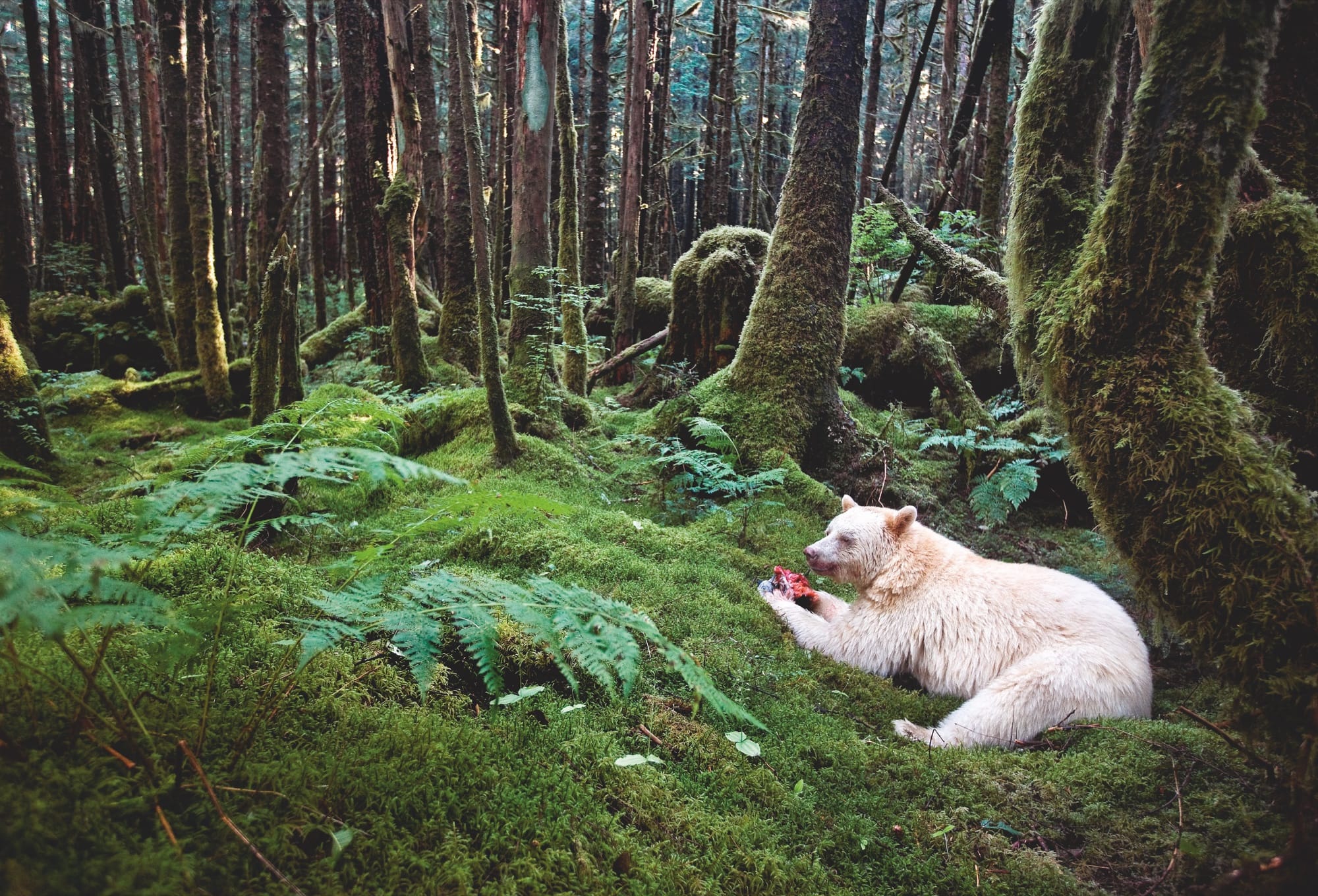
Amongst the stunning collection, you will find two wary, captive jaguars sprawled in a Mexican canoe, a congregation of hundreds of lumbering Galapagos tortoises in the Alcedo volcano on Isabela Island, a freshly caught, bloody salmon being devoured in the British Columbia rainforest by a ‘spirit bear’ – a variant of the black bear with a recessive gene that turns its fur white – an emperor penguin in Antarctica launching itself into the air to jump over a hole in the Ross Sea pack ice, a remarkable leap that also helps it avoid Leopard seals. Meanwhile, Steve McCurry, best known for his famous cover shot of the green-eyed Afghan refugee girl that went viral, makes an appearance with photographs of Sinhalese men on stilts, fishing for Spotted herring on Sri Lanka’s southern coast.
This hefty series documents the evolution from those early, more romanticised images of the exotic to those of a world plagued by social unrest and political turmoil, not a few of which were shot from the Society’s ambulance-turned-darkroom, which Volkmar Wentzel, who worked for National Geographic for almost 50 years, used to travel across India in 1948, during the country’s tumultuous post-independence division into three new states.

Historic in its breadth and scope, ‘Around the World in 125 Years’ will probably outlive the time it covers; it’s the kind of carefully compiled, trans-continental collection that will remain relevant for many years to come.