What inspired you to start Mars One?
"Looking at images of the Mars surface by the Sojourner rover in 1997 as a young student made me want to go to Mars myself. As I explored the idea, each piece of the puzzle seemed to fall in place. When I solved the last piece, I sold part of my shares in my previous company to finance the start-up of Mars One and started working full-time on the plan in March 2011.
What is Mars One’s long-term plan?
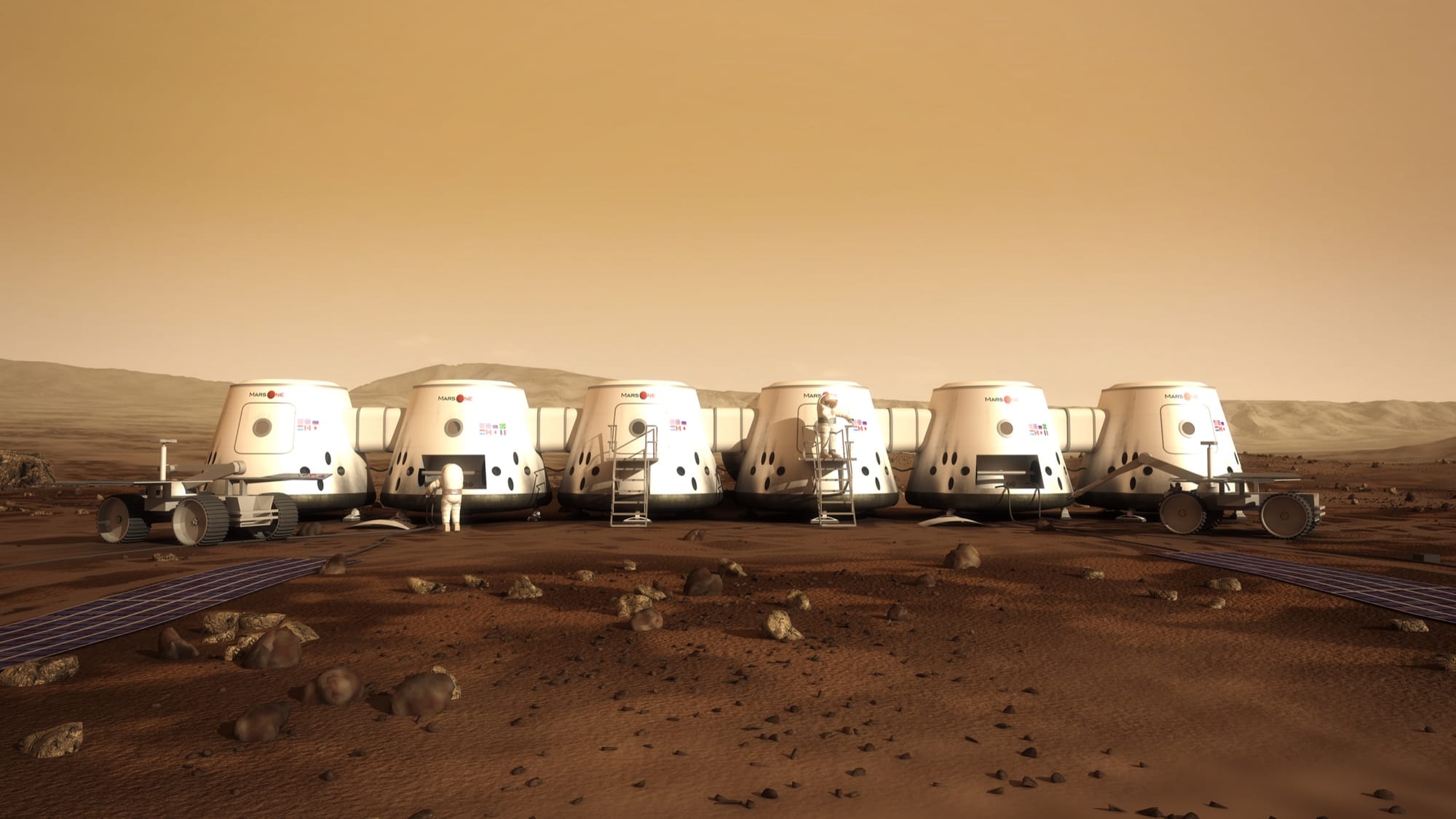
We’ll establish a four-person settlement on Mars to begin with. After, our focus will be to expand by sending four people every two years.
At some point in the future, there will be a permanent Mars colony, large enough to be self-sustaining. We realise this can be achieved only by decades of effort and patience.
We’re not the only ones working towards a Mars settlement. We hope to collaborate with other initiatives that are playing a role in taking humanity to a new planet.
Is the technology available?
Yes. One of our founders is a payload manager with the European Space Agency and our advisory board includes some of the brightest minds in the industry. The draft plan was discussed with the companies supplying every component needed. No new inventions are required to colonise Mars.
How much will it cost?
We are estimating a cost of 6 billion USD to put the first crew on Mars.
Why settle on Mars permanently?
The technology for a return mission does not exist.
Even were it possible, it would be uneconomical and dangerous. There are true pioneers among us who want to lead the way in expanding our galactic presence.
Mars settlers will be able to talk to anyone on Earth and access any digital material sent to them with only a 20-minute delay.
Of course, migrating to a different planet is not for everyone. Finding the right individuals is our first task.
What motivates applicants?
Humans have always explored and settled far-off lands. Our desire to spread out in search of newer, more exciting opportunities is the reason behind the success of our species. While not everyone wishes to be an explorer, everyone shares these intrinsic drives.
Why did you choose Mars and not another planet?
After the Earth, Mars is the most habitable planet in our solar system. Its soil contains water and surface temperatures are manageable. There’s enough sunlight to use solar panels and its gravity is 38% that of Earth's, enough for the body to adapt to in time. It has an atmosphere, albeit a thin one, offering some shielding from cosmic radiation plus, Mars’ day/night rhythm is comparable to Earth’s.
What will the settlers do?
They will spend their time exploring the planet, carrying out experiments, doing construction work and farming. This will be in addition to performing regular health and fitness evaluations, monitoring all system parameters and communicating with mission control.
Why not choose experienced astronauts?
Astronauts, as we have known them, are usually pilots, doctors, payload experts or engineers. For a crew that will permanently settle on Mars, the most important skill is an ability to function in a group. The best individuals with such criteria come from all backgrounds. Of course they need to be healthy and smart. Mars One will train the astronauts for seven years, long enough to learn to solve medical and mechanical problems and to grow food.
Do we, the audience, have a say in the selection of the Mars inhabitants?
The selected crew will be heroes for generations to come, envoys of all humanity. For this reason, Mars One feels the need to share the decision of selecting these individuals with everyone. After the expert panel has excluded all unqualified applicants, the public can choose their representatives to Mars.
What would it mean to humanity if Mars One were successful in setting up a colony?
If humanity can colonise Mars, is there anything that we can’t do? We believe our international approach will bring the people of this planet a little closer together. The mission will demonstrate how a diverse team of people can train for and then go on a challenging mission together. And if on Mars we do find some form of life, that would change our perspective of the universe forever.