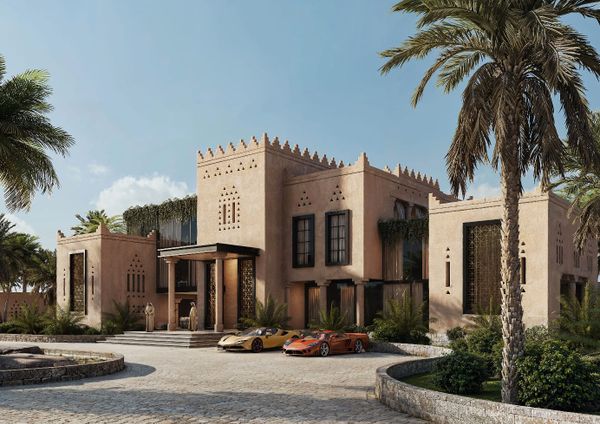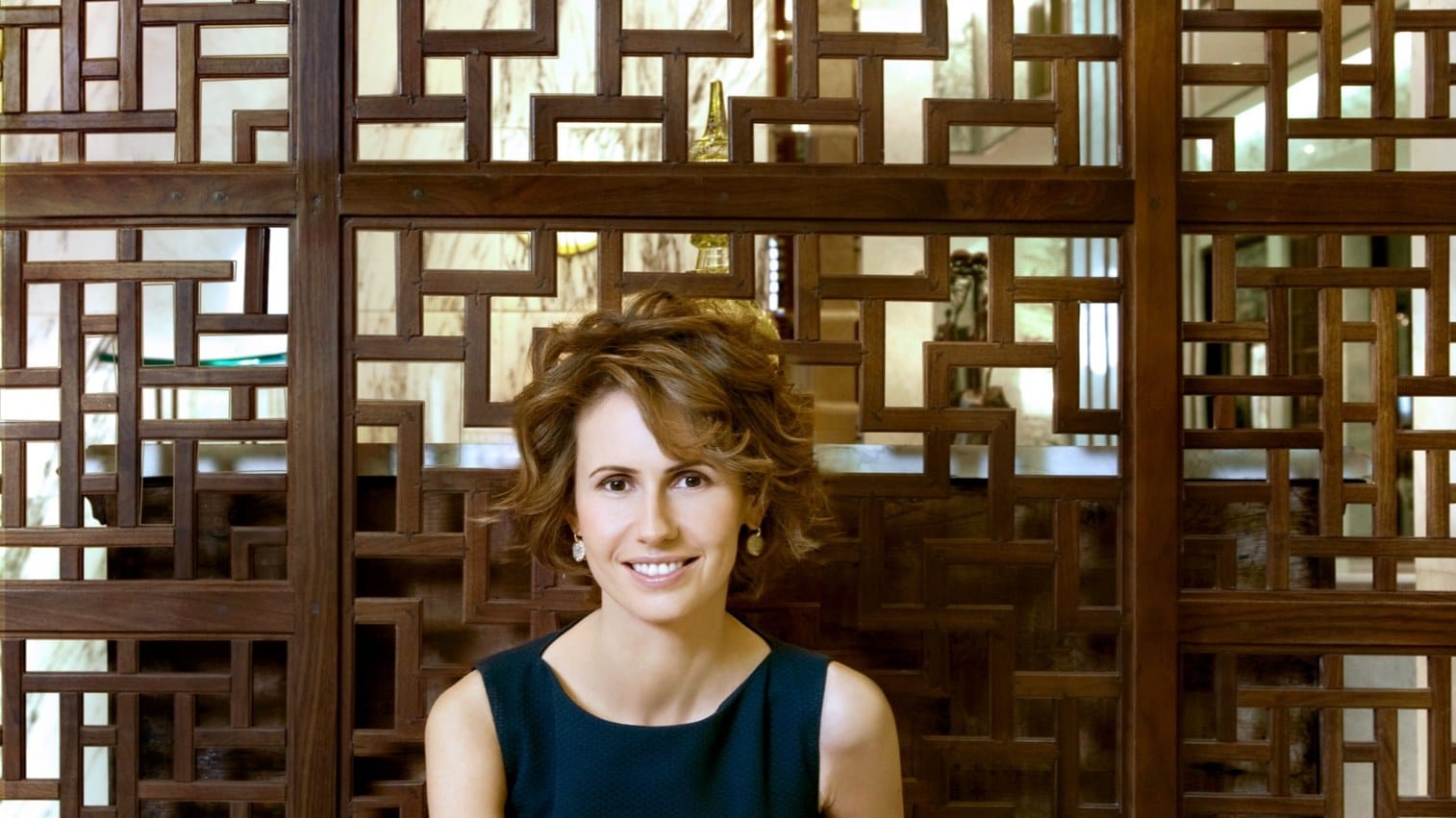
The setting is stunning. On top of a hill, overlooking Damascus, we are about to meet the First Lady of Syria, Asma al Assad. The Location, the ‘People’s Palace’ covers an area of over one and a half hectares, but it’s far from a public place as the name may suggest. Instead it is a very formal official site used to receive honoured guests of the country, an ensemble of four palaces created by the renowned Japanese Architect Kenzo Tange.
Yet the First Lady’s welcome was in stark contrast to the formality of the environment. She’s an independent spirit, who also possesses a remarkable beauty. Even her professional skills are amazing. She holds a first-class honours Bachelor of Sciences degree in computer science and a diploma in French Literature. In her former career she was an analyst in hedge fund management at Morgan Grenfell before taking on a job at J.P. Morgan, where she specialised in mergers and acquisitions for biotechnology and pharmaceutical companies.
Now the president’s wife, she’s not sitting back and doing charity work every now and then. Asma al Assad, mother of three, has established Syria’s first rural development NGO, the Fund for the Integrated Rural Development of Syria (FIRDOS); hosted the Women and Education forum, which gathered together First Ladies from six of the 22 Arab nations and delegations from all of them; and she is head of Mawred, a Syrian NGO set up under her patronage in 2003 with the aim of enhancing the role of women in Syria’s economic development. The list goes on.
The Arab world is often misunderstood place, what should be done to correct this?
The Arab world is not one culture or one monotone society; in fact, the richness of the Arab world is what makes it special. I think the challenge we’re facing in the 21st century is that we have so many methods of communication, whether it’s the Internet, satellite TV, Twitter, blogs, YouTube, you name it. But unfortunately we know less about each other. All these tools have not been used in a way for us to be able to understand different cultures, perspectives or opinions. In my opinion, we’re not using these tools as they were designed to be used. I think we need to put prejudices aside and make more of an effort to understand the reality of life in the countries we live in.
In the past, you’ve said that don’t see yourself as unique, but that you’re in a very privileged situation.
There are a lot of role models in the Middle East. I’m not unique. It depends what you mean by privileged. I work hard; I have a big responsibility. Syria is going through an insurmountable challenge of making sure that we continue to develop at a rate and pace that is suitable for the people, and that we become a more prosperous society. That doesn’t come easily; so if that’s what you mean by privileged, maybe, but I see it as a responsibility.
Could you have just taken the opportunity to be the First Lady, stay in the palace and do classical charity work?
That was never an option for me. It’s not who I am as an individual; I’ve worked all my life and I can’t see myself not working. On top of that, when you’re presented with the opportunity as I was to be able to positively influence the change that’s happening in the country - who wouldn’t take on that challenge? It’s a privilege.
You spent your first 25 years in Britain; how were these years influential to your upbringing and education?
For me the benefits of growing up in Britain are obviously the education I was very fortunate to gain in terms of the ability to think critically and the ability to work within teams in different dynamics, as well as the professional environment that I worked in, in investment banking. They provided me with an insight of how you work at very high international standards, in a very professional and rigorous manner. These are skills that I’ve carried with me even up until today; the standards I was exposed to are the same ones I try to expose others to in Syria, in all fields as much as possible.
As a mother, what are your thoughts on the fact that 60 per cent of Syria’s population is under 25?
For me, it’s an opportunity, if you compare the situation in Europe where the population is generally aging and the challenges you will face with that. In the Middle East it’s the complete opposite, we have a young population that is ready and willing and has an incredible amount of energy and potential to really make a difference. They are at the beginning of their lives and are not the future but very much a part of our present. It’s our responsibility to make sure that they have the necessary skills not just to survive but to thrive, so that they see the future as an exciting opportunity rather than a dangerous threat. Whether that’s on the economic, social, or political front, we need make sure that they have the inspiration, the capabilities and the opportunities to be able to think critically about issues, to have a world perspective, and at the same understand that they have responsibilities towards other, and rights for themselves.
Syria is in the eye of the storm and it has to deal with the economic crisis, how can one overcome all this?
To answer your question it’s important to understand a little bit about the local dynamics - what is it that is unique to us as a people, what makes us Syrian. For me, it goes back to the rich history, not just in terms of what Syria has been in terms of advancing science, technology, mankind and civilisations – you hear it all the time, the melting pot of civilisations – I think a lot of people know this about Syria, but what makes us special is the way we are able to live in harmony with one another. When you look at the number of cultures and religions and peoples that have walked these lands over thousands of years, you realise that it’s still not just a safe place, it’s a kind one, a place that is at peace with itself, regardless of the turmoil that happens on its borders. That for us is where the stability comes from; we are not perfect, but we will continue to work towards a better tomorrow.
You can look back now almost a decade since your new life began – does it scare you?
A little bit. But again, I like to look forward and not in the rear-view mirror. The past offers important lessons but I think the mistake that some people make is that they tend to live in the past or focus too much on it. You need to learn from it but definitely keep your vision forward looking.