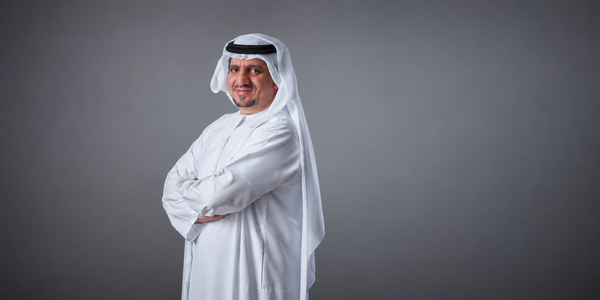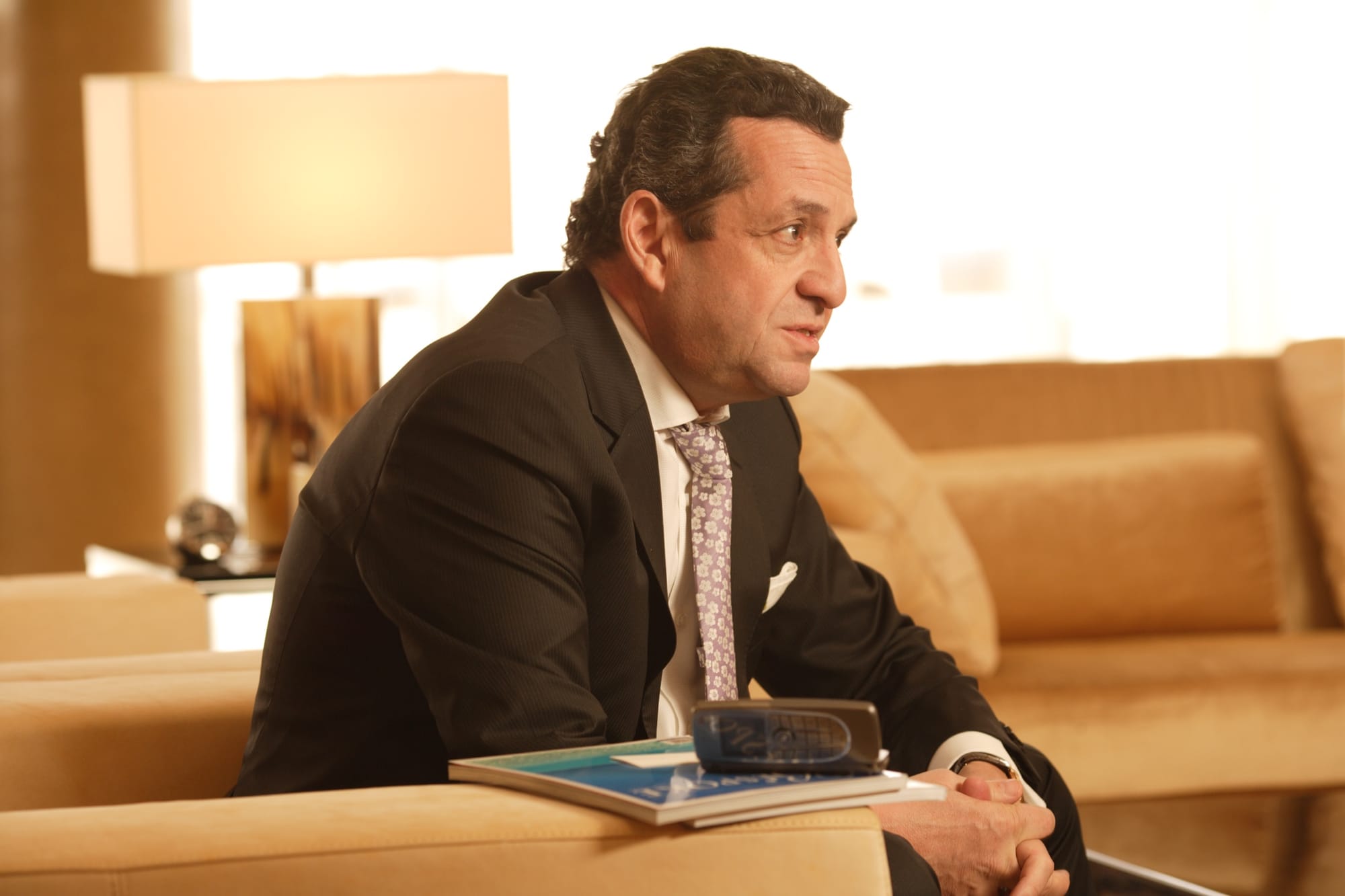
Hamed El Chiaty is the chairman and ceo of Travco Group (Travel Company of Egypt). What started in 1979 as a small specialised travel company, operating out of an apartment, is now a diversified multinational group of over 30 companies in all fields related to inbound and outbound tourism with assets well exceeding half-a-billion USD.
In the early 1980s, as Travco attracted more and more tourists to Egypt it needed to put together the necessary infrastructure to provide ever better services. Rather than relying on others, the company went it alone. These days Hamed El Chiaty’s company has built and is operating more ships on the Nile than anyone else. Travco has the single largest ground transport fleet and most significantly of all, more hotel rooms than anyone else in the region. With offices around the world employing more than 13,000 employees, Travco is now a giant. But Chiaty is not a man to sit back and count his achievements. With plans to go public at around the time this article will be featured, expect even greater things to come in the near future.
For the uninitiated, Travco can be slimmed down to four main activities. The first includes anything related to travel, such as cars, buses, airlines ticketing, aircraft handling and flight operation. The second is the hospitality arm, which includes hotel accommodations, resorts, Nile cruises and restaurants. The third sector is the Engineering and Construction end of the business that is busy these days with some mammoth projects such as a six million square metre project on the Red Sea. The last division in the Travco Group is the real estate company that specialises in the development, rental and sale of real estate.
There are Travco projects all over the Middle East but Egypt represents the bulk of the business. Chiaty is a risk taker and was honoured in 2006 by the Egyptian Ministry of Tourism for his leadership and efforts in promoting tourism in the country and especially for his role in introducing the North Coast to the Egyptian Tourism Map. As he explained, “We started our project in the middle of nowhere. It was an area that was actually a military zone, not even Egyptians knew about this area.” According to Chiaty, the North Coast developments on the Mediterranean will be a major domestic tourism hub luring local Egyptians while the Red Sea will appeal more to foreign tourists.
Though Chiaty may be on top now, he is all too aware of the dangers of losing focus once there. “We want to be the biggest and the best. And not just to be the best, but to maintain that position. I personally believe that the hardest thing is to stay on top; it is much harder than actually getting there,” he says.
All in all, Hamed El Chiaty is charming, charismatic and industrious. Chiaty represents an embodiment of self-made success. Many could say he is a lucky man and though it may seem so, his success is built upon the stalwarts of hard work and dedication. There is a business school adage of luck being a dividend of sweat. The more you sweat the luckier you get. That summarises Hamed El Chiaty.
Nicolas Shammas Could you give me a brief insight into how and where you grew up and how you got into the travel industry?
Hamed Chiaty My schooling was in Egypt. I went on to the American University of Cairo after I completed my schooling. I was very young, dynamic and unaware of what life was all about. AUC was the best possible environment for me. You must remember that not many people had the privilege of being able to travel abroad to attend university, like they do these days. In my day, it was not easy for the economy was on a different scale and the incomes were at different levels. Anyway I studied Economics and graduated successfully.
Did you then start straight away in the travel industry?
Well, because I have two brothers, one older and one younger, I had to do military service. My elder brother was already in the Army doing his service and he stayed there five years which was a very long time since Egypt was at war in several areas during the late 1970s and anyone doing their military service was not allowed to leave until the war was over. So when I finished university I had to wait for my turn to come before I could begin work. I didn’t know what I was going to do but a very close friend of mine who was in the travel business asked me to join as an apprentice. This meant earning almost no money but it would keep me busy and I could learn a business. And that’s what I did.
What was that company called?
The company was called MENA Tours. My friend was working there because he was related to the owners and naturally they gave him all the support he needed. And, as we were close friends he extended that support to me as well. However, I had to start my military service and though it was very tough in the beginning I did find a way to return home after half a day’s work. Because I was already linked to MENA Travel I would work there part time every afternoon.
How long was the military service?
A year-and-a-half. The first six months were serious, then the year after that was better for me as I was able to do part time work at the same time. It gave me a lot of background information about business and later on when I finished my military service I took the summer off and thought that perhaps I could start my own business. My father lent me some money which I had to pay back at a later date, and that was the beginning of Travco. I started it as a small business.
You went it alone?
Initially I had partners but slowly they decided to start their own businesses and they wished to split. I continued run the company alone. This was the end of 1979.
And today Travco represents the largest travel company in Egypt…
Yes. We started originally as a travel company and then we diversified into other businesses that are related to tourism. For example, we branched out into Nile cruises and hotels. We started bus transport and all sorts of other activities and now we are the largest travel-related services company in the Middle East, not just Egypt. We also have the largest market share in Egypt which is in the range of ten per cent.
But when you refer to the region do you also offer services outside Egypt?
We draw tourists to Egypt but we also have a similar business in Dubai which has been operating for ten years and then we opened in other countries such as Oman and Jordan. We started our first hotel venture in Dubai two years ago and it has just opened this year in January in fact. It is just outside Dubai in Fujairah and it is called the Miramar Resort, or Iberotel Miramar Al Aqah to be precise.
With the region constantly in a precarious position, what are your feelings about the tourism industry here and how is it affected?
The market in general is fairly resilient. In the old days one isolated incident could affect tourism in all the surrounding areas. Now because news travels so fast and everything is made available to whomever is interested, people are less scared by any event that may occur. I am not concerned by what could happen because our business is cyclical anyway with many ups and downs. We have withstood earthquakes, wars, terrorist attacks, bombings, the aftermath of the World Trade Centre tragedies, wars in Iraq and what we have seen is that business declines a little at first but then it goes straight back to normal.
What advantages does Egypt offer?
Well Egypt specifically has a wide array of services. We have culture, archaeology and history. Egyptian Civilization is taught in many universities and schools all over the world and it becomes a fantasy for many people to come, spend a few days and see the sights. The biggest advantage Egypt has is that everyone wants to see the Pyramids sooner or later and this is a big asset and something truly unique. What Egypt also has is proximity to the beaches and mild winter temperatures. So the return on investment is much better in Egypt, as you can operate 12 months a year and pay salaries for those 12 months a year. This improves the economy and energises growth.
How important is the all year round sun factor to the European tourist?
It is important. Greece and other Mediterranean countries offer fantastic products, but they are more expensive and they only operate in summer. For a European tourist all they need to do is take a four-hour flight to Sharm El Sheikh and sit on the beach, enjoy the sun, this is something they couldn’t do except maybe in the Canary Islands.
Or they could go to the Caribbean?
They could go to Cuba, the Caribbean or the Dominican Republic but these trips require ten hour flights. Beyond distance, the Egyptian hotels are relatively new and are very good value for money. The Canary Islands is windy, more expensive, the hotels are old and it is not an exotic place whereas Egypt is still regarded as an exotic place.
Which of the European markets do you focus on the most?
We focus mainly on the British, German and Italian markets, but now we are also active on the Russian and Ukrainian markets.
What advantages does our region offer?
What the region excels at is hospitality. We have very friendly, generous and hospitable people and this is something that is very much appreciated by the foreign tourists whether they visit Egypt, Lebanon, Jordan or any other part of our region. You really cannot imagine how important this is. There are many countries in the world that would become so much more appealing to tourists if they offered more friendliness and hospitality.
What would you like to see improved in Egypt to further increase tourism?
I would like to see people pay greater importance to the preservation of what we have in terms of history and antiquities. This does not only apply to Egypt, however. We have seen examples of how they do this in Dubai. For example they take an old, small house and create a story – this is something we are not able to appreciate yet. I mean here in Egypt, with the Pyramids, we have the greatest outdoor museum in the world, and what is needed is further investment as far as preservation, access and infrastructure. This is currently going on in terms of airports, roads and facilities.
Can the private sector aid in this or is it up to governments?
Both must be involved. The tourism industry is one of the most important generators of foreign currency in Egypt so both government and the private sector should and are presently working on this. I must say that over the last few years we have witnessed a huge improvement both in the mentality of the officials and their approach. They have recognised the need to improve and this recognition is obvious now. Before it took time but now I believe we are on the right track. We have to also learn from the mistakes that others have done. And we have to try and use these experiences to improve ourselves.
Could you provide us with some examples of the mistakes Egypt could learn from?
Yes. A major mistake that Egypt and some others in the region have suffered from is the lack of forward planning. You have to imagine where you want to be and prepare yourselves accordingly. When you hire consultants, you must take into consideration what these consultants have told you. I have seen mistakes in the last 15 years such as when Egypt was given grants and subsidies to hire consultants to advise on certain matters and in many cases these reports were not taken into consideration and sometimes not even read at all. Now this is changing, if we get somebody to give us advice we actually listen to them. It is not enough to hire the best consultant, what is needed is implementation. This is what the people in the United Arab Emirates are so good at.
I saw that you have offices in as far a field as China and Japan, is that part of your expansion plan?
These are what are known as feeder companies. They support our business in this region. It is better sometimes to make your own office especially if you cannot find a reliable partner who can fulfil your needs. But we are expanding to the Maldives and Thailand. We just bought an island in the Maldives so as to build a six-star luxury resort. We bought property in Thailand because I believe that Thailand has big potential in the future. We are going to look for areas that complete our business model, destinations where tourism has longer seasons.
What does the future hold in store for Travco?
We are about to go public. I cannot give details at this time but what I can say is that we have an ambitious plan of growth. We wish to grow at a minimum rate of 15 per cent per annum. We have steadily achieved that figure over the last ten years and we wish to carry on growing at that rate. To meet that end, we need to expand outside of Egypt. We have started our expansion in the UAE. We are expanding now in Oman and we are just now expanding in Thailand and the Maldives which I have previously mentioned. We currently have a hotel capacity of 9,000 rooms in a total of 48 properties. We wish to increase that figure to about 60 properties within the next three years.
Could you name the hotel chains you own and how you plan to expand them?
We own and manage three hotel chains: JAZ Resorts, Iberotel hotels and Resorts, and Sol Y Mar. As I have mentioned we wish to reach a total of 60 hotels in Egypt and the Middle East by 2011. And the only way we can achieve the aggressive growth we have in mind is to float a portion of the company thereby acquiring the cash.
Is the tourism industry changing?
Very much so. In the old days people used to go to a travel agency to get a recommendation on where to go and book a holiday. Now the process is completely different. What is happening now is people search on the net. They might also use a publication like Bespoke to get a better idea of where to go but they will then book their holidays through the internet. This is a complete change in the business model. Of course, there will always be certain things you will need a travel company for but the internet has become the common tool.
Are you moving your business online now to cater to the growing demand?
We are going more and more online. We are investing as such but it takes time.
Does Travco cater to all the tourism classes, or do you specialise in one sector?
We cover all market segments and we have a wide range of activities. For example, we are starting a new low-cost airline which will be the first low-cost airline in Egypt. It will fly to all the Arab countries, the Gulf and the Mediterranean. This will be launched in the second-half of this year. We are doing it in partnership with another low-cost airline from the region. I believe it has fantastic business potential and we are going down the right road.
So do you see more potential in low-cost tourism or at the high-end?
Definitely low-cost.
What has been your happiest moment?
I have had many, but certainly when I had my children, first my daughter and then my son. Another was when I launched my own company. It was very daunting and I could never have imagined that we would be so successful. And another very happy moment was when I was able to start to attract the largest travel company in the world to come and work with us. The company was TUI and the year was 1985. To put it in perspective, in 1984 we were still a very small company without any resources and TUI was this giant. There were 300 travel companies in Egypt at that time and they chose us. This was a very happy moment.
These days TUI and Travco are very much tied together, could you explain how?
Yes. TUI owns shares in our company and I own shares in TUI but on a personal basis. So it is an entangled but most friendly relationship.
Who has been the most influential figure in your life?
I would say my wife is the most influential figure in my life. Whether you like it or not your wife is always an influence and mine has been a great source of support for me, someone who has always been very objective in her opinions. It is important to have peace at home. Also my father was a big influence. He was a hard man, very tough and hard, and he disliked messy situations, he wanted everything to be clear cut with no half solutions. This was very important to me because this is how I run my business. I am very clear in a tough way. I like everything to be very transparent and clear and I believe this had much to do with our success.
What does luxury mean to you?
Luxury is being able to enjoy the good things in life. It is not enough to have the good things you must also be able to enjoy them. What is the use of having a Bentley permanently parked in the garage if you never have the time to enjoy it? Being able to enjoy whatever you have is the number one luxury.
How do you find the time then?
When it comes to balancing work and play there are two choices in life: either you work five days and relax for two days or you work very hard for a solid month and you take a week off. I tend to follow the week off strategy. I will work very hard for a month or two and then take a break. For example, I will work hard all winter but in summer I leave everything behind, I cruise on my yacht for a couple of months uninterrupted.
One day you will have to hand over the reins of Travco to the next generation. What do you hope they will achieve that you could not?
My dream is that my children will continue the company. For the moment we are still a family company with little responsibility to third parties. If eventually we go public then obviously we will be responsible to our investors. The company will enter another sphere of reporting and family influence will be substantially reduced. But I hope my two kids, or at least one will continue in a leading position at the company as I would want them to continue my beliefs and philosophies and strategies but it will be easier in some ways and in others more difficult.
How would you describe yourself in three words?
Three words or three sentences? [laughs]. I am always seeking the best so demanding would be one. I cannot sit and do nothing so that makes me restless and lastly I guess I am very kind.