Culture Speaking
When you talk with Sheikha Hussah Sabah al Salem Al Sabah, director general of Dar al-Athar al-Islamiyyah (DAI), three things are instantly evident. First, her passion is not for art, but for the ability of art to communicate and share cultural experiences. Second, she feels a very real sense of responsibility for using the opportunities the collection provides to reach communities in both the Islamic world and beyond. Finally, the world is quite lucky she chose to concentrate on cultural education instead of business. We might have had another woman on the ‘most successful’ lists, but the cultural cost would have been too great.
DAI is a cultural organisation inspired by the private collection of Islamic art created and fostered by Sheikh Nasser Sabah al Ahmed Al Sabah and his wife Sheikha Hussah. The Al Sabah Collection started with one piece Sheikh Nasser found in a shop in London. “He bought a beautiful fourteenth century glass bottle made either in Syria or Egypt. As he showed me the piece, he described its curves, its intricate lines and its magnificent form,” remembers Sheikha Hussah. “It was as if he were describing a beautiful woman. We felt an obligation to our civilization to collect things of our culture.”
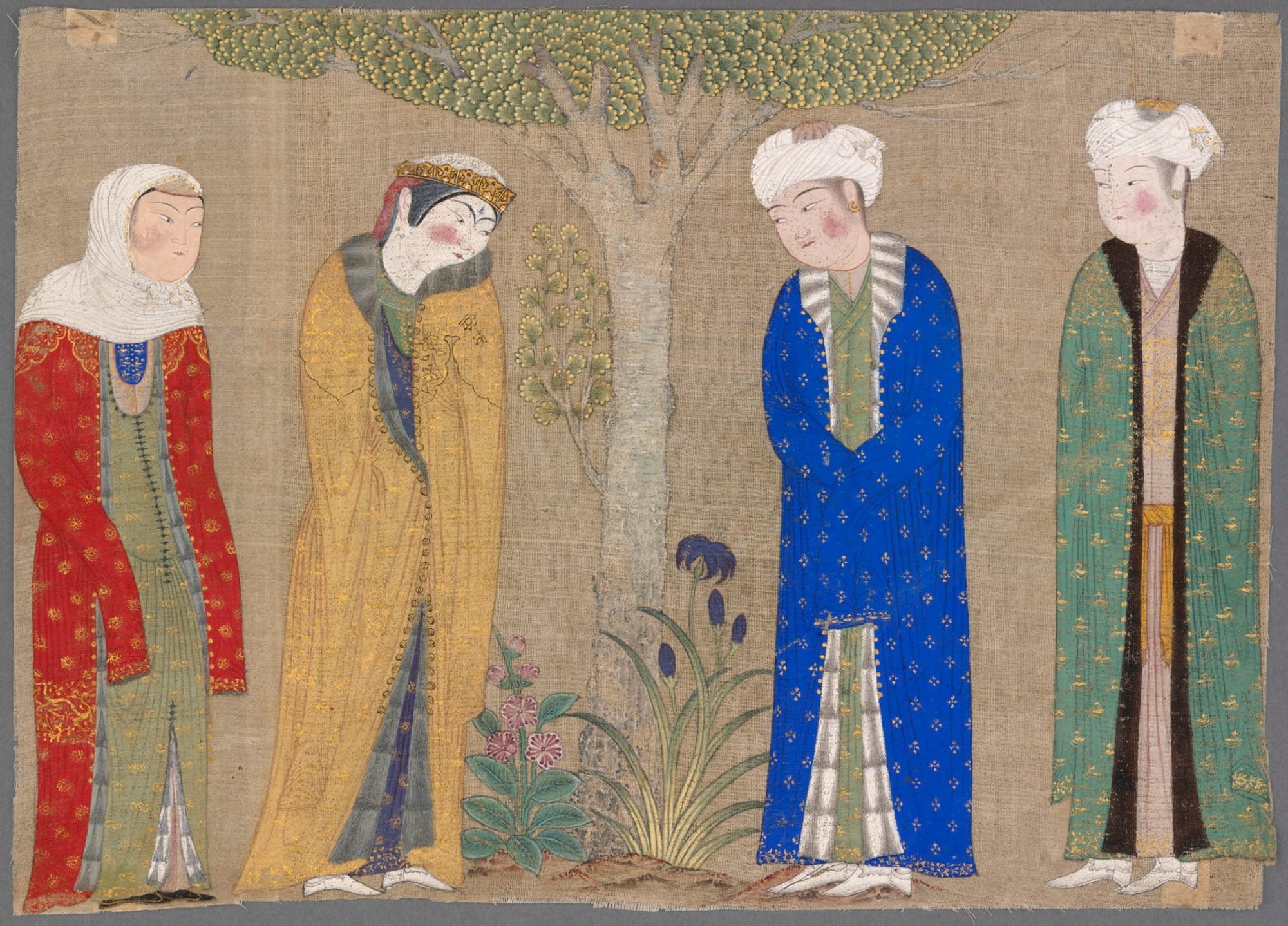
From that one bottle sprang a collection that currently includes more than 30,000 objects of art created in countries as culturally diverse as Spain and China, from the first to the fourteenth centuries AH or seventh to nineteenth centuries AD. Lovingly crafted to preserve and present all aspects of Islamic art – from extraordinary Mogul jewellery to humble ceramic serving bowls – it has been on long-term loan to the State of Kuwait since 1983. “It is our obligation to collect whatever we can find of our culture, to get dispersed pieces of art under one roof [literally and figuratively], to enlighten the public of the beauty of the Islamic culture, and to enable it to be appreciated by future generations,” explains Sheikha Hussah. “I don’t regard the pieces as my personal property but as the property of the Islamic world and human civilization.”
While the art remains the cornerstone of the DAI, under the guardianship of Sheikha Hussah, the organisation has grown into a dynamic entity promoting arts, culture and education. She is clearly driven by the ability of the art to open people’s minds as well as their eyes – also its unparalleled ability to present a picture of the Islamic world that is often missing in the media today.
As an example, she quotes Dr. Joseph M. Dye III’s comments on the exhibition of a portion of the collection at the Virginia Museum of Fine Arts. During the opening of the exhibition Dye, the curatorial chairman at the museum, noted that “there is a side to Islam that is very erudite, that has a side that loves beauty and has a highly refined culture. This exhibition shows that side. It is a splendid microcosm, a survey of great beauty and art of historical importance.”
The importance of the collection’s educational role became increasingly obvious as our conversation took a different track. The only other subject that sparked as much emotion was a discussion of her favourite piece in the collection. “These treasures are part of our being, of our own existence. Our goal has been to make these objects accessible to people, for without an appreciative audience these objects have no purpose other than technical functions.”
She referred to every piece as “my child”, but when forced to narrow down the list, Sheikha Hussah talked about a pair of fourteenth century wooden doors from Fez. For her these doors, carved with a Kufic inscription which read ‘Good Fortune and Success and Good Company’ were the symbolic door to the Dar al-Athar al-Islamiyyah. Too heavy to move easily, they were reduced to ashes when the retreating Iraqi troops set fire to the National Museum during the occupation of Kuwait in the early 1990s.
For a woman who values the story every piece in the collection has to tell, the loss of the doors was hard to accept. They were the “collective property of the entire Islamic world and of the civilized world,” as she succinctly puts it and the destruction of anything that properly belongs to so many people is, in all honesty, nothing short of a crime.
After spending just an hour with her, it is easy to see that the DAI is not Sheikha Hussah’s job, but rather her calling. In the office before 8am on most days, she is continually working – writing a speech on who and what creates a dynamic culture for a conference in Egypt for instance or doing the research necessary to be a valuable contributor to the Trilogue colloquium in Salzburg, and planning her trip to a dig in the Sinai. Later that day, she may be involved in recruiting top speakers for the local lecture series and coordinating the lending of collection pieces with local personnel or the curators and administrators from the world’s leading museums. More and more, her workload also includes corresponding with leaders on subjects related to art, architecture, multi-culturalism and inter-faith dialogue. Often she puts in 12 hour days, shifting from the office to the cultural centre for a lecture before heading home.
President John F. Kennedy was once asked why he worked so hard in public service and he replied that, “to whom much is given, much is required.” Sheikha Hussah echoes a similar sentiment, amiably closing the interview with what upon hearing seems to be ancient scripture, “The awareness of the responsibilities that good fortune brings is precisely what has created and sustains Dar al-Athar al-Islamiyyah,” she concludes. Susan Day.