It might be hard to imagine now, but back in the early 1980s, the very idea of wearing a watch with a well-wrought mechanism had lost its appeal. With the advent of the cheap and reliable Japanese mass-market digital watch, Casio’s products spring to mind, the Swiss watch industry (a pillar of the national economy for centuries) was in mortal danger. It reached the point that, in 1982, Swiss banks commissioned the head of an engineering management consultancy in Zurich to plan the ordered bankruptcy of the remaining national watch industry.
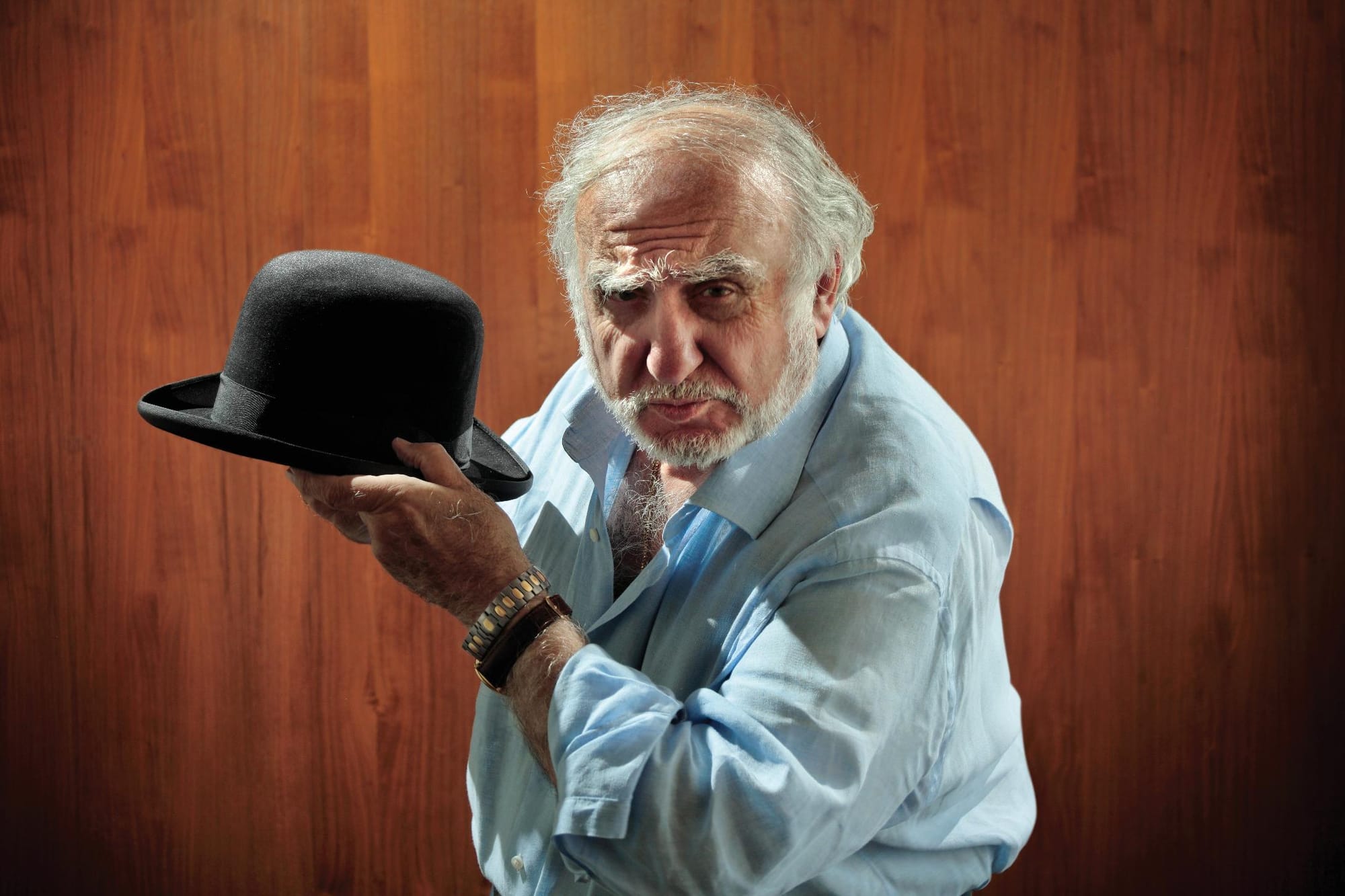
The consultant was none other than Nicolas Hayek, a graduate of mathematics, physics and chemistry from the University of Lyon in France. Married to a Swiss lady, he had settled in Zurich where he set up Hayek Engineering in the early 1960s. Counter to the brief of the banks, Nicolas Hayek’s solution was not to liquidate the watchmakers but rather to merge two of its former titans, Asuag and SSIH, which between them owned brands like Omega, Longines and Tissot.
Hayek then bought a majority stake in the reorganised group, known as SMH (Société Suisse de Microélectronique et d’Horlogerie). Realising that the quartz watch had erased the advantage of complex mechanical accuracy that had hitherto justified high prices, Hayek decided that the customer had to be sold on the idea of wearing a watch as a personal statement. So in 1983 SMH introduced the Swatch. It was plastic, battery-powered, lightweight, vibrantly coloured and fresh faced. Most crucially of all it was remarkably inexpensive to produce as it had only 51 parts, as opposed to the nearly 100 needed to make a traditional wristwatch. This allowed Hayek to retail the watch at 35 USD, making it affordable enough for enthusiasts to buy more than one at a time.
It was a raging success - sales that had initially been projected at 5 to 6 million pieces a year, were between 20 million to 25 million. And just as he had predicted, the lower market success also resuscitated the high-end brands under the SMH umbrella. The company, whose name was changed to the Swatch Group in the 1990s, generated almost 5 billion USD in sales last year and the Swiss now export some 26 million watches a year. (China exports more than a billion, but according to the Federation of the Swiss Watch Industry, the average price for a Chinese watch is around 2 USD, and that for a Swiss watch is more than 563 USD.) In real terms Hayek took Switzerland from a paltry 10 per cent global market share to a dominant 55 per cent.
Another of Hayek’s brilliant ideas was the Smart Car - a cheap, 600cc city coupé with a hybrid electric-combustion engine. Mercedes helped him produce and market it in 1998, but they disagreed over the most basic matter – its size – and the first cars did not sell well. Mercedes bought Hayek out, changed the design and made it more expensive and less coolly Swatch-like.
Hayek's son Nicolas Junior became Swatch chief executive in 2003 and his daughter, Nayla, is on the board, but Hayek stayed on as president, and was still tinkering at company headquarters when he died of heart failure. He is survived by his children and his wife, Marianne.