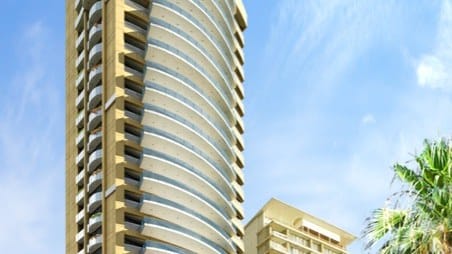
Hani Haddad is the Managing Director of A&H, a relatively new yet highly dynamic Beirut-based development company. He’s a civil engineer who has been working for his family company since graduating in 2000 from Montreal’s McGill University. Seven years later that company would evolve into what is now known as A&H.
Though the new entity has yet to complete its first project, it currently has six developments underway with a further two on the drawing board. Estimations of the six current projects show that A&H has a contracting turnover of over 150 million USD with a potential development yield of around half-a-billion USD. Certainly good business in what is deemed to be a healthy and secure market.
According to Haddad, “Beirut realty is also one of the most undervalued as compared to other Middle Eastern capitals, attracting investments and leaving significant room for more growth.” Through the interview it became clear that Haddad is highly enthused by his company’s engineering work and that he’s passionate about delivering “the best quality product on the market today.” Ever optimistic and buoyant about the Lebanese market in general, he exudes a positive approach of ‘build it and they will come,’ a manner that belies the fact he’s constructing in response to real, existing demand with his projects and their apartment sizes studied down to the last detail. It’s a fine reminder of his alma mater’s Latin motto: Grandescunt Aucta Labore, “By hard work, all things increase and grow.”
What is A&H?
A&H is a development and construction company specialising in luxury residential buildings in Beirut. It was founded in 2007 as a partnership between two entities: Abu Hamzeh and Haddad, the latter being a family of engineers who have been in the business since 1988.
In your opinion, how has the Beiruti real estate market performed over the last few years?
Since the turn of the Millennium and up until 2009, the market in Beirut has been growing at almost 30 per cent per annum. Since then things have calmed down and the market has now stabilised. Even so, I’d say that we’re still undervalued compared to the region because while the prices may now be comparable with other Middle Eastern markets, here you get better quality, higher end apartments, there’s more demand and the supply is still scarce. You could say that the fundamentals in Beirut are matchless.
How did the financial crisis affect Beirut real estate?
Well Lebanese expatriates are key players on the local market. They represent about 40 to 45 per cent of all buyers in Lebanon with an even larger share of the value of transactions due to the bigger budgets they afford [compared to the local clientele]. As a result, even though the local Lebanese were not affected too much by the crisis, those living abroad were undoubtedly hit hard and that has an effect on us. I’d say roughly 50 per cent of our sales come from expats whose realty acquisitions in Beirut are second not primary homes, which is one of the first areas to get cut when you need to curb spending.
What about 2011 and beyond, what sort of growth should we expect?
It’ll stay at roughly five to ten per cent. After such a period of heavy double-digit growth I think it’s a healthier situation to be in and one that’s surely more in line with the reality of the market. I don’t think we will see the 30 and 40 per cents that we grew accustomed to in the last few years, but the good news is that demand still outstrips the supply.
The cost of construction has risen by more than five per cent, does that not mean your margins are markedly diminishing?
Yes, the cost of construction has been going up for the last few years and the margins have been getting smaller. Land values have also been rising but the apartments prices factor all of this in. The problem is that between 2004 and 2009 the price of a residential square metre has more than doubled, while the purchasing budgets of most clients remained unchanged. Therefore we have had to respond to this shift in demand by offering smaller apartments, that way consumers can still afford a home.
Where are the best opportunities now?
I believe if you offer a quality product there will always be a buyer. What's more, there are a number of subsidised loans that have eased lending to the local middle class who might otherwise have been priced out of the market because of the steep price hikes. So for now we are sticking to Beirut although, as I said, we’re offering smaller apartments of around 150-250m2 as opposed to the 350-500m2 that may have been the norm before.
What are the risks of investing in Lebanese real estate?
I’d say that the primary risk is political instability although if you look back at historical data over the last 30 years, despite everything going on around it, the country’s real estate has remained on an upward trend. Nowadays, there’s also a risk that speculators exaggerate demand but luckily they remain a minority and Lebanon is predominantly an end-user-driven market.
It’s quite an oversaturated market, is it not? How does A&H stand out?
There’s a lot of competition and there are a lot of new developments but what we consistently offer as A&H is top quality, not just in terms of specifications but also the quality of execution. This is something you certainly don’t find with every developer in the city. We achieve that quality by remaining thoroughly involved in every aspect of the business and keeping almost everything in-house.
What do you outsource?
Well we don’t do our own designs. We employ leaders in the field to do all the exterior architecture and interior designs. Other areas we have to subcontract are the big equipment such as elevators and generators.
You mentioned earlier that your buyers are local and expat Lebanese, what about Gulf Arabs?
We haven’t sold to many Gulf Arabs in the last few years. I believe that is because many of them had a loss of confidence after the 2006 war and they tended to put large Lebanese real estate acquisitions on hold as a result. Recently, we have witnessed a modest increase, especially in Solidere (Beirut Central District), and that trend should continue over the coming years.
What would you say are the advantages of Solidere?
I think it’s the nicest area in Beirut. It’s a high end district, its clean, it’s the centre of Beirut and its an example to the rest of the city in terms of infrastructure, cleanliness, amenities and security. The only problem is that so many apartments came onto the market at the same time there. Let’s say that today there are roughly 2,500 apartments on the market in Beirut, at least 25 per cent of those are in Solidere. That definitely contributes to keeping the Solidere prices lower than they could be. Adversely there’s the potential for a much faster appreciation.
How much does demand depend on the address?
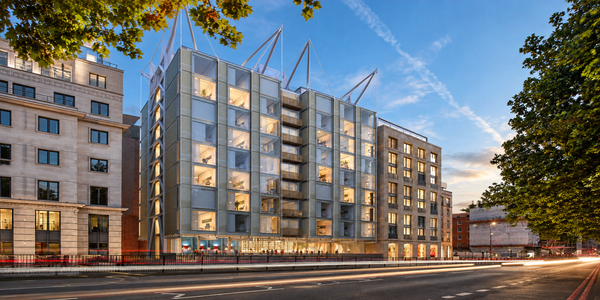
Each area has its own clientele. You’ll always have certain people wanting to live in a particular neighbourhood and not wanting to live anywhere else. Therefore, as A&H, we try to satisfy all these customers with a diverse range of projects. For example right now we have projects in Solidere, Bliss Street, Sakiet El Janzir (close to Verdun), Raouche, Ramle and we have moved a little closer to the outskirts with a project in the Mathaf area.
Do you have the capacity to take on more projects with so many in development?
Right now, we have six projects in-hand, with another in the licensing stage and one more in the design phase. But we’re always looking for more projects; it’s just a little tough today with land prices having reached such ridiculous levels. In real terms, it means that if you start a project on a new land, you won’t be able to compete with the 2,500 apartments already on the market today. Take for example A&H’s The Heights in Sakie, it has a starting price of around 4,000 USD a square metre, but if I bought the land today I’d have to sell for about 30 per cent more than that.
How much can banks finance your projects?
We’re very solid financially; in fact most developers here use their own cash. It’s one of the reasons why Beirut is so stable and resilient. You’d actually be hard pressed to find a developer who’s highly leveraged with a bank. Most can afford to buy the piece of land and start the construction from their own funds; the rest can be funded through pre-sales. Of course we do use banking overdraft facilities but they’re a very small percentage of the size of each project.
Unlike Solidere, there is no actual masterplan for Beirut. Consequently, what changes would you like to see made in regards to legislation?
We really need to work on public transportation, as there aren’t enough parking spaces in Beirut for all the cars currently in circulation. That creates a real mess with people parking on sidewalks, leaving cars double-parked and hindering the already inadequate artilleries of the city. Likewise, pollution is also a major problem as it presents a major headache when it comes to keeping the buildings clean.
Do you actually maintain the buildings though?
Yes we will. We are currently looking to create a separate entity within A&H that will look after the buildings once complete.
What comments do you have to make about the over-development and the lack of green space around the Lebanese capital?
This is part of Urban Planning’s scope and I believe they are looking into it. Hopefully in the future we will see them enforce this more. Mind you, A&H is already doing its part by developing very large green spaces within every project.
Every building states it’s the definition of luxury living, what is luxury to you?
In our line of work, getting high specifications and materials is not enough to qualify a building as a luxurious one. Without the quality of execution you nullify everything. A&H is one of the few that offers both top quality specs and execution.
Yet, until now A&H hasn’t delivered a building has it?
Well A&H has a strong track record because it was built on Haddad Engineering and we delivered many top-notch buildings in our previous guise.
But generally the quality of finishing in the Middle East is never as good as in Western Europe, the United States and Asia? Why is that?
The standards in Beirut have changed dramatically over the last few years. If you were looking at the quality of finishing before 2006 then you could have said that the quality was not up to par, but since then I’d say that finishing is definitely comparable. The real estate boom helped in this regard: prices escalated, there was much competition, and quality became the name of the game.
In general terms, there are many ways developers that cut corners, how can the consumer avoid this?
The only way to be completely safe is to buy once a building is finished. The problem with that approach is that most apartments will already be sold off-plan and there aren’t a lot of new apartments available. But I believe that if a developer has a solid reputation, a strong track record of delivering on time and with the quality expected of them then you can trust in that.
Do you have a particular passion project you’re keen on executing in the future?
I would like to build the highest tower in Beirut not just because it would be a landmark but also because it would be a prestigious marketing tool for A&H.
Speaking of marketing, could you tell us about your latest campaign?
Yes, when we started, our aim was to introduce A&H in a way that breaks through all the clutter. Regional real estate has traditionally been cold and rational in its communication, and everyone claims luxury, lifestyle or big dreams. We got together with the ad agency JWT and recognised that while buying a million dollar apartment is certainly a rational decision, it’s also a very emotional one. Buying an apartment is buying a new home, a room for life, a space that will grow families, raise memories and breed stories. So we launched with a distinct and identifiable brand that had a fresh communication - whether through our fences, print ads or billboards. That message was about ‘new beginnings’ and our latest communication reintroduces that motto through a storytelling platform called www.buildingstories.me.
Where do you hope A&H will be in ten years time?
Hopefully we will be developing outside Lebanon. I can’t say where yet but around the Middle East for sure.
www.ah-development.com