Looking around the world, numerous patterns catch the eye. One fundamental truth appears to be people’s preoccupation with the pursuit of greatness, a noble endeavour which is praised and widely recognised. To be acknowledged by one’s peers to have risen above the norm and to become extraordinary is no easy feat and many of the adjectives that are used for such people fall short of giving the complete picture. ‘Exceptional’, ‘talented’, ‘bright’, even ‘a wiz’, are only some facets that contribute to the whole person.
Nizar Choucair, founder of Patchi, is all of those and more. Having modernised and tailored the millennia-old processing of a bean into a marvel that seduces all five senses, his story is a renowned one. He was born in 1941 into a large Beiruti family of five boys and three girls. As far back as he could remember he has always had a fascination, if not a passion for chocolate.
At the tender age of twelve, he started working at his uncle’s chocolate shop during holidays and summer vacations. With just two years of experience he decided to buy some chocolates and sweets from his uncle, at whole-sale prices, and resell them in a small shop in the family building where he lived with thirty other members of his family. He made around 2,000 USD which was a lot of money for a teenager in the mid 50s.
Consequently chocolate became his consuming passion and he wanted to spend all his time working with it. After much argument and with great difficulty he convinced his father to allow him to drop out of school to work full-time. This was a short lived escapade for soon later he returned to his studies and completed an accounting degree. His first job was in Kuwait in the late sixties, “it was an unsatisfying and unfulfilling period.” In 1969 he decided to return to Beirut to run his uncle’s shop and he remained there for five years before leaving in 1974 to open his very own shop, a 30-square metre space in the Pavillon Building on Hamra Street.
The shop was named Patchi for it was short, catchy, easy to pronounce in any language and appropriately it was sweet too for it sounded similar to the Italian word for kiss, bacio. Unfortunately for Choucair the Lebanese civil war broke out a year later so he decided to expand his business with another branch outside the country. Amman was the first port of call and following the success of his products there he looked to grow his company further. Momentum had gathered and after targeting the Gulf, Patchi started to open branches all over the Middle East. Choucair attributes this success to the fact that “Patchi was the only chocolate company concerned with designing, manufacturing and selling chocolate boxes for weddings.” This idea was unprecedented at that time and thanks to innovation, hard work, dedication and self-belief he can best be described as a modern day chocolate empire.
From a tiny store in Hamra to a multinational brand spanning Asia, Europe, Africa, Australia, North America and Canada, the company has almost 130 branches, operated by an estimated 5,000 employees. Manufacturing is all handled in house with five factories located in Lebanon, Egypt, Dubai, Saudi Arabia and Syria, and another set to open soon in Malaysia. Total worldwide output amounts to a staggering 1,500 tonnes of chocolate per annum.
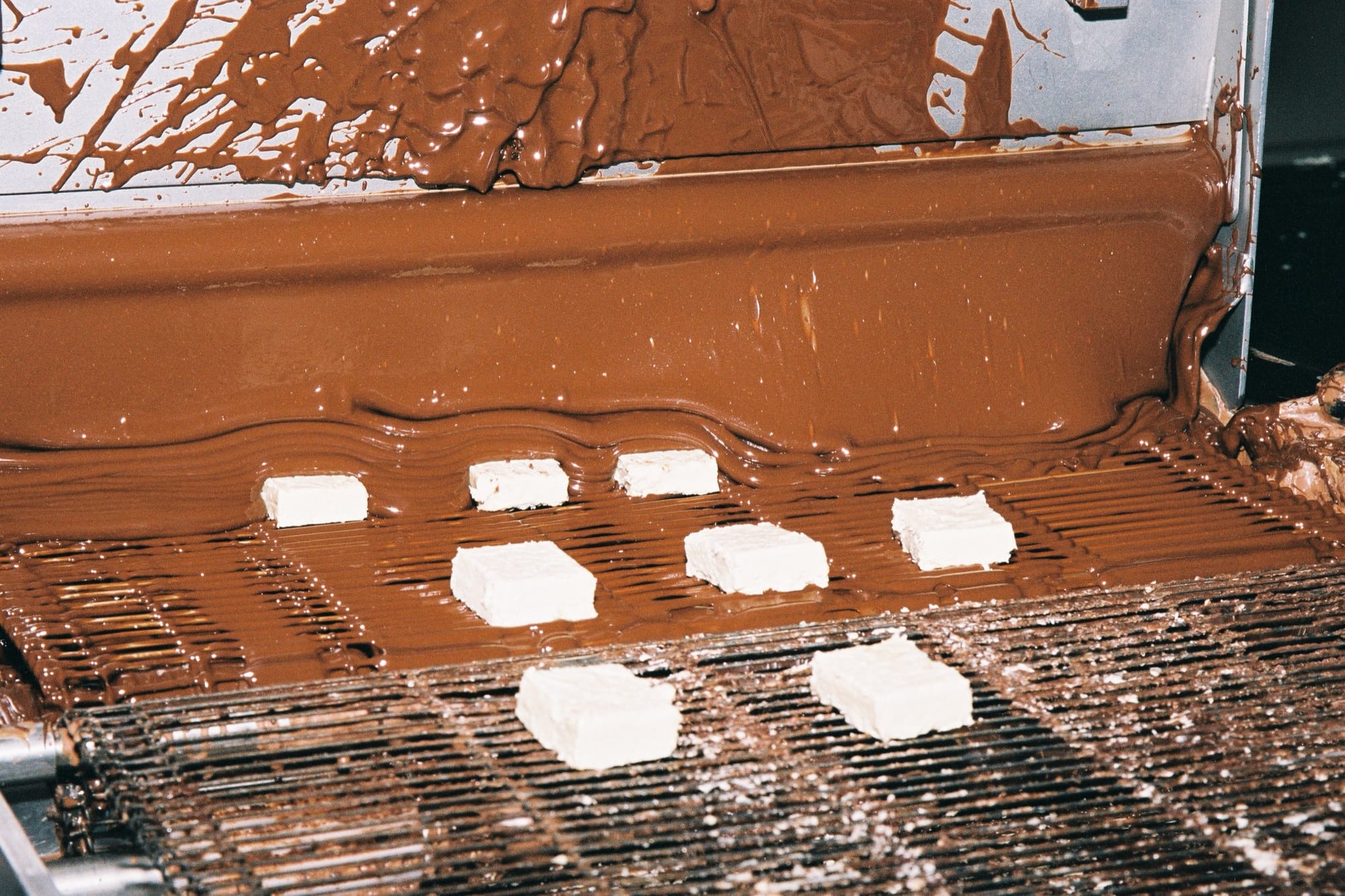
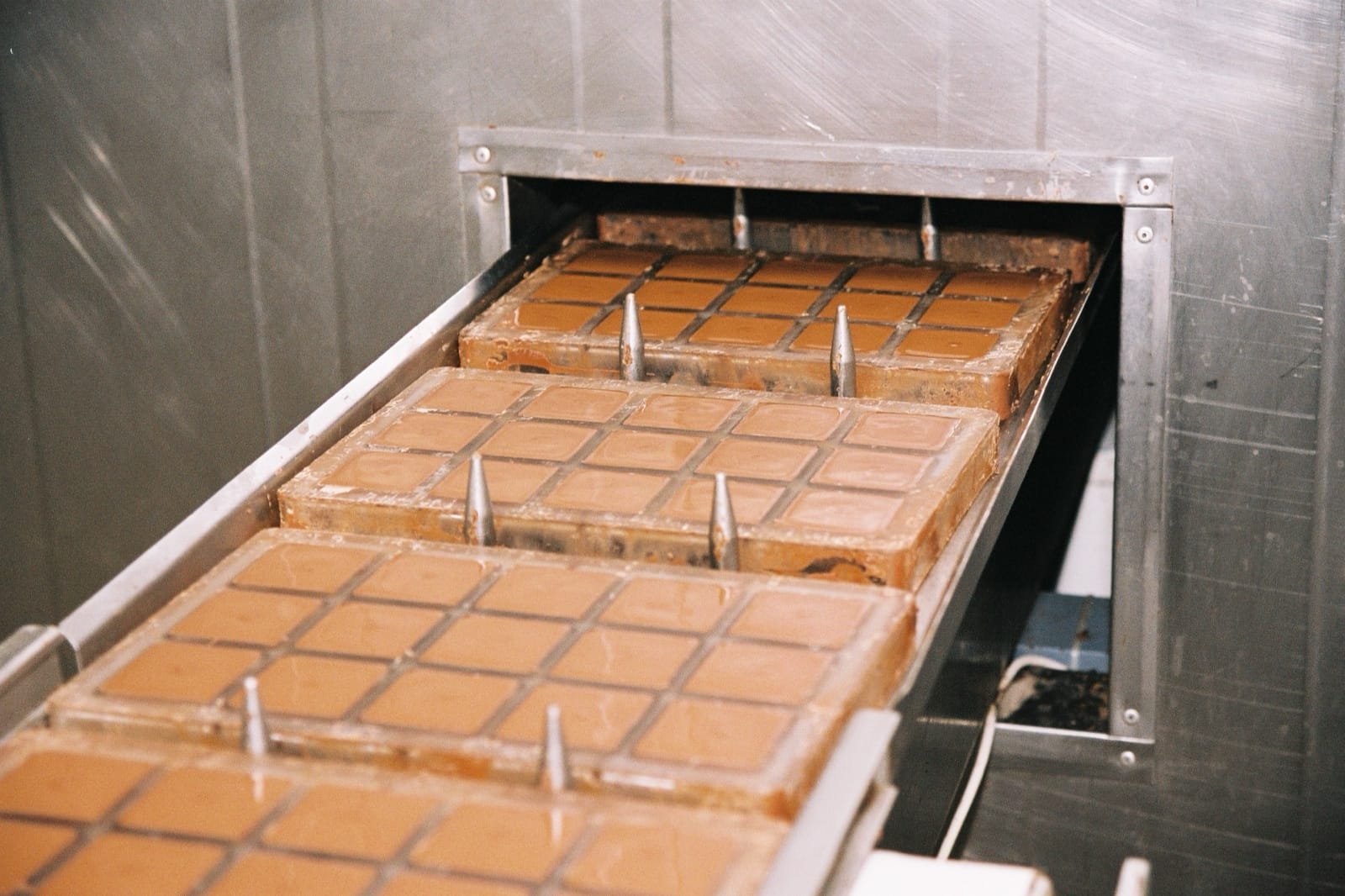
Twenty-five percent of chocolate at Patchi is black and seventy-five percent is milk chocolate, in addition there are six kinds of sugar-free chocolates. You can discover all of this by making a tour of Patchi’s hi-tech and super-hygienically managed industrial compound in Sibline, near Saida. Before entering all visitors are required to: cover their hair and feet with what looks like white shower caps, wear an enveloping big white overall and sterilise their hands with hospital-strength hand wash placed at the entrance. The machines alone are worth a visit as only the best are imported from Germany, Europe or the Far East and a dedicated team of local engineers service and maintain them.
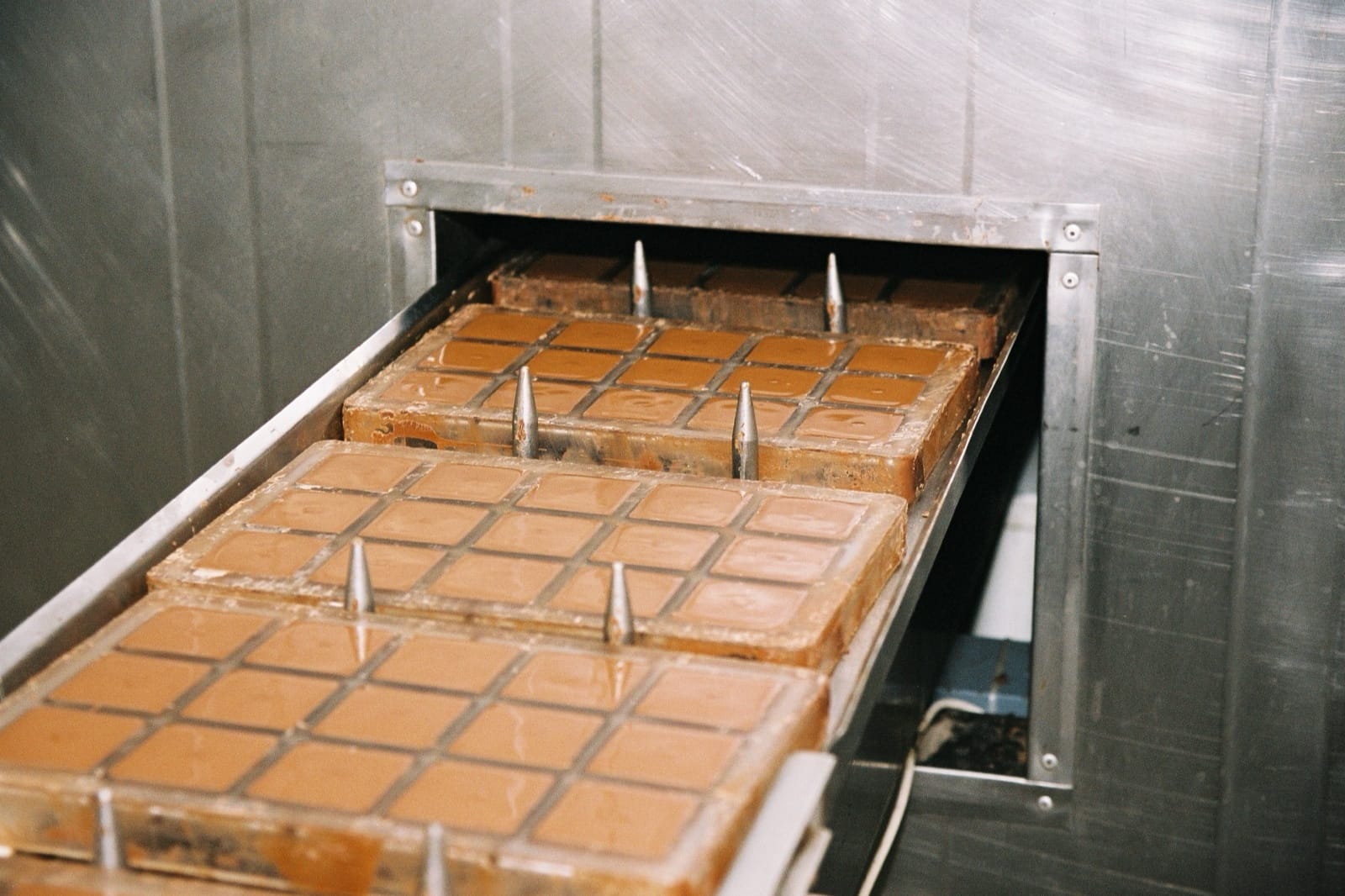
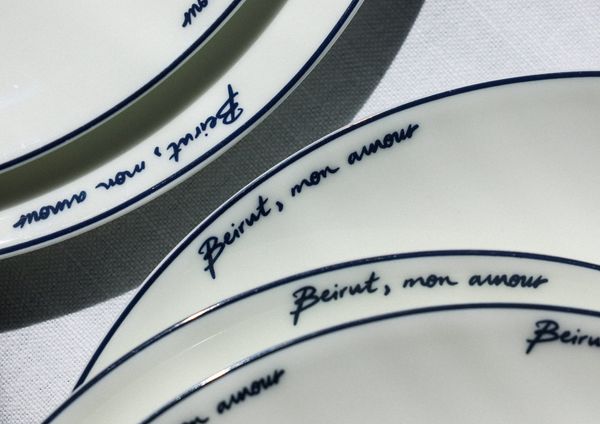
It is an impressive facility that demonstrates the company’s wide ranging expertise. Aside from the chocolate and confectionaries which is common to all Patchi factories this one produces the silver, gold, painted porcelain and other accessories used around the world. “Patchi’s foresight in meeting market needs prompted us to pursue a new line producing table design and gift ornaments,” says Choucair. Indeed Patchi produces everything in house and there is even a dedicated print and design unit within the Sibline plant. It specialises in producing paper bags, chocolate boxes and all cardboard materials and packaging that help differentiate the brand. Very aware of current trends Patchi uses sustainable sources and re-cycling wherever possible.
What struck me most during my tour was how, despite all the state-of-the-art machinery, local artisans are such a key part of the process and how even some production responsibilities are sent out to women in the locality thereby giving employment to people who, due to family demands, would otherwise be unable to work in the factory. Indeed Choucair has consistently aimed to include the local community and if new machinery means fewer people are needed then another job will be found for them within the factory.

The light and airy building resembles a bright, modern school with its separate canteen and umbrellas for eating outside amongst the bougainvillea. The wellbeing and happiness of the staff is obviously of great importance to the company. Staff are awarded certificates of commendation for various achievements in their respective fields and selected staff members also participate in annual training workshops related to their specialty. Choucair revealed that he plans to one day float his company on the stock market that way he could provide his employees with stock options which he believes will motivate them and strengthen their feelings of belonging to the company, the end result being an even better quality product.
Choucair is a firm believer that “success only comes when a man loves his profession.” He never failed because he never allowed mistakes to defeat him, he learnt from them and progressed. Nowadays with the involvement of his children in the business, he admits that this has ever further strengthened the brand name. The future definitely looks bright.