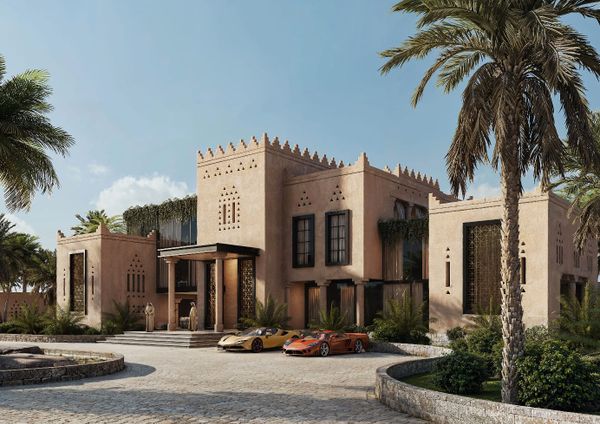
Hundreds of empty cars sit gathering dust at Dubai International Airport, abandoned by people whose dreams to start a new life in the sun-soaked emirate have since turned sour. It’s January 2009 and most have fled after racking up debts they can ill afford to pay off; a crime that carries a prison sentence in Dubai. Some are guilty of accepting any loan the local banks threw their way, while others find themselves suddenly unemployed with no means to settle the debt. All have been stung by a devastating global financial crisis that started in late 2008, the likes of which has not been seen since the 1929 Wall Street Crash. No region has been spared from a financial meltdown led by the collapse of U.S. subprime mortgages and major banks in the west. And the Middle East is no exception with Dubai arguably the biggest loser; widespread construction and pioneering projects, such as man-made archipelagos shaped like the world and the Palm Deira remain on hold, while property prices have nosedived since the boom years. Nevertheless, despite the sufferings endured by Dubai in particular, the Middle East has got off rather lightly.
“The Middle East has not been so badly hit by the economic downturn in comparison to other regions, as it has limited direct financial exposure,” says Dr. Samir Pradhan, senior researcher, GCC Economics & Gulf-Asia Program, for the Gulf Research Centre. He adds that the financial services, real estate, construction and tourism industries have suffered most from the downturn, albeit not to the same extent as in other regions.
Dr. Samir echoes a similar sentiment to one found in an International Monetary Fund report published last October. In it, the IMF said that sound government policies had softened the economic impact on the Middle East.
The report also said that oil importers with small manufacturing bases and limited exposure to banking, structured finance and global capital markets were particularly resilient. “Drawing on substantial reserves built up prior to the crisis, governments responded with expansionary fiscal policies and liquidity support to their financial sectors, which has helped contain the impact on the broader economy. These policies are also helping maintain relatively high levels of imports during the crisis, which, in turn, contributed to mitigating the global downturn,” the IMF study added.
Stimulus packages have also helped shore up Middle Eastern markets amid chronic economic conditions. In March 2009, Kuwait’s government announced it would inject 5.2bn USD into its economy to spur lending and beef up financial firms. The objective was to enable banks to borrow 4bn USD within two years, of which 50 per cent would be guaranteed by the government to encourage lending.
With its stock market in turmoil at the height of the crisis, The Kuwait Economic Society (a non-government organisation promoting economic growth) claimed the country was losing nearly 261 million USD a day in late 2008. Around the same time one of the country’s biggest finance companies, Global Investment House (GIH), appointed HSBC as an adviser to restructure some 3.1bn USD debt with local and global banks. The government believed a stimulus package would help the country and companies like GIH get back on track.
Other countries have taken similar steps to protect their respective economies from the downturn, according to Oliver Cornock, Oxford Business Group’s regional director for the GCC. “Measures have been taken by central banks where they have shored up liquidity,” he says. “For example, in Qatar where the investments are made through sovereign wealth funds to Saudi Arabia where there was a stimulus package going towards huge amounts of infrastructure spend. And in Kuwait, they cut their budget initially but have stimulus packages, which will be a massive boost for that economy.”
Of all the GCC countries, Qatar has arguably proved most resilient to the downturn, with corporate finance specialist QNB Capital recently predicting that GDP would rise 14.5 per cent this year and 17 per cent in the next. The country’s economy owes much to its rich source of natural gas, which has helped maintain its strength in difficult times. To continue this growth, billions of dollars have been spent on gas projects including the liquefaction natural gas plant in Ras Laffan. In addition, talks to increase gas supplies to India and work with Indian companies on gas projects in both companies have recently been held.
Another country that has maintained a steady course through the crisis is Saudi Arabia. None of the Kingdom’s seven banks have reported annual losses for 2009 nor asked for government support. The country has taken a few knocks, most notably a drop in oil price from record highs of 147 USD in mid-2008 to between 70-80 USD now, and defaults involving Saudi family business empires the Saad Group and AH Algosaibi & Brothers. In mid-2009, it was revealed that the companies had some 20bn USD debt between them. But government spending to stimulate bank lending has seen it through the worst of the crisis.
According to figures compiled by business intelligence provider MEED, the state invested predominantly in crude petroleum and natural gas (43.3 per cent) last year. Other industries that received government funding include manufacturing; retail, hotels and restaurants; construction and transport. Going forward, the government plans to continue investing in various sectors as it looks to diversify away from oil and gas. Expected GDP growth for 2010 is 3.7 per cent compared to 0.15per cent last year, a recent IMF study has claimed. “In Saudi we are seeing predicted GDP growth of 3.7 per cent in 2010, which has to be good when compared to just 1.3 per cent for the UAE,” says OBG’s Cornock.
Looking to outstrip both Saudi Arabia and the UAE for GDP growth in 2010 is Bahrain, which is expected to register a 4 per cent rise. The country’s Economic Development Board says it has experienced real GDP growth of 70 per cent during the past decade, spurred by ongoing government investment in diversification. Continuing on this track, the state unveiled Vision 2030 two years ago: an initiative targeting more private industry development while breaking the kingdom’s reliance on hydrocarbons. With solid financial services, telecoms and retail sectors already in place, Bahrain appears on track.
“The simple fact is Bahrain has diversified far more than other countries,” Cornock says. “It realised early on that really there was no choice because the oil it had was running out. Therefore, if you look at financial services it is a pretty big industry.
“There have also been other forms of diversification, such as Alba (an aluminium smelting company) competing in the aluminium market with pretty good growth this year, although last year wasn’t so great. Bahrain diversified early and didn’t put all its eggs in one basket.”
If Bahrain is anything to go by, then most economies in the Middle East have maintained a steady course through the economic storm. Of course, some have suffered more than most such as Dubai, which is still recovering after seeing its construction and property industries battered by the unforgiving conditions. But generally, few could argue that the Middle East has not shown itself to be a resilient force when the going gets tough.