While the first ‘hotels’ were little more than inns, secure spaces where travellers could rest themselves and their pack animals, which may (or may not) have served some kind of meal, it wasn’t all that long before more elaborate establishments, places that offered more than just basic comforts, began to appear.
Interestingly, it seems that the very first hotels that set out to be, as we would say today, ‘destinations’, grew up around hot springs. In ancient times, ‘taking the waters’, an early form of healing, was one of the main reasons most people who weren’t traders or pilgrims chose to travel.
This is true of not only the Greek and the Roman empires, both of which were known not only for their appreciation of the restorative powers of hot springs but also for the elaborate bathhouses they built to better enjoy them, an appreciation shared on the opposite side of the world by the equally ancient civilisations of eastern Asia.
While many of the ancient world’s hot springs continue to draw visitors today – Pamukkale in Turkey, Bath in England, Ma’in in Jordan and Saturnia in Italy have all been in use for thousands of years – few have hotels that date back more than four or five hundred years.
It seems that hotels as we know them, date back to the early Medieval period. By the time Marco Polo took to the road in the 1270s, he was able to report on the large network of inns and hostels that existed to serve merchants, government officials and religious travellers in China and Mongolia, similar to the networks that by then also stretched across Europe and the Byzantine Empire for the same purposes.
Three hundred years later, these informal establishments were being formally registered and regulated, first in France and then in England but it was the advent of industrialisation and the rise of the city that really gave the hotel its raison d’être. From migrant workers to wealthy businessmen, the newly mobile societies of Europe and later, America needed places to stay and as hotels sprang up across the world, the savvier amongst them began to experiment with ways to outdo each other, whether this was by introducing technical wonders, raising the luxury stakes, associating themselves with famous names or dropping their prices – tricks all familiar to the trade today.
Here in the Middle East, the story was a little different. We may have been the birthplace of civilisation and an epicentre of trade but the tumultuous nature of the last 7,000 years means that our oldest, continuously operating hotels are mere striplings.
The oldest Western-style hotel in the region is the Shepheard in Cairo, which dates back to 1841 (although it ceased operations for 6 years after being burnt down during riots in the Nasserist period). As for the khans that had served travellers for centuries, most of them were closing by the turn of the 20th, although some limped on until the camel caravans stopped in the early 1960s.
So what does it take to survive the test of time? As our selective roundup of some of the oldest hotels still operating reveals, there’s no single formula; luck, location, beauty, quality of service and the owners’ vision must all play a role but there’s as much that separates these great survivors as unites them. Bottom line? Perseverance, hard work, an ability to roll with the punches, a dedication to your clients and to meeting their desires will probably keep you in business far longer than 1,000 thread count sheets, celebrity chef restaurants or the spurious addition of stars.
Keiunkan, Nisiyama Onsen
This ryokan, or traditional Japanese inn, first opened in 705 AD to serve visitors to the hot springs in Hayakawa, a hill town in Japan’s Yamanashi prefecture. Located in a narrow and thickly forested valley a couple of hours from the sublime slopes of Mount Fuji, the Keiunkan has been in continuous operation for 1308 years (and counting) but has been repeatedly modernised, and bears little trace of its age. Not only is it the oldest existing hotel in the world, it’s also the second oldest continuously operating company in the world.
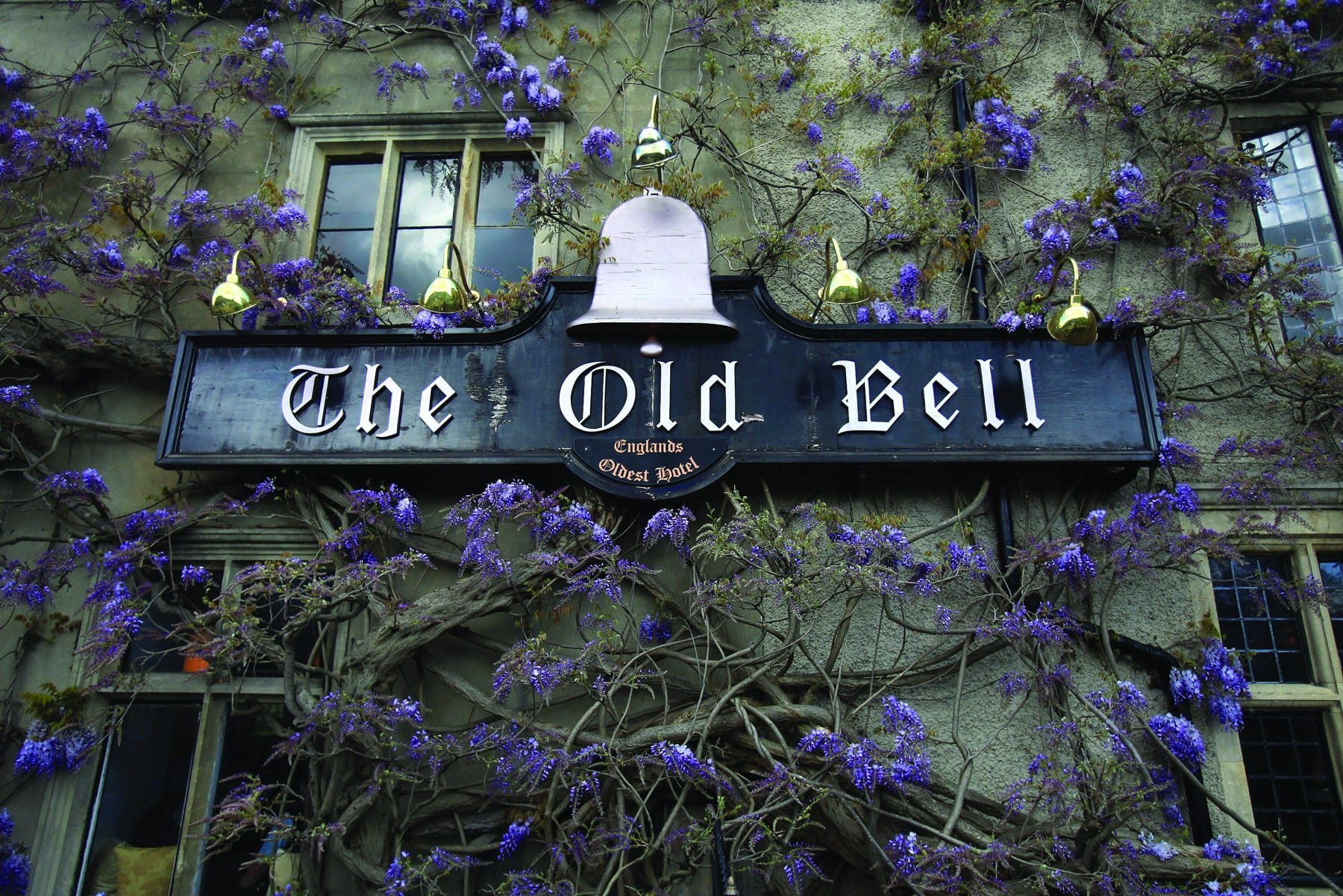
The Old Bell, Malmesbury
First built in 1220 as a hostel for pilgrims visiting nearby Malmesbury Abbey, which was endowed with the second largest library in Europe at the time, the hotel has been serving the tired and weary ever since. A ‘new’ annexe was added in the 18th century but plenty remains of the original structure, including its walls, some woodwork and an old fireplace.
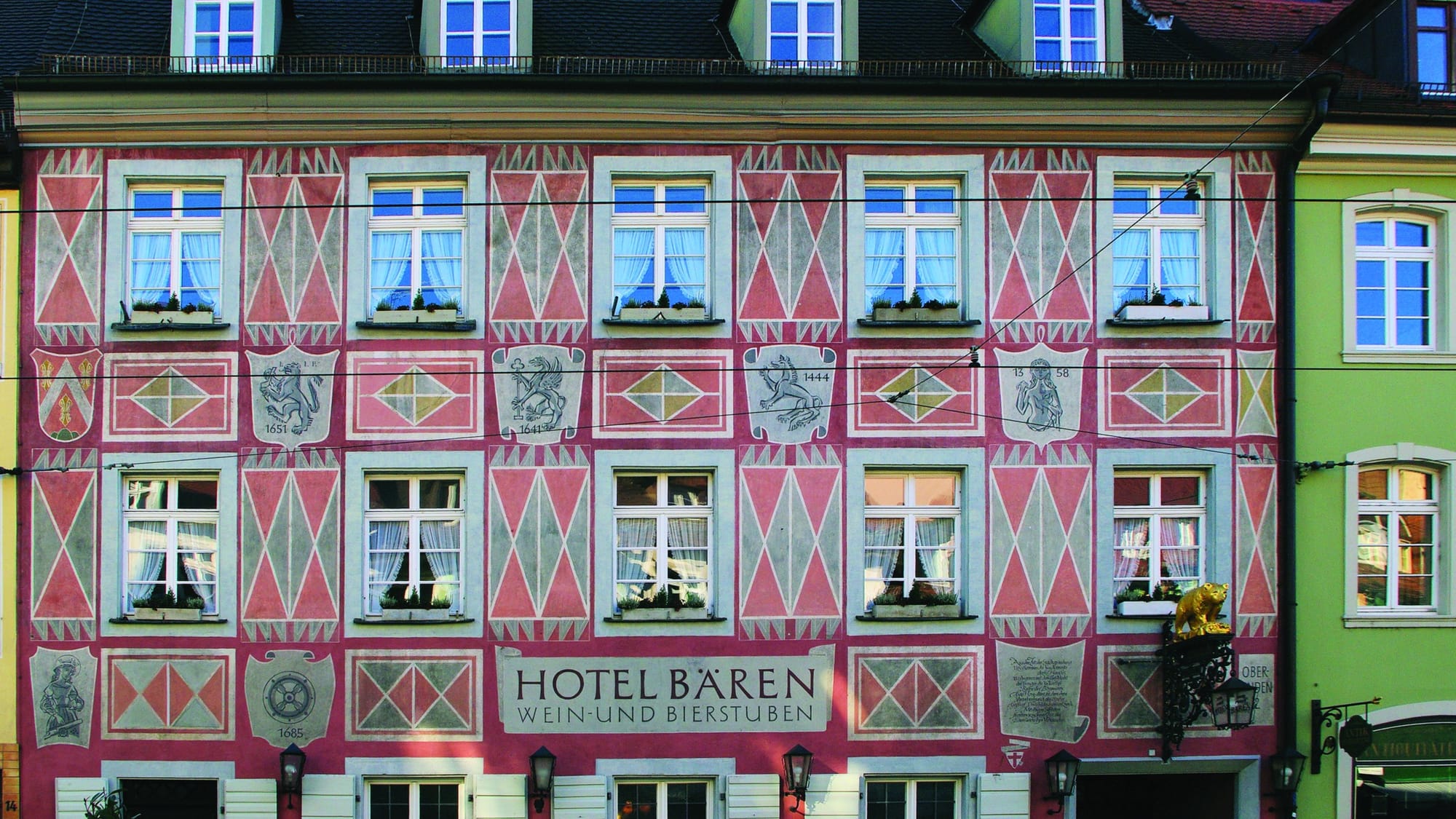
Zum Roten Baren, Freiburg
While Freiburg’s Zum Roten Baren (To the Red Bear) predates the Old Bell by a century, having been built in 1120, it began life as a private house and only became an inn sometime around 1311. Since then though, it has been in continuous operation and though much of its medieval charm has been erased by subsequent renovations, the building was one of the few to survive aerial bombardment in WWII and from the outside, looks much as it did seven hundred years ago.
Baron Hotel/Palmyra Hotel
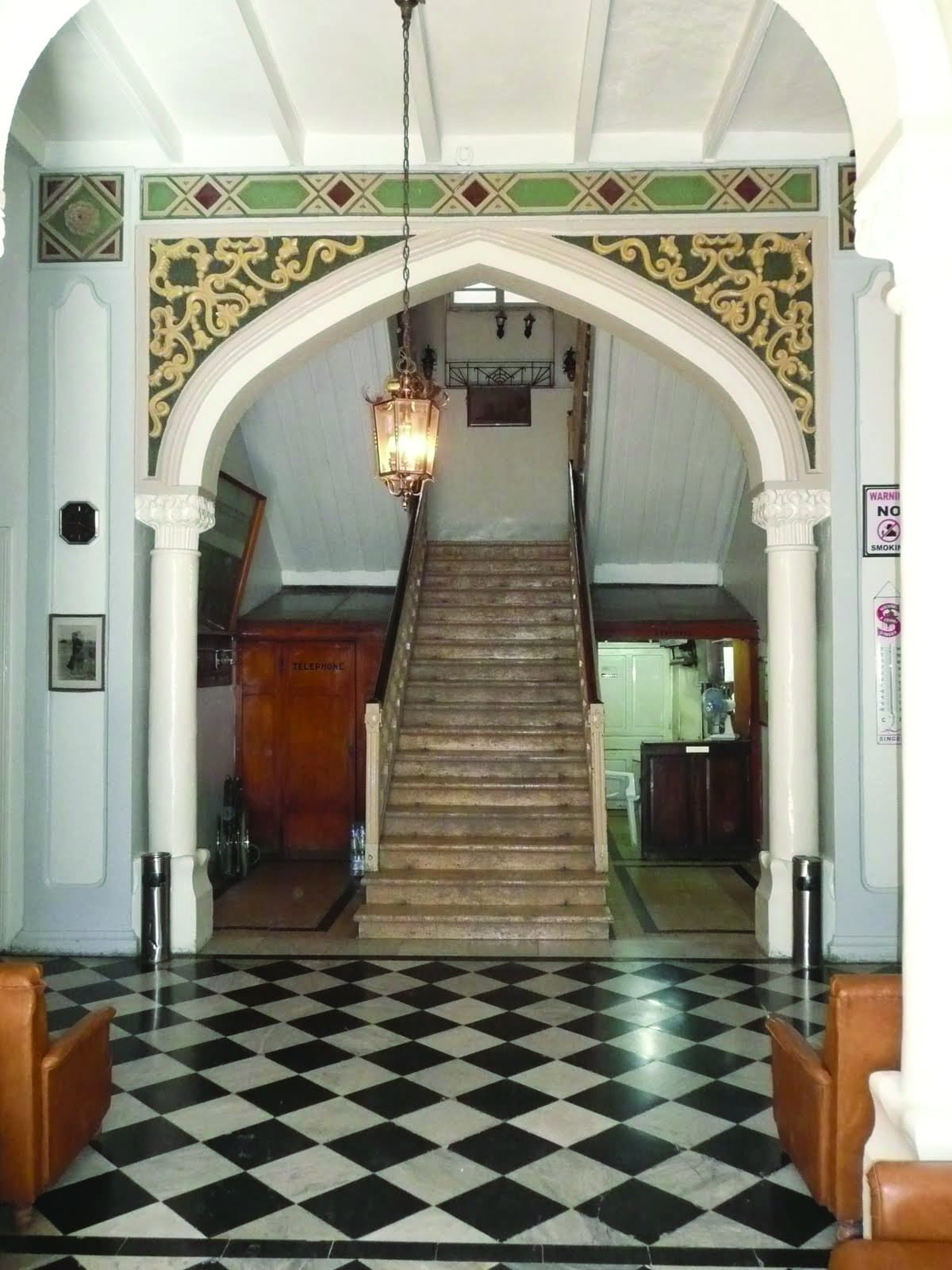
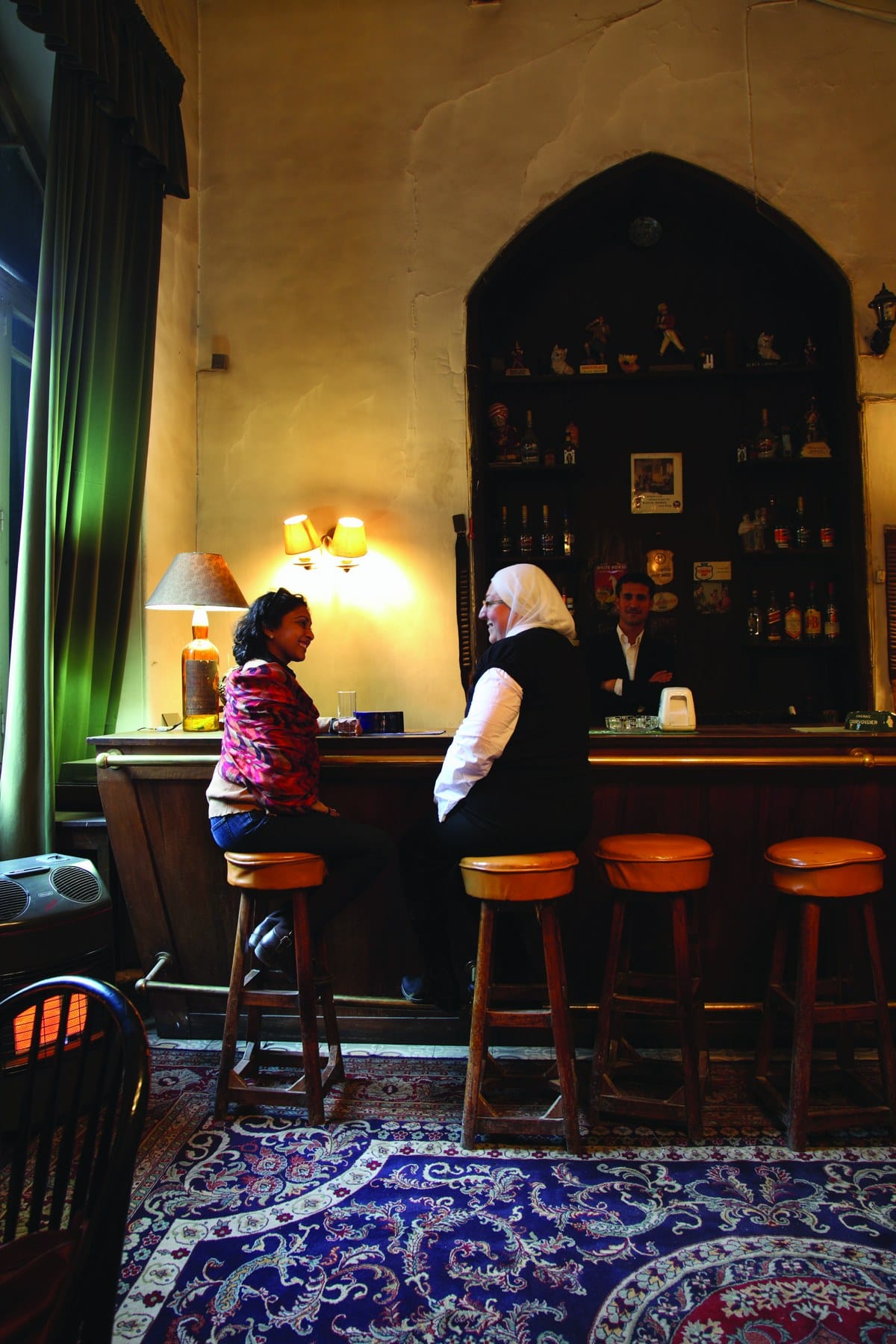
The Middle East’s longest continually running establishments – and here it’s a toss up between Aleppo’s Baron Hotel and Baalbeck’s Palmyra Hotel – only date back to the early 1870s. Their relative youth hasn’t prevented them from leading interesting lives and both establishments boast guest registers that read like a Who’s Who of the late 19th and early 20th centuries: Rockefeller, King Faisal, Agatha Christie, Freya Stark, Sheikh Zayed bin Sultan al Nahyan, Charles de Gaulle, amongst other notables, occupied their rooms.