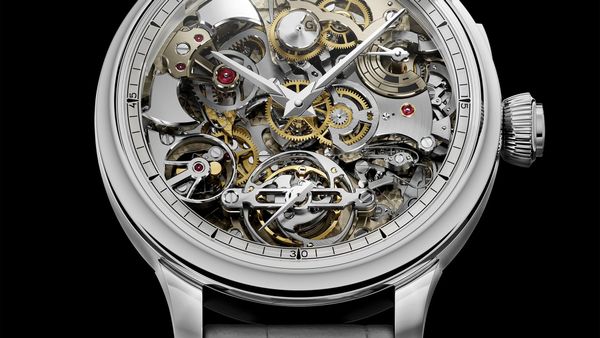
Regarded by many enthusiasts as the most exquisite and graceful of all watch complications, the tourbillon – French for ‘whirlwind’ – was invented over two centuries ago by Abraham-Louis Breguet as a means to compensate for the effect of gravity on a watch’s accuracy. Essentially, it places the most critical (and delicate) components of the watch – the balance and escapement – in a self-contained spinning cage. Hence its name.
Despite being highly sought-after, the fact that tourbillons can only be designed and finished by the most skillful master watchmakers means they have remained rare and expensive. Perhaps spurred on by the halo effect such a complication can bestow on a brand name, a number of high-end watchmakers have entered into the game of tourbillon one-upmanship.
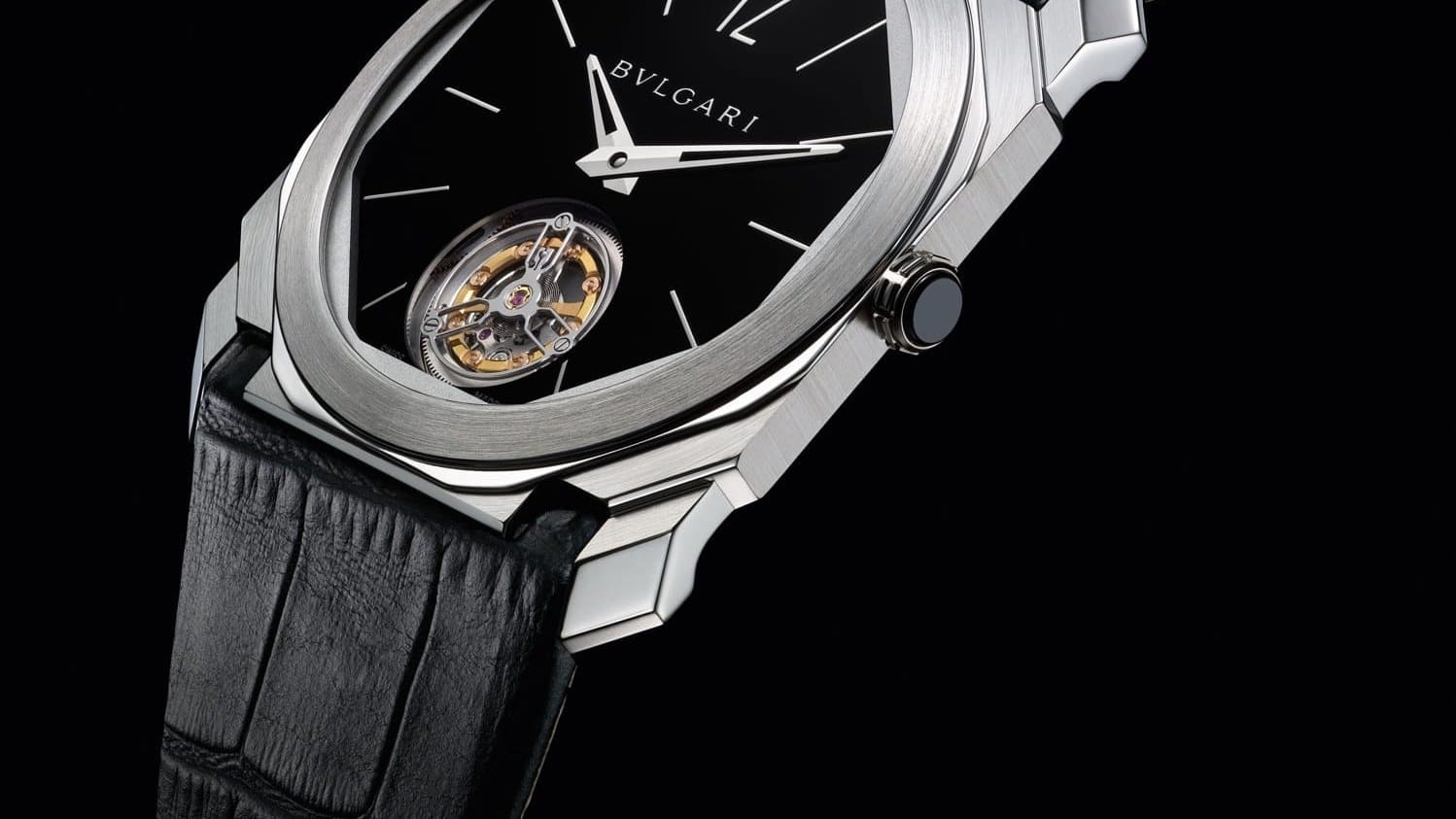
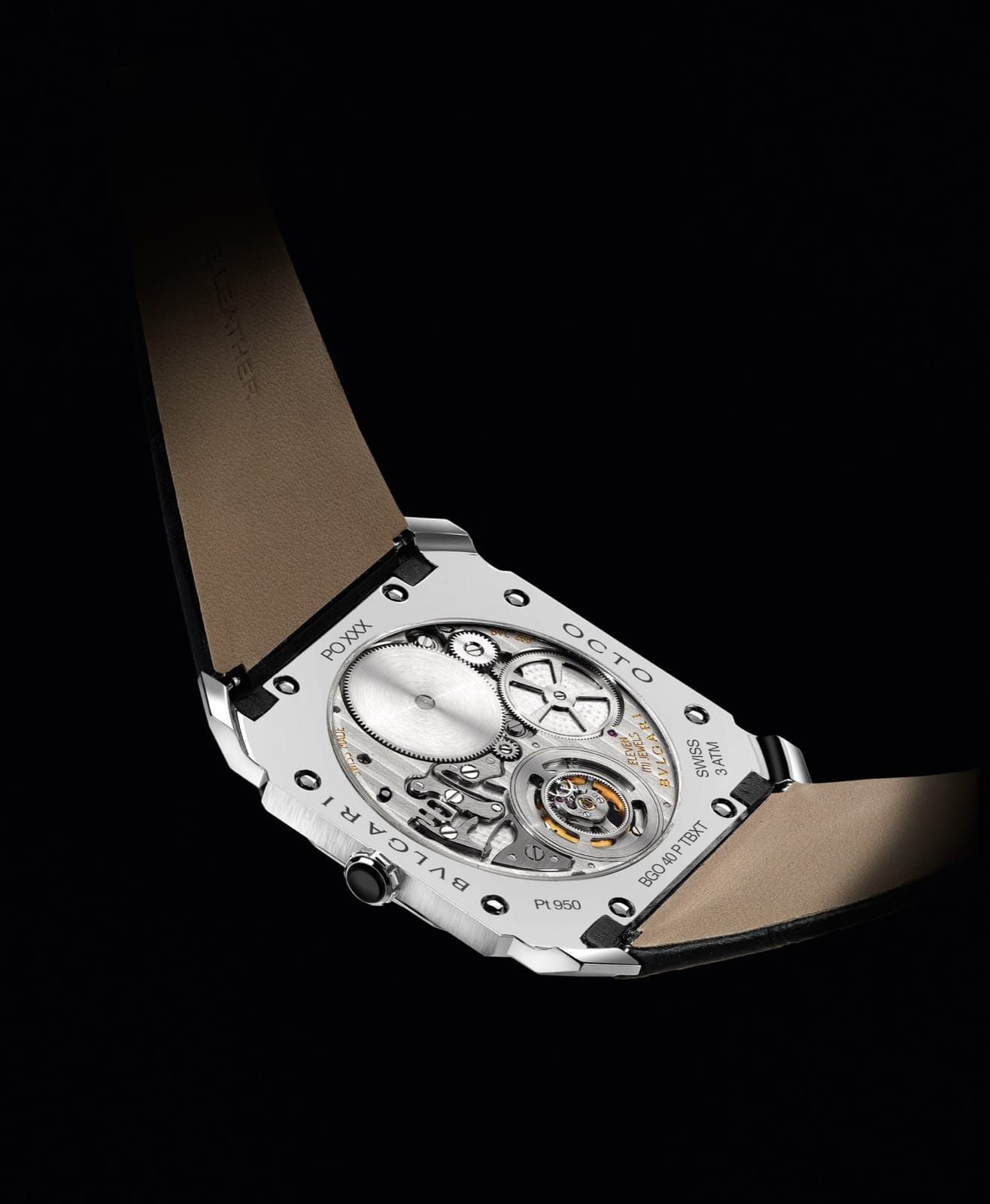
Jean Dunand gained first bragging rights with his one-minute flying tourbillon that orbits the dial once an hour on a revolving movement. Franck Muller and Jaeger-LeCoultre then each developed multi-axis tourbillons that employ a three-dimensional rotation. Greubel Forsey took a different path by creating a double tourbillon that operates on the premise that two must be better than one. But not even Breguet, the brand which can at least lay claim to having invented the complication, has had a response to Bulgari after it upped the ante this year by creating the world’s thinnest flying tourbillon for the Octo Finissimo. Remarkablly, the 144,500 USD watch’s platinum case is just 5mm thick, making it even thinner than a 5 Swiss Franc coin.
Not only did this demonstrate Bulgari’s expertise as tourbillon makers, it also shows they lead the ultra-thin pack. As if to rub salt in the wounds of the competition, Bulgari’s CEO Jean-Christophe Babin proclaimed that, “unlike round watches, which become more and more boring as you compress them, the Octo case structure is ideal for an ultra-thin watch. It loses none of its dimensionality while always retaining its character”.
This is a fitting way to mark the 130th anniversary of the Italian house, which might have started in 1884 as a silversmith but has since gone on to become a global name in the world of haute joaillerie and watches. Indeed, over the last few decades, Bulgari has shown it takes horology very seriously, building up its own in-house capabilities while snapping up the Gerald Genta and Daniel Roth brands in the process.
With his winning hand in the game of tourbillon trumps, Babin is evidently feeling bullish about his marque and proudly stated that he expects Bulgari to cement a place in the top ten of global watchmaking. With a sterling track record with other marques like TAG Heuer, he’s certainly not one to throw out empty promises. And he’s also not one to shy away from going head to head with the Swiss industry’s giants. “We are the best in the class when it comes to technology but we also have the Italian sense of art,” he says boldly, “You will never find this aesthetic and balance in a Swiss brand.”