It is time to wake up and accept what you, as an investor, are in some way already aware of. Today, dollars, euros or yen in the bank earn you no interest. Increased volatility and correlation across financial markets and asset classes ensure most traditional investment strategies are somewhat redundant, and the big developed economies are in a currency-devaluation race to export their way out of mounting economic concerns. This impossible climate is underpinned by a justifiable fear of counter-party risk, and a looming systemic risk that investors should be all too aware of after the turmoil of 2008 and 2009. Ask any market professional: making a semi-decent return these days is a very tricky business, and for the average person this should be a distant second behind actual wealth preservation.
Wealth preservation is the discipline of preserving the purchasing power of your wealth over time. Essentially the idea is to ensure that, firstly, you do not lose any money, and, secondly, that your wealth will buy you the same goods tomorrow that it does today. This means protecting yourself against the ravages of inflation, a form of stealth wealth-erosion. And you do not need government statistics like the CPI or the RPI to tell you that inflation is everywhere you turn. Do you pay more today than you did a year or two ago for groceries and clothes? Of course you do. We all do. Just look at some indicators from 2010: corn, wheat, oats and soybeans are up over 40 per cent and cotton is up over 90 per cent.
So what do you do? How do you protect your hard-earned money against volatile markets, failing banks and inflation? In one word, gold. In two words, gold and silver. Many will argue that gold and silver prices are at record levels, in bubble territory, and have no real practical use other than being shiny metals. They have been making those arguments since gold was around 800 dollars per ounce in early 2009; it is now 70 per cent higher, in 1,400 dollar territory. In fact, had you bought gold only ten years ago in the year 2000, you would have paid around 275 dollars per ounce and you would have made a 500 per cent return, outperforming most asset classes for the same period. Silver has run from around five dollars in 2000 to the 30 dollar mark today.
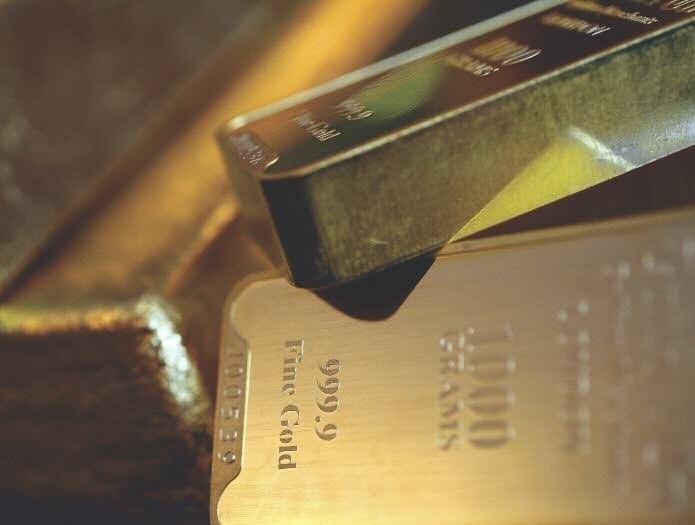
What most people cannot seem to get their head around is that gold and silver are actually money, and they always have been. The use of gold as money dates back to 4000 BC, when the Egyptians used gold bars of a set weight as a medium of exchange; the Sumerians had done this even earlier with silver bars. Gold coinage was first produced in 700 BC. The process of turning physical gold into paper money began when goldsmiths, who used to store gold for a fee, started to issue receipts for their storage. Those receipts were more convenient to carry around than actual physical gold, so it was not long before people became accustomed to the idea of paper as money.
The point is that gold and silver have performed a function as money in one form or another for some 6,000 years, up until August 1971, when President Nixon closed the gold window. Those paper receipts were as good as gold because they were redeemable for it, just as the dollar was before 1971, before we came off the gold standard. So what you need to understand is that our current fiat-currency system, with the American dollar as the world's reserve currency, has existed for only 40 years, whereas gold and silver have been money, across multiple empires and continents, for thousands of years. This historical context presents the prudent, rational and awakened investor with a significant wealth-preservation opportunity, and thus, by default, a relative wealth-creation strategy.
Today, investors are questioning the credibility of governments and central banks in the management of our global financial system. They are concerned about its sustainability as we know it, and the surge in gold and silver prices is evidence of this. For those who say it is too late, that they have missed the move, or that the metals are at all-time highs, let me tell you that it is just a psychological barrier you have to break through. Consider this: if gold can go from 35 dollars to 800 dollars in the 1970s, a more than twenty-fold increase, and it took 350 dollars to purchase in 2003 what 35 dollars purchased in 1971, then why can gold not go from 350 dollars in 2003 to 8,000 dollars a decade later?
Silver is only the silver lining; all roads lead to gold. Go out today, buy a safe, put it in your house and stuff it with some physical gold and silver every month. It is your best insurance against what could be a very costly restructuring of our global financial system, which seems more likely to happen than not. Stay hungry, keep curious and, above all, good luck.