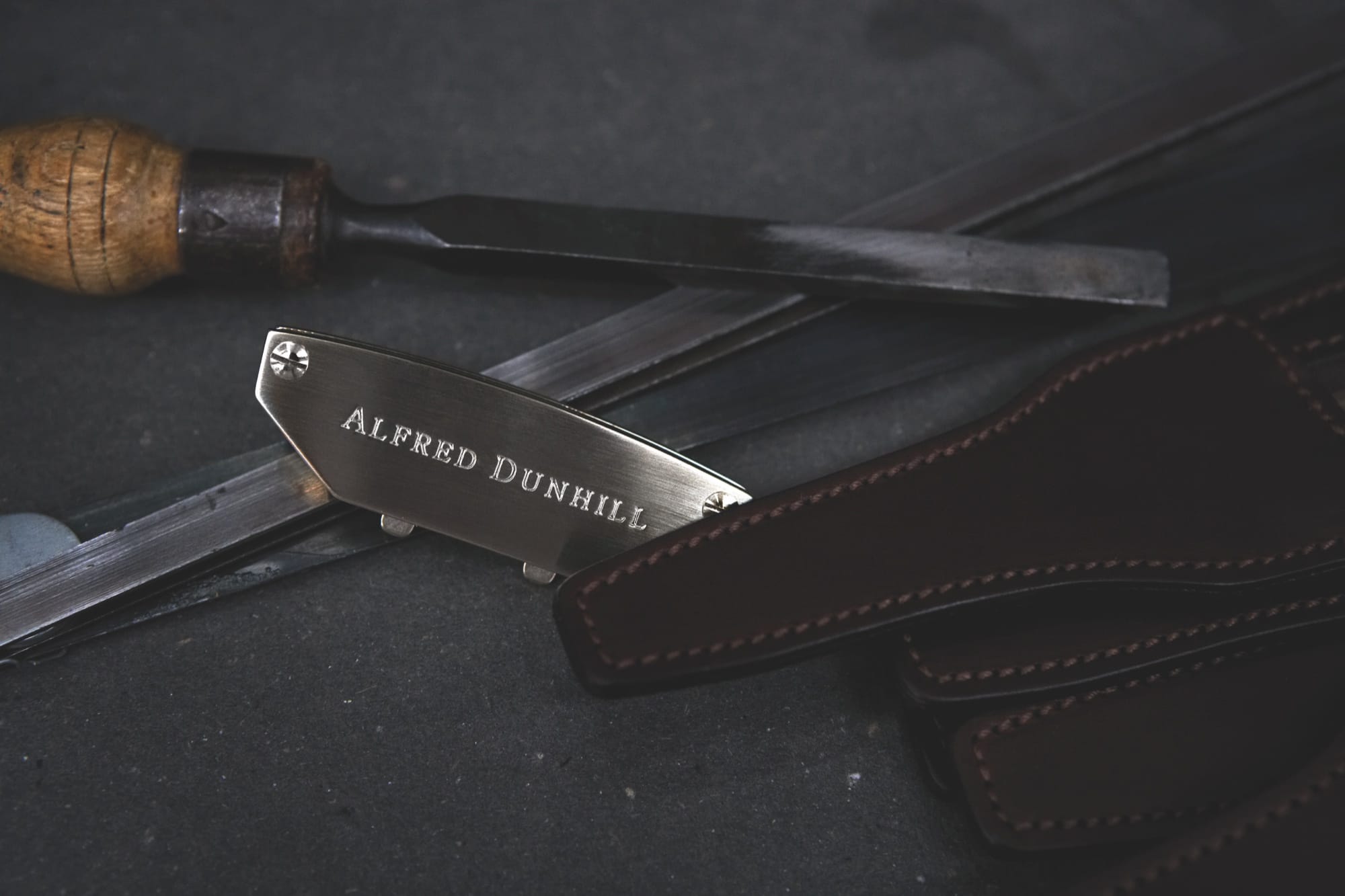
Staying true to its centuries-old traditions in leather artisanry and handcraftsmanship does not mean Alfred Dunhill has not been evolving with the times. Today, Dunhill is known for its menswear collection, writing instruments and other accessories, but it all started with luxury leather goods.
In 1893, it was with the vision of an entrepreneur that Alfred Dunhill inherited his father’s saddlery business, a provider of high quality leatherwear for horsemen. The age in which horses were the main mode of transport was coming to a end but the craze associated with well bred and finely groomed horses gave way to an obsession with speed, cars and powerful engines.
Alfred Dunhill saw this trend coming. He anticipated it by transforming fine leather for equestrians into a wide assortment of luxury automotive accessories for the “Dunhill Motorites” of the modern age, ranging from hats, gloves and jackets to bespoke motoring trunks and cases, a bespoke tradition that continues to this day at Dunhill’s leather workshop in Walthamstow, London. From this atelier, which still operates according to the exacting standards laid down by Alfred Dunhill, the discerning customer can order leather products customized by personalised choices of skin, finish, hardware, and linings, all hand-stitched.
Emerging out of the age of the motor, Dunhill looks ahead to the future of travelling, as contemporary as it is classic.
www.dunhill.com
The Dunhill guide to bag making
Choosing the skin
While the neck and shoulder sections of an animal yield the thickest leather, Dunhill leather derives mostly from the backside, for the most uniform structure and quality. Also all leather parts are usually cut from the same skin, for consistency of finish and colour.
Tanning
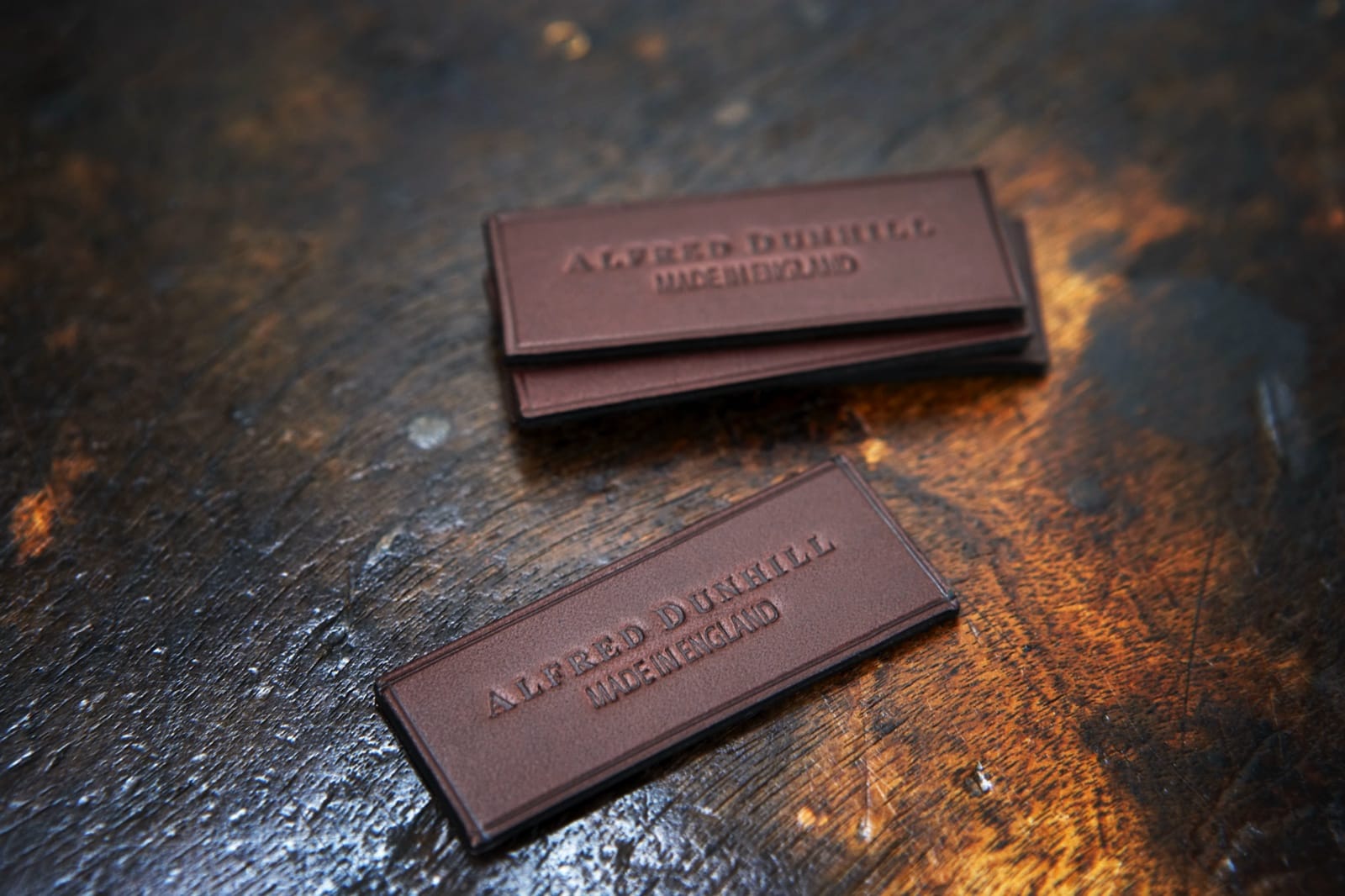
What every Dunhill professional knows is that vegetable tanning is integral to the premium quality of Dunhill leather whereby a natural plant-based ingredient called tannin (usually extracted from tree barks) combines with proteins in the cowhide to form a compound that will strengthen the skin and prevent it from decomposing easily. For Dunhill, this process can take up to 8 weeks.
Cut
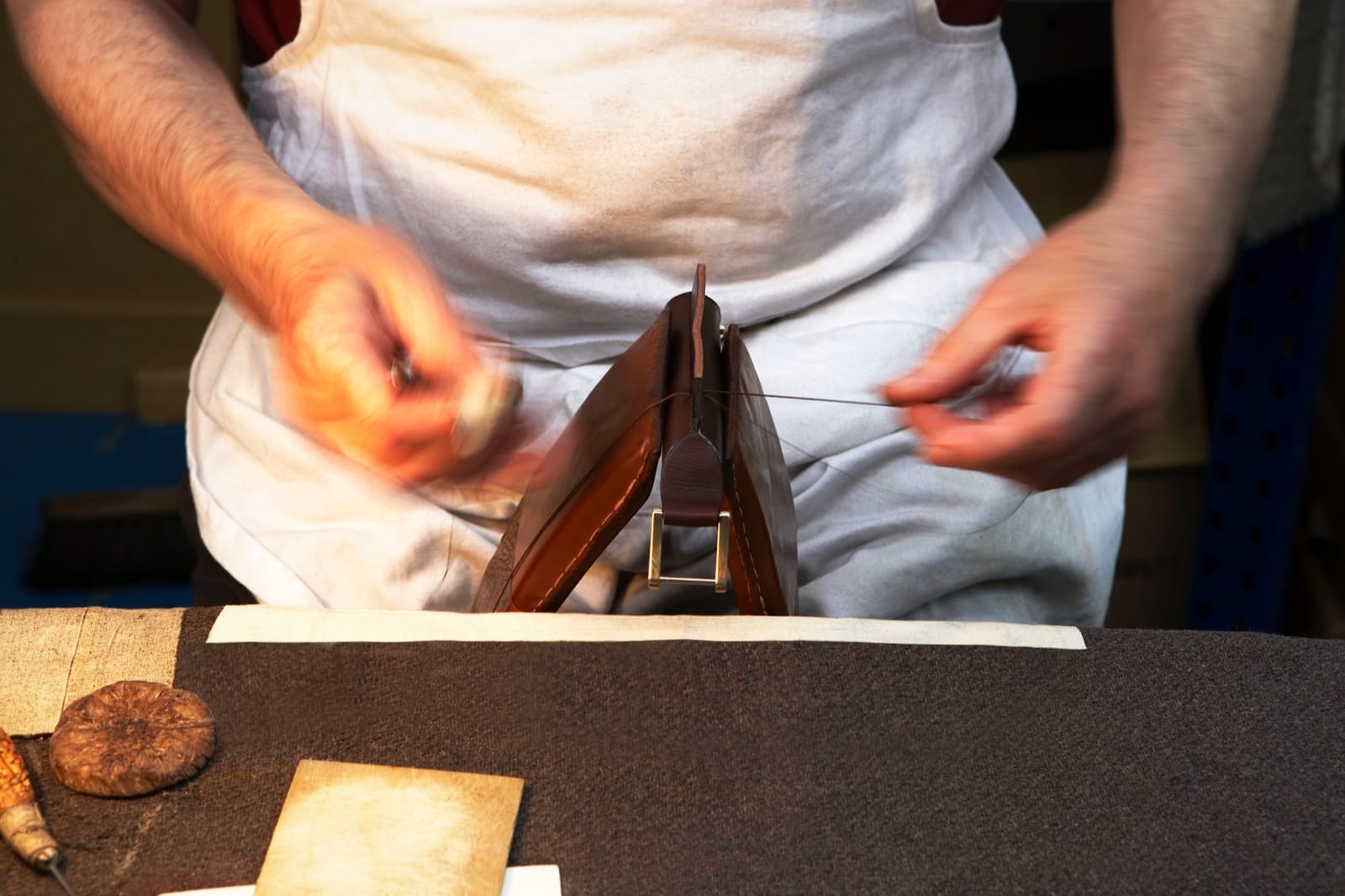
Once the leather is tanned, it is cut into the appropriate thickness by precision tools.
Dying and finishing
Dying then occurs and finishing is applied, which improves its water and abrasion resistance. The raw edges are folded and stitched and the leather is skived or shaved to reduce its thickness. The edges are then sealed in order to prevent the permeation of any form of moisture and an edge dye is hand painted onto the leather. A final sealant coating is applied and the logo is branded, using a gold or silver foil. The area where hardware, such as brass locks, buckles or other fittings are attached, is usually reinforced with extra leather so that it remains fastened to the piece for life.