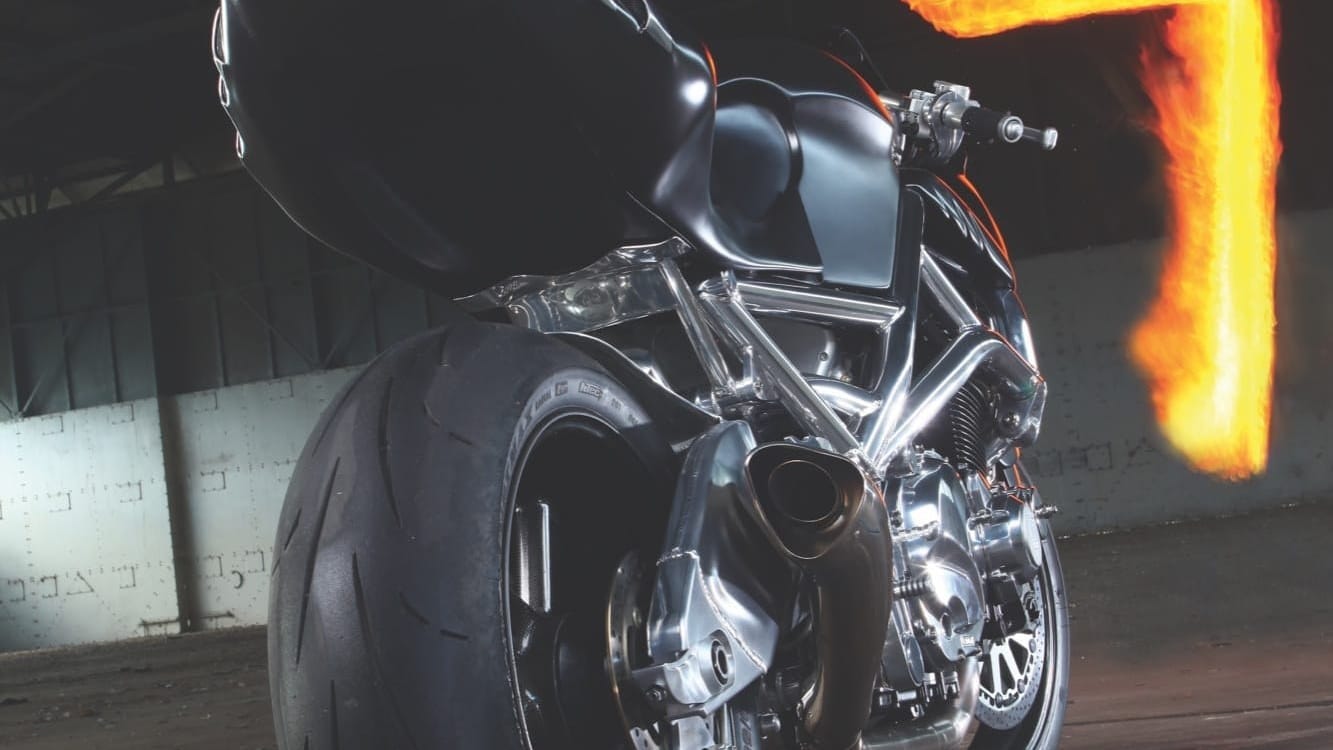
Sheene dominated bike racing in the 1970s and early 80s and was one of the first sports personalities to embrace the world of product endorsement, which is one of the reasons he’s so fondly remembered. And what could be a more fitting tribute than to have the world’s greatest, most expensive production motorcycle developed in his honour? The Icon Sheene is that bike.
You probably haven’t heard of Icon Motorcycles before now and there’s good reason for that: it’s a new company with no previous products, no heritage and no track record of any kind. But don’t let that cloud your judgement - after all, who had heard of Pagani before that company launched its stunning Zonda supercar? Icon may be a new enterprise but the breadth of talent within it is formidable.
The brainchild of Icon founder and Sheene fan Andrew Morris, himself a successful entrepreneur in the shipping industry, the idea came to him, of all places, in the middle of the Atlantic Ocean. He was rowing across it at the time, raising money for charity, and started thinking about the ultimate motorcycle - a dream that refused to go away. For 18 months following his transatlantic trip, the concept remained, literally, on the drawing board and then Morris met up with a company called Spondon Engineering. It was explained to him that they used to build Barry’s race bike frames and the Sheene idea was born.
Morris showed the plans to Steve Parrish, who was a close friend of Sheene’s and also the 500cc World Motorcycle champion in 1976 and this, in turn, led to him making contact with 20 or so individuals who were determined to bring the project to fruition. It had to be right, though, for Barry’s closest friends and family to get behind it. So rather than build a hi-tech replica of the bikes Sheene raced in his career, the Icon Sheene was to be the kind of bike that he would have had a hand in designing had he still been alive. Modern in every respect, utilising the very best in technology and racing know-how, this ‘ultrabike’ was set to be the Bugatti Veyron of two-wheeled machinery.
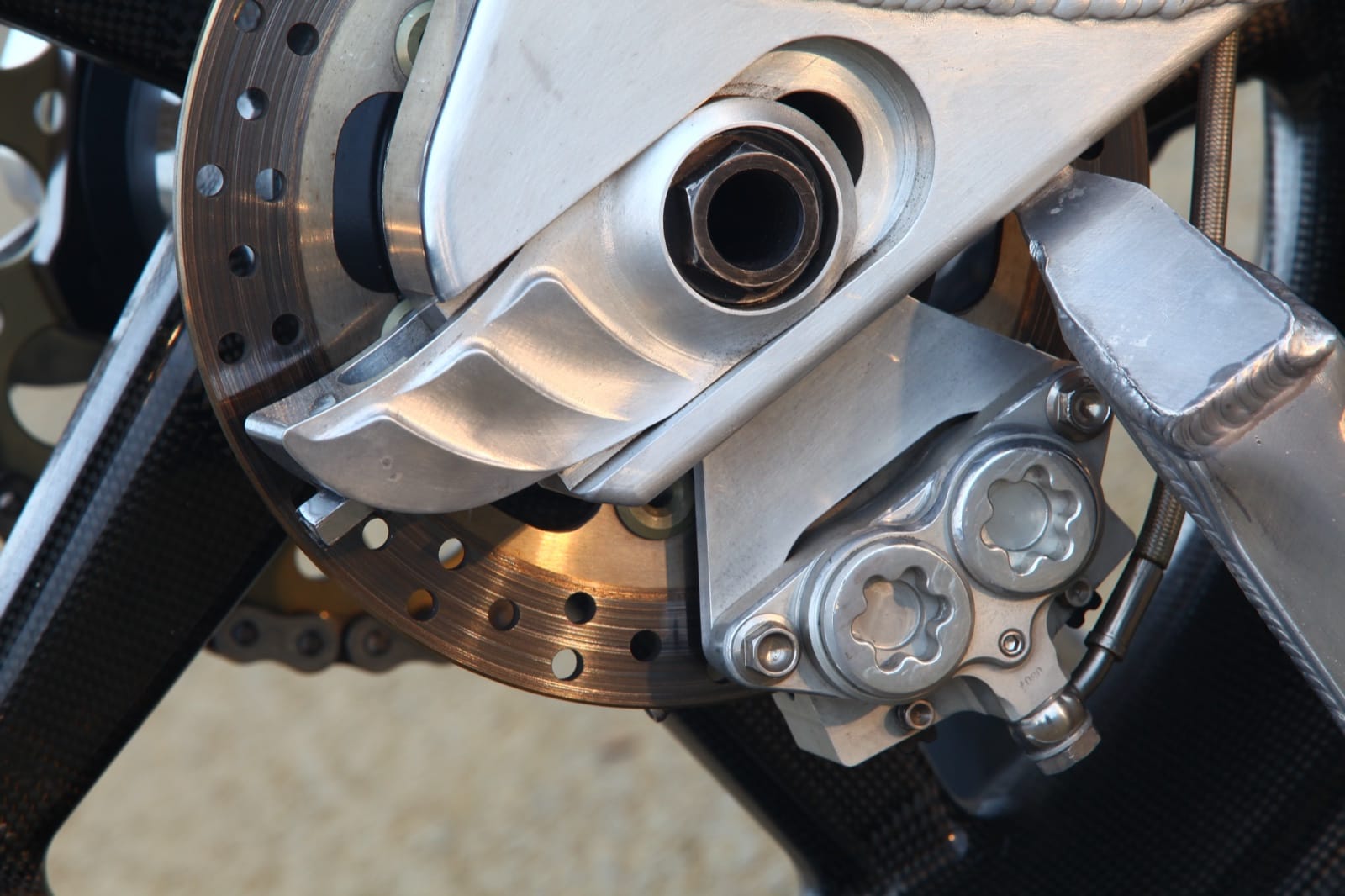
Five years since the idea came to Morris, the first production Icon Sheene has been revealed and it really is an incredible piece of work. It is entirely bespoke and there are Sheene references wherever you care to look. For instance, Sheene was once out-braked by another rider who was using ISR stoppers, so he went to the manufacturer and asked them to supply him with a similar set-up but was frustrated as Suzuki was contracted to another supplier. So the Icon Sheene has ISR carbon racing brakes and it goes without saying that the bike’s hand crafted tubular chassis has been designed and fabricated by Spondon.
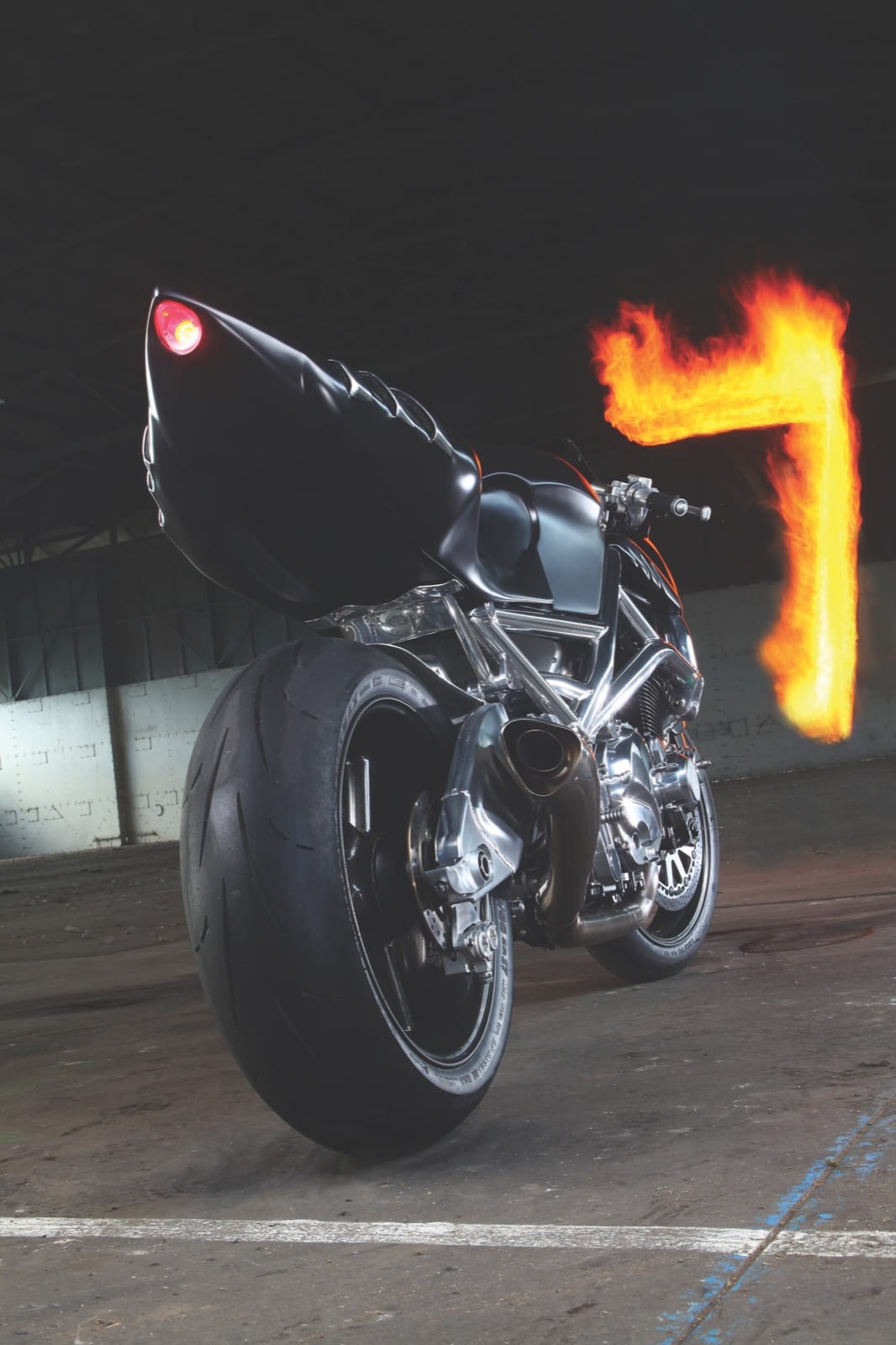
The engine is from Suzuki because Sheene rode for them in his heyday, only the handbuilt GSX motor has been extensively reworked. It’s been bored out to 1.4-litres and has strong, lightweight internals with power delivery helped by a Garrett turbocharger. The problem with turbocharged bikes is that often the turbo cuts in with little warning and riders can be unceremoniously dumped mid-corner when the boost comes. To counteract this effect, the Icon Sheene has been tuned so the power delivery is much more linear, with the turbo coming into play much further down the rev range. Power is rated at a formidable 257bhp – that’s plenty in a car but for a bike weighing just 200kg, in fact it’s nothing short of sensational.
The lightweight carbon fibre racing wheels are supplied by Dymag, who, you guessed it, used to supply Barry with his, and the bike’s handmade carbon body panels are painted by Mike Fairholme, the man responsible for the artwork on Sheene’s helmets. Barry’s signature, along with his wife Stephanie’s, features on the solid silver handlebar yokes and even the pressure of the original’s pen has been replicated. It’s mind boggling how much attention has been paid to even the smallest, least significant detail.
Joss Nicholas is the project manager for Icon Sheene and he says that Barry’s influence was hard to ignore. “Part of Barry’s extraordinary charm”, he says, “was that he brought out the best in people and this uplifting spirit infused everyone associated with the Icon Sheene through its development and, as a consequence, it has exceeded all our expectations. When we call this the world’s first ultrabike, we do so with good reason.”
Each bike takes a staggering eight months to build, with every example made to tailor fit its owner. The fuel tank alone, moulded from Jenson Button’s F1 car’s side pods and hand made from aluminium, takes a whole month to form. Visually the bike is startling, with its massive engine proudly shown without any fairings getting in the way and it’s loud, too, thanks to its hydroformed exhaust, itself a product of F1 know-how. Morris is keen to point out, though, that it’s “rorty, not illegal.”
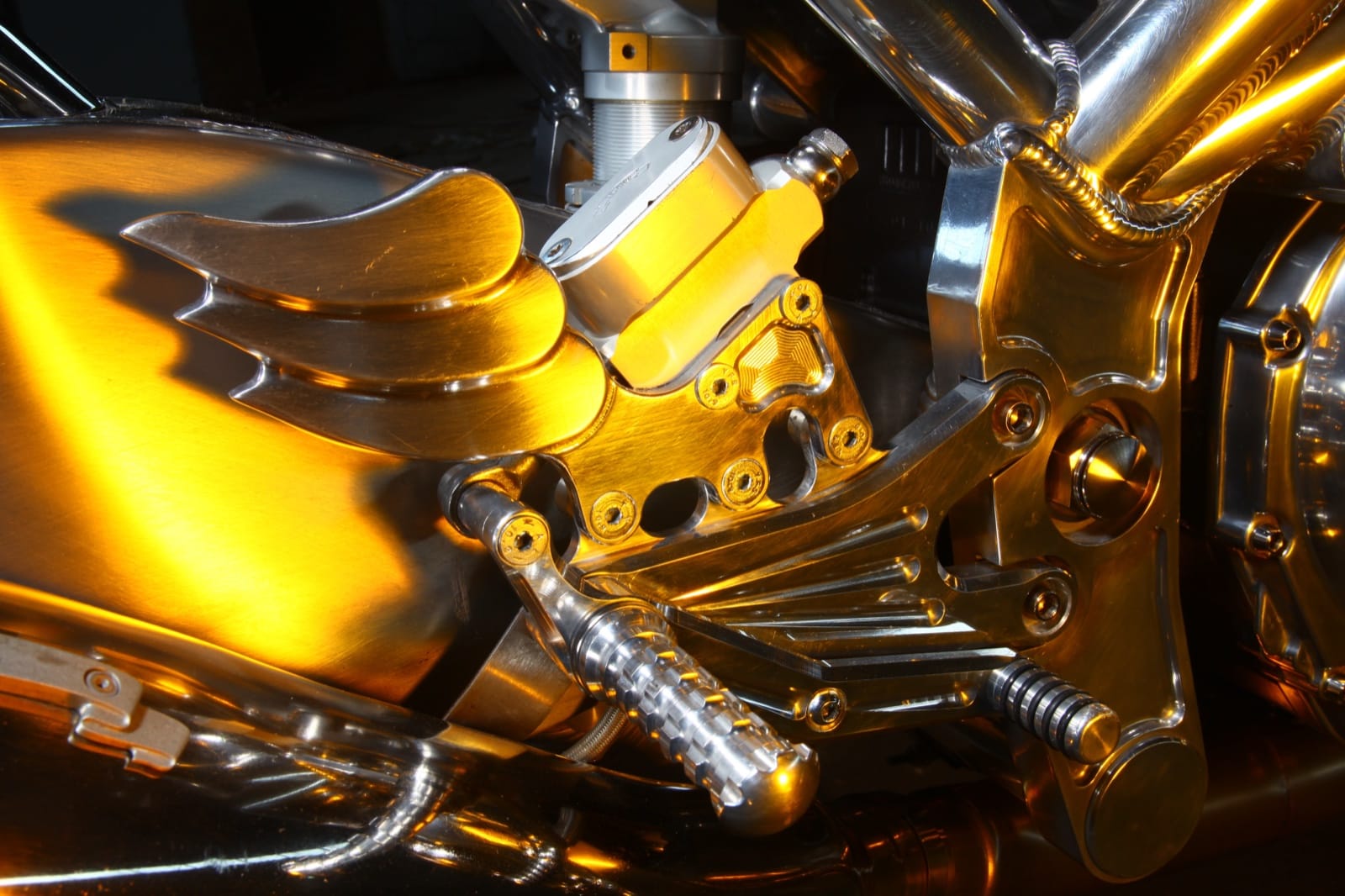
Any vehicle as extraordinary and exclusive as this is bound to be expensive and, at 155,000 USD, the Icon Sheene is reassuringly so. It’s the world’s most expensive bike but it’s also the world’s fastest, too, with a top speed in excess of 322 km/h (200mph). And, as if there weren’t enough Sheene connections already, only 52 of these bikes will ever be built. Why? Well that’s the number of years that Barry lived, before his battle with cancer claimed his life in 2003.
For a man who lived life on the edge and brought happiness to millions, there really could be no more fitting tribute than this incredible motorcycle. Barry Sheene was, and still is, an icon and the Icon Sheene will, in years to come, be viewed as the ultimate bike built in memory of the ultimate rider. It’s what he would have wanted.
WHAT Icon Sheene
SPECS Turbocharged 1.4-litre Suzuki GSX with a top speed of 322 km/h
PRICE 155,000 USD
WHY The fastest and most expensive production motorcycle ever produced, with the styling and, frankly, back-story to make it the finest and most intriguing bike the world has ever seen.
www.iconsheene.com