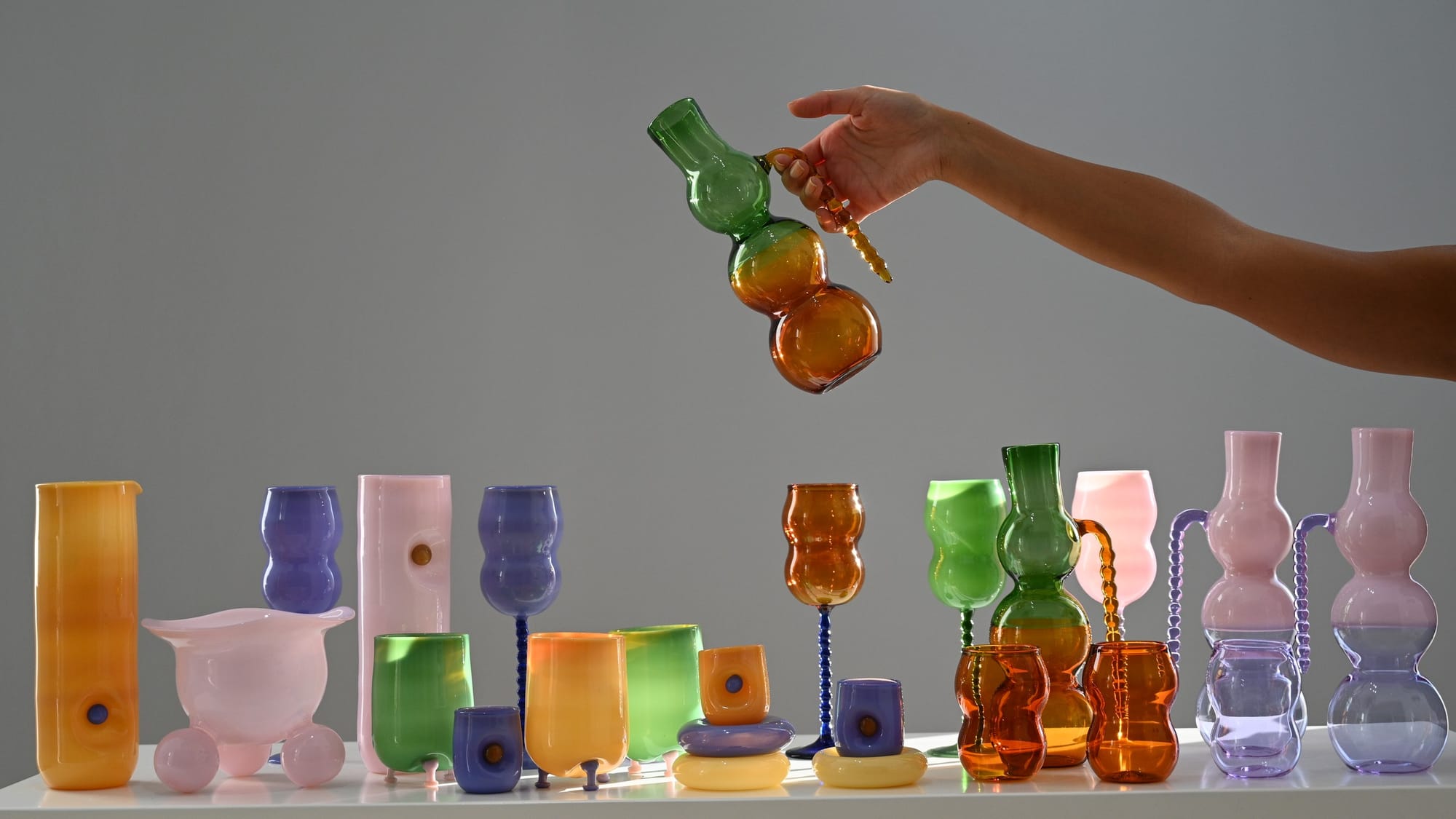
Ornamental by Lameice is glassware that has that special ability to transform a room or tablescape. Brimming with charm, vibrant colours and playful shapes, the pieces are showstoppers that refuse to blend quietly in the background or simply serve a singular purpose. The brand’s founder and designer Lameice Abu Aker launched the brand during the thick of Covid in 2021, and today her gorgeous pieces can be found in leading design led home concept stores across Europe and the Middle East.
Lameice says her design sensibilities come from Jerusalem where she was born and raised. “It’s a soft place with rough edges, but addictive nonetheless,” she affirms. “That duality – the beauty and tension coexisting fundamentally shapes how I see design and craft.” Before Ornamental, Lameice, who holds a master’s degree from Politecnico di Milano, worked in the arts and heritage sector while juggling design projects. She embarked on a research project on how Palestinian identity narratives vary across different villages. But, as she dug deeper, she began to imagine how her own identity could fuse with local artistry.
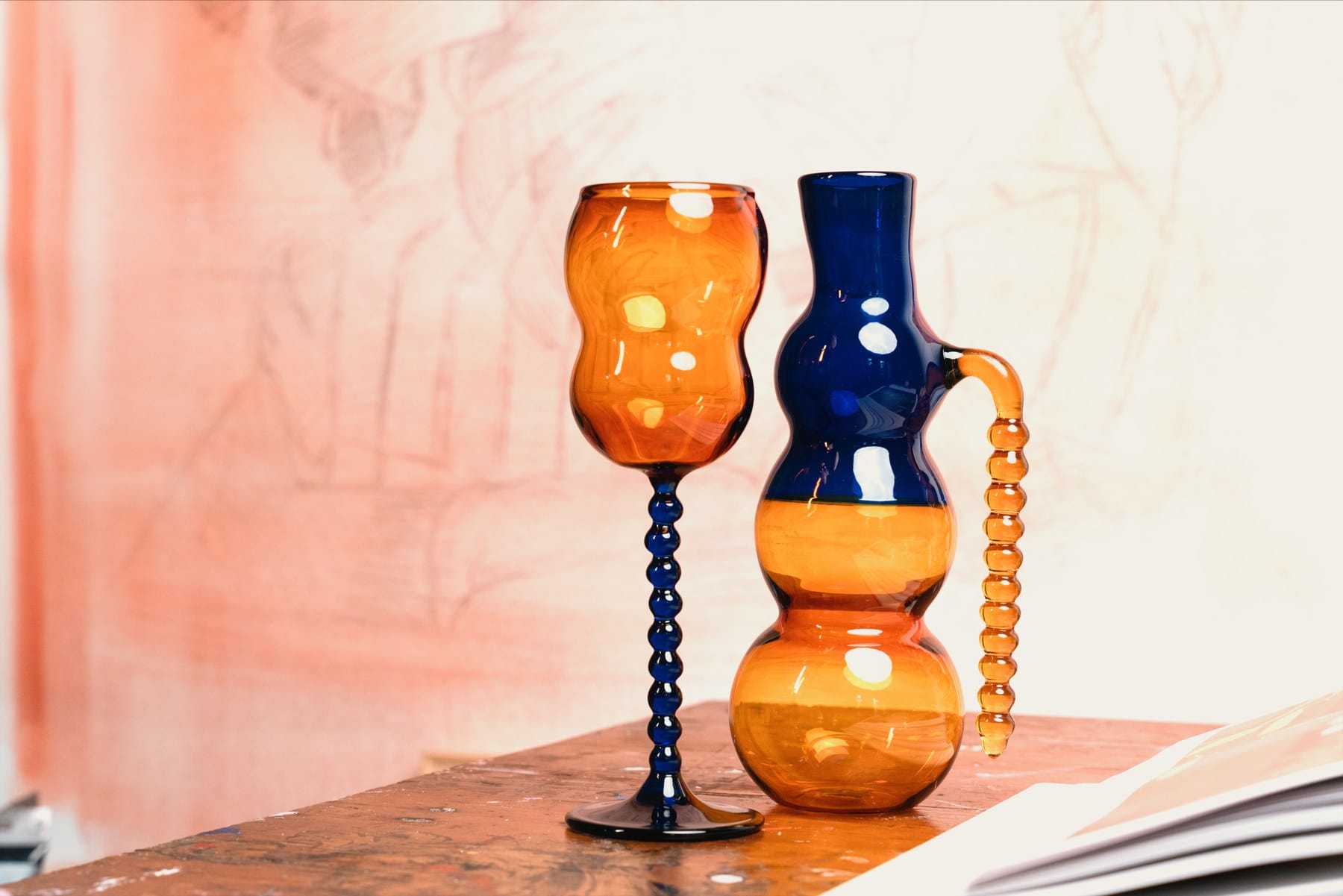
Her vision became clear when she met traditional glassblowers in Hebron – a handcraft that has dwindled down to just a handful of artistic families these days – and agreed to collaborate with the Twam family of Jaba’ village near Jerusalem, who were initially sceptical but also open to fresh ideas and ready to experiment with new forms. Together they developed new glassware prototypes, overcoming endless challenges in their pursuit of the extraordinary. Each Ornamental by Lameice piece is handblown without moulds or shortcuts. (Some of the larger pieces, like the Chemistry Vase, can take up to eight hours of continuous work.) And as a result, no two Ornamental pieces are ever exactly alike.
Lameice says she focusses on colour with an optimistic and playful approach to glassware and the table. “The pieces are meant to start a conversation, invite a touch and express the personality of their owners. The character of each piece alters depending on their colour and context,” she explains. Moreover, each collection has its own personality. The Eye Candy Collection, for example, is about a wonkiness mixed with linear finishing, focussing on intersections and contrasts. The Dreamlike Collection experiments with beading techniques with more feminine forms. Yet, the most personal collection for Lameice is The Teta Edition which is inspired by her grandmother whom she describes as particular, sentimental and full of character. “She treated objects with reverence: the cabinet of glassware in her home, the noise of family gatherings, the sensorial image of sage or zaatar steeped in tea,” recalls Lameice fondly.
Even though people often associate colourful luxury glassmaking with Murano nowadays, Lameice points out that the Middle East has a longer history in this craft than Italy. In fact, Venetian merchants the all the way back to the Medieval period used to value and import glass from the Middle East, particularly the enamelled kind. “Palestinian glassblowing has ancient roots. The technique was invented along the Syria-Canaan coast in the 1st century BC, and Hebron's glass industry was established at the time of Roman rule. It's been part of our craft DNA for over two millennia,” adds Lameice. Ornamental by Lameice is an excellent example of how traditional glassware, a craft that is unfortunately dwindling in the Middle East, can be sustained by collaborations with young designers. She describes her relationship with her glassblowers as collaborators and co-conspirators. “Together we are pushing an ancient craft into places it hadn’t dared to go before.”
One such new direction was the creation of marble-like inserts as seen on the Eye Candy cups and pitcher, as well as the Yasmina vase. Apparently, it was an extremely difficult feat to make these round inserts as they require very different temperatures to the vessels they're attached to. “We failed many times and broke more pieces than our hearts desired. But we're thrilled to have cracked it [no pun intended]. They've become a staple and a bestseller. Sometimes the most difficult pieces become the most beloved!”
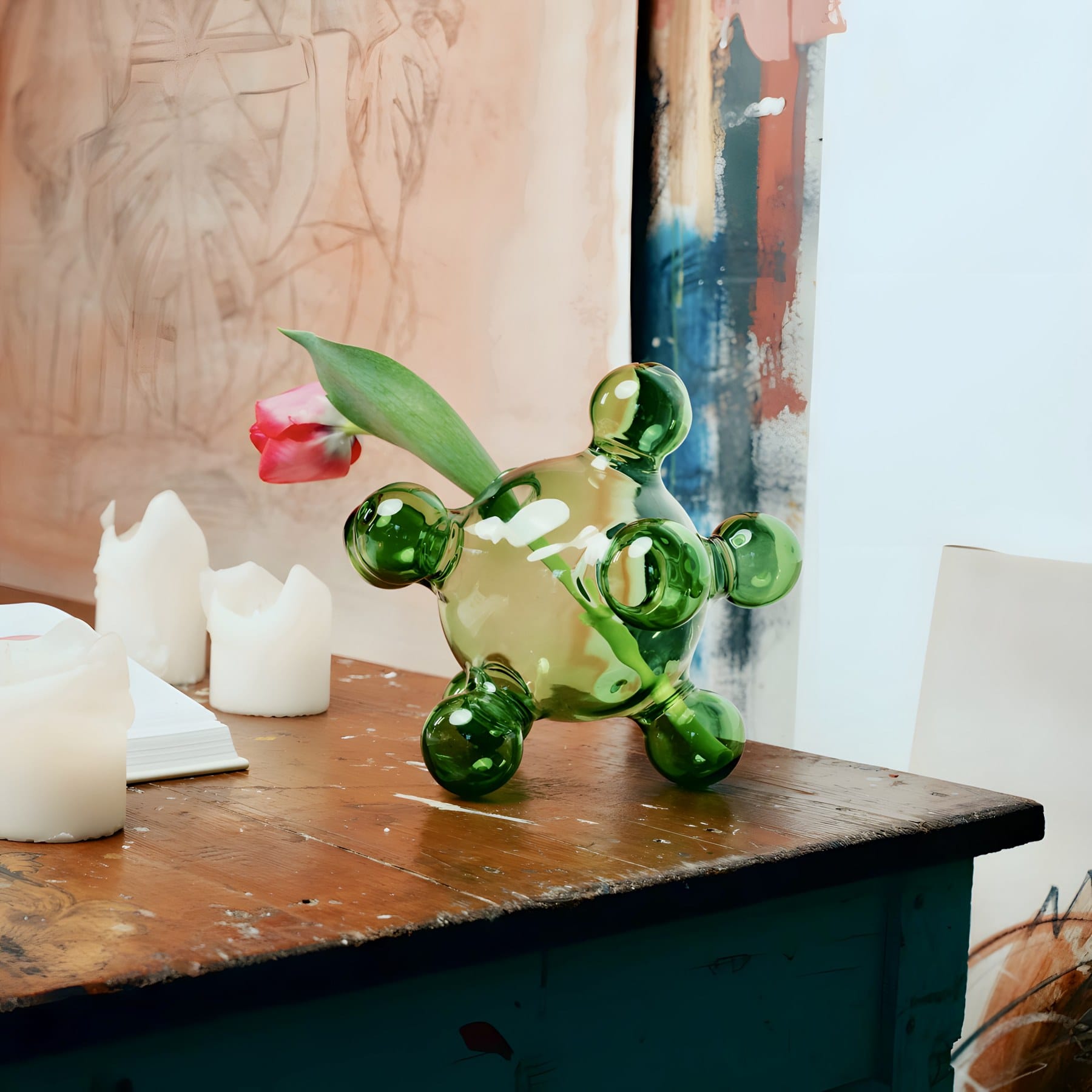
For Lameice, her vibrant glassware is meant to start a conversation, and she loves that they draw people in. The espresso sets are her best-sellers, along with the wine and martini glasses. In Europe, she says there is a particular fondness for the egg cups. And among her Showpieces, The Chemistry Vase continues to be a firm favourite with its striking design that captivates and intrigues. “People seem to connect with its peculiarity,” says Lameice.
Today Lameice divides her time between Milan and Jerusalem. Italy offers access to the European design scene and Jerusalem, her production hub and the place that remains her cultural anchor. And her brand is bridging the best of craft and design, serving as a reminder that true beauty is not mass produced but something that's done with care and passion, one hand and mouth-blown glass piece at a time.
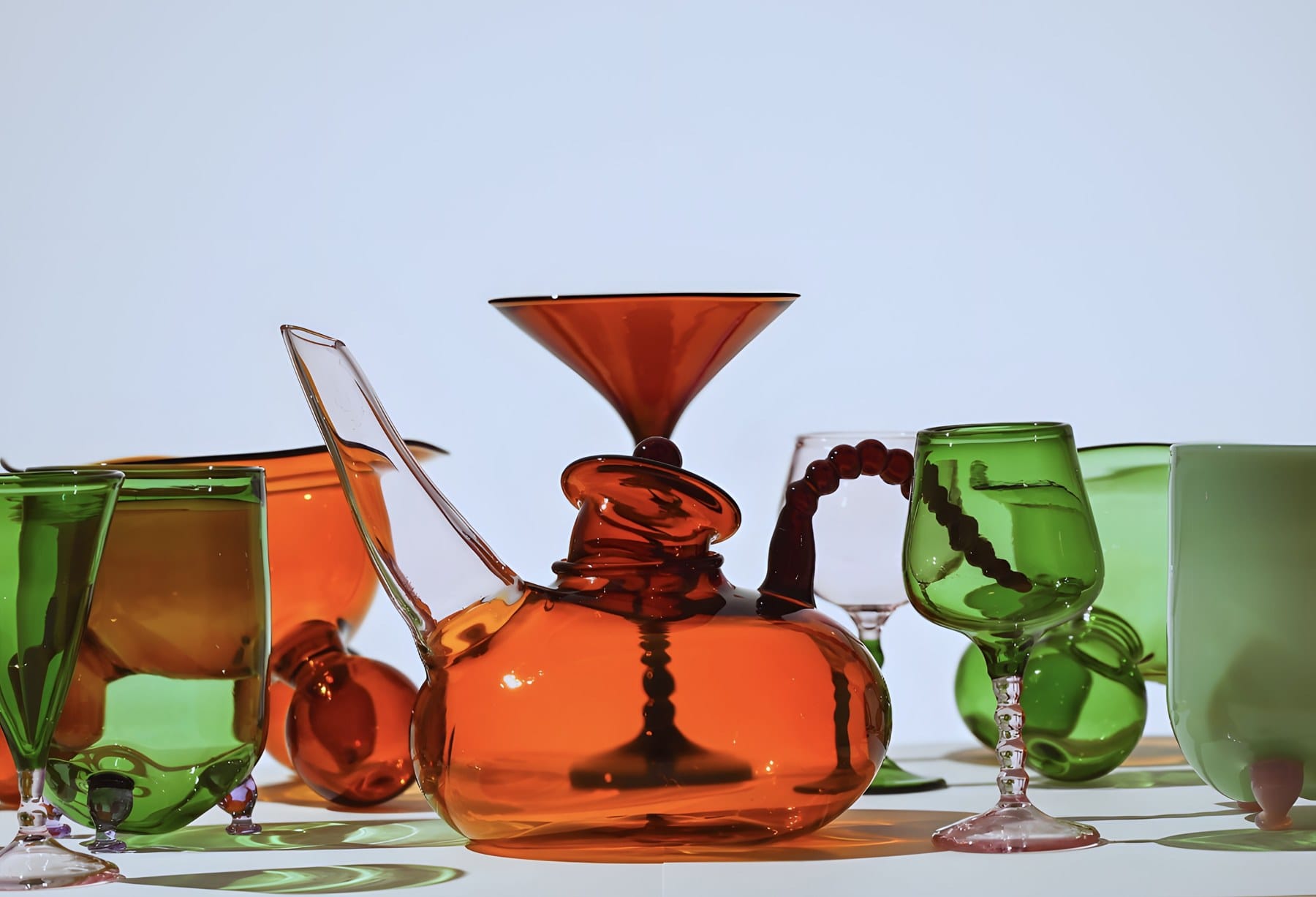
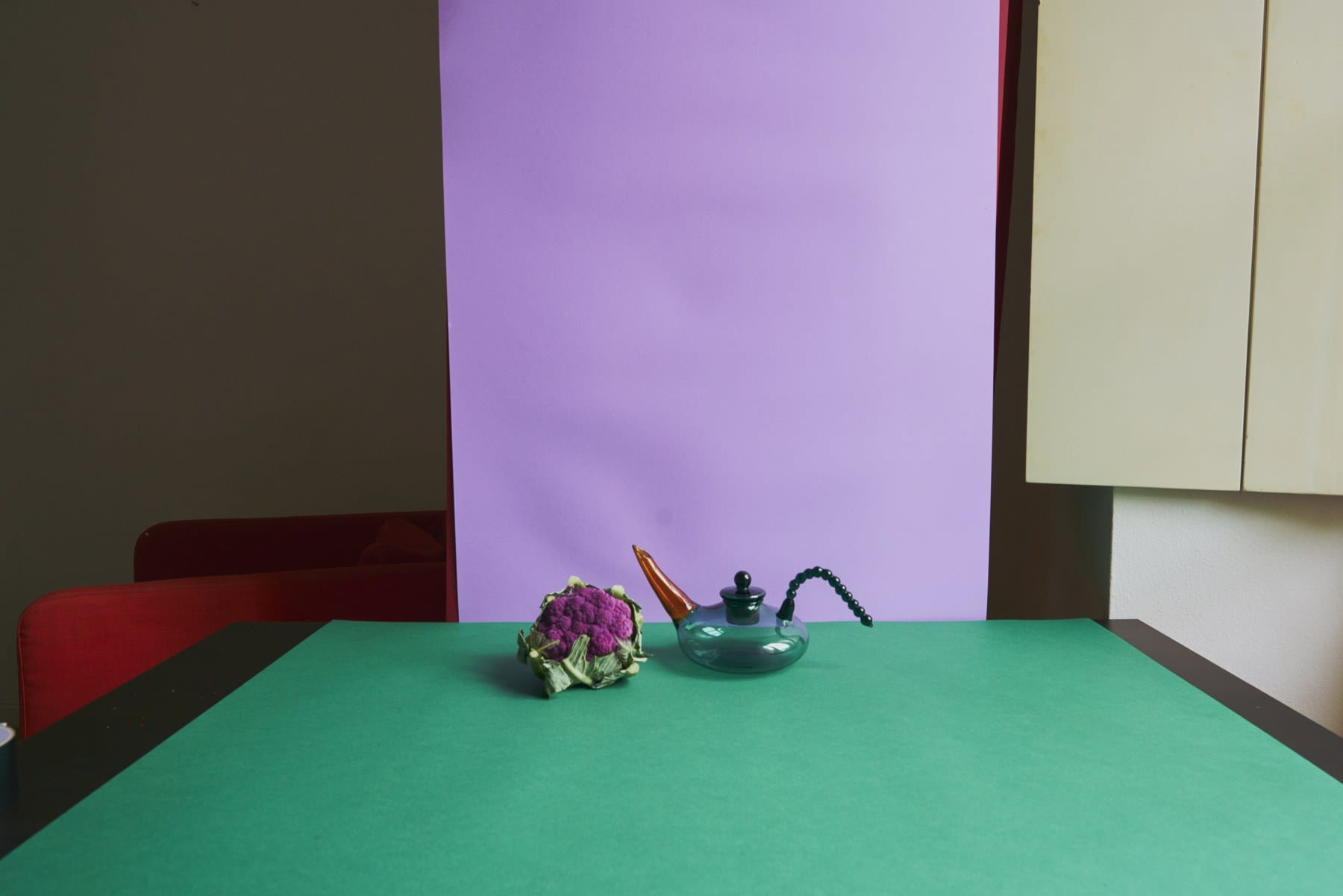
Opening page and right: The Dreamlike cup can be bought in four different colours, and there's a matching Pitcher too, replete with a glass bead handle. Previous: With its marble pushing through the outer surface of the vessel, the Espresso glass demonstrates Lameice's fascination with the alchemy of glass. Above: The Honey Bowl is a hand-blown and hand-shaped bowl in a rich amber hue. Below: The Teta Chaipot. Opposite: Lameice Abu Aker and the famous Chemistry Vase, which takes seven hours of uninterrupted focus to make.