NetJets is not just big in terms of private aviation. It is big in general aviation. Even though the entire fleet is made up of private jets, the airline is in fact the second largest in the world, after American Airlines. Now NetJets may be massive in the States and large in Europe, here in the Middle East it is not yet as established. However with the onset of the credit crunch, the rest of the world is fast tightening its belt, but our region is still the world’s fastest expanding market for the private jet industry.
Indeed the Middle East will account for almost three quarter of a billion dollars of the private jet market this year alone. In such a highly competitive industry, the only way companies can hope to succeed is to differentiate their offerings, “What we offer is not only the largest fleet of aircraft and a team of the best trained and most highly experience pilots and flight crew, but also an idea – fractional aircraft ownership – whose time has come,” says Chadi Saade, managing director of sales & marketing of NetJets in the Middle East.
So just what does NetJets offer and why is it of such importance? Basically there are three services. First a customer can buy a share of a particular jet, starting from one- sixteenth which is equivalent to 50 annual flight hours. The biggest share you can opt for is one-half, which corresponds to 400 flight hours per year. Also what you should be aware of is that even though you are buying a share in one jet, you will also have access to every other plane in the provider’s fleet. The second NetJets option is for a customer to join the new Middle Eastern-specific XXV XXV Jet Club programme which offers flight time on aircraft in 25-hour increments (this service falls within Marquis Jets’s scope in the States – a subsidiary of NetJets.) And lastly a customer can do a simple jet charter (which in the States is managed by the subsidiary called Executive Jet Management – another NetJets company.)
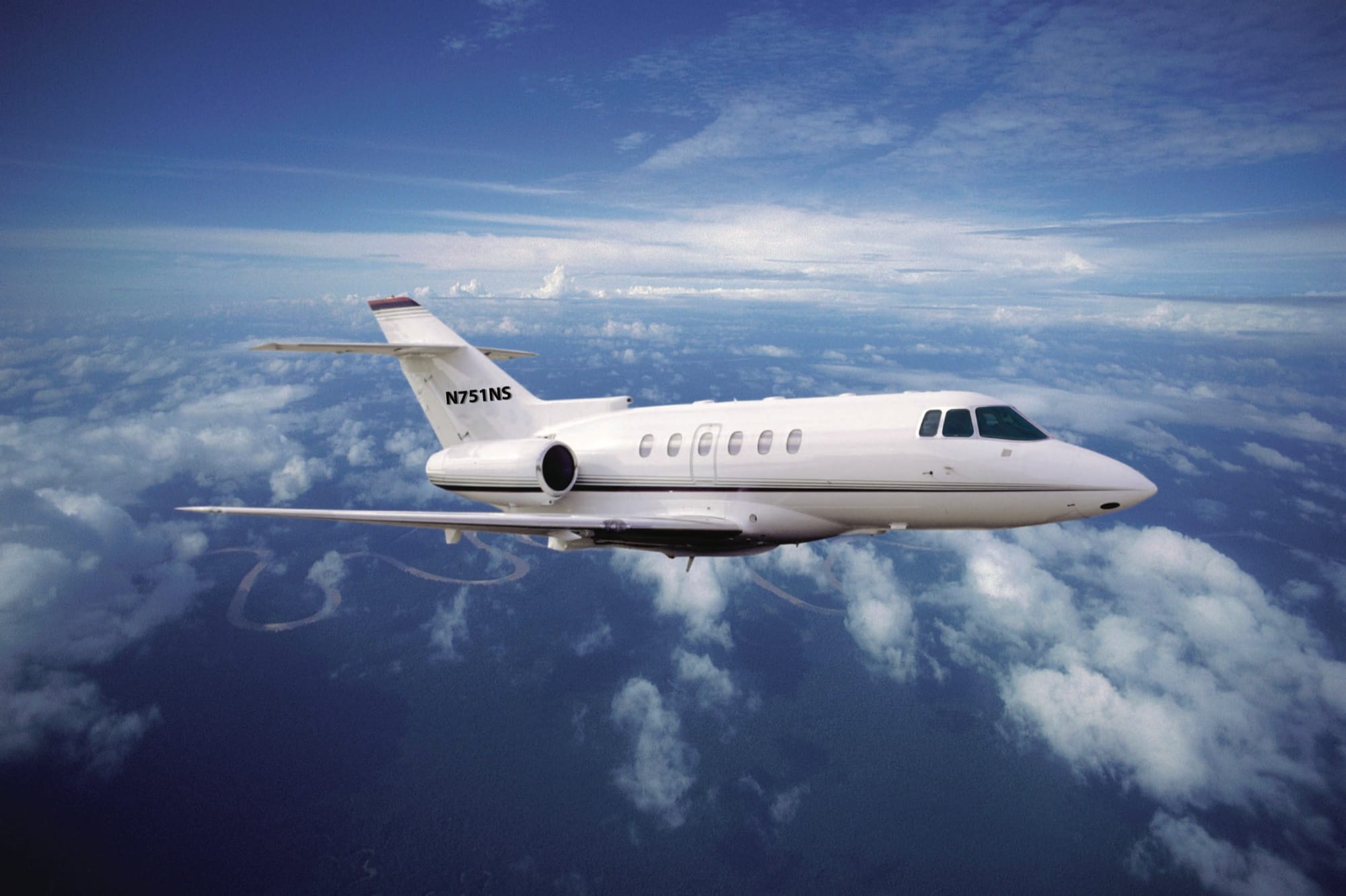
The fractional ownership programme is most suited to more frequent fliers whereas the charter service appeals to occasional fliers. If you were hoping to get an idea of the specific rates, then we must look to the pricing of the American business as the Middle Eastern branch is more evasive. There are numerous jets on offer within the fleet. At the lowest end, a one-sixteenth share in a seven-passenger Hawker 400XP costs about 425,000 USD. If you were to charter it, the price would be about 2,000 USD per hour. At the other end of the scale, a one-half share in the exquisite 18-passenger Gulfstream G550 will set you back around 23.5 million USD. Again, if you were to charter it, the cost would be about 7,500 USD per hour. Additionally, like most fractional operators, NetJets adds a fuel surcharge to the cost of each flight.
With such a comprehensive offering of programmes, as well as the broad fleet of aircraft, it is easy to see why so many executives have been convinced to switch to private jet travel. Once a NetJets member, customers can travel on their own schedules, avoid check-in and security lines, stretch out in the comfort of the spacious cabins and best of all, they can fly with only the passengers they choose. Furthermore they need not worry about servicing the aircraft, as the company adheres to rigorous safety and maintenance standards.
“NetJets guarantees aircraft availability within 12 hours of a customer request and is uniquely capable of delivering a consistent, world class service with an unparalleled commitment to safety and security,” pledges Saade.
NetJets currently has almost 800 owned aircraft and they have already placed orders for almost a hundred more. When you think that last year NetJets’ 6,700 employees made or managed more than 370,000 flights to 2,400 airports in 173 countries, covering a total of about 220 million miles, it is clear that the company is a well established forerunner with both size and scope.

Many do not know it but Warren Buffet is the man behind the airline’s massive expansion. Buffet’s Berkshire Hathaway investment firm purchased NetJets in 1998. And significantly he has taken a long-term approach to the business rather than looking for a quick return. That has allowed for much reinvestment in terms of replacing aircraft and reach and therefore the airline’s customer base has grown and so has its fleet.
NetJets Middle East started back in 1999 and is still in a period of development. NetJets Middle East, which is a division of National Air Services, headquartered in Jeddah, Saudi Arabia, has already invested large sums of money to increase the fleet and the reward has been almost eight per cent in annual growth. There are currently 60 new aircraft on order that are being delivered at an average rate of an aircraft per month. Of course once demand becomes significant enough then there will be benefits to the customer such as the abolition of ferry fees (surcharges associated with the cost of moving an aircraft to the place where the client will board or moving it back to a base after the client lands.) This fee has already been waived in regions such as the United States, Canada, Europe and Mexico, due to the broad client base that exists there - when a customer flies to a particular location, another client is most likely waiting to board there.
For those that are searching for the most economical way of owning a jet, fractional ownership is the way. But do you still have the right to say that you own a jet? Yes, of course. Fractional jet holders are in fact, the legal owners of a portion of an aircraft, which is then leased back to the fractional company who manages the plane and regulates its use. The ultimate in bragging rights is now within reach.
CONTACTS
NeJets Jeddah Office,
Al Jeraisy Building
Medinah Road
Jeddah, KSA
Tel: + 966 2690 0122 Ext. 413
NetJets Dubai Office,
DAFZA, 6WB, Office 332
Dubai, U.A.E
United Arab Emirates
Tel: + 971 4 2146339
www.njme.com