I have to admit, this is an unusual arrangement for an interview. We are sitting in an airy apartment, around a large wooden desk that’s in front of a wall-sized mirror. This means that I am faced with reflections of the two women I’m chatting with; May Mamarbachi and her daughter Raya, and my own as well.
Luckily, there’s a terrace full of plants and artworks on every wall to detract from the mirror. Behind me is a striking piece I noticed as I walked in. It’s a painting of two slightly distorted figures, animal-like – one is coloured chalk white, legs enveloped by flames of paint and the other black, with a discreet tail. A code of numbers is printed against a mustard swirl and a cloud of dark smoke rises from a bright red piece of furniture. This surreal vision is by Iraqi artist Serwan Baran and the composite portraits and gestures behind his work are intriguing. Both abstract expressionist and figurative, it’s beautifully disturbing.
Baran is one of those artists who isn’t well-known, except to connoisseurs of modern and contemporary art from this region. “He came over for dinner one day,” May tells me, almost offhandedly, when I ask her how she discovered him, “and was amazed to find that I own a piece by Appel.” (Christiaan Karel Appel was one of the founders of the European, avant-garde CoBrA movement in 1948). Impressed with May’s private collection, the artist decided to show her his work. She then draws my attention to a kaleidoscopic, layered collage by Liane Mathes Rabbath, originally from Luxembourg. What makes it so special isn’t the intricate geometries but the fact that the whole thing is made out of old-school cigarette papers with Arabic writing printed on them. “Her husband owns a factory, where they still produce them,” May explains.
As we return to our places near the mirror and I make a remark about its strange placement, May laughs, “You know, we weren’t looking for a large apartment but I do like to have space.” And the mirror definitely opens it all up. “I think the owner used to do gymnastics here.”
“Pilates,” her daughter Raya corrects.
Raya may be the quieter of the two but she is the business mind behind their joint venture, Artscoops. A digital platform, it specialises in the buying and selling of contemporary and modern artworks from the MENA region. They have a handpicked selection of pieces you can browse online and then buy directly from the artists and commercial galleries represented. Powered by the online auction house, Paddle 8, it’s unique in the Arab world. “We chose to partner with Paddle 8 because online auctions are their specialty and they were recommended to me by Sotheby’s and Christie’s. Plus, we had worked with them before, for Syri-Arts,” she says, referring to the charity auction she initiated last year to raise money for refugee children in Lebanon, which was curated by the director of contemporary art at Sotheby’s, Kathy Battista. The event raised over a million dollars. Then came Artscoops.
If the idea behind it doesn’t seem obvious for a start-up, my uncertainty is cleared when Raya explains that after she helped out with the charity auction, she checked with Paddle 8 exactly how many pieces were bought physically in Lebanon and how many online. “It was something like 30:70, with the majority being bought on the web. This proved there is a market for an online art,” she says in her matter-of-fact way that immediately dispels my doubts.
How it works, in financial terms is that Artscoops charges a fixed percentage for each sale (20 per cent), which is significantly less than what galleries charge (anywhere between 30 and 50 per cent). “We set up two companies, Artscoops SAL here and Artscoops Limited in the UK, in order to be able to use PayPal,” Raya says. Transparency is a key element when it comes to the business of buying since people are often wary of online transactions. So Raya explains that they don’t sell anything without a certificate of authenticity. “We need to know the provenance or where each piece is coming from,” she stresses. “We also look after the packing, distribution and shipping to anywhere in the world,” May adds.
Artscoops now have 44 artists, 25 of which are independent, or not represented by gallery owners. At their first auction, held between September 10and 24 this year, the highest priced artwork was by Hussein Madi - 41,000 USD before bidding. “We had 86 pieces on auction,” Raya says, adding that they were different to the 89 pieces that the website boasts.
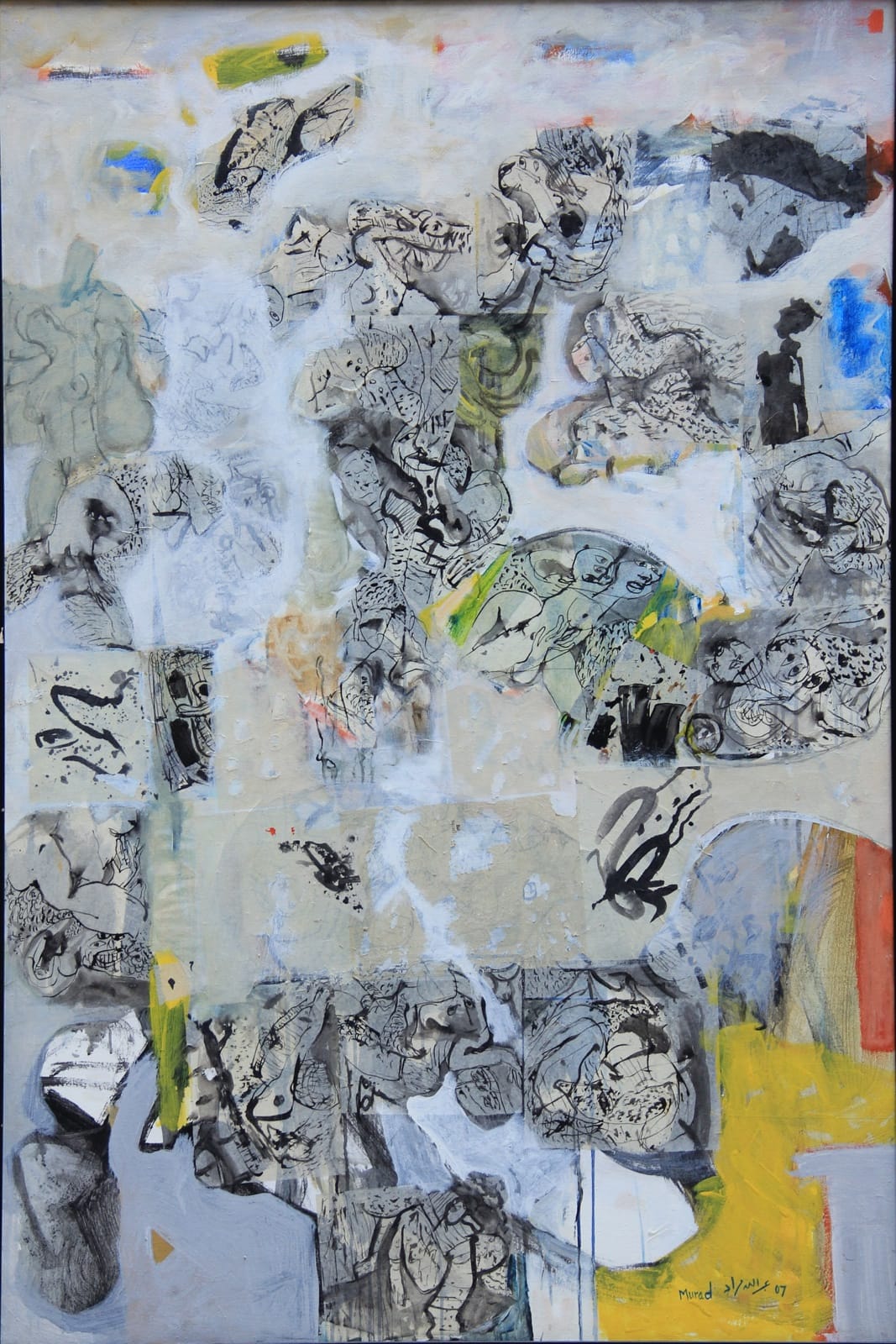
A lot of the connections to the artists and galleries are thanks to May, who apart from being a private collector, has undertaken a number of initiatives in the art world. For instance, she curated a world ceramics show for London’s V&A museum, before bringing it to Damascus in November 2008, when the city was the Arab capital of culture. She then oversaw a travelling exhibition that began in Beirut’s Mouawad Museum, of jewellery by sculptors, designers and architects the following year.
Surprisingly, her favourite kind of art is far from contemporary; Iznik ceramics from the 16th and 18th century, distinctive for their blue and white motifs. Mamarbachi got into contemporary art after she opened a boutique hotel in Damascus, Beit Al-Mamlouka. “I had to put pictures on the wall,” she says simply. “That was back in 2004, I was collecting so many pieces by local artists that I started to organise exhibitions every month. Art was always something I liked but I didn’t have time to study it until the children went to university and I pursued a BA & MA in SOAS and Sothebys, in art and archaeology with a focus on Islamic art. You know, you need to go back in order to understand modern art. Those were the best times of my life.”
Raya’s foray into the art world is more circuitous. She’s worked predominantly in digital marketing for advertising agencies like Publicis (Lebanon) and DDB (Qatar) and her MBA is from London’s Henley Management College, which was where she came up with an interesting thesis that was later published in a journal. “I explored the question of whether it’s better to invest in an art fund or the stock market. Although an art fund has slower returns, I showed that after locking in your sum for 5-7 years, the returns are much higher,” she tells me. “I was hoping to start my own fund one day.” She then set up an online real estate company with a German colleague, for which they had some backing but not enough. “After the crash in Europe, I decided to sell my shares and come to Lebanon, although I have never lived here.” Her family had moved between London, Saudi Arabia and Paris before resettling in Lebanon after the war.
“There was always this thought in the back of my mind about how to combine the art and the digital worlds,” she continues. And so Raya made a business plan for the Artscoops concept and showed it to a fund manager earlier this year to make sure it was sound. “I found that there’s a price range for people to buy online, it is up to 10,000 dollars - with15,000 being on the high end and 50,000 the upper limit. So you’ll find the majority of the artworks we have on the website are priced between 2,000 and 20,000 dollars.”
Throughout the interview, as mother and daughter complement one another with their stories, sometimes filling in for each other, I realise what a neat arrangement this is, since they’ve made sure to divide up their respective roles. Raya takes care of the strategy and marketing and also makes the legal agreements with the artists. May takes care of the art part, networking and managing relationships with artists and galleries. It won’t always be such a small operation though. Artscoops are planning to add a few more people in October to the curatorial and editorial sections of the company. May adds that their next step will be to display the artworks online in three-dimensional form, by having each piece rotate so that people have a more tangible sense of what they are buying.
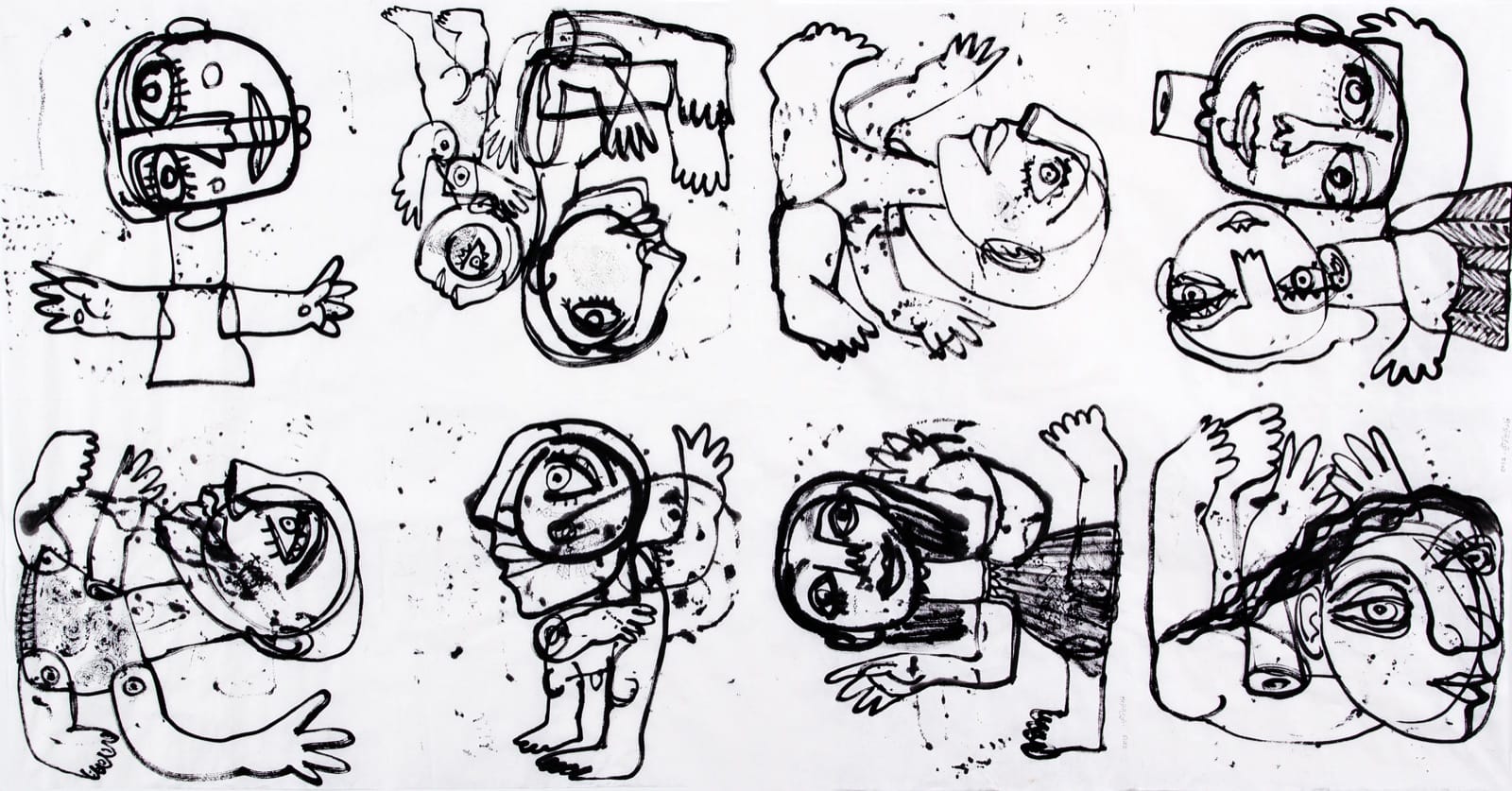
And all the pieces are handpicked. May explains how she would go to the artists she knows and persuade them to make smaller works that are more affordable. As she continues speaking, my gaze turns to the mid-sized bust by Mustafa Ali, placed smartly placed on the living room table. “You know with all the wars happening in our region, we’re still making art, I catch her saying. “Art is something alive, it shows that we can still celebrate life.”
She gestures to the pieces on the floor, standing against the corners of the room, “I don’t think everything is meant to be hung on the wall, they shift. For example, this painting in front of me with the boy and the bicycle. If I change its place, it changes. I might notice something I hadn’t noticed before and travel somewhere else, in my mind.”
As our images materialise once again in the mirror, I understand exactly what she means.