Designer Jozeph Forakis is back in his native New York. He’s in the US from Milan – his base for the last couple of decades – for the Palm Beach International Boat Show. He connects with us over Zoom from his childhood bedroom as he's visiting his mother in the hip Brooklyn enclave, Greenpoint. A cartoonish horse painting hangs on the wall behind him, one of his mother’s works. Forakis tells me about his artsy upbringing. “My mother was a painter and my father a sculptor. They met in the New York art scene in the 1960s and were a real part of it, hanging out at Andy Warhol’s Factory. I went to grade school with the sons of Jim Dine,” he says.
Forakis has an impressive resume in his own right. An early switch from architecture to his beloved industrial design at RISD (Rhode Island School of Design) gave him a springboard to success. “It was everything I dreamed of in terms of creativity, strategy, technology and materials,” he reminisces. He then won a scholarship for a graduate programme at the prestigious Domus Academy in Milan and didn’t look back, going on to collaborate at their research think-tank alongside some of Italy’s industrial design heavyweights. He was headhunted by a recruiter to lead the opening of Motorola’s strategic design centre during their hey-day. Today’s iteration of his eponymous design studio was born in 2002 and boasts a portfolio of global clients from Samsung to LG. “Innovation is not an event, it’s creating a culture of innovation, that’s what we try and help companies do,” he says of their ethos.
A call from Martin Lo of Hong Kong's Cheoy Lee Shipyards Ltd steered Forakis into the world of superyachts. As their consulting creative director and brand manager, he’s helped them bridge the gap between shipyards and luxury yachting, adding CL Yachts to their portfolio. Forakis designed the interior and exterior for the new 29.5m CLX96 motoryacht, which was showcased at Palm Beach. “The CLX96 has a ‘workboat chic’ aspect about it,” he explains. “It’s very much anchored in functionality – there’s not a single design choice that doesn’t have at least two or three functional reasons to exist.”
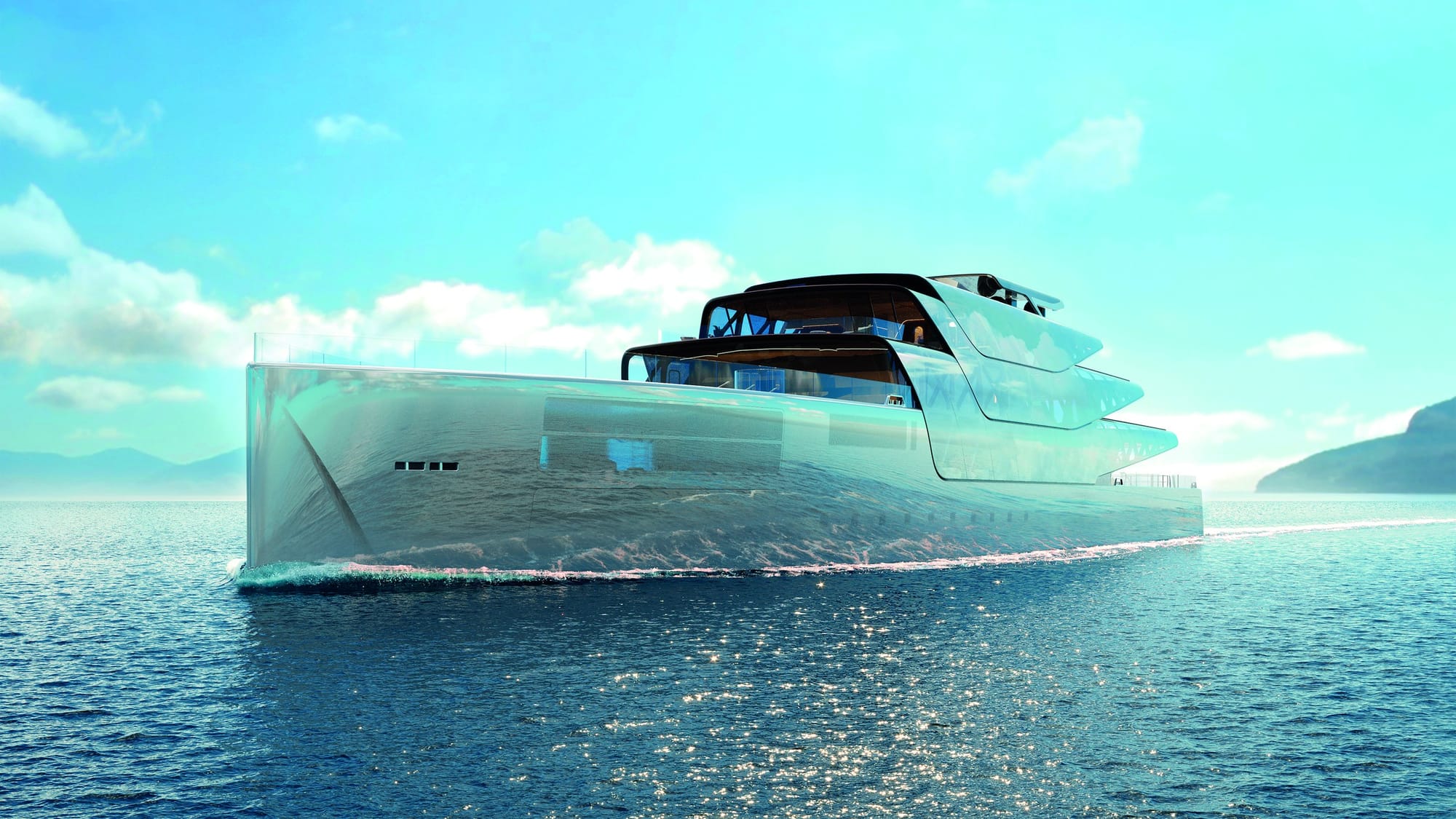
Forakis has also just revealed the ideas for his latest project – the Pegasus megayacht – which is ‘off the nautical charts’ when it comes to cutting edge technology and pure luxury. “It’s the first of what will become the next generation of sea vessels,” explains Forakis as we leaf through the beautifully rendered designs.
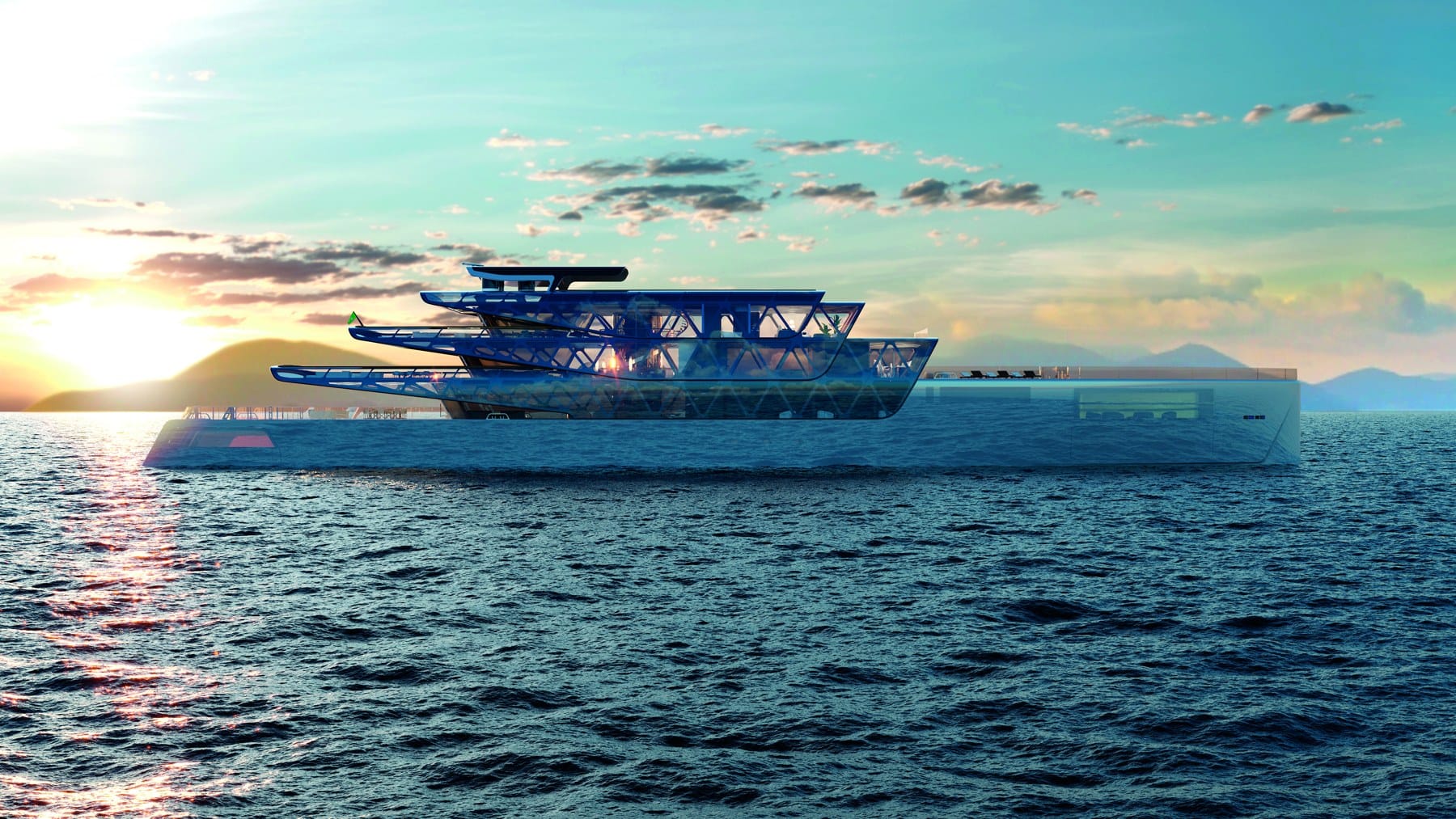
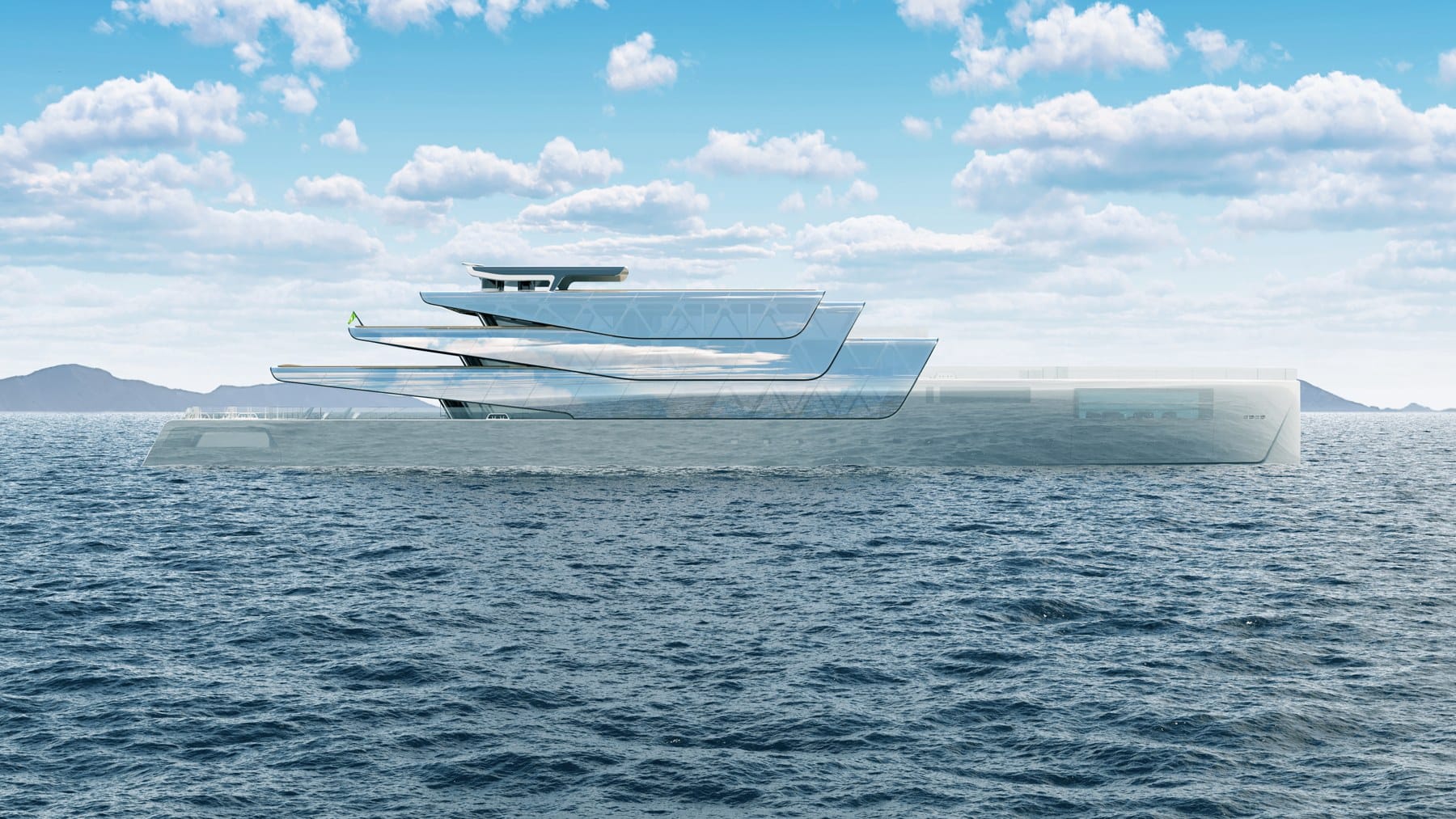
The sleek 88m-long boat resembles a winged, floating mirror. It features five decks of futuristic innovation and can accommodate 14 guests and 26 crew. There’s a helipad on the bow that can retract to reveal a pool, appearing like a giant aquarium on the level below; a zen lounge with soft flooring that oozes through the toes like sand and a solarium beach club. Guests will enjoy the cinema, spa, gym, and chic lounge. All lighting and furniture – including a bespoke grand piano – is designed or handpicked by Forakis.
Inspiration for Pegasus came to him on the beach during a post-lockdown holiday on the remote Greek island, Ano Koufonissi. Forakis holds up his black “battered, sea salted and dog-eared” sketchbook and opens it up to show me the early pencil drawings of Pegasus which resemble windswept curves. “To be honest sitting on a beach is like torture to me,” he laughs. “I can’t really sit still for too long without ideas coming. How could something as pure and clear as nature – the sun in the water and the clouds – come to fruition? What would it mean to make an earnest effort at something that was built and powered in a different way to be more harmoniously integrated with nature, rather than competing or polluting it?”
After many hours of devotion, research and specialist interviews, the designs and 3D-models of Pegasus are ready. “Now is the moment we are hoping to expand and start working with selected experts in the field to take it to the next phase. Ideally, I would like to work with a visionary who cares about our collective sustainable future.”
It’s this “broad and deep research” into futuristic technology that stands Pegasus leagues apart. “Pegasus developments are based on existing technology that would need to be evolved to achieve the scalability we’re talking about.”
One such technology Forakis hopes to employ is futuristic 3D printing. “Once 3D printing is developed, it can be made in a factory or a shipyard that’s a fraction of the size of the footprint of a traditional shipyard, by a fraction of the staff and a fraction of the energy in a reduced time with reduced waste and energy consumption. You can then integrate systems and make modifications, customisations and fully integrate into the structure,” he explains.
Indeed, every, last detail of the yacht has the planet in mind. “It goes from invisible to transparent,” Forakis says of the mirrored design. “Invisibility and transparency are metaphors for its environmental impact. As a technological system it’s intrinsically linked and as a design statement or language it’s holistically conceived.”
Pegasus is ‘zero emissions’ and converts all of its energy from seawater. “Because it harvests hydrogen from the sea, its range is infinite. Why would you ever have to come into port?” Forakis says as he shows me a technical drawing of the boat and imparts a short physics lesson. “Here are the transparent solar panels which generate electricity for seawater desalinisation, deionisation, and the electrolyser, which extracts hydrogen from the sea water. It is then stored in the hydrogen tanks and converted as needed by fuel cells into electricity, which is in turn stored in lithium-ion batteries to drive the azimuth pod, bow thruster, navigation, and hotel systems.”
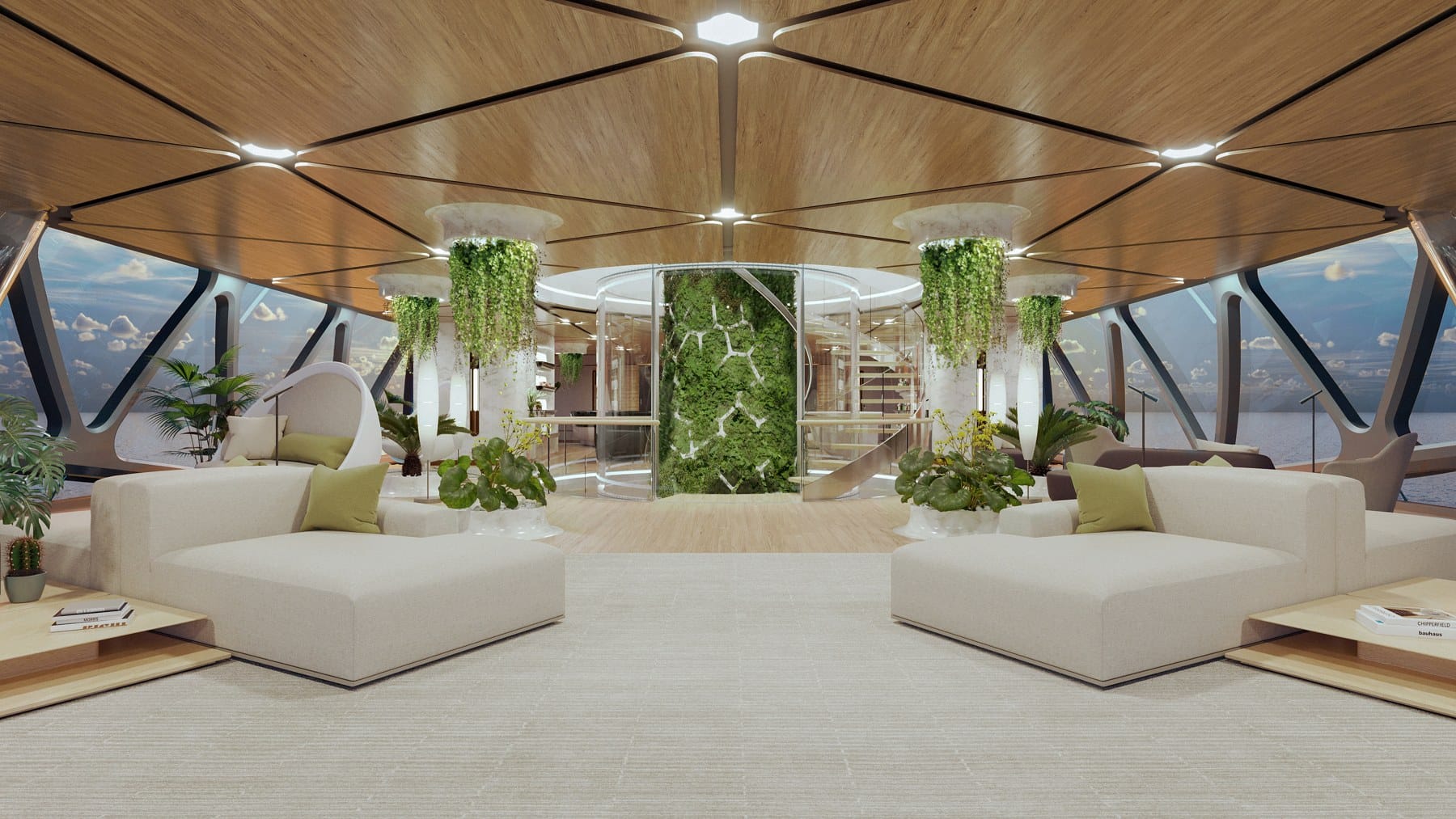
The centrepiece of the yacht is its cylindrical ‘tree of life’ which emerges through the middle of the boat’s four decks from a zen garden (a meditation and yoga area) and a shallow reflecting pool. This green wall is the heart of the boat’s hydroponic farming system which will provide fresh food and purified air. “Of all the high-tech stories on the boat, the thing that is probably the most advanced is hydroponic gardening because this needs to be developed in order to feed the planet. The tree and the hydroponics garden are behind glass walls so they can be maintained in their own environmental conditions to optimise growth,” he explains.