Position: Creative director of Edge of Arabia
Based: In London, but travels to Saudi Arabia a whole lot
Why Edge of Arabia for an arts organisation?
It’s the title the founders came up with, after watching a documentary situated Saudi Arabia at the very edge of the Arabian peninsula
What makes it edgy?
It’s neither fringe or mainstream. It’s cutting-edge, but sometimes even rural since we don’t take the actual artists out of their comfort zone. There is hardly a contemporary art scene in Saudi Arabia, at least not prior to 2009, and we are trying to provide that platform. It’s not like we are showing landscapes, pictures of camels or impressionist painting. We are trying to push artists to develop in unpredictable ways, whether they are photographers, sculptors, videomakers or even musicians.
What’s the main approach?
It’s a grassroots initiative all the way, and bottom-up. We do not work like museums or other institutions, but begin from the ground.
What does the title of your latest exhibition, “We Need to Talk” refer to?
One of King Abdullah’s speeches related to religion. The artists grapple with issues religion and society, and social media. Their work is divided into the three sections of Past, Present, and Future.
What was the reception like?
It’s our best exhibition to date. About 1,000 people showed up to the opening in Jeddah and we had positive international feedback. We also invited 65 museum collectors and curators from abroad to come.
What do you think was so special about it?
Engaging with the local creative community. We hired bloggers to contribute to the catalogue, a local musician for the background music, a Saudi chef for catering, and a Saudi designer for the outfits. We like to involve all kinds of creators in that way. There were even artist workshops where the exhibiting artists came and gave talks about their work to students.
Have the revolutions occurring in the Arab world affected the work Saudi artists are doing in any way?
Not really, since Saudi is not part of it. The artists seem to be looking at how the country is evolving from the inside. Politics is not really in the agenda here, just a space for creative individuals.
But you did produce the first pan-Arab exhibition, The Future of a Promise, at the Venice Biennale last November as a result?
Yes, Saudi Arabia was already being represented at its national pavilion during the Biennale and we thought it would be misleading to stage another Saudi-only exhibition there, but rather have more interaction with established artists from the Middle East, such as Mona Hatoum.
Are all the artists you support based in Saudi Arabia?
No, some are in Paris and Dubai as well.
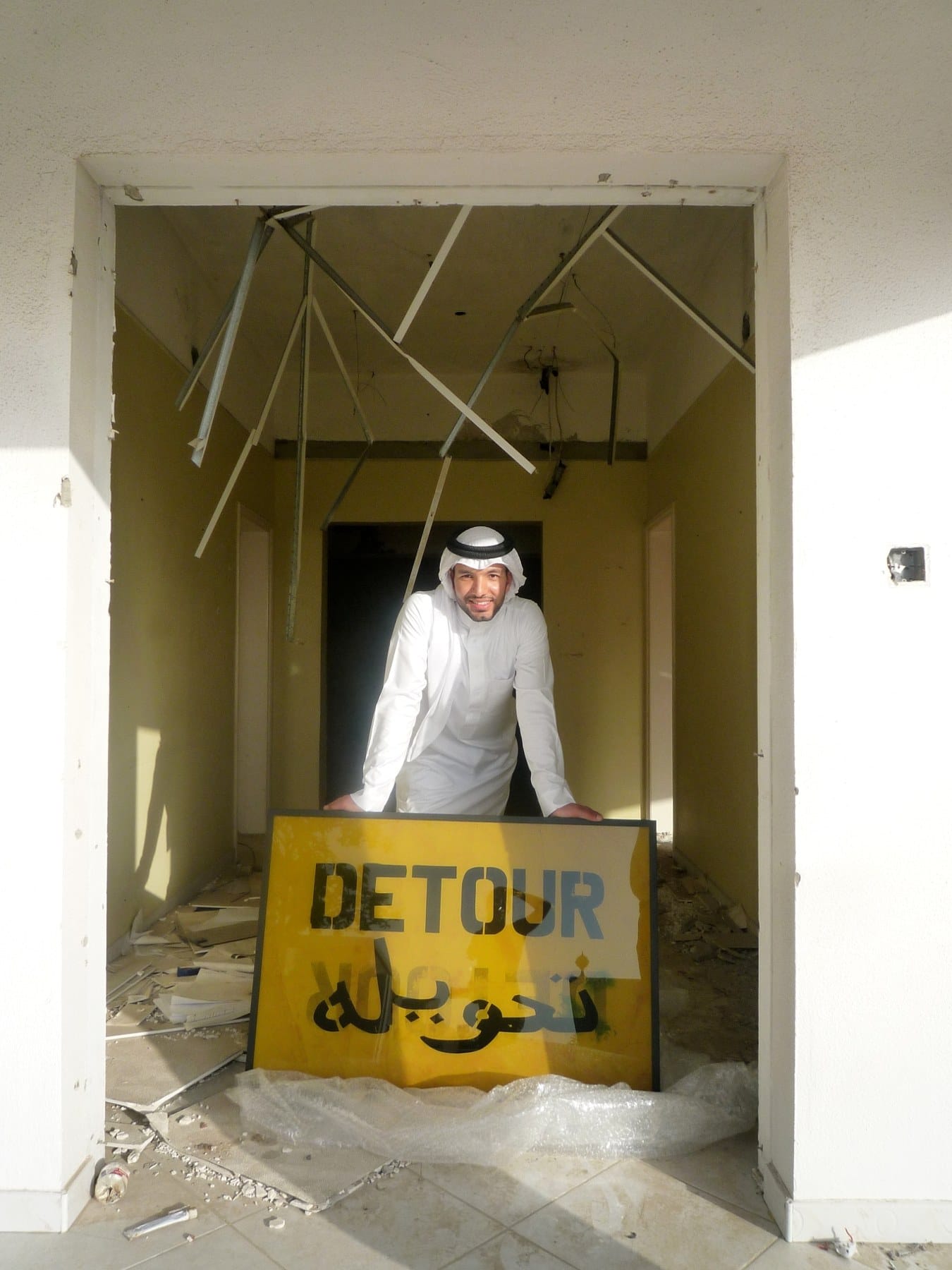
Do you make art yourself?
No.
What exactly is your job?
I set the general strategy and art direction, deal with funding and international guests, set up the collaborations we have with the cultural institutions and curators, decide on exhibition locations and venues. Business development, in short.
Isn’t that your background?
Yes, I was working in the field of Finance and management before I joined Edge of Arabia, but living in London, I’ve always been involved with the art world. I joined Edge of Arabia in 2009.
What was the most difficult project you worked on?
I always get the sense that the last exhibition worked on is the most difficult, until it becomes my favourite. Then, the next one comes along and I find that it is even more challenging and you have to re-invent yourself again.
What was the most extravagant?
The Venice Biennale for its sheer scale
What are the challenges in general?
Finding funding for each new venture (our founding sponsor is the Abdul Latif Jameel Community Intitiatives, which is Saudi). Each location carries with it particular challenges as well. In Venice, we were by a canal, where everything needed to be shipped and artworks transported from boats. In Dubai, the site-specific installations were in an abandoned space, which also had to be wholly set up as well, and transformed into an airport terminal. We’ve also produced works in Istanbul and Berlin.
What is the most rewarding aspect of your job?
Being a cultural messenger. As a Saudi, I feel like I have to give something back to support my country. Which is why we also have our education programs to empower youth.
What can we expect from you in the future?
A multi-artist book in March on contemporary Saudi Arabian artists with an established body of work and an exhibition in London during the fall. More guest curators and more societal engagement. We are also working on the first documentary on contemporary art in Saudi.
What’s the outlook for Saudi contemporary art?
It’s good. A museum in Los Angeles recently acquired 2 artworks for Saudi contemporary artists for their collection and the British museum has also added 5 Saudi artworks to their Hajj collection.
What are you most proud of?
Perfecting the know-how of exhibition-making, seeing the development of local contemporary artists and the launching of their careers. And also giving this platform to them for visibility where they are virtually unknown to the rest of the world.