Two notable natural wonders, though, pop out on my list: visiting the North Slope of Alaska to see the clash of exploring Prudhoe Bay oil first hand, while preserving the wilderness for migrating caribou and standing at the edge of the Sharyn Canyon in a remote corner of Kazakhstan to see the rock formations known as the Valley of the Castles.
I have also had the good fortune to interview 30 heads of state and, at one point or another, most of the chief executives of the Fortune 100. I also chair a dozen “A-list” panels each year, which gives me the chance to share the stage and challenge those who are at the top of their game.
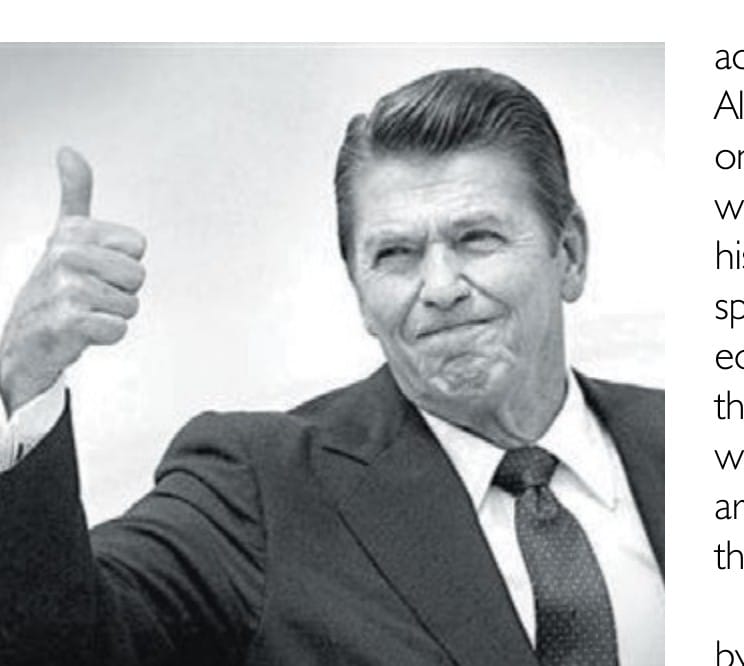
But if I had to pick one ‘must-see or must-do’ in my professional lifetime so far, it would have to be conducting an interview at the Oval Office with the 40th President of the United States.
The year was 1988, the final six months of then U.S. President Ronald Reagan’s second term. The interview was scheduled ahead of a G7 Summit in Toronto but questions were surfacing about what Reagan knew of the “arms for hostages” deal involving Oliver North and the selling of weapons to Iran, with profits funnelled to a rebel group in Nicaragua.
In 1988, I was a 27-year-old special series producer for the Nightly Business Report on PBS TV. This meant I was in charge of managing the preparation for the interview, going through questions and rehearsals with the correspondent/bureau chief I was working for, making sure the show went off without a major glitch and helping ensure that, as a result, it made news.
That work is standard operating procedure for a producer. We had three hours to manage the setting up of cameras, lighting and sound equipment. In that timeframe, I observed the constant stream of high-level members of the White House team briefing the President. This included Treasury Secretary, James Baker, Federal Reserve Board Chairman, Alan Greenspan and Secretary of State, George Shultz. It was a pretty powerful team but for them I realised, it was another day at the office.
After fine-tuning the set-up, we were escorted out of the Oval Office and the Secret Service team took over. They made a final sweep to make sure the President’s space was safe and secure.
An hour later, the moment arrived. The President entered with Chief of Staff, Donald Regan and acting Press Secretary, Marlin Fitzwater by his side. The tall, former Hollywood actor was dressed in a brown suit (not normally the most flattering for men, but he pulled it off well) and matching leather lace-ups.
Despite showing his age – later acknowledged as the initial signs of Alzheimer’s disease – Reagan greeted each one of us with a warm handshake that was, in a word, disarming. For a moment, his positions on the MX missile, record spending at the Pentagon and supply side economics did not seem to matter. This was the man at the centre of global power, who was in the midst of spending the Russian army into bankruptcy, a contributing factor in the fall of the Berlin Wall.
Moments later, the 20-minute interview by our bureau chief was conducted. Sat in the producer’s chair, it seemed to last no more than a quarter of that time. While the White House hoped the focus would be on the global economy, especially the stronger dollar, my colleague dug into the Iran-Contra Affair.
Reagan acknowledged on the record for the first time there were some items, in the spirit of national security that he felt a President did not need to know. The famous line “the buck stops here” all of a sudden vanished. That, as we say in the business, was news.
While the bureau chief was busy editing the interview, I began a three-hour session liaising with the major U.S. networks. They all wanted that admission. A niche, but respected business programme became the centre of the news cycle for a day. Back then, there were no digital files, just old-fashioned videotape. We distributed the material to wire services, broadcast networks and leading newspapers. Our exhilarating, whirlwind work was done for the day.
Nearly a quarter of a century later, I can still remember the feel of the pile carpet in the Oval Office beneath my feet and, of course, that warm, disarming handshake from America’s president.