Described variously as the ‘Picasso of Design’, the Guru of Biomorphism and an industrial design star who designs spacecrafts to view the stars, Newson is the man behind a plethora of sensually- if not sexually- imbued products; fluid in line, seamless in functionality and often cosmic in conception.
But beyond the futuristic, space-obsessed thematic for which Newson is famed, it is a rather different kind of sensibility that has defined his work, in all its multitudinous incarnations. From the EADS-Astrium Space Plane (2007) – a space-tourism start-up currently competing with Branson’s Virgin Space to take travellers into orbit - to his salt and pepper grinders for Alessi, Newson’s attention to the delicacy of functionality is forever present.
“My products are frequently described as feminine, organic, curvy and sexy,” he says, with a detectable hint of pride. “And I do have a feminine sensibility.”
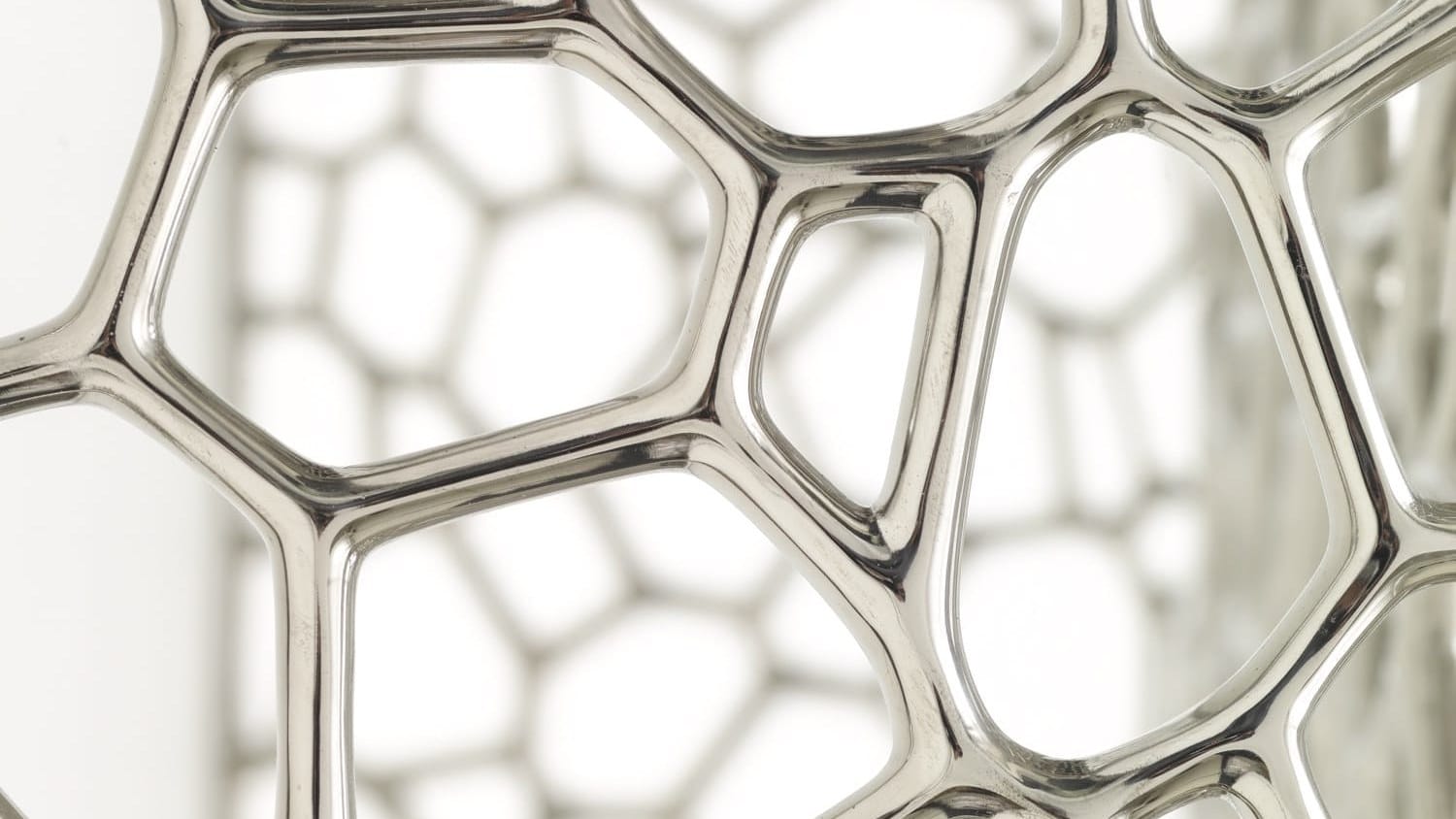
Flick through the 610 pages of Taschen’s forthcoming 5,500 USD limited edition retrospective of Newson – modestly entitled ‘The Gospel According to Marc’ - and that sensibility, as well as the staggering diversity of his output, is clearly in evidence. From the Riva Aquariva speed boat to Jaeger-LeCoultre’s Atmos 561 watch and Nike’s Zvezdochka shoe (which he named after one of the Soviet Space Dogs) to the Kelvin 40, a personal jet commissioned by Paris’s Fondation Cartier, the Voronoi Shelf – a honeycomb of voids carved against all odds out of solid Carrara marble - or his work as Creative Director for Qantas Airlines, it is clear that for Marc Newson and his organic curves, the sky has never been the limit.
At the age of just 48, I ask him what is it like to have a retrospective of your life’s work printed, especially when many architects and designers do some of their best work quite late in life. “The Taschen experience was cathartic,” he says. “I do miss the way I used to work. I was a one-man operation. I made things. Now my work is more on an intellectual level.”
He views the publication in the same vein as his CBE. Beyond the personal honour, he feels it’s also an acknowledgement of the broader design community. It isn’t the first time he’s been put in a book but it is the most comprehensive in terms of scale. “There’s nothing that comes as close,” he says, “On my design process alone, for example, there’s a whole chapter on my unrealised projects. It’s very much the good, the bad and the ugly.”
Not that the man who is currently designing a new Beretta – not for killing, mind, just as an aesthetic exercise - has time for any kind of ugliness. Except, perhaps, as a source of inspiration. Newson can be evasive on the sources of his inspiration – he’s even cited the uprisings in the Middle East as creative food for thought - but he is clear on one point. “I harness inspiration from the negative side of things, the way things don’t work, the way things look offensive, the fact that there isn’t sufficient choice on the market.”
That lack of choice and the imposition this places on the rest of us, is something that particularly irritates him. “Consumers are getting a bum deal, they have their tastes dictated to them,” he says, explaining his ire. “If I had 100,000 USD to spend on a car, I’d be hard pressed [to find one].”
It’s hardly surprising, then, to learn that when he was presented the opportunity to design a concept car for Ford, Newson didn’t hesitate. The result was the O21C, which he shaded in a neo-1960s palette of orange, green and yellow. Boasting a symmetrical front and back silhouette, his Ford is a galaxy apart from other cars and displays a streamlined, almost naïve integrity. The characteristics are reminiscent of the designer himself for you see while Newson is arguably one of the most successful designers in the world, rather than let this go to his head, he remains charmingly attentive to the needs of average folk. “Design is fundamentally democratic,” he claims in his measured, understated way. “It should have the ability to improve peoples lives, to put a smile on their faces.”
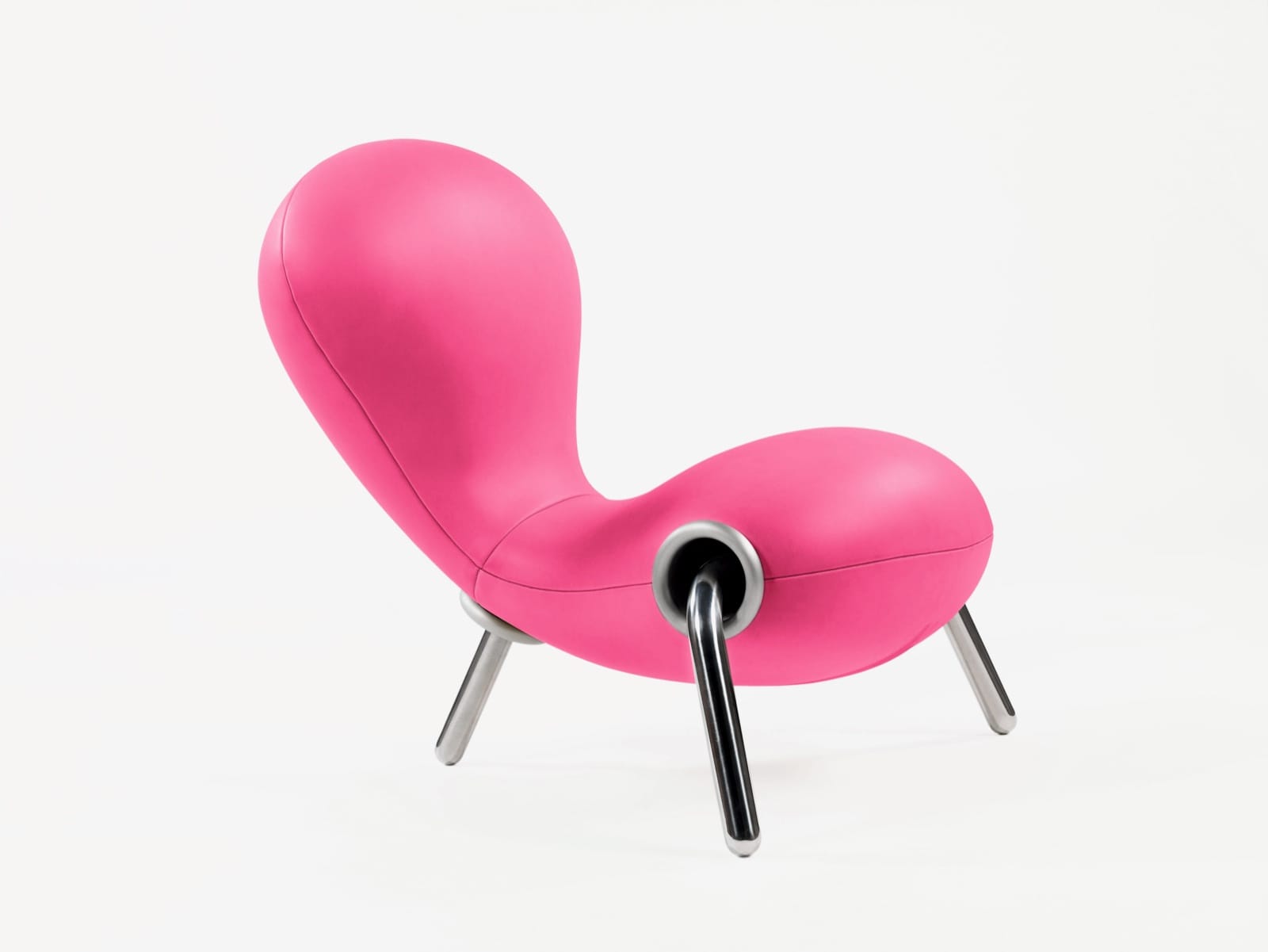
“On a philosophical level, the design community has the ability to mesh nicely with all the reactivity that’s going on in the world. Design is a struggle against what exists really. Design is not an area where people speculate just to make money.” He pauses to laugh as his self-irony. Newson is the first designer to be exhibited by the art world’s most prestigious gallery, the Gagosian and as such, he has raised the profile – and price tag - of design objects in general. “I labour over my work,” he adds. “It’s all about process and materials.”
Unlike modern architecture. For such a futuristic designer, Newson possesses a fairly low opinion of much of what’s being built today. Looking round his home city of London, where he lives with his wife and two young daughters, it doesn’t take him long to find a target: Renzo Piano’s recently opened skyscraper the Shard. “I can’t help getting the feeling that it’s the result of a thumbnail sketch on a napkin and then a whole bunch of engineers figuring out how to make it,” he rails of the building, which is famously just 1 metre higher than the Eiffel Tower.
“Architecture is so deeply, politically motivated. It’s about power. You don’t really have a choice. A building gets built, you look at it, live in it, experience it without having any choice. In design you have a choice plus it’s on a different scale so it’s not so imposing.”
There could be an incongruity or two in Newson’s argument. Not least because many of his own products are only affordable to the super-rich, placing them far beyond the choice of most people. But perhaps it is unfair to flag this point. If the designer is considered in such high regard, it is on the merits of his designs and what he aims to achieve through them rather than on their purchasers, that he deserves to be judged and the fact that his career has been both prolific and prominent suggests that on this front, he’s a winner.
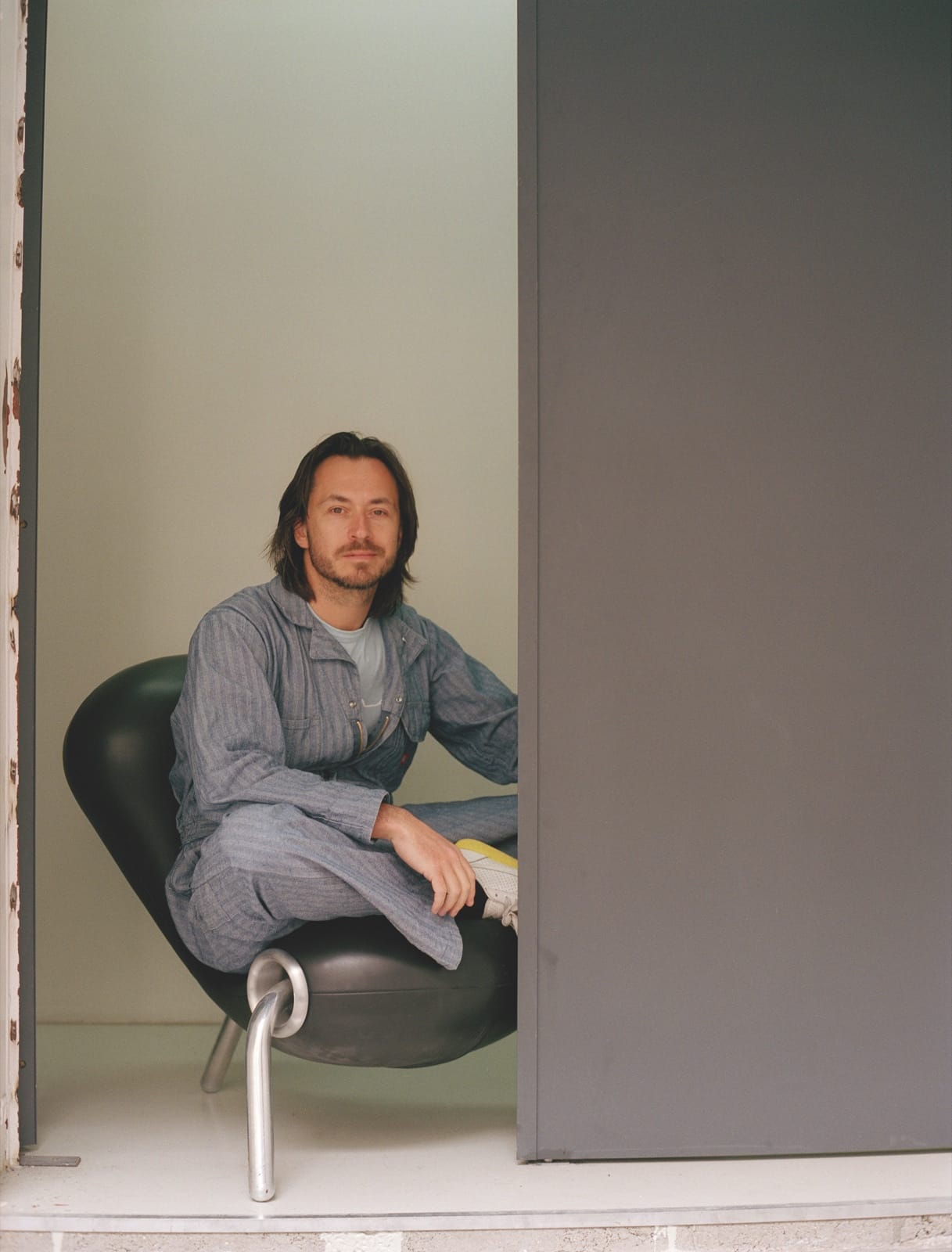
Newson has often said he is fascinated by Nature and its relationship to science, chaos and order, as well as the repetitive way things recur at different times and different scales and few can equal his translation of such processes into form. The fabulous Julia necklace for Boucheron, for example, is inspired by the patterns in fractals. Consisting of white gold, diamond and sapphires, arranged in scintillating, mathematical whirls of light, such is the necklace’s celestial splendour, it threatens to outshine even the most beautiful wearer.
Once, we believed the future of objects would be an age of the limitless and the disposable but if Newson gets his way, it may look much more like our grandparents’ past. Likely born of his fascination for Nature, the designer’s current concern is leading him to focus on producing objects that last.
“I think any designer is going to be in the doghouse one way or another. If you use wood, you’re destroying forests. If you use plastics, chances are you’ll be using materials that aren’t completely recyclable,” he says, elucidating a solution that sounds old-fashioned but which may be his most futuristic yet. “I’d rather just design an object so meaningful that people didn’t throw it away at all.”