1. Paul Poiret (1879 – 1944)
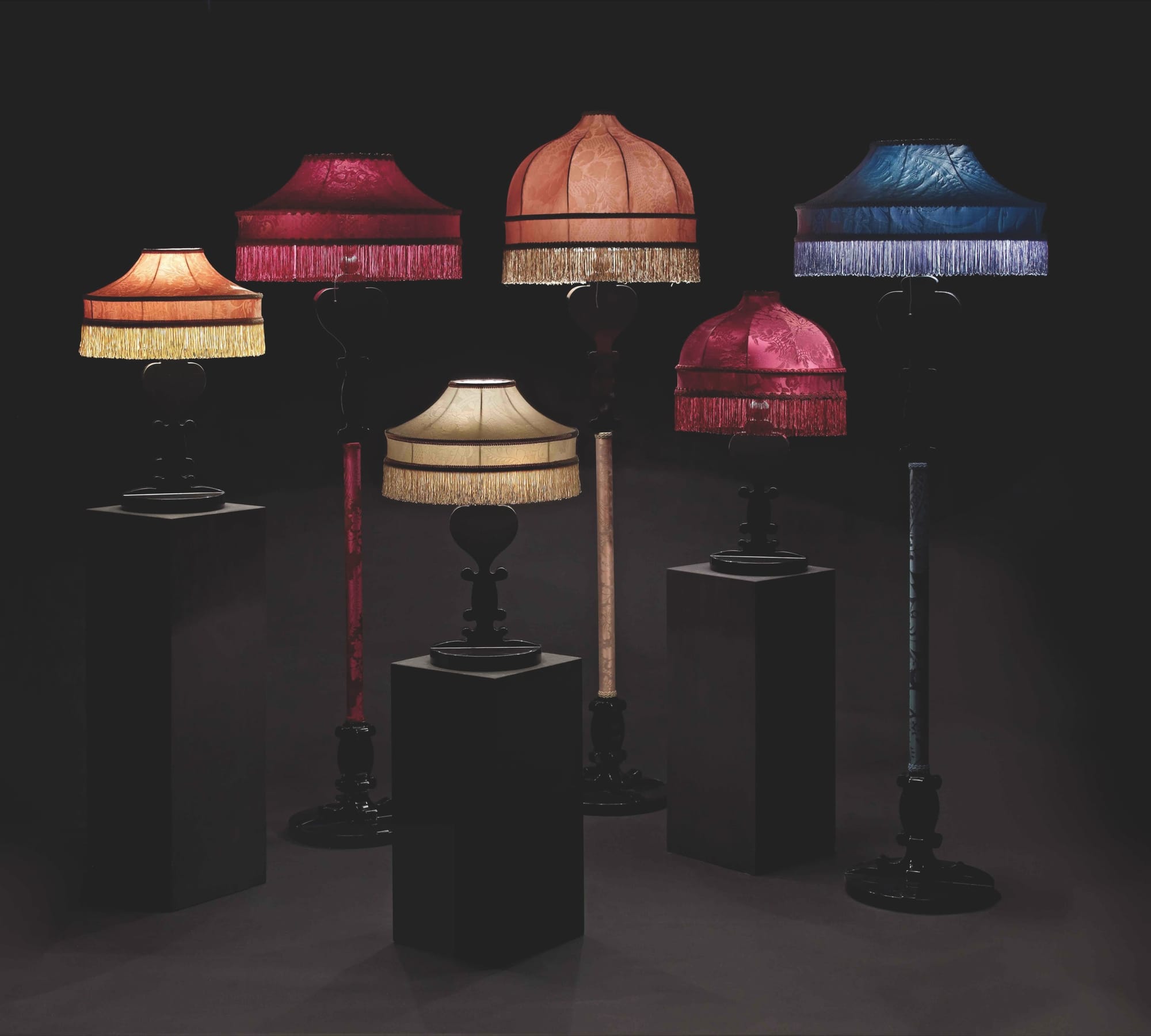
It’s often said that Paul Poiret is to 20th century fashion what Picasso was to 20th century art. Poiret was born into a poor Parisian household, his talent manifested at an early age. Apprenticed to an umbrella maker as a child, he collected scraps of leftover silk to fashion clothes for his sister’s dolls. As a teenager, he began selling sketches to dressmakers and eventually, to several major couture houses. At 17, he was snapped up by influential couturier Jacques Doucet, and Poiret’s first design for him, a red cloth cape, sold by the hundreds. Moving from there to London’s House of Worth, he began to create the simple, shift-like dresses, amongst them the lampshade tunic that turned fashion on its head. Inspired by Art Nouveau, Asia and Les Ballets Russes, Poiret was shockingly modern. In 1903, he established his own house, where he produced wide-sleeved robes, hobble skirts, harem pants and pantaloons. Also he ushered in the death of the corset by popularising brassieres. Too lavish for post-WWII Europe, Poiret died as he began - a poor man.
2. Coco Chanel (1883 – 1971)
Possibly the most famous designer of all time, Coco Chanel will forever be known for the bold simplicity of her “little black dress” but her collarless jackets, knee-length skirts and women’s trousers were just as influential. Designed for comfort, her classic yet casual creations scandalously borrowed elements from menswear, liberating women from the restrictions of the corset. Chanel herself had a hard life. Sent to an orphanage after her mother’s death, the young Gabrielle Chanel – her nickname “Coco” came from a much later stint as a cabaret singer in Moulins - learned how to sew. After working at a small fashion house, where she out-stitched (and out-styled) her colleagues, Chanel was unceremoniously fired for being better than the Madame. Moving to Rue Cambon in Paris in 1910, Chanel first sold hats before launching a line of clothing – funded by her aristocrat lover. By the 1920s, Chanel was thriving and she moved into cosmetics, launching her classic scent, Chanel No. 5. Coco died in 1971 in an apartment in the Hotel Ritz, where she had spent 30 years of her life.
3. Elsa Schiaparelli (1890 – 1973)
Regarded as Coco Chanel’s rival, Elsa Schiaparelli’s prominent, flamboyant designs were inspired by the Surrealist movement. Although her background was privileged and she studied philosophy at the University of Rome - her mother was an aristocrat and her father, a revered medievalist - her family was conservative and sent her to a convent. There, she appropriately went on a hunger strike. Her first foray into fashion was at a ball in London, when she bought blue fabric and made a dress by pinning her gown into place. She established a couture house in Paris in 1927, introduced padded shoulders in 1932 and hot pink clothing, as well as turbans and trompe l’oeil sweaters with a knitted-in bow at the neckline. Though her designs did not survive the end of WWII, Schiaparelli is known for working with the likes of Jean Cocteau and Salvador Dali (for whom she produced the infamous shoe hat and lobster print dress in 1937) and is best known today for her equally infamous autobiography, ‘My Shocking Life.’
4. Sonia Rykiel (1930 – present)
For Sonia Rykiel, fashion was a matter of necessity. A window-dresser by trade, she designed her own maternity dresses in 1962 when she couldn’t find anything she liked. It started a trend and she followed this her now iconic sweater, the “Poor Boy”. When this shrunken piece of knitware made it to the cover of Elle magazine, it created a sensation far larger than size. Rykiel was hailed the “Queen of Knits” in 1967 and began to carve out a niche for herself. A year later, Rykiel opened her first boutique, where she would invert seams, add distinct colours and stripes to her sweaters and work with luxury yarns like mohair, angora, and alpaca. In addition to her figure-hugging knits and jerseys, she used materials like crêpe to create a softer look than the usual solid tweeds and plaids. Her 3-piece ensembles offer mix-and-match possibilities, perfect example of how to layer in style.
5. Vivienne Westwood (1941 – present)
Westwood’s last name comes from her first marriage, which did not last. Nor, for that matter, did her job as a primary school teacher in North London. Moving into jewellery, Westwood began to sell in Portobello Market and finding an audience, opened her infamous Let it Rock boutique in the 70’s with her great love, Malcom McLaren, later the manager of the Sex Pistols. Leaving jewellery, she began to sell Punk-inflected and New Wave clothing; bondage trousers, spiked collars and her notorious God Save The Queen T-shirts, which proved wildly successful. In 1981, Westwood had her first runway show, which drew inspiration from Pirates. As her relationship with McLaren ended, her collections proliferated; Buffalo, Savage, Punkature, Hynos and with 1884, her very first sports collection using fluorescent fabrics. Awarded an O.B.E, Westwood greeted the Queen in a see-through blouse and skirt, twirling around to demonstrate she wore no underwear. Sassy may not be the word.
6. Rei Kawakubo (1942 – present)
They say Rei Kawakubo is as elusive as her designs. This Japanese designer studied fine arts and literature before taking a job at a textile factory and as a freelance stylist in 1967. In 1975, she set off on her own, establishing her Comme Des Garçons boutique in Tokyo. Her almost ascetic taste is often termed anti-fashion while her penchant for asymmetry, distressed materials, holes, multiple sleeves, crooked seams and frayed edges in blacks and greys is sometimes referred to as “Hiroshima chic.” By challenging conventional fashion standards and championing radical silhouettes, Kawakubo is viewed as a conceptualist and she has always said that she wants to create clothes that never existed. By creating clothing that can be worn both as pants and as a dress, she’s definitely been doing that. Kawakubo opened her first London store in 2004, where she also stocks other labels, and has been at the vanguard of the transient boutique movement - also known as guerrilla store - all over the world ever since.
7. Miuccia Prada (1949 – present)
It may surprise you to learn how Miuccia Prada’s began. A member of the Communist Party and a staunch feminist, she has a PhD in Political Science and later studied and performed mime for five years at Milan’s Teatro Piccolo. In 1978, she was reluctantly forced to take over her grandfather’s company with her husband, which had been manufacturing luxury leather bags since 1913. Unsurprisingly, Prada began moving in new directions. Her finely crafted black nylon and leather handbags, launched in 1985, were an instant hit. Unlabelled and hard wearing with pure lines, they were kind of bag you need to have. Four years later, she launched her first ready-to-wear collection followed in 1992 by the more modest Miu Miu label, which was inspired by her own personal wardrobe. Prada’s designs have been consistently about classic, understated luxury, always minimalist and often displaying a knack for using unusual materials.
8. Jean Paul Gaultier (1952 – present)
This enfant terrible of fashion is famed for the notorious Madonna cone bra, his use of navy stripes, men’s kilts and corsets. His decadent, eccentric, irreverent style is a fusion of Punk, streetwear and androgyny. Gautier never trained formally as a designer and spent his teenage years skipping school and drawing his own imaginary collections. At 18, his sketches caught the eye of designer Pierre Cardin, who took him on. Six years later, in 1976, he launched his first collection, which established him as France’s most irreverent designers. His label went from success to success and slowly, JPG became sufficiently mainstream to be appointed creative director of Hermès, serving from from 2003 until 2010. But he never lost his wilder side. In 2006, he launched a line of make-up for men and continued to create amazing clothes for cinema, such as his designs for Luc Besson’s “The Fifth Element,” Peter Greenaway’s “The Cook, the Thief, His Wife & Her Lover,” and Pedro Almodovar’s latest, “The Skin I Live in.” And yes, his runway shows remain as outrageous as ever.