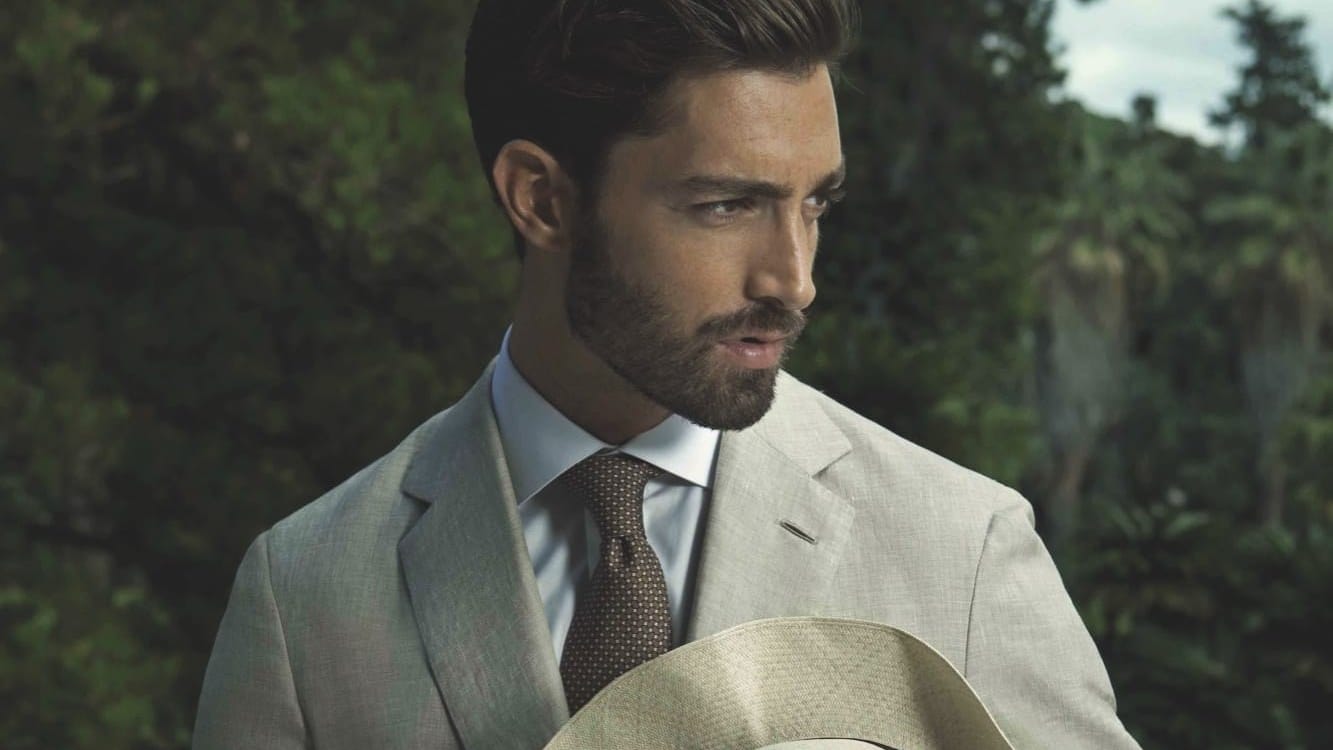
In art, as in fashion, one must learn the rules before breaking them. And that’s exactly what Nazareno Fonticoli, a master tailor from the town of Penne, did when he teamed up with Roman entrepreneur, Gaetano Savini and created the House of Brioni in 1945. Trained at the Abruzzo school of tailoring, Fonticoli’s relaxed, Mediterranean-inspired silhouettes adhered to the peerless cutting and stitching techniques borrowed from Savile Row but crucially broke convention by doing away with much of the structuring and the heavy materials associated with traditional English suits.
As difficult as the times may have been, forward-looking sartorial style was the perfect antidote for a world recovering from World War II. Indeed, Brioni’s pitched shoulders, tapered waists and narrow trouser suits cut from novel fabrics in bold colours – such as silks and brocades – were reminders of pre-war luxury and offered an instant sense of escapism from the hardships of post-war life. “There is still a bit of craziness,” admits Francesco Pesci, Brioni’s ceo since 2010, with a laugh. “But then, the people at Brioni have never been conservative.”
The brand was named after the Croatian islands that are spelled, Brijuni but pronounced ‘Brioni’, a glamorous golf and polo getaway, which was the favourite haunt of European aristocrats in the 1920s and 1930s. This is why, as you may have noticed, there is a polo symbol on the buttons of Brioni’s sports blazers lasting decades before Ralph Lauren embraced a similar theme; Getano Savini recognised the marketing potential conveyed by this simple allusion to effortless, moneyed elegance.
Pesci goes on to explain how the marque introduced another, now obvious innovation when it became the first brand to show its suits at runway shows. “Everybody takes the catwalk for granted. Fashion shows are the bread and butter of this business. But in 1952, this was a scandal and showing men in silk jackets was like blasphemy.”
Held at the Pitti Palace in Florence, Brioni’s 1952 show transformed the partnership into a transatlantic sensation, with Fonticoli and Savini’s suits entering the wardrobes of the likes of Clark Gable, Cary Grant and John Wayne.
Fast-forward 50 years and the name Brioni conjures a very different image. In the 1970s and 1980s, the brand’s maxim of “elegance, quality, comfort in luxurious tailoring” made it a symbol of success and a preferred choice for the North American boardroom, adding more conservative, corporate shoulders to their film world mix; Donald Trump, George W. Bush, Kofi Annan and former New York mayor Rudy Giuliani amongst them.
Despite the intentions of its founders, Brioni grew unfaithful to its innovative past. Pesci believes this shift was partly a result of consumer misconception, since one must not forget that “beneath the [classical] surface, there is a little bit of folly.”
He likens the brand’s designs to a vintage Cadillac. “It’s an old car but it’s still beautiful now. That’s what we’re after – timelessness,” he says. “A balance between fashion and correct proportions, to a look that’s beautiful beyond a singular moment.”
When asked who, dead or alive, he would like to see wearing Brioni, he doesn’t even hesitate. “Edward VIII,” he says, “the king who gave up his kingdom to marry an American divorcée.”
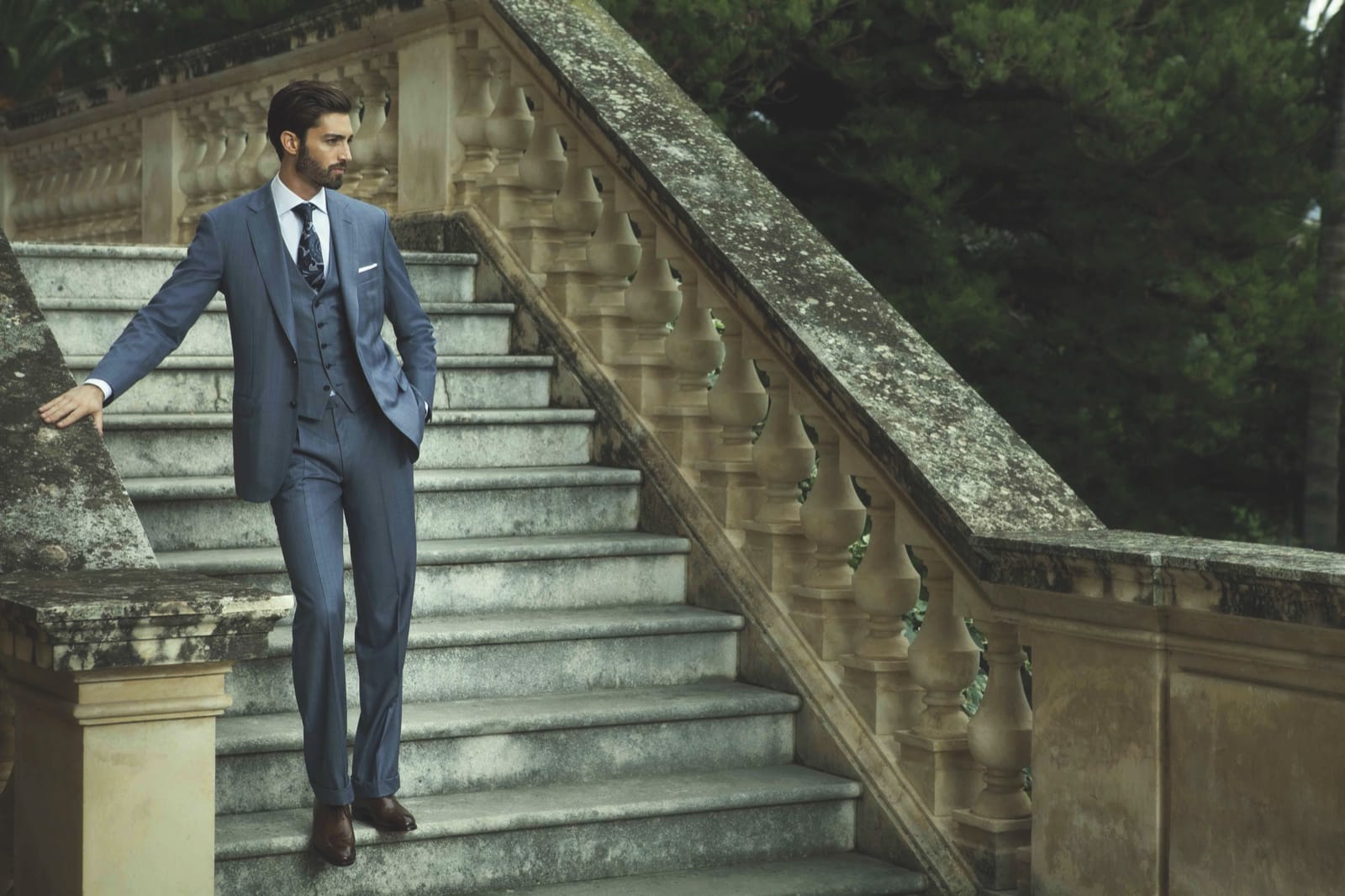
The pairing seems suitable. There is definitely something regal about the brand’s unapologetic and unbridled commitment to luxury. Other companies have wavered during the latest global recession; some by scaling back, others by watching their stock sink into fashion quicksand. As Armani and Gucci turned their attention to coats and casual wear and Prada shunned power suits in favour of suppler silhouettes, a shaken industry even began to debate whether the suit had become an emblem of the past. For the loudest proponents of the industry’s (short-lived) brush with the hair-shirt , the pinstriped, high-rolling businessman seemed as passé as the Filofax.
Not Brioni. Never an aspirational brand, its commitment was always steadfast and superior elegance – not fashion. For some, the times they might be a-changin’, as Mr. Robert Zimmerman once so famously sang, but by continuing to appeal to the pockets of the upper echelons – the one per cent that will always be dressed in the best - Brioni has managed to stay relevant.
Indeed, in a valiant display of the manner in which it bucks trends, the company launched one of the most expensive, limited edition fragrances on the planet in 2008 and while the ostentatious bottle may have been wildly at odds with the posturing parsimony so popular at the time (how swiftly that has all been forgotten), it sold out immediately. In 2009, The Wall Street Journal published an article entitled “The 43,000 USD Recession Suit”. Commenting on Brioni’s made-to-measure collection in vicuna, pashmina and qiviuk, the newspaper declared it “history’s most expensive line of men's suits.” More recently, when Brioni opened its Downtown Beirut store last March, it unveiled its largest VIP room to date.
This spitting-in-the-wind attitude is in some ways Brioni’s return to its rebellious Roman roots. Acquired by French multinational PPR in 2011, consolidation has given the brand a new lease of life. The launch of a casual wear line, Pesci explains, was not a way of diluting the suit line, but of offering the same high-end luxury tailoring for out-of-office hours. Channeling ‘Our Man in Havana’ and ‘Topaz’, Brioni’s current line offers hand-stitched t-shirts and made to measure jeans with a classy, laidback Cuban feel. “We love colour,” Pesci adds. “Brioni is, after all, a luxury house from the Mediterranean. It’s not just about black, grey and blue.”
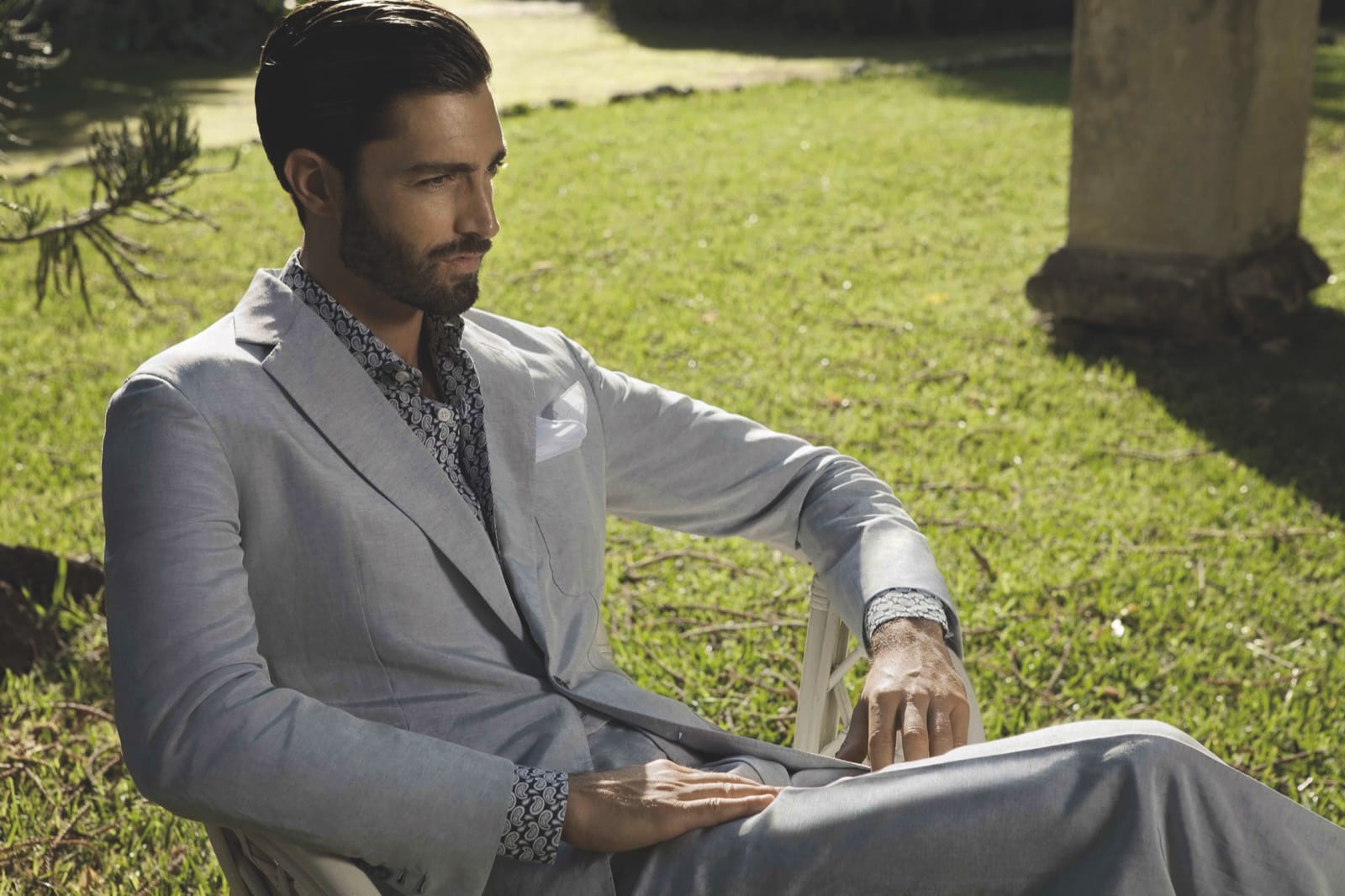
As the brand expands into the Middle East, part of its appeal will always be the Made in Italy label. “When a product is made in Italy, it adds something to its quality, design, performance and attractiveness,” says Pesci. “I don’t deny that this is also a marketing constraint. At this point if our products were made outside they would not be accepted by the customer.”
Not that there’s much chance of that happening any time soon. Brioni’s tailors are not only trained in Italy, they are trained at Brioni’s tailoring school in the hillside town of Penne. The four-year course, which is followed by a year-long apprenticeship, includes courses in Italian and English and Maths – which must be especially useful given the astronomical sums one of the label’s suits can command. “You can learn to be a ceo,” muses Pesci, cryptically, “but you can’t learn to be a tailor.”
I must have looked a little confused. After all, if you can’t learn to be a tailor, there doesn’t seem to be much point in having a tailoring school, does there? “Anyone can be taught to make a suit,” he elaborates, “but making a beautiful suit, a perfect suit, that is art.”